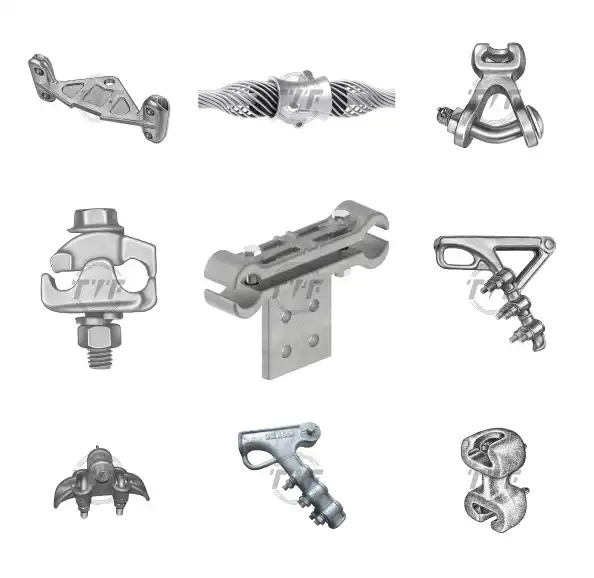
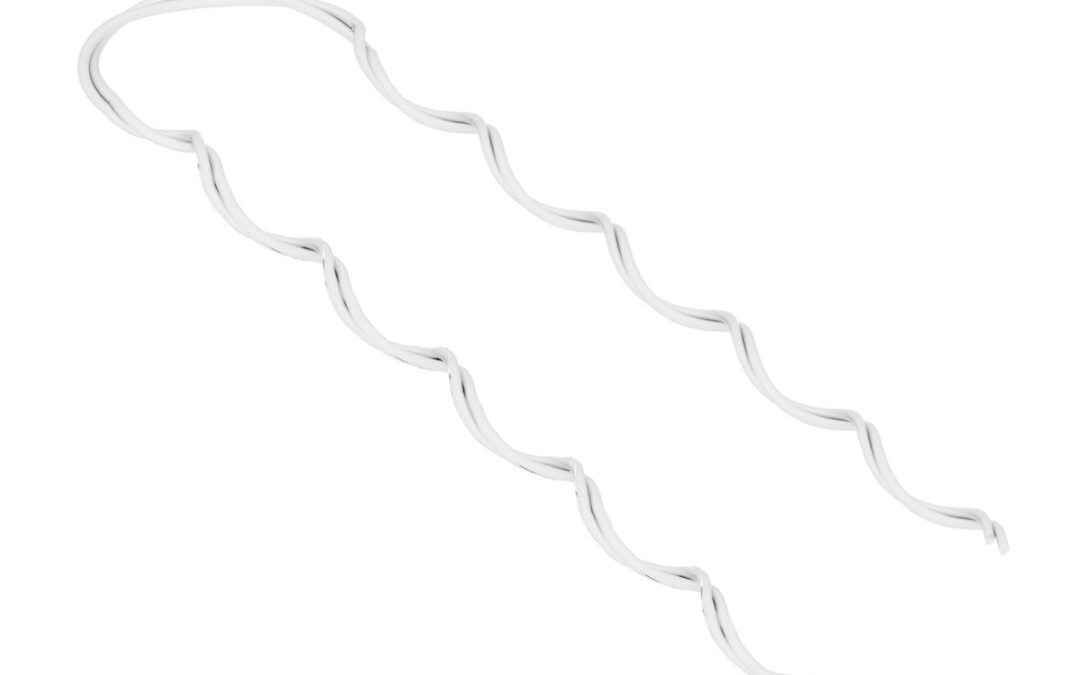
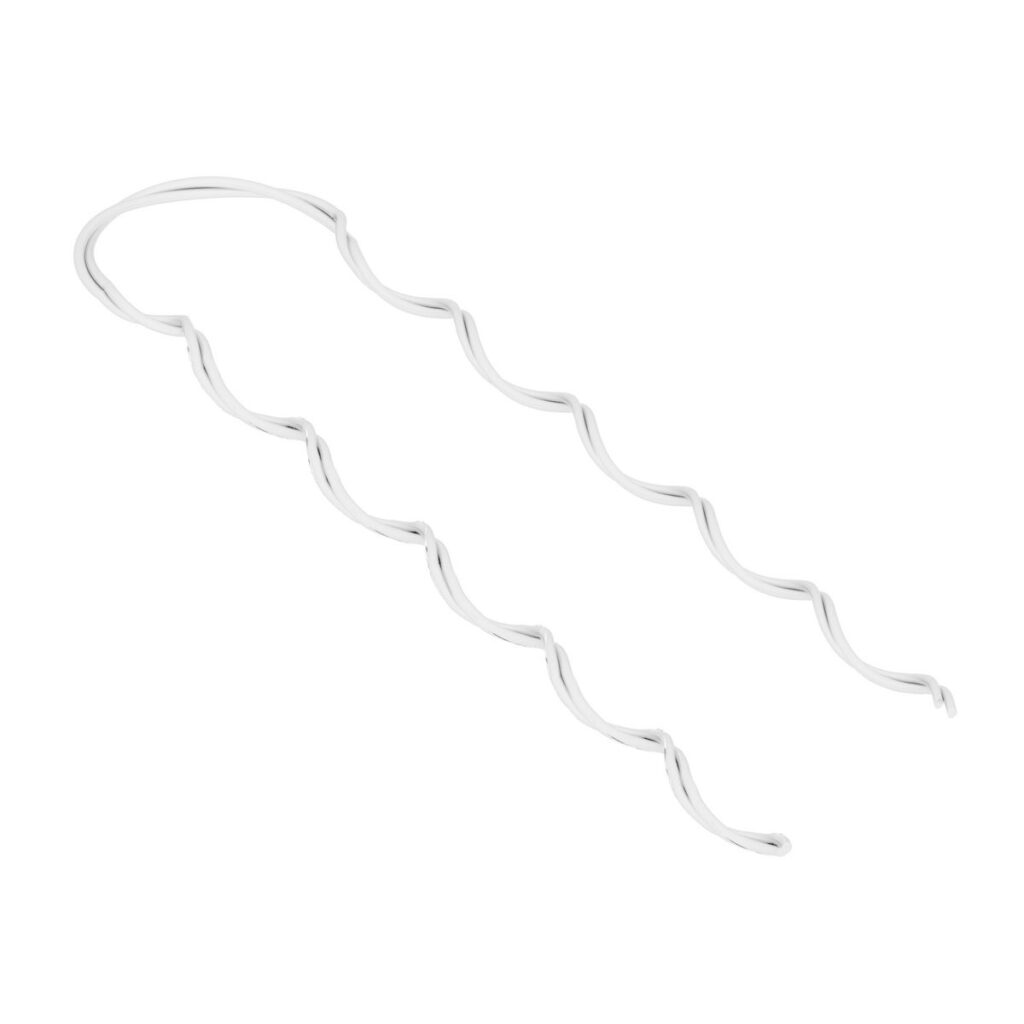
A slack span deadend is a helical fitting used to terminate and anchor an overhead conductor in a limited-tension span. It is installed at the end of a conductor span where the line is intentionally left with reduced tension rather than being fully tensioned. The dead end serves as where the conductor is mechanically terminated, anchored to a structure, and electrically sectionalized. A slack-span deadend differs because the conductor segment approaching that deadend is not fully tensioned, has controlled sag, and is often part of a temporary span. It functions in temporary line configurations, low-load distribution sections, transition points, and service drops. Slack span deadends function with standard deadend components like deadend clamps, insulators, crossarms, and guying systems. It is engineered for sag and clearance calculations and wind and thermal expansion effects and ensures ground clearance. Conducting quality assurance for slack span deadends helps maintain the safety, reliability, and longevity of power networks.
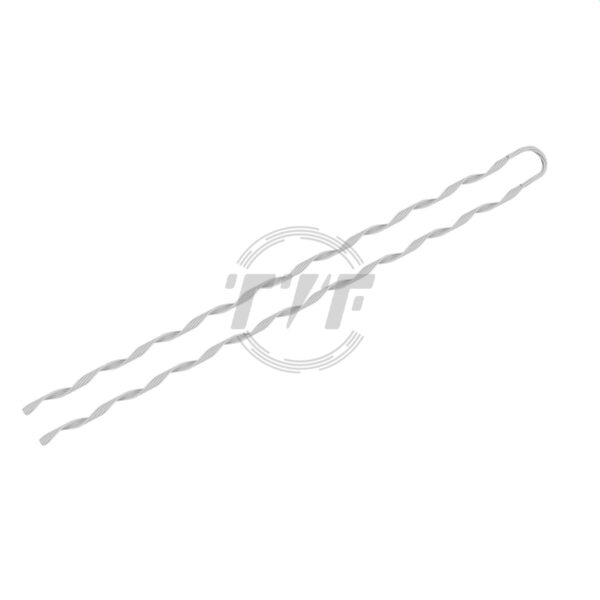
Guy Wire, Aluminum Clad Steel Deadends, Guy Strand 14000 Lb
A Slack span deadend is a termination assembly used in overhead power line construction to anchor conductors in low-tension (slack) spans. It provides secure mechanical retention and stable electrical continuity while accommodating increased sag, thermal expansion, and dynamic movement typical of distribution and short-span applications.
Engineered for compatibility with common conductor types (e.g., AAC, AAAC, ACSR), the assembly typically comprises an aluminum alloy clamp body for conductivity, galvanized steel hardware for strength, and optional protective interface compounds to minimize oxidation and contact resistance. It is optimized for installations where flexibility, ease of deployment, and cost efficiency are prioritized over high-tension performance.
Key Features
- Controlled grip design: Ensures secure conductor retention without strand damage or excessive compression
- Low-tension optimization: Performs reliably under reduced mechanical loads with higher sag profiles
- Corrosion-resistant construction: Aluminum and hot-dip galvanized steel components for long-term durability
- High conductivity interface: Minimizes contact resistance and prevents localized heating
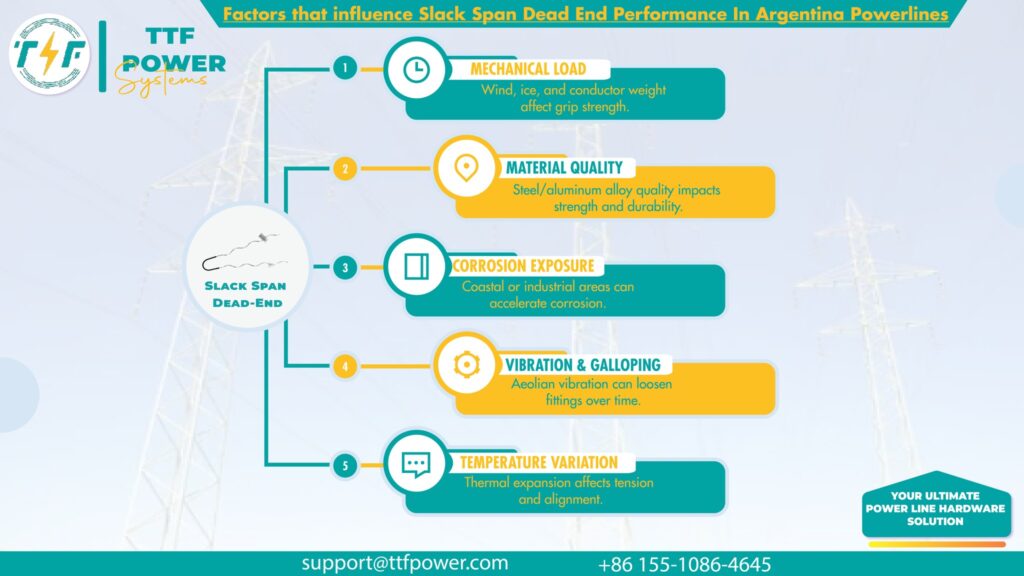
- Fatigue-resistant performance: Designed to withstand wind-induced vibration and thermal cycling
- Dimensional precision: Ensures proper fit across specified conductor sizes and types
- Ease of installation: Simplified assembly with standard tools and reduced need for tensioning equipment
- Standards compliance: Manufactured and tested in accordance with relevant IEC/ASTM requirements
Importance of conducting quality assurance for slack span deadends
Conducting quality assurance for slack span deadends ensures they remain critical control points for mechanical stability, electrical continuity, and reliability in overhead line systems. Slack spans experience greater sag and dynamic movement, which increases exposure to wind-induced oscillations, thermal expansion and contraction cycles, and conductor swing and clashing. Quality assurance ensures that deadend assemblies can withstand fatigue loading and cyclic stress. Poor-quality components fail prematurely under fluctuating conditions. QA processes verify correct mechanical ratings of hardware, proper installation torque and alignment, and conductor grip integrity within deadend clamps. Defects can translate into clearance violations, which increase risks of flashovers, vegetation contact, or public safety incidents. Quality assurance confirms low-resistance electrical contact, prevents localized heating, and reduces corona and partial discharge risks. Additionally, it ensures proper galvanization, material conformity, and resistance to moisture ingress and chemical exposure. Failure to enforce QA speeds up corrosion-driven degradation, which weakens mechanical and electrical performance.
The role of quality assurance during the manufacture of slack span deadends
Quality assurance during the manufacture of slack-span dead ends ensures components perform reliably under fatigue, vibration, thermal cycling, and environmental exposure. QA for the deadends mitigates risks tied to fit, fatigue, corrosion, and electrical contact quality. Weak quality assurance results in slippage, overheating, or accelerated degradation in service. Here are the roles of quality assurance during the manufacture of slack span deadends.
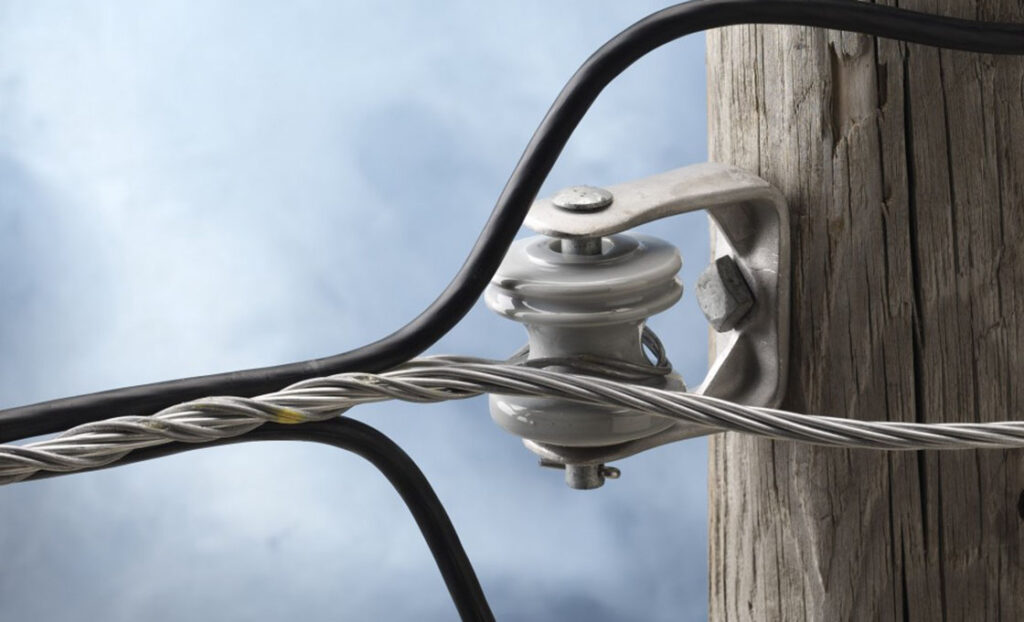
- Raw material verification – quality assurance for the dead ends begins with material control through chemical composition checks, mechanical properties, and traceability. This stage prevents latent defects such as brittle fracture or accelerated corrosion.
- Dimensional and tolerance control—slack span deadends depend on secure conductor seating rather than high clamping force. Quality assurance enforces tight tolerances on groove profiles, verification of bolt threads, fits, and clearances, and consistency across production batches.
- Process quality control – The manufacturing process for the dead end is monitored through statistical process control, tooling calibration and wear management, and in-process inspections.
- Surface treatment and corrosion protection—QA validates galvanization thickness and adhesion, surface finish quality to reduce corona and oxidation sites, and coating uniformity.
- Mechanical performance testing—slack span deadends must meet defined limits through slip strength tests, proof load and ultimate strength tests, and vibration testing to stimulate wind-induced oscillations.
- Electrical integrity validation – QA verifies contact resistance within specified limits, absence of burrs, and compatibility with conductor materials to avoid galvanic issues.
- Environmental and durability testing – quality assurance includes salt spray and thermal cycling to assess expansion and contraction effects and UV and humidity exposure for polymeric components.
Common quality failures in slack span dead ends in power networks
Quality failures in slack span deadends manifest as fatigue, slippage, or corrosion-driven degradation rather than immediate mechanical breakage. Slack span deadends are vulnerable because lower tension reduces immediate failure visibility and higher movement amplifies degradation mechanisms. Quality assurance prevents minor defects from transitioning to clearance issues, overheating, or structural compromise. These failures include:
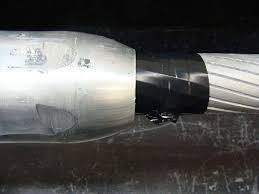
- Conductor slippage – this arises from poor groove geometry, low friction surfaces, and inconsistent bolt torque. This leads to gradual conductor creep, increased sag, and clearance violations.
- Conductor strand damage – improper clamp design can damage conductor strands with sharp edges, excessive clamping pressure, and misalignment during installation. This results in strand breakage, reduced tensile capacity, and localized heating due to altered current distribution.
- Corrosion and coating failure—slack span dead ends face environmental conditions, which makes corrosion a failure driver. Corrosion weakens structural components and increases electrical resistance at contact interfaces.
- Fatigue cracking under cyclic loading—slack spans undergo motion through wind-induced vibration and thermal expansion and contraction cycles. Poor material quality leads to fatigue cracks at stress concentration points like bolt holes.
- High contact resistance and overheating – electrical performance failures stem from poor surface finish at contact points, oxidation buildup due to inadequate material selection, and loose connections over time.
- Hardware loosening and loss of period-slack span movement can reduce mechanical integrity through bolts loosening due to vibration and lack of locking mechanisms.
- Insulator interface failures – improper fitting, weak mechanical interfaces, and degraded insulating materials appear where deadends interface with insulators. This can lead to mechanical instability or electrical leakage paths.
Materials for slack span deadends and how quality assurance protects them.
Material selection for the slack-span dead end depends on mechanical loads, higher movement, environmental exposure, and electrical contact. Quality assurance for these materials preserves their properties from raw input through field deployment. Conducting quality assurance prevents corrosion-driven degradation, maintains mechanical integrity, ensures electrical continuity, and controls dimensional compatibility. Lack of quality assurance degrades the materials into corrosion points, electrical inefficiencies, and mechanical weak links. Common materials for slack span deadends include:
Aluminum alloys
These materials provide good electrical conductivity, adequate strength-to-weight ratio, and resistance to atmospheric corrosion through natural oxide formation. QA offers spectrometric analysis, casting inspections, and surface finishing controls to ensure low contact resistance.
Galvanized steel
This is common for components such as bolts, U-bolts, and structural hardware. Steel components provide high tensile strength for mechanical anchoring and structural rigidity for maintaining clamp integrity. QA protection verifies galvanization thickness and adhesion and mechanical testing for tensile and proof load strength.
Aluminum-clad steel
The interfaces must balance electrical conductivity and mechanical strength. Quality assurance protection offers compatibility checks between clamp material and conductor type and contact resistance testing to confirm uniform current transfer.
Composite materials
These materials provide electrical insulation and resistance to contamination and moisture. These face challenges such as UV degradation, thermal aging, and moisture ingress. QA offers aging tests, dielectric strength verification, and material certification against environmental standards.
Protective coatings and interface compounds
These include anti-oxidation greases, conductive pastes, and protective platings that enhance electrical and corrosion performance. They face risks of uneven application, chemical instability, and washout. The quality assurance process includes application process control, chemical composition validation, and adhesion and durability testing.
TTF-certified slack span deadends. Why we certify:
TTF’s approach to power line hardware services results in optimal product quality, strict adherence to custom design, and reduced cost. We are constantly checking manufacturing processes, addressing material concerns, and improving staff expertise to ensure the best quality product. Our quality control for the slack span deadends begins with the first batch of samples that you received from us. And this continues through all production phases, where our QC staff never stop looking for opportunities to improve product quality. We offer:
- Tolerance Analysis
- Tooling Life Analysis
- Rockwell Hardness Testing per ASTM E18
- Brinell Hardness Testing per ASTM E10
- Magnetic Particle Testing per ASTM E1444
- CMM (Coordinate Measuring Machine) Testing
- 24″ Optical Comparator for Complex Measurements
- Tensile/proof load testing up to 160,000 lbs (700 kN)
- Hot Dip Galvanizing Plating Thickness per ASTM E376
- Torque Testing
- Roughness Testing
- Lifetime Sample Retention
- Dimensional Testing
- Mechanical Testing
The benefits of using slack span deadends in power networks
Slack span deadends serve where mechanical flexibility and installation efficiency are more valuable than tension performance. The deadends provide a balance between mechanical efficiency, cost, and flexibility. They serve in distribution networks, rural electrification, and non-critical spans. Here are the advantages of using slack span deadends in power networks.
- Reduced mechanical stress on structures—sagging conductors lower longitudinal loads, reduce the need for heavy-duty structures, and are less reliant on extensive guying systems.
- Improved tolerance to thermal expansion—slack span deadends accommodate thermal elongation without excessive stress buildup. They also reduce the risk of the conductor snapping and maintain stability across wide temperature variations.
- Enhanced flexibility during installation – slack configurations simplify construction through easier stringing and sagging operations. They also reduce the need for precision tensioning equipment and allow faster deployment in remote environments.
- Lower hardware and installation costs—slack span deadends contribute to cost-efficient network expansion in rural electrification.
- Reduced risks of failures—the spans offer lower tension, which reduces stored mechanical energy in the conductor. This improves network safety in distribution-level systems.
In conclusion,
Slack span deadends provide controlled flexibility, simplified installations, and cost-effective deployment. They lower tension and increase movement in distribution lines, short spans, and adaptive network configurations. However, increased sag, cyclic loading, and environmental exposure make them more sensitive to material defects, poor fit, corrosion, and installation errors. Slack span failures rarely occur as immediate breakages since they develop as slippage, fatigue cracking, or electrical inefficiencies. Thus, it is crucial to conduct quality assurance from material selection and manufacturing control, to installation monitoring. This ensures that each component performs under real operating conditions. It also protects against hidden defects, preserves electrical and mechanical integrity, and prevents minor inconsistencies from escalating to network-level issues.