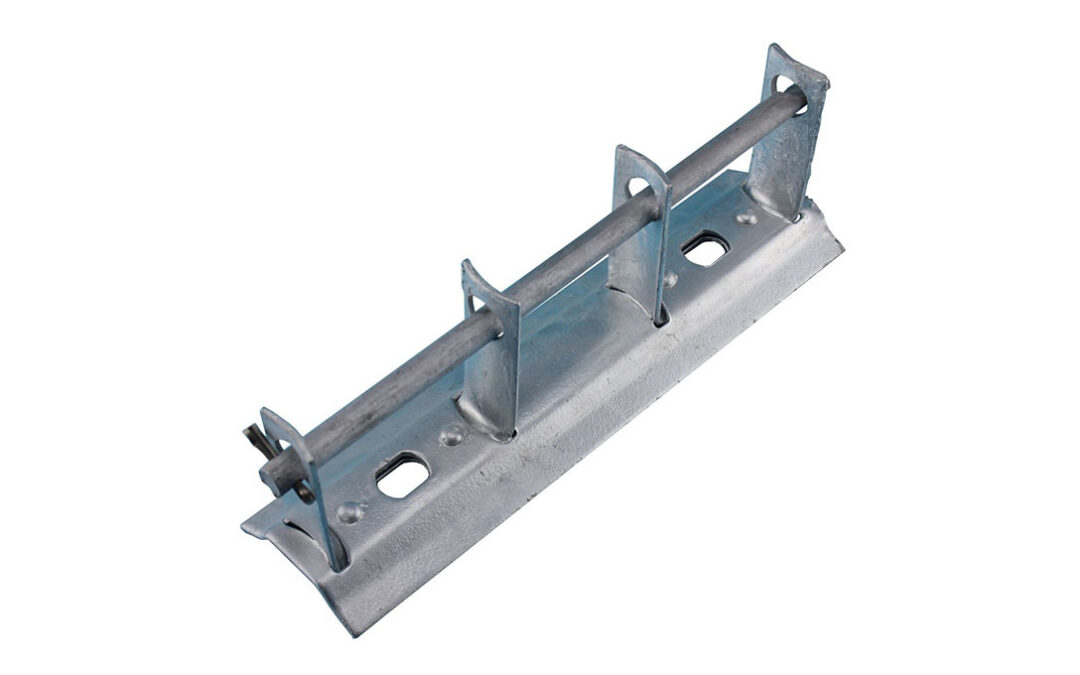
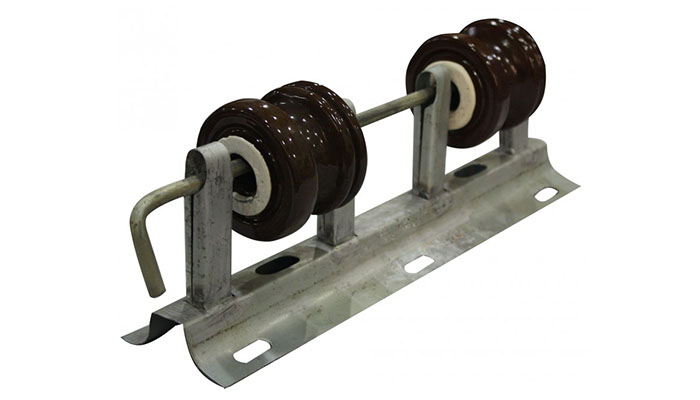
A secondary rack bracket is a mounting component used to support and secure secondary electrical conductors and communication cables on utility poles, substations, and distribution networks. It provides a stable attachment point for secondary racks and ensures conductors remain spaced, supported, and positioned safely. The secondary rack bracket holds low-voltage conductors that deliver electricity from distribution transformers to customers. It also transfers conductor loads, wind loads, and tension forces to the utility pole. Secondary rack brackets are from hot-dip galvanized carbon steel, structural steel plate, stainless steel, and aluminum alloy. The most common material for the bracket is hot-dip galvanized steel that combines high mechanical strength with corrosion resistance. The brackets serve utility distribution poles, service lines, commercial electrical distribution, rural electrification projects, and transformer pole installations. Utilities should consider quality standards when selecting the secondary rack bracket. Quality-assured secondary rack brackets contribute to safe and more dependable electrical service.
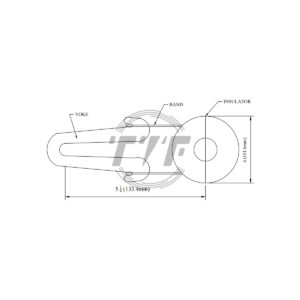

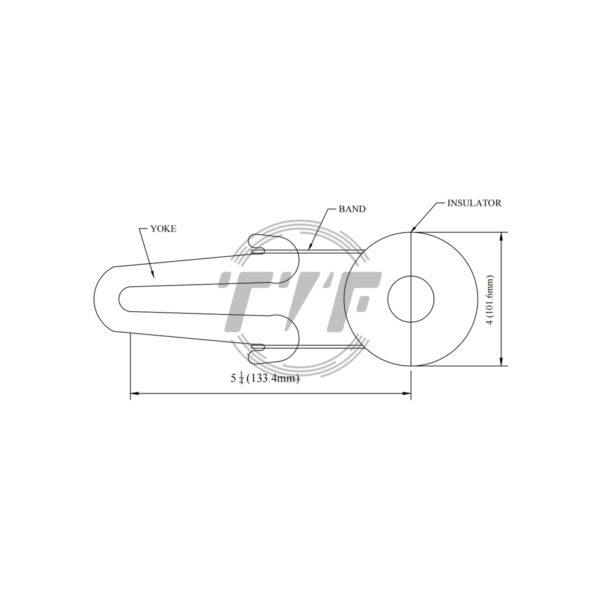
Secondary Rack Bracket
The Secondary Rack Bracket is a heavy-duty structural fitting designed to securely mount secondary racks and support low-voltage conductors on utility poles in overhead power distribution networks. Manufactured from high-strength steel and protected with a hot-dip galvanized finish, it provides excellent mechanical stability, corrosion resistance, and long-term durability under demanding environmental conditions. The bracket ensures proper conductor positioning, simplifies installation, and enhances the safety and reliability of overhead line construction.
Key Features
- Manufactured from high-strength carbon steel for superior load capacity
- Hot-dip galvanized for excellent corrosion and weather resistance
- Precision-engineered for accurate fit and easy installation
- High mechanical strength to withstand conductor tension and wind loads
- Compatible with standard secondary racks and utility pole hardware
- Reinforced design for improved structural rigidity and long service life
- Smooth, burr-free finish to improve safety and reduce installation damage
- Suitable for residential, commercial, industrial, and rural overhead distribution systems
- Low maintenance with reliable performance in harsh outdoor environments
- Manufactured under stringent quality control to meet utility and industry standards
Components of the secondary rack bracket
A secondary rack bracket consists of components working together to support secondary rack assemblies and low-voltage conductors. The key components of the rack include:
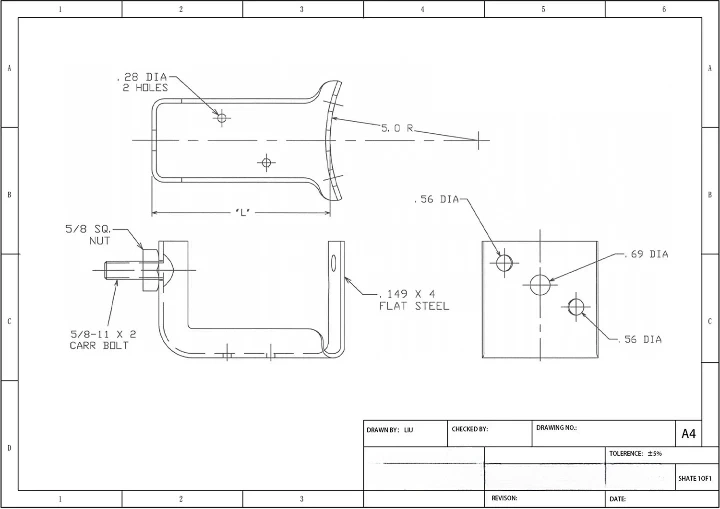
- Bracket body—this is the main frame of the secondary rack bracket that carries the mechanical loads. It supports the rack assembly, resists deformation, maintains structural stability, and provides attachment points for other components.
- Pole mounting plate – this distributes loads across the pole, provides a stable mounting surface, and prevents bracket movement.
- Mounting slots – these are precision-drilled holes that allow the bracket to be attached to the pole using bolts. It secures the bracket to the pole and simplifies installation and alignment.
- Bolt connection points – these are designed to withstand the clamping forces generated by mounting bolts. These connection points hold fastening hardware, prevent cracking, and maintain mechanical integrity.
- Reinforcing gussets – these are the ribs that increase load-bearing capacity, reduce flexing under conductor tension, and improve resistance to wind and vibration.
- Rack attachment surface—this part of the bracket supports the secondary rack that carries insulators and conductors. It provides a secure mounting platform, maintains correct rack orientation, and supports electrical hardware.
- Edge reinforcements – these edges increase structural rigidity, remove sharp edges, and reduce stress concentrations.
Roles of quality assurance during the manufacture of secondary rack brackets
Quality assurance ensures that the brackets meet the mechanical, dimensional, and corrosion-resistance requirements needed for reliable performance. Conducting QA helps detect manufacturing defects that can compromise network safety, reliability, and service life. The process includes inspections, testing, process control, and documentation throughout production. Here are the key roles of QA during secondary rack bracket manufacturing.
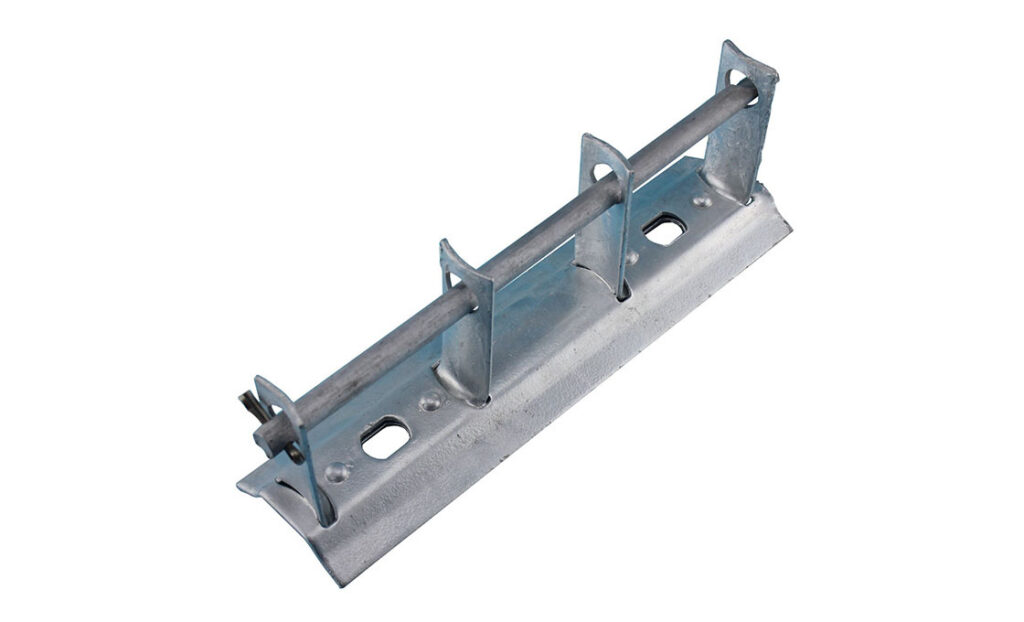
- Verifying raw material quality – quality assurance begins with the inspection of incoming raw materials to ensure they meet the necessary specifications. The QA personnel verify steel grade and mechanical properties, chemical composition, plate thickness, and traceability.
- Monitoring manufacturing processes – the rack production process includes cutting, punching, bending, welding, machining, and finishing. QA monitors each of these processes to ensure consistency. Process monitoring reduces manufacturing defects before they cause failures.
- Ensuring dimensional accuracy – proper dimensions are critical for compatibility with utility poles, secondary racks, and mounting hardware. QA verifies bracket dimensions, hole diameter and spacing, mounting slot dimensions, and bend angles.
- Inspecting welding quality – QA checks weld integrity to ensure structural reliability. Inspection focuses on weld size, complete fusion, penetration quality, absence of cracks, and proper weld placement.
- Verifying mechanical strength – QA confirms that brackets can withstand operational loads without permanent deformation. The tests include static load testing, compression testing, tensile testing, bend testing, and fatigue testing.
- Controlling surface finish and corrosion protection—QA verifies zinc coating thickness, surface appearance, adhesion of the galvanized layer, and absence of bare spots.
- Detecting manufacturing defects—common defects facing the rack include burrs, sharp edges, misaligned holes, distorted bends, warping, surface cracks, and poor galvanizing.
- Performing final product inspection – every production batch undergoes a comprehensive final inspection. This includes verifying dimensions, structural integrity, surface finish, galvanizing quality, proper marking, and packaging condition.
Quality failure modes in secondary rack brackets
Secondary rack brackets in power distribution systems support secondary racks and conductors on utility poles. Their performance depends on high manufacturing quality and proper installation. Defects from manufacturing, galvanizing, handling, or installation can reduce their mechanical strength, increase corrosion, and increase the risk of failures in service. These are the most common quality failure modes in secondary rack brackets.

- Corrosion due to inadequate protective coating – corrosion causes uneven galvanizing, bare steel exposed during manufacturing, and mechanical damage to the coating during transport or installation. QA measures for corrosion include measuring zinc coating thickness, inspecting coating uniformity, and performing adhesion testing.
- Dimensional inaccuracies – incorrect dimensions prevent proper installation and can introduce mechanical stresses. QA includes using calibrated measuring instruments, inspecting critical dimensions, and verifying hole spacing.
- Material defects – inferior raw materials reduce the load-bearing capability of the bracket. QA measures include verifying material certificates, performing chemical composition analysis, conducting tensile and hardness testing, and inspecting incoming materials.
- Cracking—Cracking comes from excessive forming stress, poor welding practices, and material defects. These cause loss of structural integrity and sudden failure under load. QA offers magnetic particle testing and proper bend radius control.
- Weld defects – these rise from porosity, undercutting, lack of infusion, weld cracking, and slag inclusions. These cause reduced mechanical strength, crack initiation, fatigue failure, and separation of structural members. QA measures include qualified welding procedures, certified welders, and visual weld inspection.
- Improper hole location of size—this comes from punching errors, worn tooling, and poor alignment during fabrication. This causes bolt misalignment, installation delays, and uneven loading. QA conducts hole position verification, template inspections, and coordinate-measuring equipment.
- Deformation – brackets should maintain their design geometry throughout manufacturing. Deformation comes from incorrect forming pressure, uneven cooling, improper handling, and residual stresses. QA processes offer flatness inspection, dimensional verification, and controlled forming processes.
Materials for secondary rack brackets and importance for quality assurance
Secondary rack brackets support secondary racks, conductors, and equipment on utility poles in overhead distribution systems. The brackets should be from high-quality materials to help them withstand mechanical loading, wind, moisture, temperature fluctuation, and environmental contaminants. Quality assurance verifies the integrity of these materials throughout manufacturing. Quality assurance ensures that every material used in production meets the required specifications and maintains consistent quality throughout the manufacturing process. These materials include:
Carbon steel
Carbon steel has high strength, good formability, and cost-effectiveness. It is suitable for stamping, bending, punching, drilling, and welding. Carbon steel offers high mechanical strength, excellent load-bearing capacity, and good weldability and machinability. Carbon steel brackets are suitable for utility distribution poles, residential secondary networks, and commercial overhead distribution.
Hot-dip galvanized steel
The zinc coating provides corrosion resistance while retaining the strength of the steel substrate. Galvanized steel offers corrosion protection, low maintenance requirements, and resistance to moisture and atmospheric corrosion. Galvanized steel brackets serve in industrial power systems, high-humidity regions, and transmission and distribution infrastructure.
Stainless steel
Stainless steel is ideal for installations where severe corrosion resistance is necessary. This includes areas such as coastal, marine, or chemically aggressive environments. This steel offers high durability, minimal maintenance, and an attractive surface finish. Stainless steel brackets are ideal for coastal substations, marine installations, and chemical processing facilities.
Aluminum alloys
Aluminum brackets are lightweight, naturally corrosion resistant, and have a good strength-to-weight ratio. However, they have lower strength than structural steel, higher thermal expansion, and galvanic corrosion. They are ideal for communication infrastructure, lightweight utility structures, and specialized distribution systems.
High-strength low-alloy (HSLA) steel
HSLA steel is ideal for heavy-duty applications that need higher mechanical strength without significant weight. This steel offers high yield strength, improved fatigue resistance, and reduced material thickness. HSLA steel brackets serve in heavy-duty utility hardware, high-load distribution systems, and regions with severe wind or ice loading.
TTF-Certified secondary rack bracket. Why we certify:
TTF’s approach to power line hardware services results in optimal product quality, strict adherence to custom design, and reduced cost. We are constantly checking manufacturing processes, addressing material concerns, and improving staff expertise to ensure the best quality product. Our quality control for the secondary rack brackets begins with the first batch of samples that you received from us. And this continues through all production phases, where our QC staff never stop looking for opportunities to improve product quality. We offer:

- Tolerance Analysis
- Tooling Life Analysis
- Rockwell Hardness Testing per ASTM E18
- Brinell Hardness Testing per ASTM E10
- Magnetic Particle Testing per ASTM E1444 CMM (Coordinate Measuring Machine) Testing
- 24″ Optical Comparator for Complex Measurements
- Tensile/proof load testing up to 160,000 lbs (700 kN)
- Hot Dip Galvanizing Plating Thickness per ASTM E376
- Torque Testing
- Roughness Testing
- Lifetime Sample Retention
- Dimensional Testing
- Mechanical Testing
In conclusion,
Secondary rack brackets provide secure support for secondary conductors and related hardware. Their performance depends on proper design, high-quality materials, precise manufacturing, and quality assurance. Manufacturers should ensure controlled material quality, fabrication processes, dimensional accuracy, corrosion protection, and mechanical performance. This can help reduce common failure modes and ensure reliable and durable brackets. These brackets can enhance the safety, durability, and reliability of electrical distribution infrastructure.