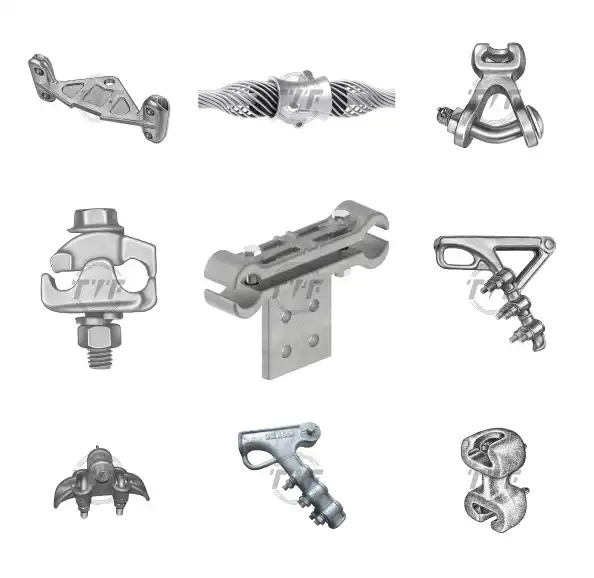
An aluminum compression terminal is a mechanical-electrical connector that terminates aluminum conductors. It is a component that helps connect to equipment, busbars, insulators, and transformer terminals. The compression terminal ensures low-resistance electrical continuity and high mechanical strength at line terminations. The aluminum compression terminals can be crimped onto an aluminum using a hydraulic compression tool. It forms a permanent, gas-tight connection that reduces electrical losses and prevents conductor slippage under tension. The terminal is used on overhead power networks for electrical continuity, mechanical anchorage, corrosion resistance, and long-term reliability. It serves on substation line terminations, transformer and switchgear connections, angle structures, and renewable energy interconnections like solar and wind collector lines.
The working of the aluminum compression terminal
An aluminum compression terminal operates in overhead power networks by forming a permanent and high-integrity connection between the conductor and electrical equipment. During the installation, the conductor strands are inserted fully into the terminal barrel to ensure complete strand engagement and load sharing. The terminal is then inserted using a hydraulic compression tool with matched dies. After compression, the barrel deforms around the conductor strands and reduces the voids between strands. During compression, the metal-to-metal contact produces low contact resistance and uniform current distribution and reduces the risk of localized heating and thermal runaway. Aluminum compression terminals transfer mechanical loads from the conductor to dead-end fittings, insulators, and equipment terminals. The extended barrel length distributes stress evenly, reduces strand fatigue, and prevents stress concentration at the termination point. The compression terminal provides mechanical anchorage and electrical efficiency for reliable power transmission and distribution infrastructure.
Importance of compression terminals in power networks
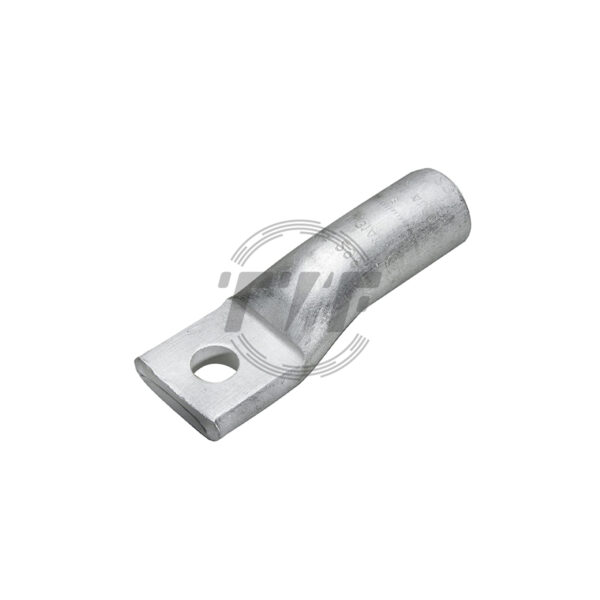
Aluminum Compression Terminal
The aluminum compression terminal is a high-conductivity connector designed to provide secure, low-resistance termination of aluminum conductors in overhead and underground power line systems. Installed by hydraulic or mechanical crimping, it ensures a permanent, vibration-resistant electrical connection between conductors and equipment such as transformers, switchgear, and busbars. Manufactured from high-purity aluminum, the terminal delivers excellent electrical performance, corrosion resistance, and long-term reliability in demanding utility environments.
Key Features
- High-purity aluminum construction for optimal conductivity
- Compression-type design ensures low contact resistance and high mechanical strength
- Compatible with standard hydraulic and mechanical crimping tools
- Excellent resistance to corrosion and environmental degradation
- Designed for use with AAC, AAAC, and ACSR conductors
- Smooth barrel and chamfered entry for easy conductor insertion
- Suitable for overhead transmission, distribution, and substation applications
Using the aluminum compression terminal provides electrical efficiency, mechanical integrity, system safety, and long-term reliability. Properly designed and installed compression terminals are crucial for overhead network development. The terminals create a uniform, low-resistance contact between the conductor and equipment interfaces. They provide anchor conductors at dead-ends and equipment terminals, distribute tensile forces, and prevent slippage and breakage. Properly installed terminals reduce loose connections that lead to arcing and support safe operation under normal conditions. They are from high-quality materials such as aluminum alloys that provide resistance to corrosion. This ensures stable electrical performance, resistance to environmental degradation, and lower maintenance and inspection. In modern power networks using AAC, AAAAC, and ACSR conductors, the compression terminals are compatible to accommodate thermal expansion and avoid galvanic corrosion. Additionally, they provide reliable terminations at substations, interconnection points, and collector systems for renewable energy integration.
Features and components of the compression terminals
Aluminum compression terminals are precision connection devices designed to ensure electrical efficiency, mechanical strength, and long-term reliability. The terminals offer thermal and mechanical performance for maintaining pressure over temperature cycles. It combines a robust terminal palm and material features optimized for outdoor power networks. Its components offer an electrical, mechanical, and durable solution for overhead transmission and distribution infrastructure. Aluminum compression terminals consist of high-purity aluminum and tin-plated surfaces for enhanced corrosion resistance. The treatments are designed to reduce galvanic corrosion when used with approved hardware. Its key components include:
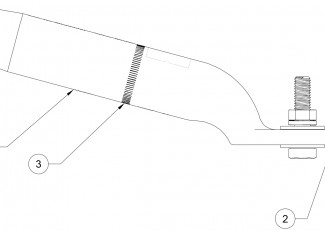
- Compression barrel—the compression barrel is the load-bearing and current-carrying section of the compression terminal. It holds the aluminum conductor and is plastically deformed during installation. The barrel is manufactured from high-conductivity aluminum or aluminum alloy. Its size also matches the specific conductor cross-sections.
- Terminal palm—this provides the interface between the conductor and external equipment such as busbars, insulators, transformers, or switchgear. It features a flat, machine contact surface for greatest electrical contact. It also prevents rotation under vibration and load to handle high current density.
- Inspection and positioning marks—the marks guide correct installation and quality control. It has visible barrel markings showing die size and compression sequence. Its insertion depth marks ensure full conductor engagement and support post-installation inspection and maintenance audits.
- Conductor entry and chamfered mouth—this section allows proper conductor insertion and strand alignment. It has a flared entry to prevent strand damage, a smooth internal bore to allow even strand compaction, and reduces installation errors.
Types of aluminum compression terminals
Compression lug
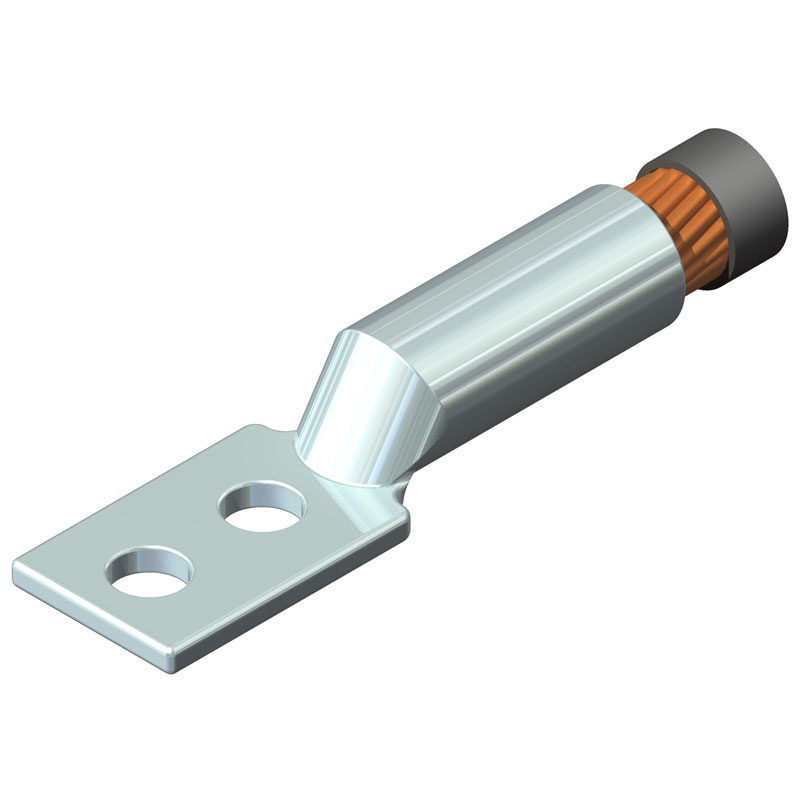
This consists of a compression barrel and a flat palm with one or more bolt holes. It is ideal for bolted connections to busbars, equipment pads, and structures. It is also available in one-hole, two-hole, and four-hole configurations. Compression lugs serve in substations and switchgear connections, overhead line terminations, and transformer and breaker interfaces.
Ring-type compression terminal

This features a circular palm with a single bolt hole to provide a closed-loop connection. It works in low- to medium-voltage distribution lines, control panels, and equipment requiring high vibration resistance.
Pin-type compression terminals
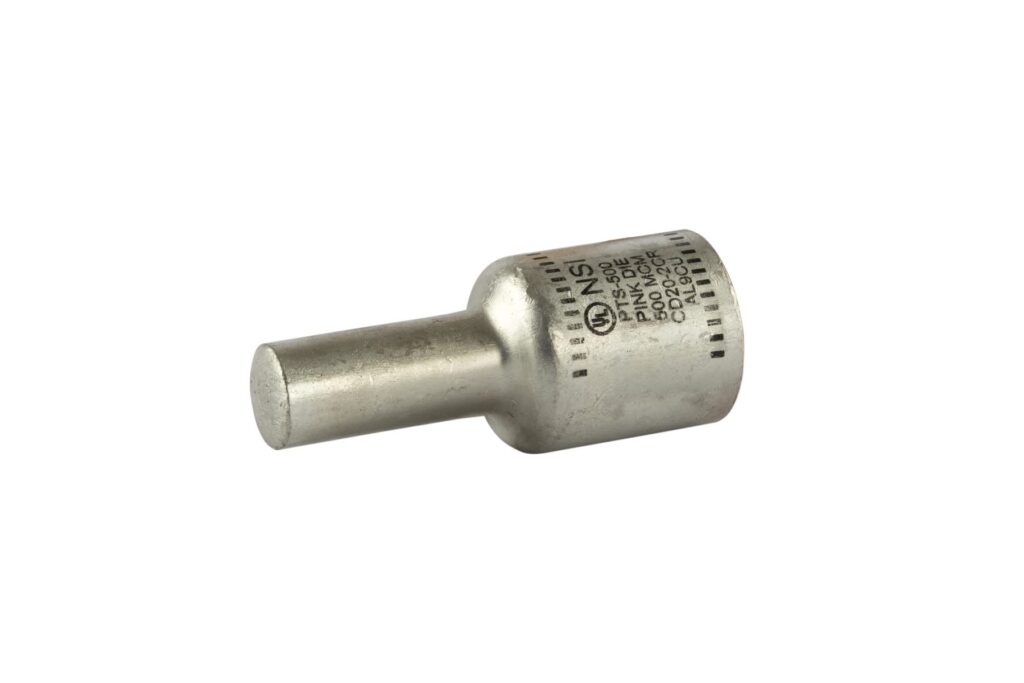
These terminals have a solid cylindrical pin instead of a flat palm to fit into socket connections. It ensures uniform contact pressure in clamp interfaces, simplifies installation, and provides current transfer. It is ideal for transformer bushings, switchgear and disconnectors, and compact substation equipment.
Long-barrel compression terminal
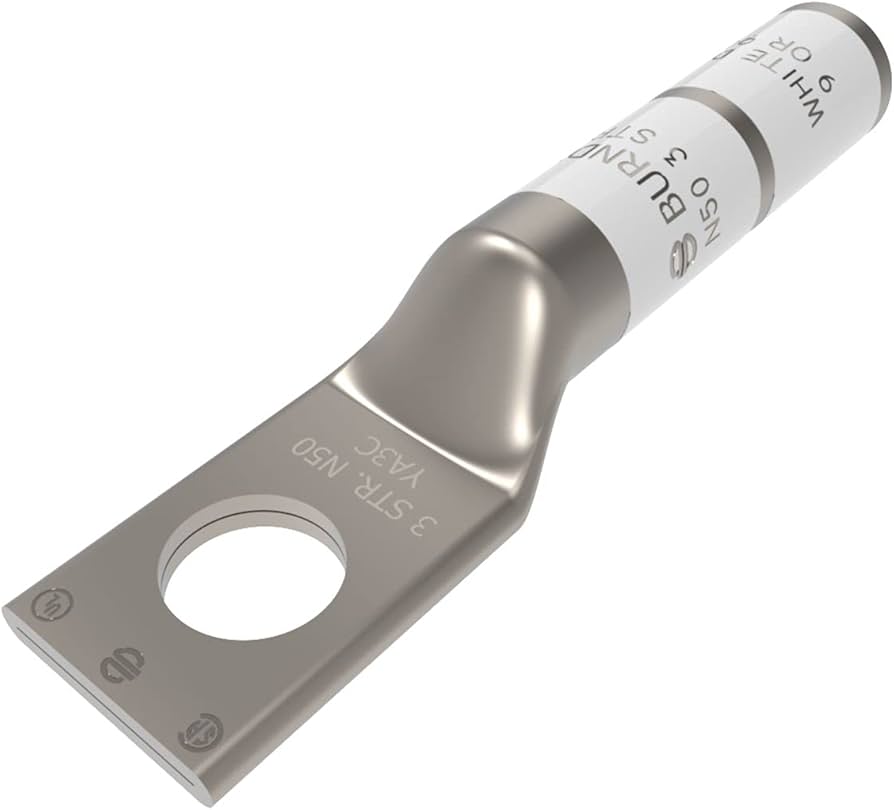
This features an extended compression barrel to improve mechanical and electrical performance. It has enhanced tensile strength and pull-out resistance. The terminal also offers improved stress distribution along conductor strands for reduced risk of strand fatigue. It works in high-tension overhead lines, angle and dead-end structures, and transmission-class conductors.
Bimetallic compression terminals
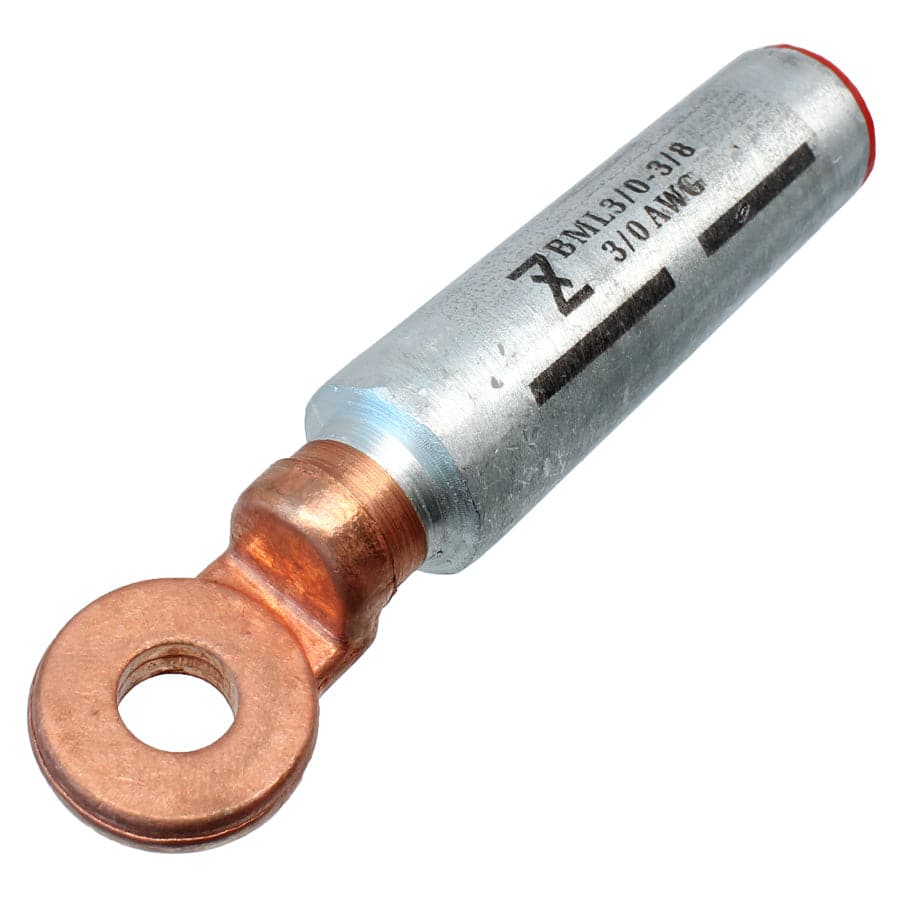
This terminal combines aluminum and copper sections joined by friction welding. It prevents galvanic corrosion between aluminum conductors and copper equipment. The terminal maintains low contact resistance. It is ideal for aluminum conductors connected to copper busbars, substations, and renewable energy interconnections.
Insulated terminal
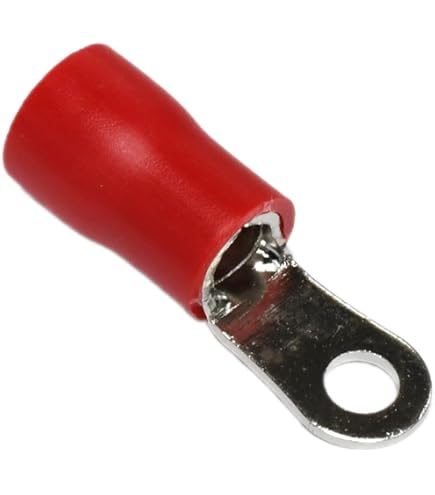
The insulated terminal provides extra electrical insulation, reduces the risk of accidental short circuits, and enhances personnel safety. It works in distribution networks, control and secondary circuits, and compact installations with close clearances.
Technical specifications for the compression terminals
Following the technical specifications helps define its electrical capacity, mechanical performance, material compatibility, and installation requirements. The specifications ensure safe, efficient, and standards-compliant operation in overhead distribution and transmission networks. These specifications include:
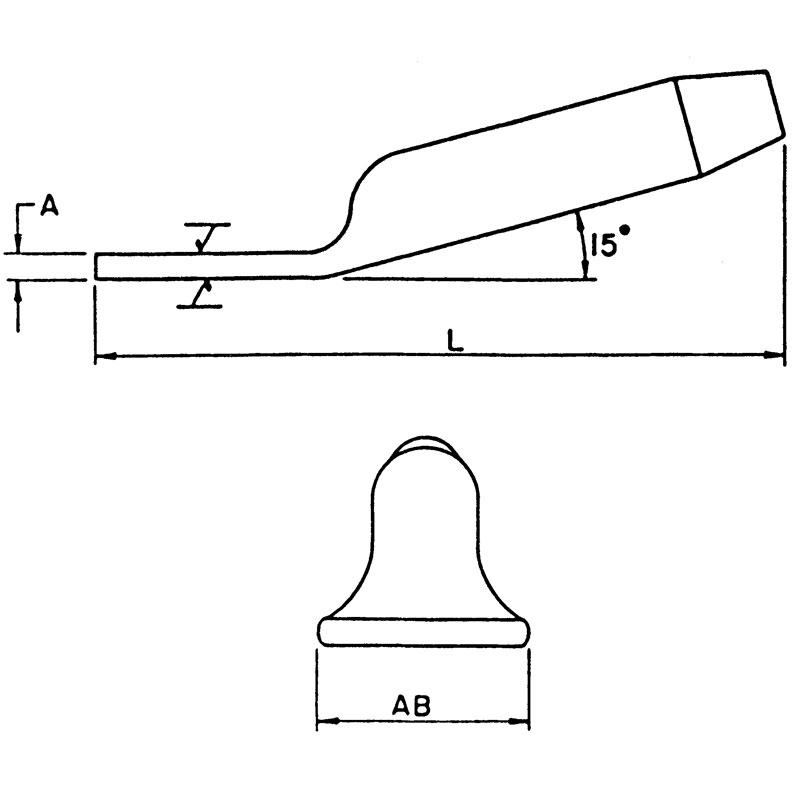
- Conductor compatibility—the terminals are specified according to the conductor type and size they are to end. It is compatible with AAC, AAAC, ACSR, and aluminum-alloy conductors. Its barrel dimension matches the conductor diameter.
- Material specification—the terminals are from materials such as aluminum alloy, surface finish, bimetallic variants, and anti-oxidation compounds. Their specifications reduce contact resistance and galvanic corrosion.
- Electrical ratings—the electrical performance for the terminal is defined by current-carrying and thermal limits. The specifications include rated current, operating temperature, short-circuit withstand capability, and low contact resistance need.
- Mechanical performance—these ensure the terminal withstands environmental and operational loads. These include pull-out strength, tensile load rating, vibration resistance, and thermal cycling endurance.
- Palm and interface dimensions—this includes the palm thickness and width for current density control, hole configuration, and hole diameter to suit standard bolt sizes. The specifications ensure stable and low-resistance bolted joints.
- Compression and installation requirements—the installation specifications for the terminal ensure consistent field performance. It includes approved compression die size, hydraulic crimping, orientation of compression indents, and visual indicators.
Application areas of the aluminum compression terminals
Aluminum compression terminals work across power infrastructure where aluminum conductors are terminated with high electrical efficiency and mechanical reliability. They function in transmission, distribution, generation, and renewable energy systems. This makes them a crucial component in modern power networks. Here are the key application areas of the compression terminals.

- Overhead transmission lines—compression terminals work at the line termination and dead-end structures. They provide high tensile strength and stable electrical performance under environmental and thermal conditions.
- Overhead distribution networks—distribution systems depend on aluminum compression terminals for reliable conductor connections at lower voltage levels. It serves on pole-top transformer connections, feeder line terminations, and switching points.
- Industrial and utility infrastructure—utilities and large industrial facilities use compression terminals for primary and secondary circuits. They provide standardized, code-compliant connections that simplify installation and inspection. They are essential in industrial substations, utility-owned service entrances, and large motor and process equipment connections.
- Substations and switchyards—substations use aluminum compression terminals to connect lines to equipment. They function in busbars, transformers, circuit breakers, and disconnector terminations, and jumper connections between equipment.
- Power generation facilities—the compression terminals work within generation plants to manage power output and interconnections. They support stable current flow and safe load transfer from generation sources to the grid. They serve in generator output conductors, auxiliary power systems, and collector circuits in power plants.
- Renewable energy systems—the corrosion resistance and mechanical reliability of the support long-term operation in exposed environments. They support solar PV collector lines, wind farm inter-array and export cables, and energy storage system interconnections.
Best practices for using the compression terminals in power networks
Using the compression terminals helps achieve safe, low-loss, and long-lasting connections in power networks. It is crucial to follow recommendations provided by experts and manufacturers. These practices include selecting the correct terminal, preparing the conductor, using appropriate compression tools, and ensuring full conductor insertion. It is also crucial to inspect the compression joint, make secure connections, and follow standards and maintenance procedures. Utilities must install terminals under IEC, ASTM, or utility standards and include terminations in routine thermal and visual inspections. The aluminum compression terminals focus on delivering reliable electrical performance, strong mechanical anchorage, and long service life in power networks.