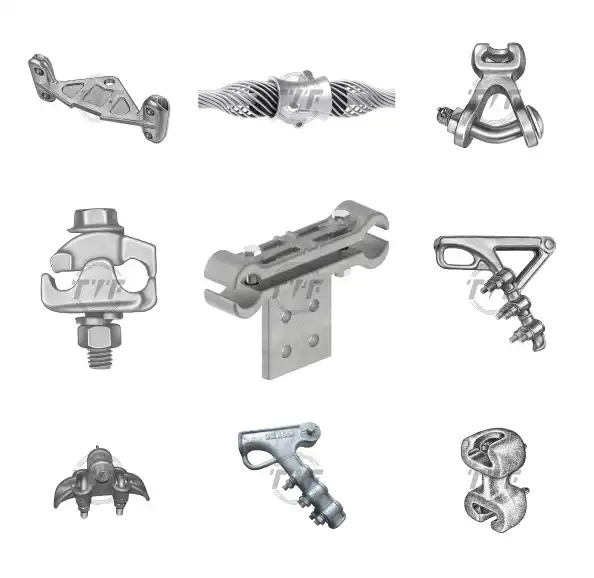
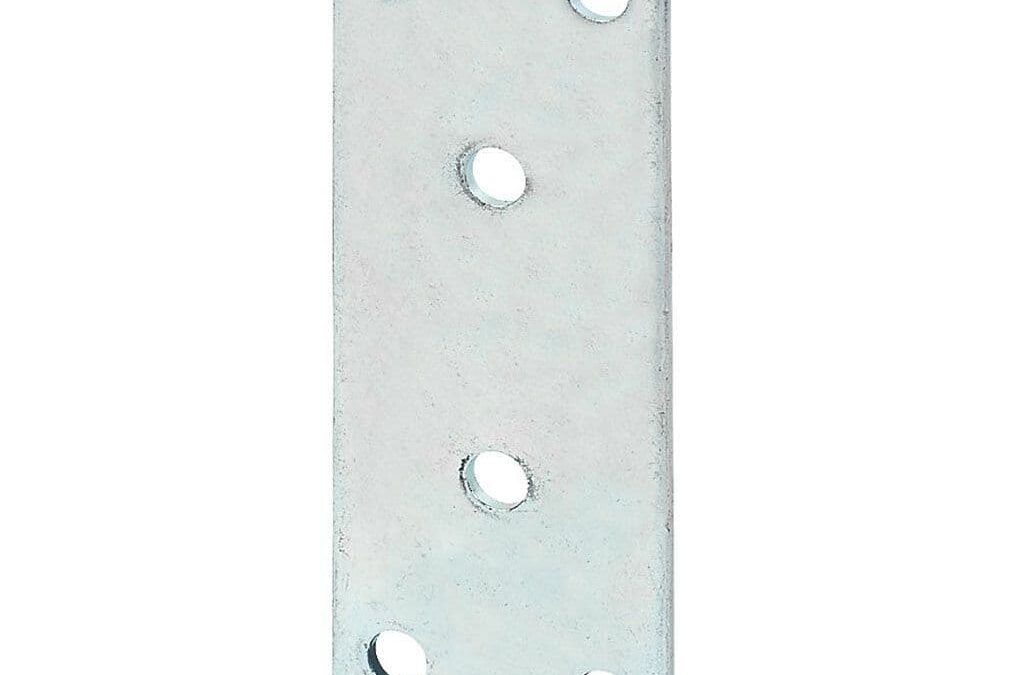
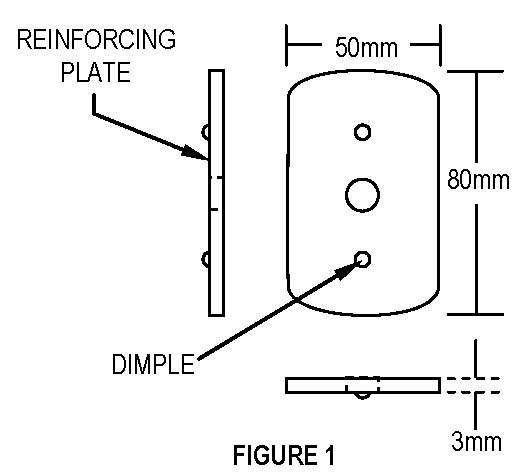
A reinforcing plate is a metallic support component installed on poles, crossarms, or structural connection points to strengthen the mechanical integrity of the assembly. It helps distribute mechanical loads, reduce stress concentration, and prevent deformation or cracking in utility structures subjected to conductor tension, wind loads, and environmental stress. Reinforcing plates strengthen weak sections of poles and fittings. The plates are installed around bolt holes, crossarm joints, guy attachment points, and suspension and dead-end assemblies. The plates spread these forces over a larger surface area, reducing localized stress and improving durability. Reinforcing plates are from high-strength metals such as galvanized steel, stainless steel, and carbon steel with anti-corrosion coatings. Using reinforcing plates in overhead power line systems increases the operational lifespan of poles and hardware. Conducting quality assurance for reinforcing plates strengthens connections in load-bearing applications. They prevent failures that can lead to structural collapse or property damage.
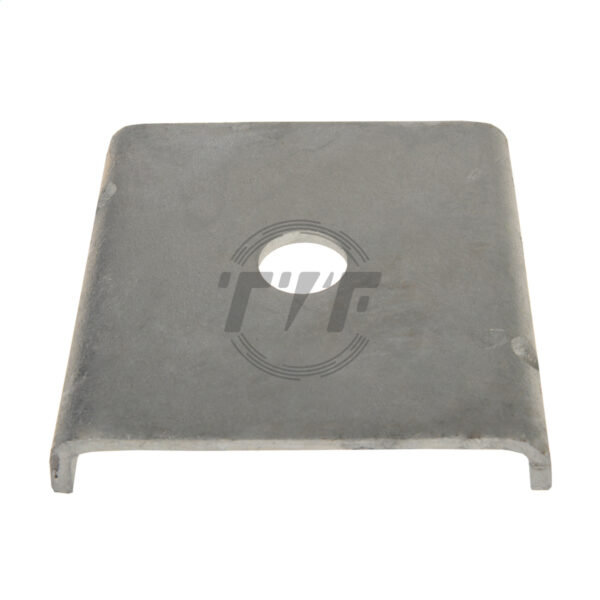
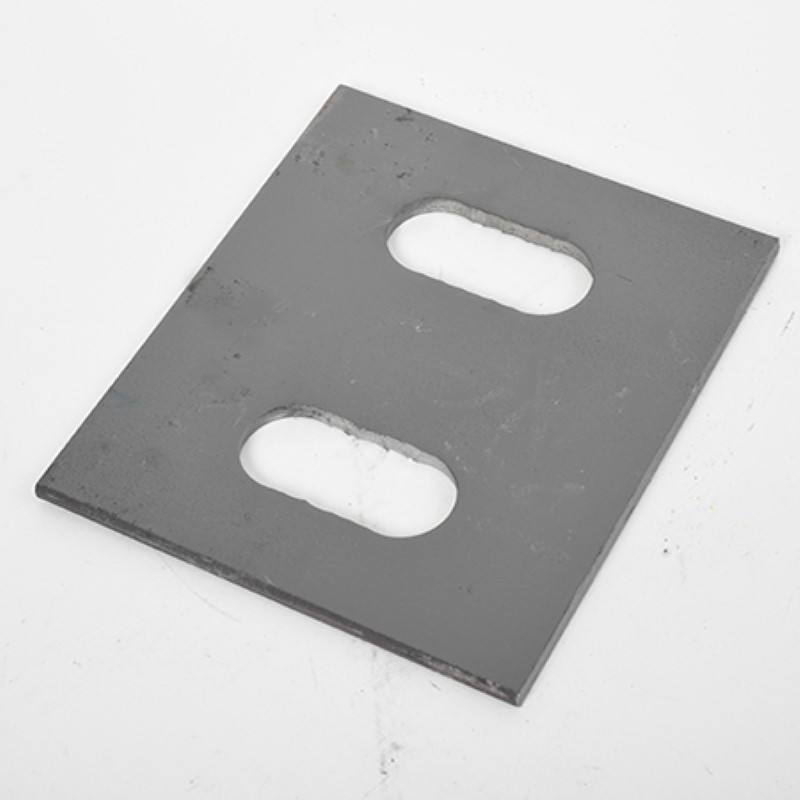
Steel Reinforcing Plate for 6″ x 8″ Crossarm
The reinforcing plate is a structural component used in overhead power line systems to provide additional mechanical support and stability at connection points. Typically installed at joints or stress-prone sections, the plate distributes mechanical loads evenly, preventing material fatigue and prolonging the lifespan of line fittings and towers. It is engineered to meet high tensile and compression performance standards in demanding environmental conditions.
Key Features:
- High-Strength Galvanized Steel: Corrosion-resistant and durable for long-term outdoor use
- Precision-Engineered Holes: Ensures secure alignment with bolts, clamps, or insulators
- Load Distribution Design: Minimizes stress concentration at connection points
- Versatile Application: Compatible with various pole and tower structures
- Weather-Resistant Coating: Suitable for extreme temperatures and humid conditions
- Compliance Certified: Meets IEC and ANSI structural standards for power line hardware
Importance of conducting quality assurance for reinforcing plates
Quality assurance for reinforcing plates ensures structural stability, mechanical safety, and network performance. QA prevents manufacturing defects or failures that can lead to structural instability, equipment damage, and power outages. Reinforcing plates face conductor tension, wind loading, vibration, dynamic mechanical stress, and equipment weight. Quality assurance verifies that plates meet specified tensile strength, yield strength, and thickness requirements. This ensures the plates withstand operational loads without bending, cracking, or deforming. The process identifies manufacturing defects such as surface cracks, porosity, incomplete galvanization, poor welds, and improper hole alignment. Early detection during production reduces the risk of field failures and costly replacements. Conducting quality assurance improves corrosion resistance, enhance infrastructure safety, reduce maintenance and lifestyle costs, and supports grid reliability. Reinforcing plates undergo tests such as tensile strength testing, yield strength testing, coating thickness inspection, dimensional verification, hardness testing, and visual surface inspection.
Purposes of quality assurance during the manufacture of reinforcing plates
Quality assurance during the manufacture of reinforcing plates ensures that the product meets the mechanical, dimensional, and corrosion-resistance requirements needed in overhead power line infrastructure. QA controls are implemented throughout the entire production process to prevent defects, maintain compliance with engineering standards and guarantee production performance in field conditions. Here are the roles of quality assurance during the manufacture:
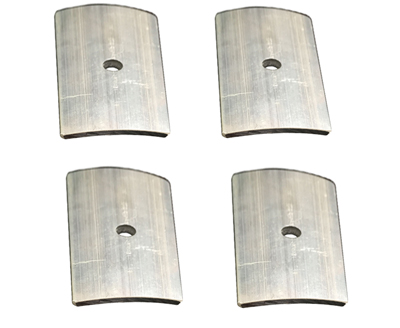
- Raw material verification – quality assurance verifies the quality of incoming raw materials. QA teams inspect material certificates and conducts tests to confirm chemical composition, tensile strength, yield strength, and material thickness.
- Monitoring dimensional accuracy – reinforcing plates must fit with pole hardware, crossarms, bolts, and tower assemblies. Quality assurance ensures that manufacturing dimensions remain within specified tolerances. This is through hole spacing inspections, thickness measurements, width and length verification, and alignment checks.
- Controlling cutting and fabrication processes – QA helps maintain consistency and prevent defects such as burr formation, misaligned holes, warping, and edge cracking. Process monitoring ensures that CNC machines, punching tools, and fabrication equipment operate correctly and produce uniform components.
- Weld quality inspection – QA inspects weld penetration, weld strength, surface finish, crack formation, and porosity. Non-destructive testing methods can identify hidden welding defects that could compromise structural performance.
- Corrosion protection verification – quality assurance supervises protective coating processes such as zinc coating, powder coating, and hot-dip galvanization. The reinforcing plate undergoes coating thickness measurement, adhesion testing, surface uniformity checks, and salt spray testing.
- Mechanical performance testing – quality assurance validates the mechanical capability of reinforcing plates. This is through tensile testing, load testing, bend testing, and impact resistance testing.
- Detection of manufacturing defects – QA systems help identify production defects before products are shipped. Common defects checked include cracks, surface pits, lamination defects, incomplete galvanization, incorrect hole patterns, and plate distortion.
Common quality failures in reinforcing plates
Reinforcing plates provide mechanical support and stress distribution at critical structural points. Without effective quality assurance, they face quality failures that reduce structural reliability and shorten service life. These failures can lead to mechanical instability, accelerated corrosion, infrastructure damage, and costly maintenance operations. Here are the common quality failures in reinforcing plates.
- Corrosion and coating failure – this occurs due to poor galvanization, uneven zinc coating, thin coating thickness, and surface contamination before coating. Corrosion weakness can lead to loss of mechanical strength, structural perforation, bolt loosening, and premature failure.
- Cracking and fracture defects – cracks may develop during manufacturing because of poor material quality, excessive hardness, and improper forming processes. Cracking reduces the load-bearing capability of the reinforcing plate and may trigger structural failure.
- Incorrect dimensions and hole misalignment – common issues include incorrect plate thickness, improper hole spacing, uneven edges, and misaligned bolt holes. These defects can create installation challenges and cause uneven stress distribution, improper fastening, and reduced structural stability.
- Poor weld quality—these include incomplete weld penetration, porosity, slag inclusion, and undercutting. Weak welds reduce the structural integrity of the assembly and increase the risk of mechanical separation under load.
- Material deficiencies—this arises from the use of low-grade or non-compliant steel that can cause performance issues such as low tensile strength, reduced ductility, brittleness, and poor fatigue resistance.
- Deformation and warping – improper fabrication or heat treatment can cause reinforcing plates to warp or bend. Warped reinforcing plates may prevent proper installation, create uneven load transfer, and increase stress concentration at fastening points.
- Galvanization peeling and flaking – zinc coating detaches from the plate surface because of poor surface preparation, incorrect galvanizing temperature, and contaminated steel surfaces. Peeling galvanization exposes the steel to rapid corrosion and reduces environmental durability.
Materials for reinforcing plates and how quality assurance protects them
Reinforcing plates are from high-strength metallic materials designed to withstand mechanical loading, environmental exposure, and operational stress. Material selection affects the durability, corrosion resistance, and structural reliability of the plates. Quality assurance protects these materials by ensuring they meet engineering specifications, resist environmental degradation, and maintain consistent performance throughout their service life. The materials undergo testing to ensure the selected materials meet project and industry standards before manufacturing begins. QA process includes mechanical property verification, corrosion resistance protection, prevention of surface defects, and heat treatment and fabrication control. Quality assurance improves the reliability, safety, and operational lifespan of power transmission and distribution infrastructure. Common materials for the reinforcing plates include:
Carbon steel
This has high mechanical strength, good load-bearing capability, cost-effectiveness, and ease of fabrication. It serves in distribution pole structures, crossarm reinforcement, and transmission hardware assemblies.
Hot-dip galvanized steel
This is the most common material in overhead power infrastructure. It consists of steel coated with zinc through a galvanization process to improve corrosion resistance. Hot-dip galvanized steel offers strong structural performance, excellent weather resistance, and reduced maintenance requirements.
Stainless steel
This offers excellent corrosion resistance, high durability, good mechanical strength, and resistance to chemical exposure. These plates serve in marine installations, chemical processing areas, and polluted industrial regions.
Alloy steel
Some of the reinforcing plates use alloy steel to improve tensile strength, fatigue resistance, impact resistance, and structural toughness. Alloy steels provide heavy-load transmission structures, high-stress applications, and extreme environmental conditions.
TTF-certified reinforcing plates. Why we certify:
TTF’s approach to power line hardware services results in optimal product quality, strict adherence to custom design, and reduced cost. We are constantly checking manufacturing processes, addressing material concerns, and improving staff expertise to ensure the best quality product. Our quality control for the reinforcing plates begins with the first batch of samples that you received from us. And this continues through all production phases, where our QC staff never stop looking for opportunities to improve product quality. We offer:

- Tolerance Analysis
- Tooling Life Analysis
- Rockwell Hardness Testing per ASTM E18
- Brinell Hardness Testing per ASTM E10
- Magnetic Particle Testing per ASTM E1444
- CMM (Coordinate Measuring Machine) Testing
- 24″ Optical Comparator for Complex Measurements
- Tensile/proof load testing up to 160,000 lbs (700 kN)
- Hot Dip Galvanizing Plating Thickness per ASTM E376
- Torque Testing
- Roughness Testing
- Lifetime Sample Retention
- Dimensional Testing
- Mechanical Testing
Advantages of using reinforcing plates in power networks
Reinforcing plates are structural support components used to strengthen connection points, distribute mechanical loads, and improve stability. Their benefits in power networks include:
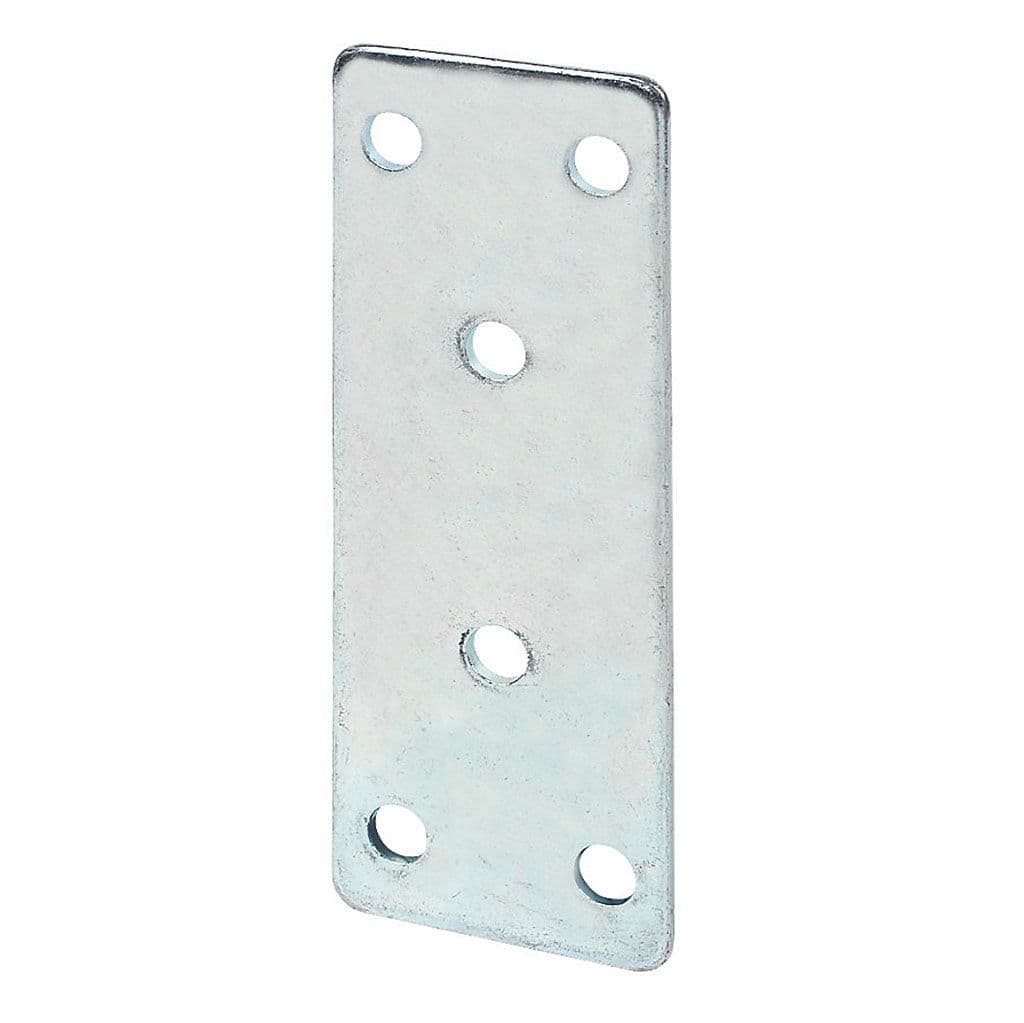
- Improved structural strength – reinforcing plates increase the mechanical strength of critical joints in power infrastructure. They strengthen pole and crossarm connections and support high-tension conductor loads.
- Better load distribution—distributing concentrated loads reduces stress concentration at bolt points and prevents localized deformation.
- Increased service life of infrastructure – reinforcing plates reduce stress and prevent structural fatigue. They help extend the lifespan of utility poles, crossarms, and guying systems.
- Support for heavy electrical hardware – the plates provide the necessary mechanical support to carry loads.
In summary,
Using reinforcing plates in power networks helps strengthen connection points and distribute mechanical loads. They also enhance the stability of poles, crossarms, and hardware assemblies. They maintain the mechanical integrity of transmission and distribution infrastructure exposed to wind, conductor tension, vibration, and environmental stress. Quality assurance for the reinforcing plates ensures compliance with industry standards, verifies mechanical strength, controls dimensional accuracy, and confirms corrosion protection effectiveness. It also prevents defects such as cracking, poor welding, deformation, and coating failure. These defects could compromise structural safety of power networks. Despite these risks, reinforcing plates improve structural strength, enhance load distribution, extend infrastructure lifespan, and reduce maintenance requirements.