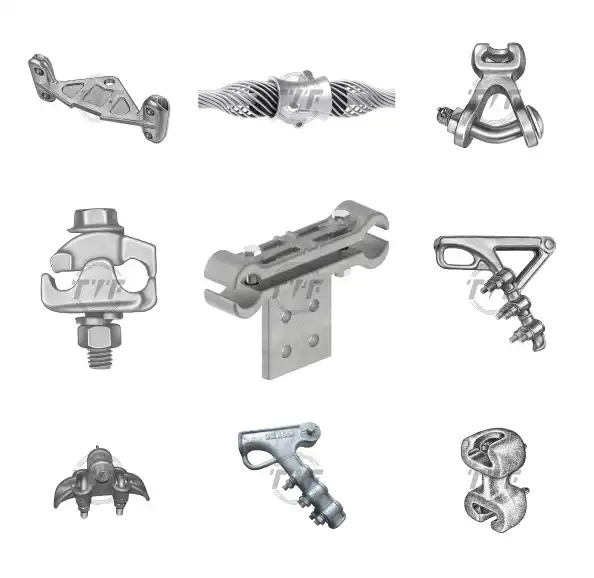

A hotline tap clamp is a specialized electrical connector used in live-line work to create a secure electrical tap or branch connection from an energized overhead power conductor without shutting off the power. The clamp allows utility workers to safely tap into an existing energized conductor to add a new connection without de-energizing the line. It is able to install on energized power lines without causing a short circuit. It provides a secure mechanical grip and a low-resistance electrical connection. Live-line tap clamps install using insulated hotline tools to allow workers to stay safe from the live conductor. It grips the main conductor tightly and taps off power to a secondary conductor. Some of the clamps feature piercing teeth to penetrate insulation for a clean electrical contact. Its main purpose is to connect service lines to main overhead lines, add new circuits, and make emergency repairs.
How does a hotline tap clamp work?
The clamp works by allowing a safe and secure electrical connection between a live main conductor and a tap conductor without interrupting power supply. It functions on live-line work where maintenance must be performed on energized power lines. Using insulated hotline tools, the lineman positions the hotline tap clamp onto the main conductor. The clamp tightens onto the main conductor using a compression bolt, set screw, or hinged jaw mechanism. The tap wire is inserted into a designated groove or channel on the clamp. It then forms a stable mechanical and electrical connection between the live main line and the new tap. The clamp is from high-conductivity materials to maintain proper current flow. It is also designed to withstand thermal expansion and mechanical stress from wind, temperature, or line tension. They enable power line construction and maintenance without disrupting electricity service.
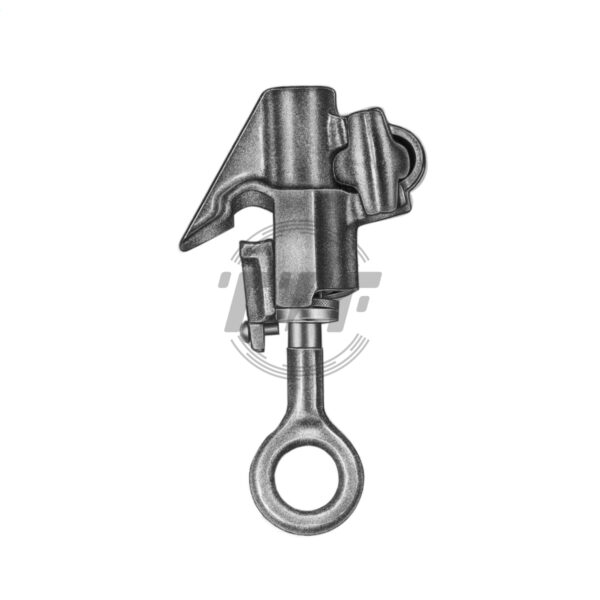
Aluminum Alloy Hot Line Tap Clamp
The Hotline Tap Clamp is a precision-engineered electrical connector designed for live-line (hotline) tapping in overhead power line construction. It enables safe, secure, and efficient tapping of energized conductors without interrupting power flow. Constructed from high-strength, corrosion-resistant materials, this clamp ensures reliable conductivity and mechanical integrity in harsh environmental conditions.
Key Features:
- Live-Line Installation: Enables safe tapping of energized conductors without power shutdown.
- High Conductivity: Made from tin-plated aluminum or copper alloy for optimal electrical performance.
- Corrosion Resistant: Resistant to rust, oxidation, and atmospheric degradation.
- Secure Grip: Serrated jaws and heavy-duty fasteners ensure firm contact and minimal resistance.
- Thermal Expansion Tolerance: Maintains grip under temperature fluctuations.
- Tool-Compatible: Designed for use with hotline tools and hot sticks.
- Universal Fit: Accommodates a wide range of conductor sizes and types.
- Insulation Piercing Options: Available in models with insulation-piercing capabilities for quick tap connections.
Importance of using the clamps in overhead power lines
Hotline tap clamps are crucial in the construction, maintenance, and expansion of overhead power line systems. It is designed for use on energized lines and provides a safe, efficient, and cost-effective way to tap or branch off power without interrupting electrical service. Hotline tap clamps allow technicians to make connections for repairs without shutting down the power. Proper clamping reduces the risk of overheating, arcing, or fire due to poor contact. Utilities can balance loads across phases or reroute power during peak demand periods using tapped circuits. Their design handles vibrations, conductor movement, and thermal expansion. The clamps are from high-quality alloys that endure rain, heat, UV exposure, and pollution. Using these clamps ensures safe live-line operations, reduces the need for costly outages, and allows for scalable grid expansion.
Key features of the live-line tap clamp
A hotline tap clamp creates safe, secure branch connections, and it combines electrical efficiency, mechanical durability, and safety for live-line work. Its features are able to ensure efficiency, safety, and reliability in live overhead power line operations. The following are the key features of the hotline tap clamp.
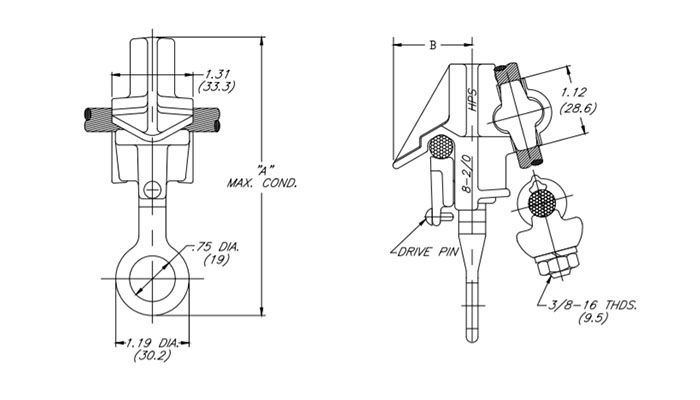
- Live-line compatibility—the clamp works with insulated hot sticks that allow technicians to connect tap conductors without interrupting power. It is essential for operations where power continuity is non-negotiable.
- High conductivity materials—aluminum or copper alloy body—provide excellent electrical performance with minimal resistance. It may also have tinned surfaces to enhance conductivity and reduce galvanic corrosion.
- Corrosion and weather resistance—the clamps have outdoor-grade protection to withstand EV exposure, rain, salt spray, and extreme temperatures. It provides durability against rust and mechanical degradation.
- Strong mechanical grip—some of the designs have serrated or grooved jaws that ensure a firm, vibration-resistant grip on the conductor. Some have bolted or hinged locking systems that maintain consistent pressure and stability over time.
- Thermal expansion tolerance—the clamp remains secure during conductor expansion or contraction caused by temperature fluctuations.
- Wide conductor compatibility—the clamp has versatile sizing that accommodates various conductor sizes and types, including bare wires. It also features optional insulation-piercing features that reduce the need for pre-stripping conductors.
- Reliable electrical and mechanical performance—low contact resistance ensures efficient current transfer and reduces energy losses. It is also built to perform in high-wind or heavy-load environments without loosening.
Common types of hotline tap clamps used in overhead power lines
C-type hotline tap clamps
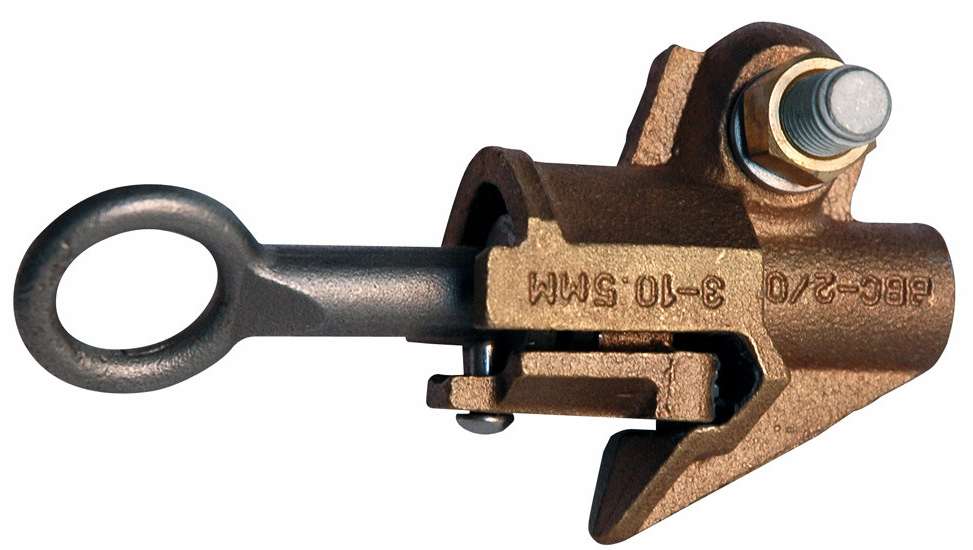
These clamps slide over the main and tap conductors using compression tools and hotline sticks. They are simple and secure and widely used for small to medium conductors. C-type clamps are ideal for parallel tap connections where the tap wire runs alongside the main conductor.
Bolted hotline tap clamps
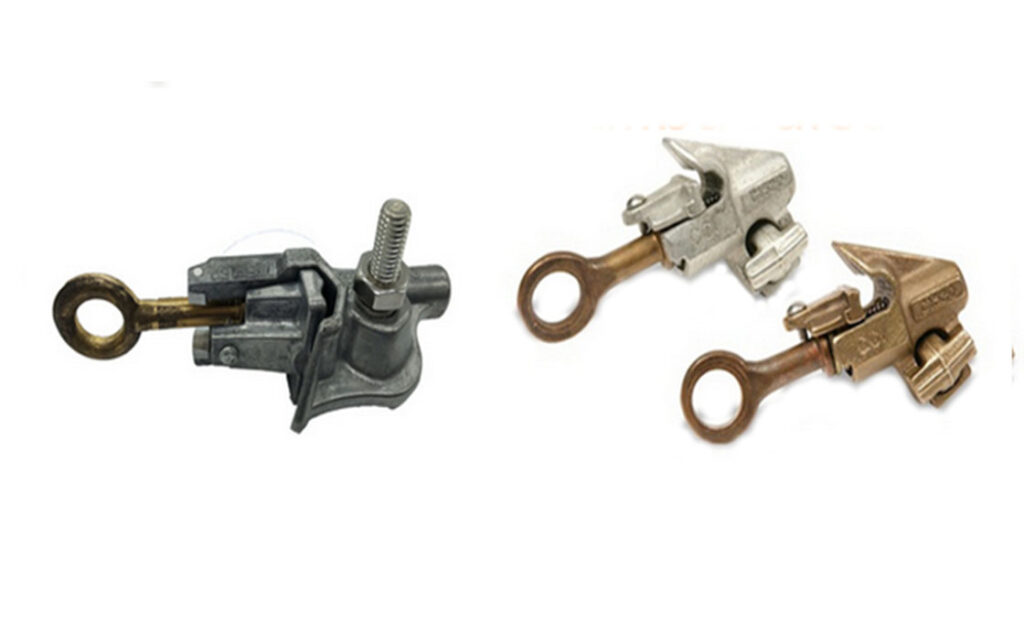
These clamps feature bolted jaw components with grooves to hold both the main and tap conductors. It easily mounts and tightens using insulated tools. It is reusable, adjustable, and provides a solid mechanical and electrical connection. Bolted clamps are ideal for mechanically strong and high-current connections.
Insulated piercing hotline tap clamps
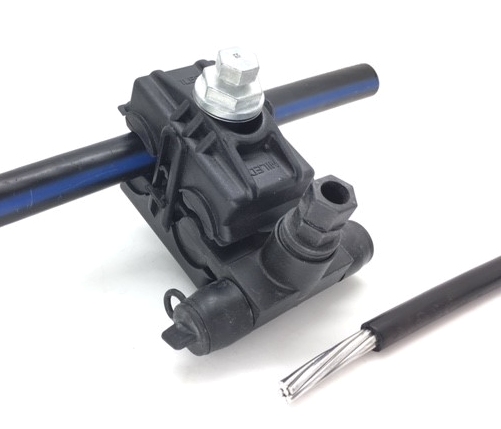
These have sharp teeth that pierce through conductor insulation. It installs with torque-controlled bolts to ensure uniform piercing. It is best suited for tapping insulated conductors without stripping insulation.
Compression-type hotline tap clamps
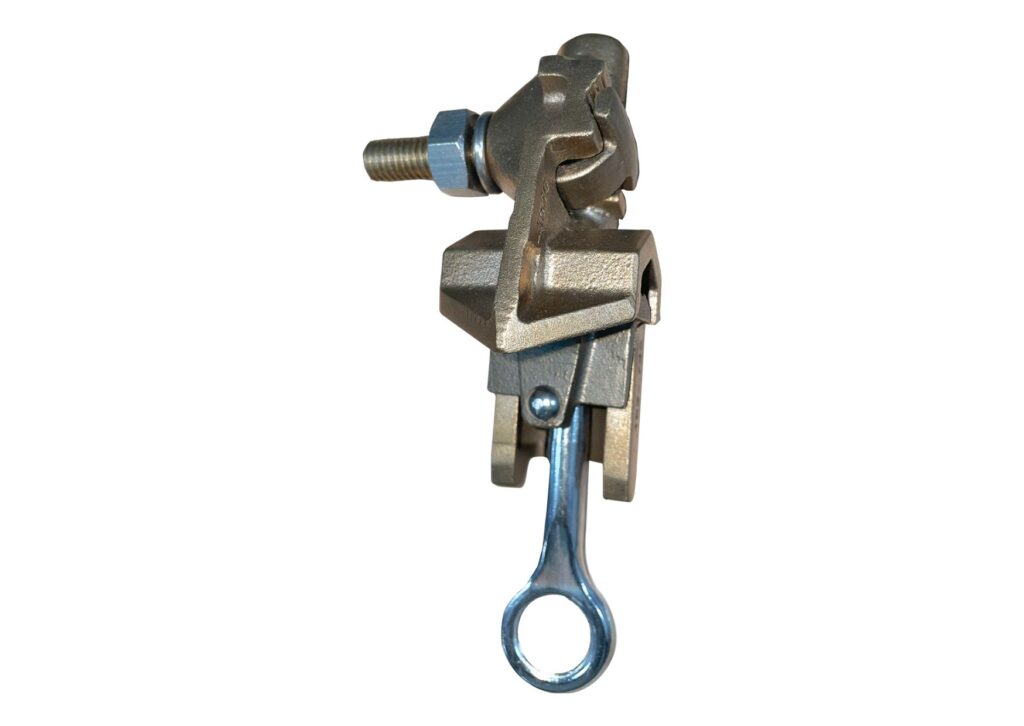
The design requires hydraulic or mechanical compression to secure the clamp to conductors. It needs special compression tools and crimping tools. The clamp provides a high-integrity and low-resistance joint. It works in permanent installations where vibration resistance and low resistance are critical.
Hinge-type hotline tap clamps
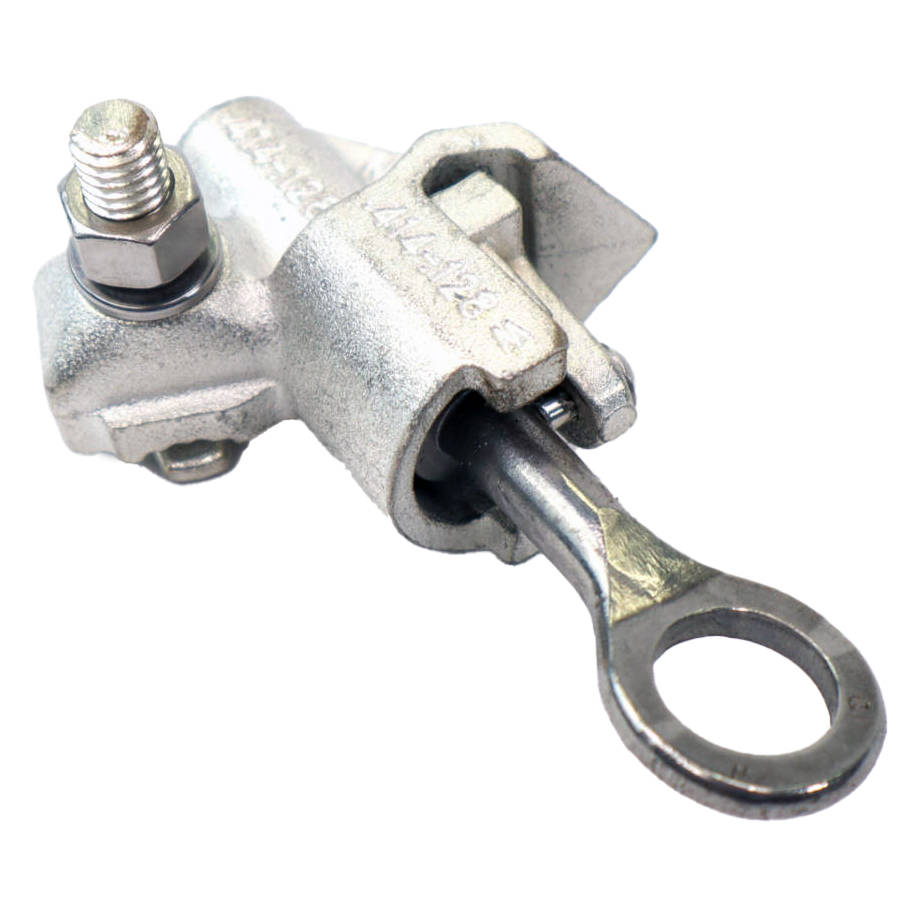
This features a hinged jaw that swings open to receive the conductor and is then bolted shut. It provides easy installation and removal in emergency setups. It serves in difficult-to-reach areas or where many tap connections are necessary. Its installation is fast and safe for live-line installation using hot sticks.
Parallel groove tap clamps
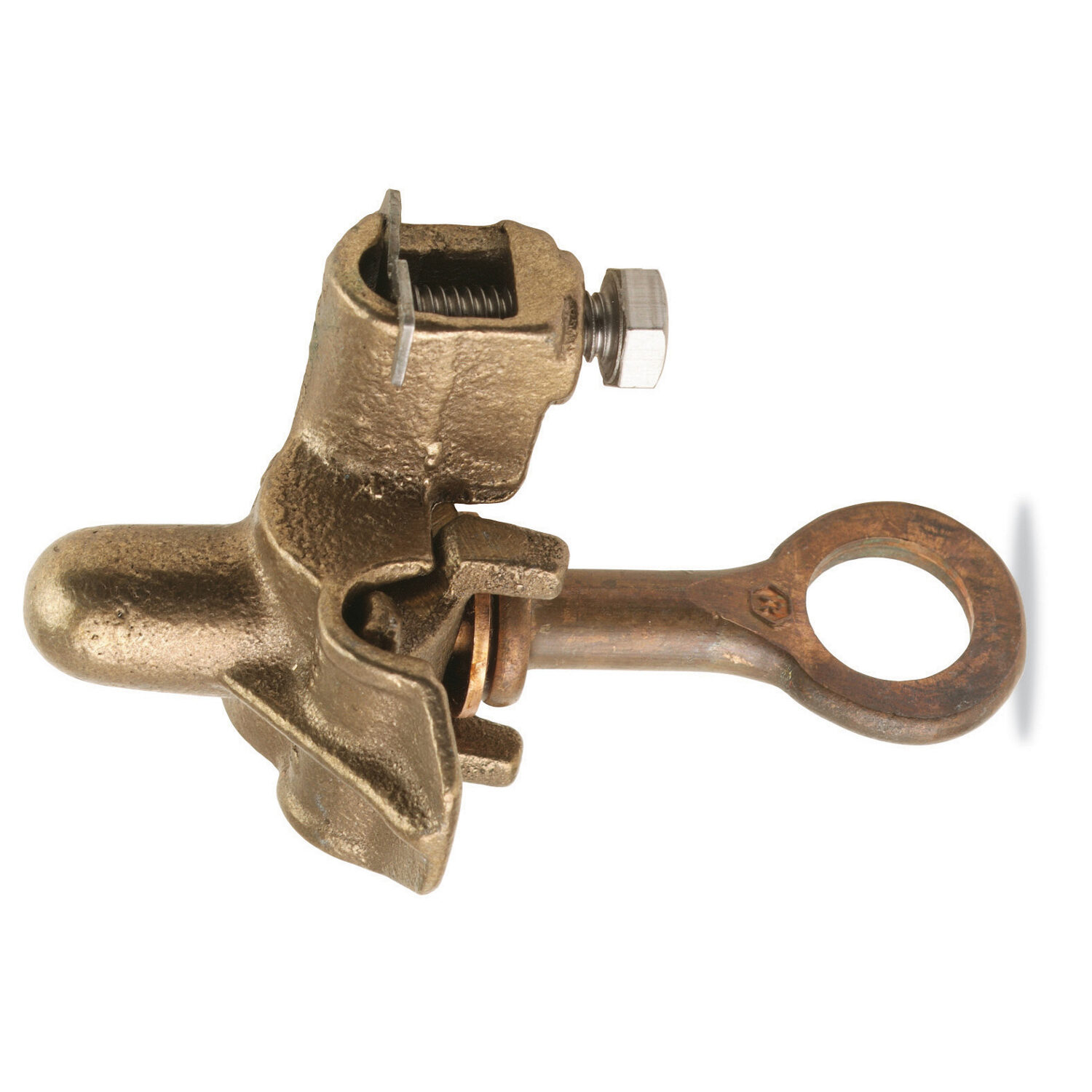
This clamp uses two grooved aluminum or copper pads tightened by bolts. It needs tightening with hotline-compatible torque tools. It provides excellent electrical performance and low contact resistance. The clamp mostly serves in tapping conductors of equal or different sizes.
Design and materials for tap off clamps for power lines
The design and material composition of hotline tap clamps are crucial to their function on overhead conductors. A well-designed hotline tap clamp ensures electrical reliability, mechanical strength, corrosion resistance, and safe live-line operation. Its design consists of a compact and contoured design, grooves, fastening mechanisms, insulation piercing, and hotline tool compatibility. These designs ensure long-term reliability, reduce maintenance, and uphold safety in critical power distribution systems. The common materials for hotline tap clamps include:
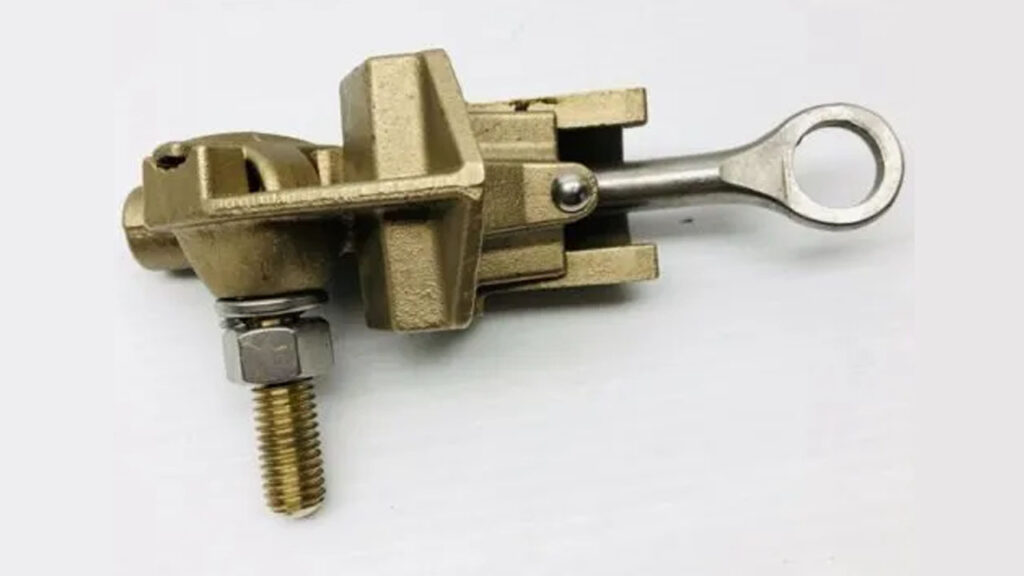
- High-strength aluminum alloy—this is a lightweight, corrosion-resistant, and highly conductive material. It is common in clamps used with aluminum conductors or mixed-metal applications.
- Copper or copper alloy—this provides excellent conductivity and corrosion resistance and is mostly preferred for copper conductor systems.
- Stainless steel—this provides mechanical strength and resists corrosion in outdoor environments. It helps withstand vibration and thermal cycling.
- Galvanized or zinc-plated steel—this serves in budget-friendly clamps where extreme corrosion resistance is not necessary.
- Nickel plating—this enhances conductivity and prevents galvanic corrosion in dissimilar metal connections.
- Anodizing and passivation—this applies to aluminum parts for extra protection against oxidation and wear.
Functions of overhead line connectors on power lines
Hotline tap clamps serve a vital role in overhead power distribution by enabling safe, live-line tapping of electrical conductors. The clamps are able to handle use on energized power lines too, allowing utility crews to perform essential work without interrupting electricity supply. The core functions include

- Facilitating live-line taps—this enables safe branching of a secondary conductor from an energized main conductor without the need for power shutdown. It connects new service lines, temporary power supplies, or added load during system expansion.
- Ensuring secure mechanical and electrical connection—the clamp holds the main and tap conductors to withstand wind, vibration, and line tension. It provides a low-resistance, high-conductivity path for current to flow from the main line to the tap wire.
- Maintaining system safety and reliability—the live installation safety feature ensures that linemen can work safely without direct contact with live conductors. It is critical for utilities where outages could impact hospitals, industries, or public infrastructure.
- Allowing grid expansion and load management—the clamp supports flexibility, which makes it easier to connect new circuits, reroute power, or balance loads between phases. It is useful in modern, modular grid systems where live additions and adjustments are necessary.
- Reducing maintenance downtime—the clamps allow quick installation and removal with their tool-friendly design. It reduces the time needed for fieldwork and reduces costs during temporary connections.
- Withstanding harsh environmental conditions—hotline tap clamps are from corrosion-resistant materials. These include aluminum alloy, copper, or stainless steel. These materials help ensure UV, rain, pollution, and extreme temperatures.
Best practices for using a hotline tap clamp in electrical systems
Using a hotline tap clamp demands strict adherence to safety protocols, correct installation procedures, and equipment compatibility. Following best practices ensures reliable connections, worker safety, and long-term system performance. These practices include following live-line safety procedures, inspecting the clamps and conductors, ensuring proper clamp selection, applying correct torque, ensuring proper alignment and contact, avoiding excessive mechanical strain, and scheduling regular inspections. Following these best practices ensures efficient live-line work while protecting both workers and infrastructure.