
A cutout fuse is a protective electrical device used in overhead power distribution systems. It protects transformers, distribution lines, and other equipment from overcurrent and short-circuit faults. The cutout combines a fuse link and a switching mechanism in a single assembly. When excess current flows through the line, the fuse link melts and interrupts the circuit. This isolates the faulty section and prevents damage to upstream equipment. It consists of a fuse link, cutout tube, insulating housing, mounting bracket, and contacts. It serves in overhead medium-voltage distribution lines, renewable energy installations like solar and wind farm feeders, and rural and urban power distribution networks. Fuse cutouts are mostly rated for 11 kV, 15 kV, 24 kV, and 33 kV distribution systems depending on grid requirements.
How the fuse cutout works in distribution lines
A fuse cutout operates through a protection principle designed for overhead medium-voltage distribution systems. It detects abnormal current conditions and disconnects the circuit before damage occurs. The electrical current flows from the line conductor through the upper contact, down the fuse link, and out through the lower contact to the protected equipment. The fuse element remains intact, and the cutout tube stays in a closed position to maintain a continuous circuit. As the fuse element melts, an electric arc forms within the circuit tube. The tube has materials that release ionizing gases, lengthen and cool the arc, and extinguish it. It controls the arc interruption to prevent damage to surrounding equipment and ensures a clean disconnection. After the fuse melts, the lower end of the fuse tube is released and the tube swings downward. The mechanical and electrical processes make the fuse cutouts a reliable protection solution in distribution networks.
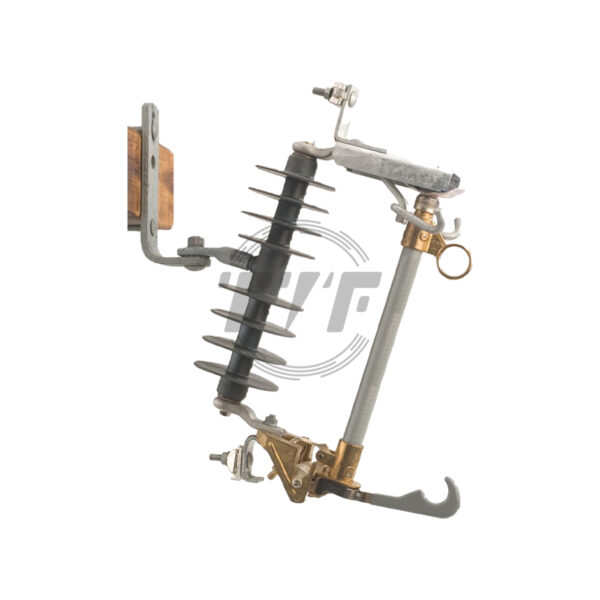
D-Shaped Linkbreak Type C Cutout Fuse with 10kAIC Fuseholder
A Cutout Fuse is a critical protective device used in overhead power line construction. It combines a fuse and a switch, designed to protect distribution transformers and lateral lines from short circuits and overloads. When a fault occurs, the fuse link melts, disconnecting the circuit and preventing equipment damage. It also allows for manual disconnection and visible isolation for maintenance.
Key Features:
- High Interrupting Capacity: Effectively clears high fault currents in distribution networks.
- Visible Break: Provides a clear visual indication of blown fuses for quick fault detection.
- Interchangeable Fuse Links: Supports standard, slow-blow, and fast-blow types for various applications.
- Weather-Resistant Construction: Built with UV-resistant, high-strength porcelain or polymer insulators.
- Easy Installation: Compatible with standard pole-mount configurations and hardware.
- Manual Opening Capability: Allows line crews to safely isolate circuits during maintenance or switching.
- Current Ratings: Typically ranges from 15A to 200A with voltage ratings up to 38 kV.
The significance of a fuse cutout in overhead distribution lines
Using the fuse cutout in overhead distribution lines provides protection, operational safety, and network reliability at the edge of the power system. It ensures efficient, economical, and maintainable power delivery. Fuse cutouts protect distribution transformers, capacitor banks, and line sections from damage caused by short circuits, overloads, and insulation failures. The cutouts enable selective coordination and ensure only the affected section is disconnected while the rest of the feeder remains energized. The visible disconnection from the fuse cutout shows a de-energized circuit. This ensures safe maintenance and troubleshooting, reduces the risk of accidental backfeed, and protects the public from prolonged exposure to faulty equipment. Fuse cutouts work in coordination with upstream reclosers and breakers. They offer layered protection to reduce unnecessary fuse operations and support stable grid performance. The fuse cutouts protect interconnection points and distribution transformers from reverse currents and abnormal loading conditions to maintain grid stability.
Key features and components of the Type C cutouts
A fuse cutout is a robust outdoor protection device for overhead distribution systems. The integration of designed components and features ensures reliable fault interruption, safety, and long-term performance. It features standardized voltage and current ratings, weather resistance, live-line operations, arc-quenching capability, and a drop-open mechanism. These enhance operational safety and simplify fault location. Here are the physical components of the fuse cutout.

- Fuse link—the fuse link is the main protective element of the cutout. It contains a calibrated fusible wire designed to melt when current exceeds a specified rating. Fuse links come in different current ratings and time-current characteristics.
- Cutout tube—the cutout tube houses the fuse link and comprises arc-quenching, heat-resistant materials. The tube confines and extinguishes the electric arc, releases deionizing gases to interrupt current flow, and drops open once the fuse operates.
- Upper and lower contacts—the upper contact connects the cutout to the incoming line conductor. The lower contact provides mechanical support and releases the tube when the fuse melts. These contacts are from high-conductivity copper or bronze for low resistance and durability.
- Insulating housing—the housing supports the live components and offers electrical insulation. It is mostly from porcelain and polymer for high mechanical strength and hydrophobic features.
- Mounting bracket—this secures the fuse cutout to poles or crossarms. It can withstand wind loads, vibration, and mechanical stress from conductors and environmental exposure.
Common types of the fuse cutout
Fuse cutouts come in several standardized types designed to meet specific system voltages, protection needs, and installation conditions in overhead distribution networks. Understanding the designs is crucial for selection, coordination, and reliable system performance.
Expulsion fuse cutout

The expulsion fuse cutout uses gas generation and arc elongation to extinguish the arc. It also provides a visible drop-open sign after operation. This cutout is ideal for rural and semi-urban networks that need simplicity and visibility.
Drop-out fuse cutout

A dropout fuse cutout allows the fuse tube to swing downward when the fuse link melts. It offers a clear visual isolation of the faulted circuit, a gravity-assisted opening mechanism, and easy inspection and replacement.
Enclosed fuse cutout

The enclosed fuse cutout provides enhanced protection in challenging environments. It reduces the risk of arc exposure and contamination and improves performance in polluted areas.
Polymer-housed cutout

This features a polymer insulating body instead of traditional porcelain. It is lightweight and easy to install, offers superior resistance to pollution and moisture, and has high impact resistance. Polymer fuse cutouts are ideal in modern distribution systems and renewable energy installations.
Porcelain fuse cutout

The porcelain fuse cutout offers mechanical strength, long operation and reliability, and higher weight compared to polymer designs.
Loadbreak cutout

This cutout is designed to interrupt load current and is equipped with arc-control attachments. It allows switching under normal load conditions and enhances operational flexibility during maintenance.
Technical specifications for the fuse cutouts
The technical specifications of a fuse cutout define its suitability for protecting overhead distribution systems under fault conditions. The specifications ensure electrical coordination, mechanical reliability, environmental durability, and regulatory compliance. The following are the technical specifications for the fuse cutouts.

- Continuous current rating—this defines the greatest current the cutout can carry without overheating. Common current ratings include 100A and 200A. The selected rating must exceed the expected load current on the protected equipment.
- Fuse link current rating – fuse links are available in a wide range of ampere ratings to allow precise protection coordination. The selection depends on transformer size, feeder load characteristics, and time-current coordination with upstream devices.
- Interrupting capacity—the interrupting capacity specifies the greatest fault current the fuse cutout can interrupt. This parameter must be greater than the maximum prospective short-circuit current at the installation point.
- Basic insulation level—this defines the cutout’s ability to withstand lightning and switching surges. The values include 75 kV, 95 kV, 110 kV, and 125 kV.
- Creepage distance—this is the surface path length between live parts and ground along the insulator.
- Mechanical strength—the fuse cutouts should withstand conductor tension, wind and ice loading, and short-circuit mechanical forces.
- Material specifications—the insulator housing is from porcelain or polymer, contacts are from copper or copper alloy, and the fuse tube is from heat-resistant fiber.
- Rated system voltage—the fuse cutout must match the nominal distribution voltage of the line. Common ratings include 11 kV, 15 kV, 24 kV, 27 kV, and 33 kV. The rating ensures enough insulation level and clearance under operating conditions.
- Operating temperature—the fuse cutouts can operate across a wide temperature range from -40°C to +50°C or higher.
Application areas of the type C cutout
Fuse cutouts work in overhead distribution lines to ensure operational reliability and asset protection. Their versatility, visibility, and cost efficiency make them a foundational protection device in modern overhead distribution systems. Their key application areas include

- Protection of distribution transformers—the cutout protects the transformer from overloads and short circuits. It isolated failed transformers from the feeder and prevented cascading faults.
- Lateral and branch line protection—fuse cutouts serve at the origin of laterals and branch feeders branching off main distribution lines. They ensure that faults on a branch do not trip the main feeder and only the affected lateral is disconnected.
- Sectionalizing of overhead feeders—fuse cutouts act as sectionalizing devices that divide the line into manageable protection zones. They help improve fault localization, restoration speed, and maintenance flexibility.
- Capacitor bank and voltage regulation protection—the cutouts protect pole-mounted capacitor banks and voltage regulators. They isolated devices during internal faults to prevent damage to upstream equipment.
- Renewable energy and distributed generation interconnections—the cutouts provide protection against reverse currents, abnormal loading, and equipment faults. They serve at interconnection points, step-up transformer primaries, and feeder tie-ins for solar PV, wind, and distributed generation.
- Temporary and construction power supplies—fuse cutouts provide simple and fast protection, easy isolation, and adaptable protection solutions.
Following best practices for fuse cutouts in overhead distribution networks
Following the best practices for fuse cutouts ensures safe operation, proper coordination, and long-term reliability in overhead distribution systems. These practices include selecting the right fuse cutout, ensuring proper installation and mounting, and using approved fuse links designed for the specific cutout type. It is also crucial to perform visual inspections before re-energization. This helps check for cracked insulators, worn contacts, damaged fuse tubes, and signs of overheating. This helps replace components before failure occurs. Following these practices ensures safe fault interruption, reduces outages, and protects distribution assets. Properly managed fuse cutouts remain a dependable cornerstone of overhead distribution line protection.