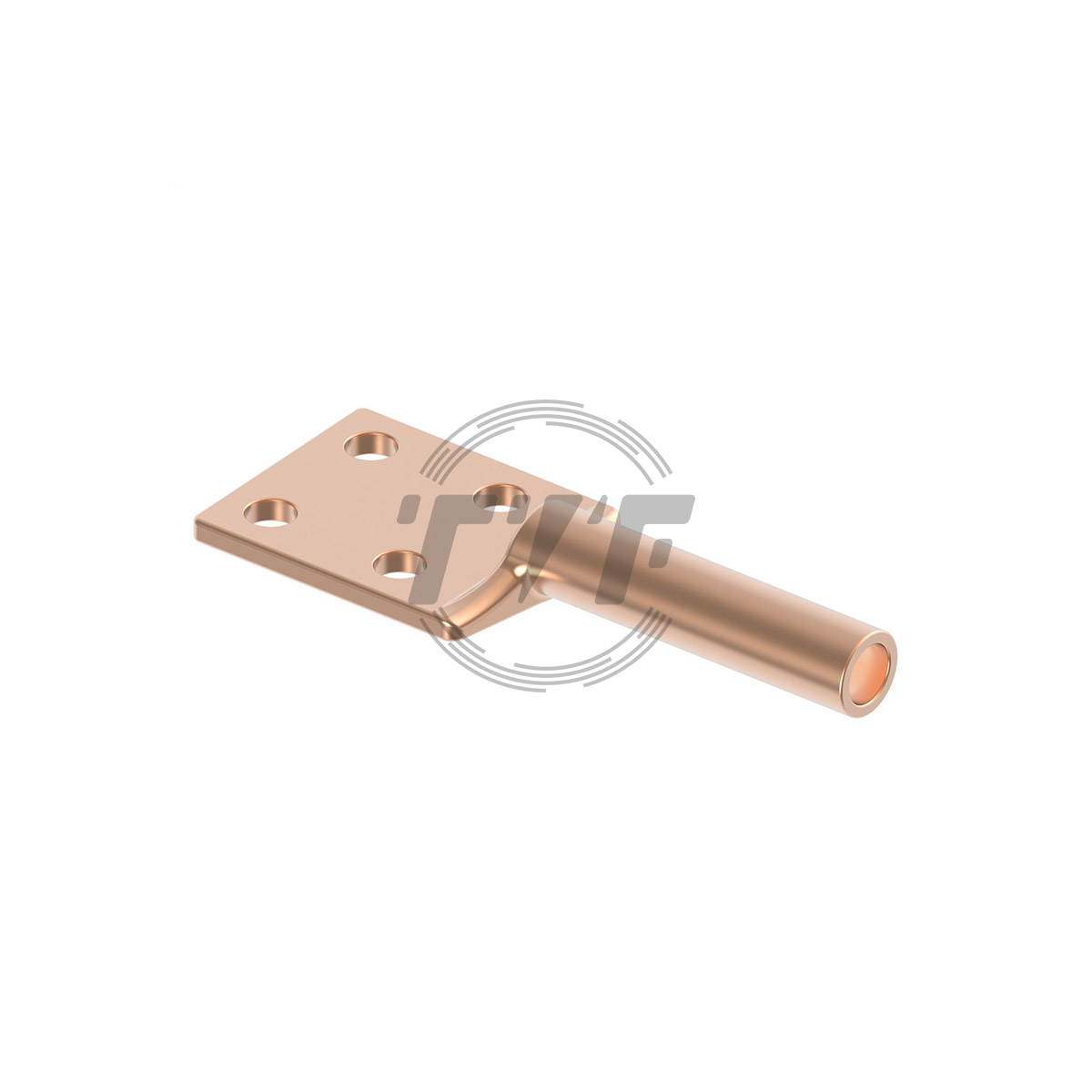
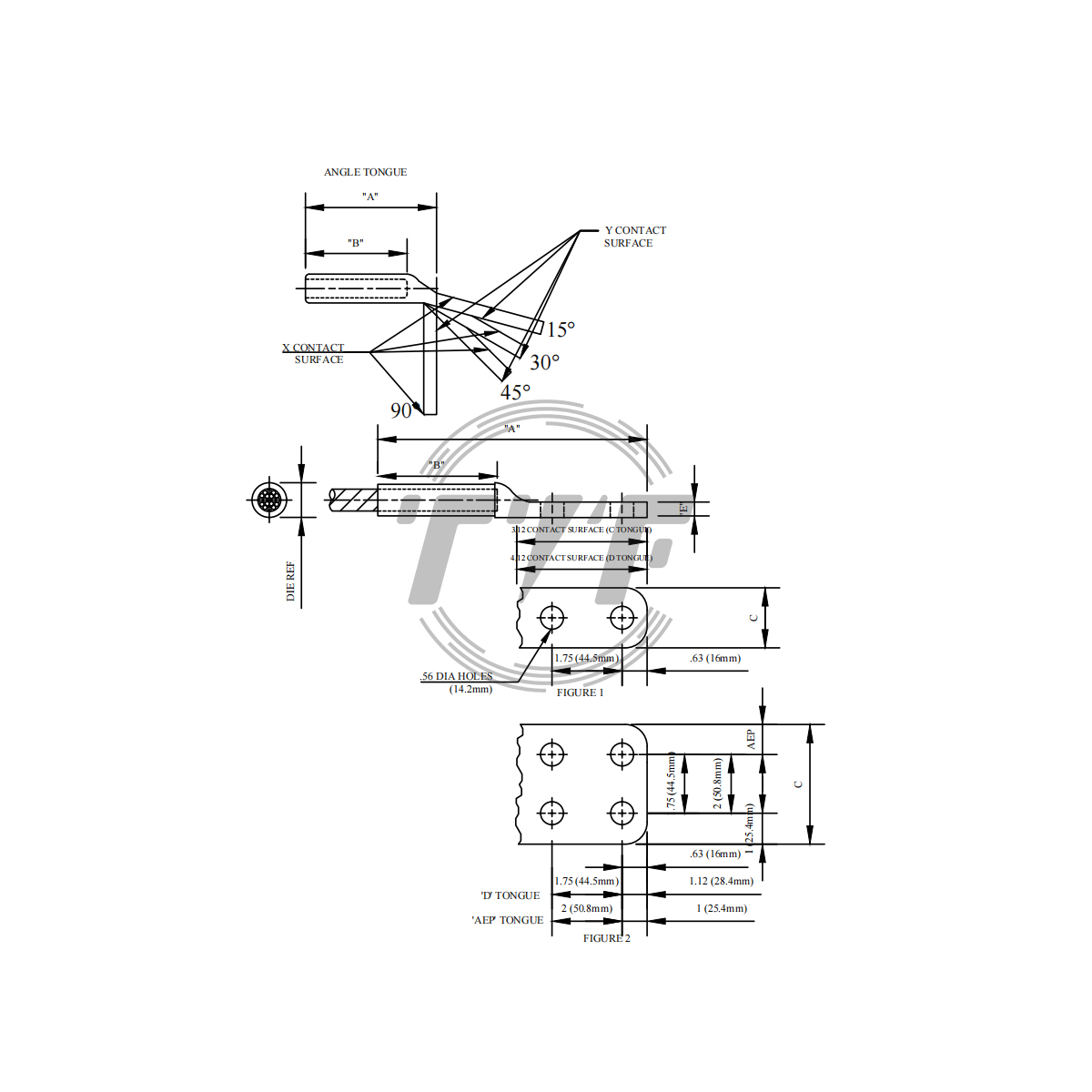
Copper Compression Terminal
A compression terminal is a high-integrity electrical connector used in power line construction to terminate conductors and establish secure, low-resistance connections to equipment, busbars, or other conductors. It is installed by mechanically compressing the terminal barrel onto the conductor using calibrated crimping tools, creating a permanent, gas-tight bond. Compression terminals are widely applied in medium- and high-voltage transmission and distribution systems due to their superior electrical conductivity, mechanical strength, and long-term reliability under demanding environmental conditions.
Key Features
- High Conductivity Materials – Typically manufactured from electrolytic-grade copper or aluminum alloys to ensure optimal current flow and minimal resistive losses.
- Seamless Barrel Design – Enables uniform compression and consistent electrical contact across the conductor strands.
- Tin-Plated or Anti-Corrosion Finish – Enhances resistance to oxidation, galvanic corrosion, and harsh outdoor environments.
- Crimped, Gas-Tight Connection – Eliminates gaps, preventing moisture ingress and reducing the risk of overheating or oxidation.
- High Mechanical Strength – Withstands tensile loads, vibration, and thermal expansion in overhead and substation applications.
- Compatibility with Standard Tooling – Designed for use with industry-standard hex or indent crimping dies for precise installation.
- Inspection Markings – Often includes visual indicators or markings to verify correct crimping and conductor insertion depth.
- Wide Conductor Range – Available in multiple sizes to accommodate various conductor types, including AAC, AAAC, ACSR, and copper cables.
- Standards Compliance – Manufactured in accordance with IEC, ASTM, or ANSI standards for performance and safety assurance.