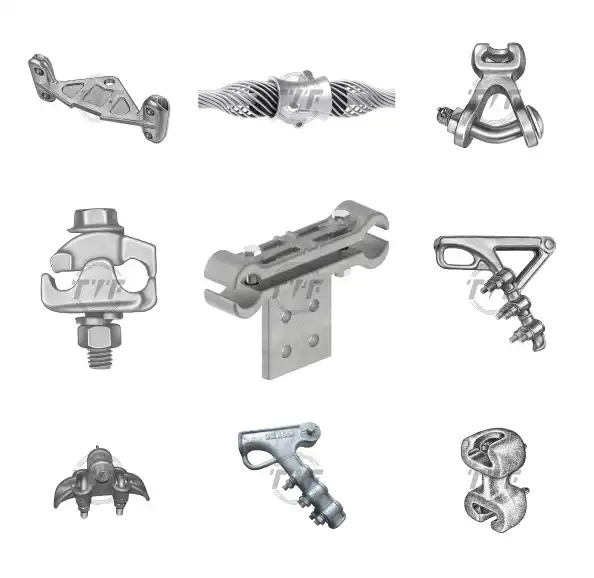
An oval-eyeball eye is a forged line fitting used in overhead power transmission and distribution systems to connect insulator strings to crossarms or towers. The ball eye comprises robust materials such as forged carbon steel or ductile iron finished with hot-dip galvanization for corrosion resistance. The ball eye combines an oval-shaped eye at one end with a spherical ball at the other to form a ball-and-socket hardware assembly. The oval-shaped eyeball consists of two functional ends. The oval eye is the elongated opening designed to accept a bolt or pin. This helps improve load distribution and reduces localized stress compared to round eyes. The ball end is a precision-formed spherical section that mates with a corresponding socket fitting. This allows rotational movement and limited angular displacement. The ball eye serves in suspension insulator strings, strain and tension assemblies, high-voltage and medium-voltage transmission lines, and renewable energy evacuation.
The working principle of the oval-eyeball eye
The ball eye is a spherical metallic connector that resembles a small ball with a hole through which the conductor, insulator, or fitting passes. It integrates with suspension fittings for conductors, dead-end assemblies, and insulator strings. The ball allows the conductor to swing under wind or sway without overstressing the hardware. It ensures proper clearance between conductors and support structures to prevent flashover. The ball integrates with insulator assemblies to maintain the dielectric integrity of the line. This helps to prevent leakage currents along the tower. Its versatility makes it essential in areas with high wind loads, ice accumulation, or seismic activity. The ball eye provides rotational freedom for conductors, reduces mechanical stress on insulators, and ensures safe electrical clearances under dynamic conditions.
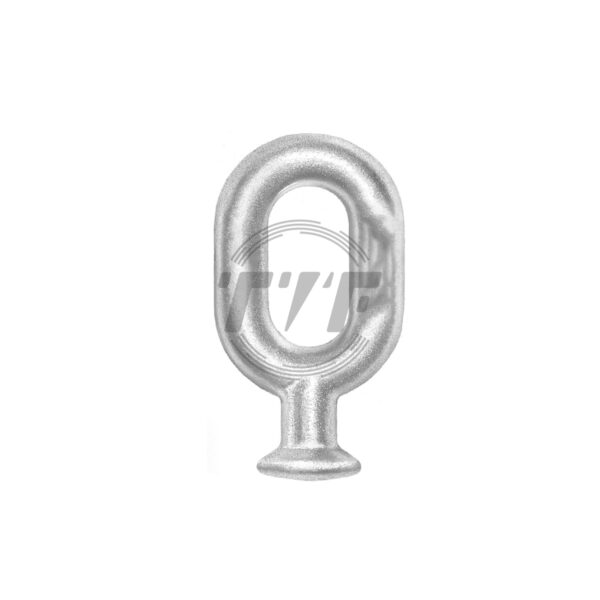
Forged Steel Ball Eye, Weight: 1.176 lb
The ball eye is a high-strength line fitting used in overhead power transmission and distribution systems to provide a secure mechanical connection between conductors, insulator strings, and suspension or dead-end assemblies. Its spherical profile enables controlled articulation, reducing mechanical stress on insulators and supporting structures under dynamic loading conditions. The ball eye is engineered to deliver mechanical reliability, electrical safety, and extended service life, making it an essential component in modern power line construction and grid infrastructure projects.
Key Features
- Forged steel construction for high tensile strength and fatigue resistance
- Spherical ball design allowing rotational movement and load alignment
- Oval or round eye configuration for secure pin and clevis connections
- Hot-dip galvanized finish for long-term corrosion protection
- High rated mechanical load capacity suitable for HV and EHV lines
- Smooth surface profile to minimize wear and corona discharge
- Standards-compliant dimensions ensuring interchangeability with line hardware
The importance of the ball eye in power networks
The ball eye supports the reliability, safety, and efficiency of power transmission and distribution networks. It acts as a secure anchor for conductors and suspends them from towers or insulator strings. This helps prevent sagging or accidental detachment that leads to outages. Its spherical design allows slight movement of conductors under wind, ice, or thermal expansion. The reduce stress on insulators and other hardware. Ball eyes help maintain proper distance between conductors and support structures. The ball eye ensures that conductors are electrically isolated from towers and other grounded elements. They contribute to uninterrupted power delivery by keeping conductors suspended to prevent mechanical failure. Their design allows easy inspection and replacement of conductors without disrupting the network.
Key components and features of the ball eye
The ball eye consists of various components and features that ensure mechanical reliability, electrical safety, and adaptability under operational stress. It has a spherical design that allows the conductor or insulator to rotate under loads. They also offer high mechanical strength to withstand tension forces from heavy conductors over long spans. The ball eye also features electrical compatibility, durability, and ease of installation and maintenance. The key components include:
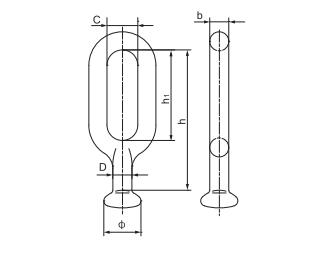
- The spherical body—this is the core element of the ball eye with a spherical-shaped ball. It provides rotational freedom for the attached conductor. It consists of galvanized steel, stainless steel, or corrosion-resistant alloys. These materials help withstand environmental exposure.
- Eye or loop—this is the central hole through the ball to allow a bolt, pin, or fitting to secure the conductor, insulator, or clamp. It ensures a secure anchoring point while allowing slight movement.
- Connector—the ball eye connects to suspension clamps, dead-end fittings, and insulator strings. The connection transmits mechanical loads from the conductor to the support structure.
- Protective coating—some ball eyes have galvanization or anti-corrosion coatings. These elements protect the component from rust, UV exposure, and environmental degradation.
Types of oval-eyeball eye
Standard ball eye
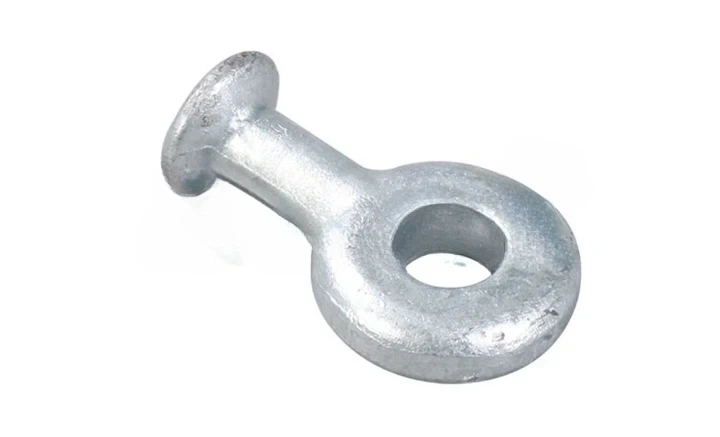
This features a spherical ball with a central eye designed to connect to suspension clamps or insulator strings. It allows conductors to hang freely while accommodating wind-induced movement. The standard ball eye is ideal for medium to high mechanical loads.
Ball eye with socket connection
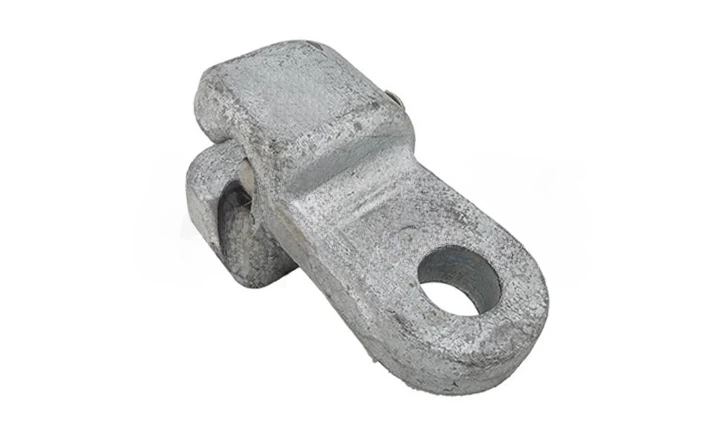
This ball eye is designed to mate directly with socket clevis fittings. It provides a secure ball-and-socket joint to enable smooth rotational movement. It helps reduce stress concentrations on insulator strings. The ball eye serves in high-voltage transmission lines that need flexibility and load alignment.
Forged ball eye

This provides higher mechanical strength and fatigue resistance given its hot forging rather than casting. It is preferred for extra-high-voltage and heavy-span applications. The forged ball eye is ideal for extreme wind, ice, or seismic conditions.
Galvanized ball eye
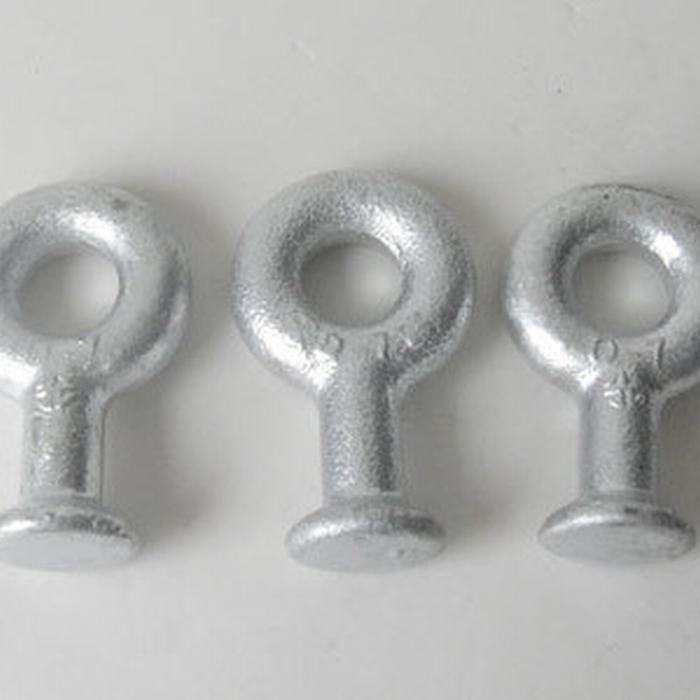
This ball eye has hot-dip galvanization coatings for corrosion resistance and extended service life with minimal maintenance. It serves in coastal, humid, and industrial environments where moisture and pollutants speed up corrosion.
Ball eye for dead-end assemblies
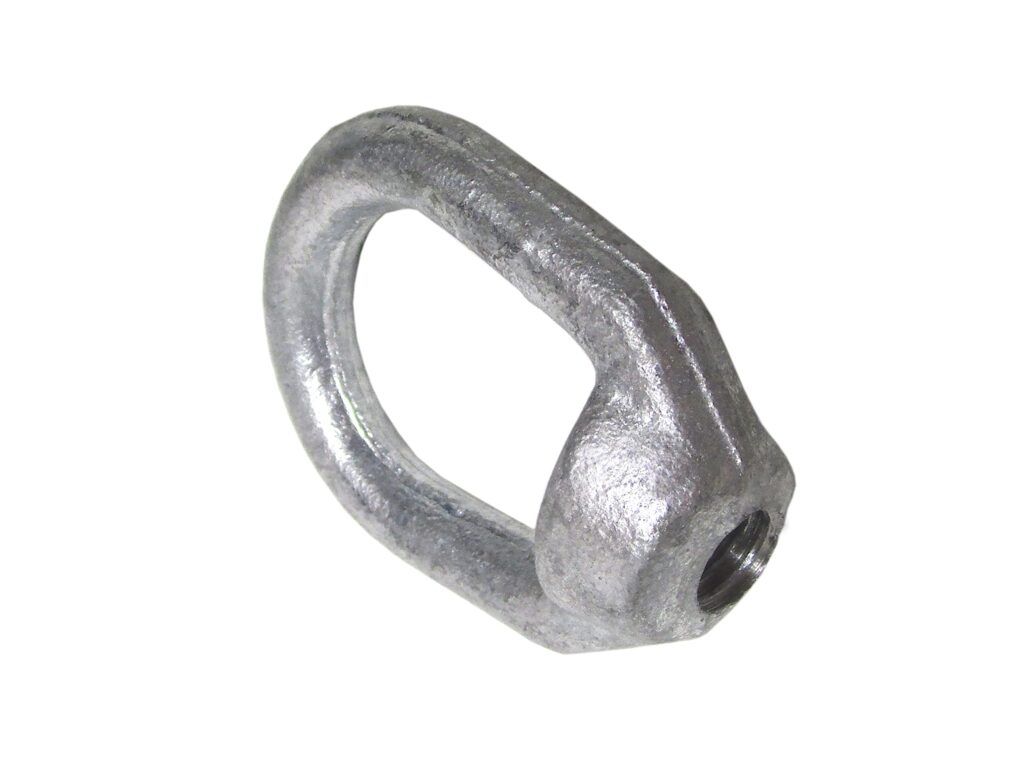
This ball eye handles higher tensile loads compared to suspension-type ball eyes. It is designed for use in dead-end or termination points. The ball eye maintains secure conductor anchoring while allowing limited angular movement.
Corona-control bull’s-eye
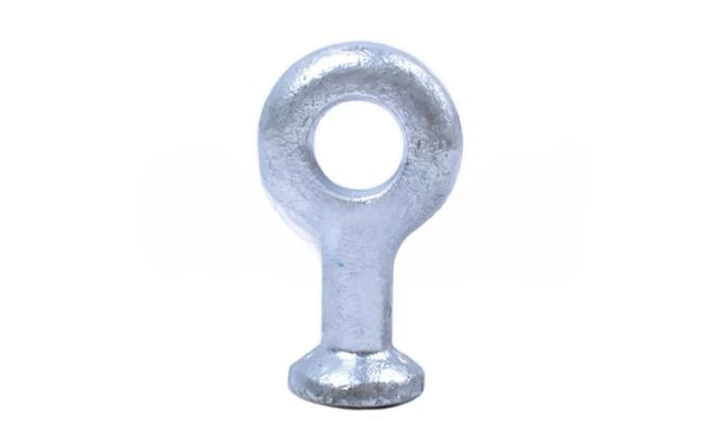
This reduces corona discharge and radio interference in high-voltage applications. It is also engineered with smooth contours or integrated grading features. It is ideal for use in extra-high-voltage and ultra-high-voltage transmission lines.
Technical specifications for the oval-eyeball eye
The oval ball eye is a specialized fitting used in overhead transmission and distribution networks. They are ideal in applications that need higher mechanical loads, improved alignment, and secure pin connections. Its technical specifications ensure compatibility with insulator strings, suspension hardware, and international power line standards. Here are the key technical specifications for the ball eye.

- Eye configuration—the oval-shaped eye provides greater bearing surface than a circular eye. This is crucial to reduce localized stress at the pin interface. The eye orientation accommodates load transfer and improves mechanical stability in suspension and dead-end assemblies.
- Mechanical performance specifications—the ball eye has a permissible angular movement designed to allow free articulation under wind, conductor galloping, and thermal expansion. They also have mechanical load ratings ranging from 70 kN to 210 kN depending on line voltage and span length.
- Material and manufacturing—the ball eyes are from high-strength forged carbon steel or alloy steel. The hot forging ensures grain continuity and high fatigue resistance.
- Dimensional compatibility—this includes pin diameter compatibility, commonly 16 mm, 20 mm, or 28 mm, matching standard clevis and insulator pins. Its ball diameter is sized to meet socket fitting requirements for standard insulator strings.
- Electrical considerations—the specification includes a voltage application range suitable for medium, high, and extra-high voltage overhead lines. The ball eye features smooth contours that help reduce electric field concentration and flashover safety. This maintains electrical clearances when installed with insulators.
- Applicable standards—the ball eyes are manufactured and tested under IEC, ASTM, ANSI, and IEEE transmission hardware standards.
Application areas of ball eyes in power networks
Ball eyes work with line fittings that enable secure mechanical connections while accommodating conductor movement under operational and environmental loads. The clamps function in applications that demand flexibility, strength, and electrical safety. They are crucial in distribution lines and transmission towers, substations, and renewable energy connections. Here are the key functions of the ball eyes in power networks.
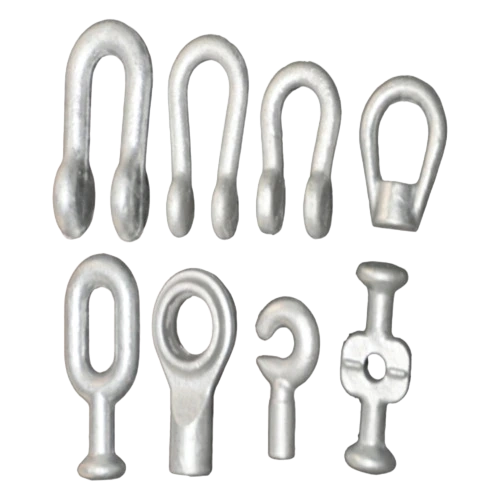
- Insulator string assemblies—ball eyes are crucial parts of the insulator strings in high-voltage and extra-high-voltage lines. They connect insulators to suspension clamps and enable proper articulation between hardware components.
- Substations and busbar systems—oval eyes work where flexible mechanical connections are necessary. They serve in busbar suspension and jumper connections. Ball eyes handle vibration and thermal movement caused by load variations. They also enhance mechanical stability while maintaining electrical clearances.
- Renewable energy infrastructure—the expansion of renewable energy relies on ball eyes for key connections. They work in wind and solar farm collector lines, transmission links connecting renewable plants to the grid, and infrastructure that needs durable fittings.
- Long-span installations—ball eyes serve in river crossings, valleys, and mountainous terrain. They handle large conductor spans with increased mechanical loads. Additionally, they provide flexibility to absorb dynamic forces from wind and conductor galloping.
- Overhead transmission lines—ball eyes work in high-voltage and extra-high-voltage transmission lines. They serve in suspension assemblies to connect conductors to insulator strings on transmission towers. They allow controlled articulation of conductors under wind, ice loading, and thermal expansion.
- Distribution networks—ball eyes provide reliable mechanical support in these networks. They help maintain conductor alignment and safe clearances in urban and rural networks.
Ball eyes best practices and quality control.
It is crucial to ensure the performance and longevity of ball eyes in power networks that depend on best practices and quality control across design, manufacturing, installation, and maintenance. These practices include correct load rating selection, standardized geometry, and application-specific design. It also includes corrosion protection and coating control with materials. This is with materials like hot-dip galvanization, coating thickness verification, and uniformity checks. Additionally, it is crucial to observe installation practices such as proper orientation, correct hardware matching, and avoiding on-site modification. Performing maintenance helps check for corrosion, deformation, wear, and galvanization loss. Quality control and testing the ball eyes includes dimensional inspection, mechanical load testing, fatigue and slip testing, and visual and NDT inspection. Following these practices ensures mechanical reliability, electrical safety, and long service life of power networks.