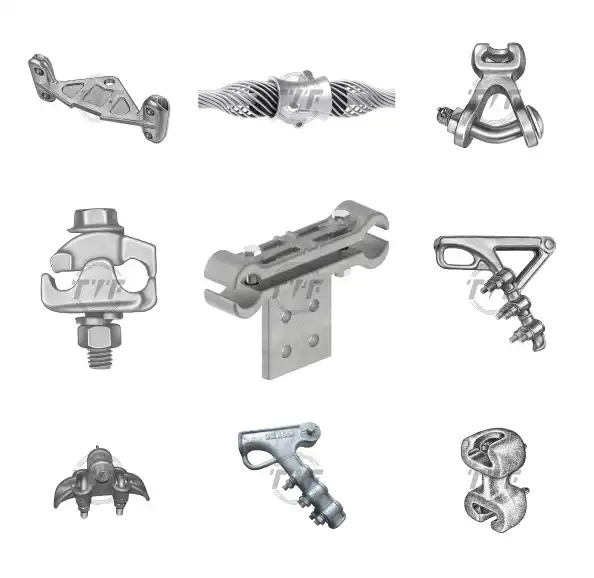

An ADSS suspension clamp is a designed hardware component used in overhead power line and telecommunication networks to support all-dielectric self-supporting cables (ADSS) fiber optic cables. The clamp suspends and secures ADSS cables onto utility poles without damaging the cable sheath. It provides mechanical support at intermediate points along the span to keep the cable stable. ADSS suspension clamps help distribute mechanical loads evenly to prevent stress and premature wear on the ADSS cable. The cable consists of non-metallic contact to protect the cable from abrasion and electrical interference. It is also made from materials like aluminum alloy or stainless steel with UV- and weather-resistant elastomer parts. The ADSS suspension clamp works on straight-line sections of ADSS cable routes, distribution poles, transmission towers, and telecommunication towers. This cable is different from dead-end clamps, as it lets the cable at intermediate points hang freely.
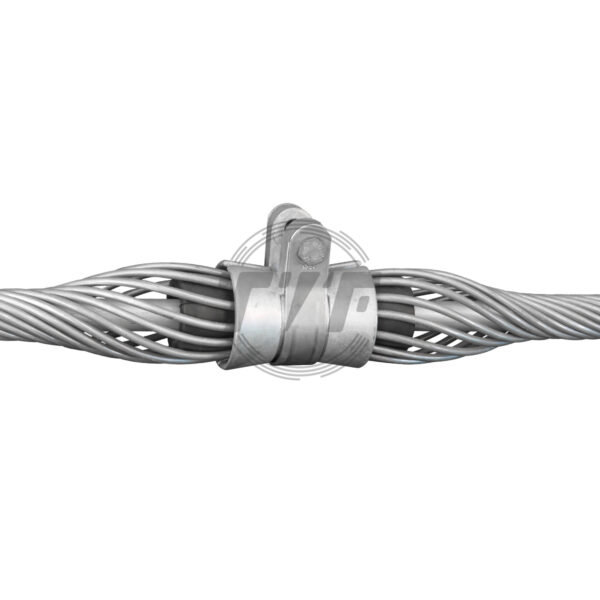
Standard Voltage Suspension Clamps
The ADSS Suspension Clamp is a specialized hardware fitting designed to securely suspend All-Dielectric Self-Supporting (ADSS) fiber optic cables on overhead power transmission and distribution lines. It provides safe support at intermediate spans while protecting the cable from mechanical stress, vibration, and electrical discharge. The clamp ensures long-term reliability of ADSS installations in high-voltage environments and harsh outdoor conditions.
Key Features
- High-Strength Body: Made from corrosion-resistant aluminum alloy for durability and load-bearing capacity.
- Elastomer Insert: UV-resistant neoprene/rubber insert cushions the cable, prevents crushing, and provides vibration damping.
- Electrical Insulation: Non-metallic contact design protects against corona discharge and electrical tracking.
- Vibration Resistance: Effectively reduces Aeolian vibration and cable fatigue in windy environments.
- Load Distribution: Evenly transfers cable weight to towers/poles, minimizing stress on the cable sheath.
- Armor Rod Compatibility: Can be used with preformed armor rods for additional protection in long-span or high-stress applications.
- Easy Installation: Simple clamp structure with bolted/hinged fittings for quick and secure mounting.
- Versatile Application: Suitable for short, medium, and long spans in power transmission and distribution networks.
Operations of ADSS suspension clamps
ADSS suspension clamp mounts on utility poles or transmission towers at intermediate points of the line. The ADSS cable rests inside a cushioned insert, which gently grips the cable without compressing it. Its aluminum alloy or stainless-steel body transfers the cable’s vertical load to the pole. The clamp carries the cable’s weight and distributes the mechanical load to prevent stress on any single point of the cable sheath. The elastomer insert provides a sliding and damping effect to allow the cable to move slightly during thermal expansion, wind-induced movement, and seismic activity. ADSS cables are light and prove to be resistant to aeolian vibration caused by wind. The clamp’s internal rubber insert acts like a shock absorber, damping these vibrations. The non-metallic contact surface insulates the cable from potential corona discharge or tracking. Its operation also depends on the workflow that includes installation, cable placement, load bearing, movement control, and long-term protection.
Importance of aerial cable clamps in overhead power lines
ADSS suspension clamps are crucial for the long-term reliability of overhead power and communication lines. The clamps ensure the fiber optic cable remains securely supported at intermediate spans to prevent sagging or uncontrolled swinging. The ADSS cable would face excessive strain, leading to sheath damage without the clamps. Suspension clamps distribute the cable’s load while allowing controlled movement to reduce localized stress points. The suspension clamp ensures non-conductive contact to prevent corona discharge or electrical tracking between the cable and the tower. This is crucial for maintaining both network reliability and safety in high-voltage zones. Optical fibers inside ADSS cables are sensitive to bending, compression, and stress. Suspension clamps keep the cable in its designed curvature radius to prevent signal loss. Additionally, ADSS suspension clamps are from corrosion-resistant aluminum alloys and UV-resistant elastomers. This helps support the lifespan and efficiency of ADSS fiber optic installations in power lines.
Key features of ADSS suspension clamps
The ADSS suspension clamp is a reliable, durable, and vibration-damping support system. The clamps protect the cable mechanically and electrically, ensure long service life in harsh outdoor conditions, and maintain fiber optic performance in overhead power line networks. These features include:
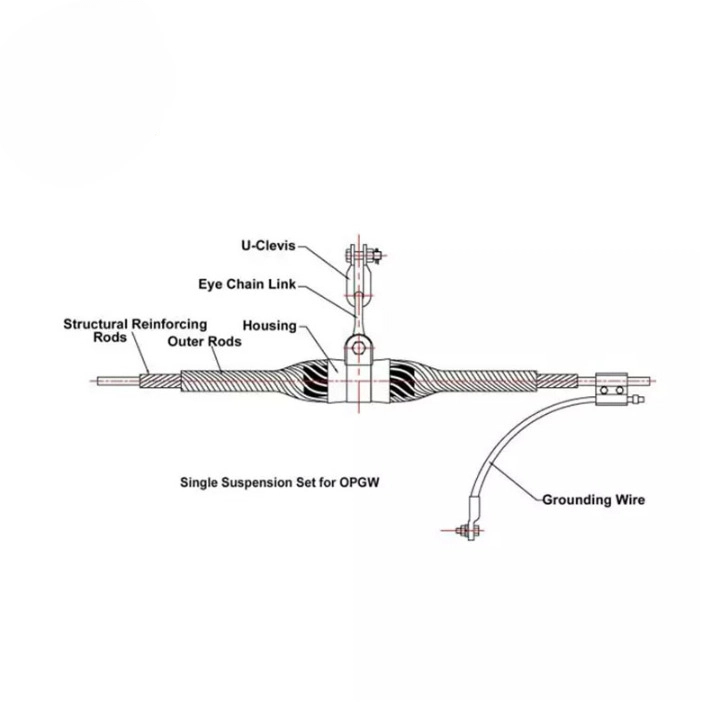
- Non-metallic cable contact—the clamp uses elastomer or neoprene inserts that cradle the ADSS cable. This helps prevent absorption, crushing, and electrical conductivity with the tower.
- High mechanical strength—the ADSS suspension clamp is from aluminum alloy or stainless steel for durability. It is also designed to withstand tensile loads, wind pressure, and ice and snow weight. This strength also helps transfer the load safely to the pole without deforming the cable.
- Vibration damping design—the clamp has built-in rubber inserts and armor rods that absorb aeolian vibration. It protects the cable sheath from fatigue and wear caused by wind oscillations.
- Corrosion and weather resistance – ADSS suspension clamps are from materials that are hot-dip galvanized, anodized, or coated for longevity. They help the clamp resist UV degradation, salt spray, and extreme temperatures.
- Controlled flexibility—the clamps allow the cable to move and support thermal expansion and contraction without stressing the fibers.
- Electrical insulation—this ensures the ADSS cable remains electrically isolated from the tower. This prevents tracking, corona discharge, or flashover in high-voltage environments.
- Easy installation—the clamp has a simple design with bolted or hinged bodies for quick mounting. It is compatible with standard crossarms, brackets, and tower hardware.
Types of fiber optic clamps
Standard suspension clamps

This clamp has a simple body with elastomer inserts that grip the cable. It supports the cable at intermediate points while allowing slight movement for thermal expansion and wind sway. It mainly serves in short to medium spans up to 100-200 m.
Double suspension clamps
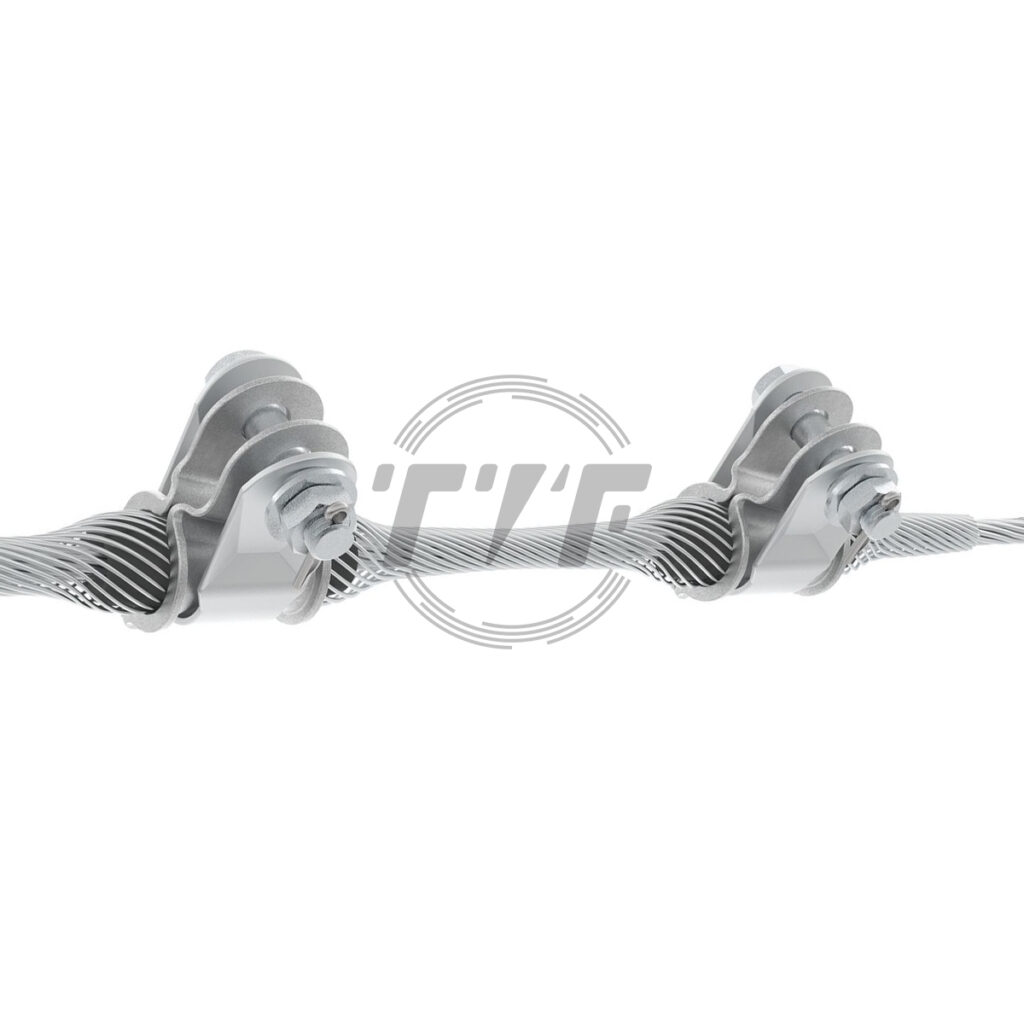
This has two suspension units installed in parallel to share the cable’s load. It provides extra stability and reduces bending stress on the ADSS cable. It offers better performance in high-tension, windy, or icy regions.
Armor rod suspension clamps
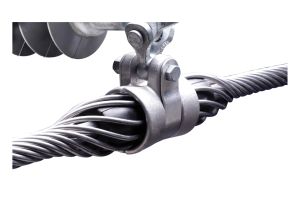
The clamp includes preformed armor rods wrapped around the ADSS cable before insertion. Armor rods spread the cable’s load over a larger area to protect against abrasion and vibration fatigue. It extends cable lifespan in harsh environmental conditions with strong winds or vibration risks.
Flexible suspension clamps
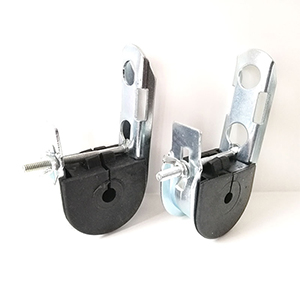
This clamp uses a flexible elastomer insert and special fittings to allow more angular movement. It provides both support and flexibility where the cable changes direction. Flexible clamps prevent excessive bending stress in sections where the line curves.
Heavy-duty suspension clamps
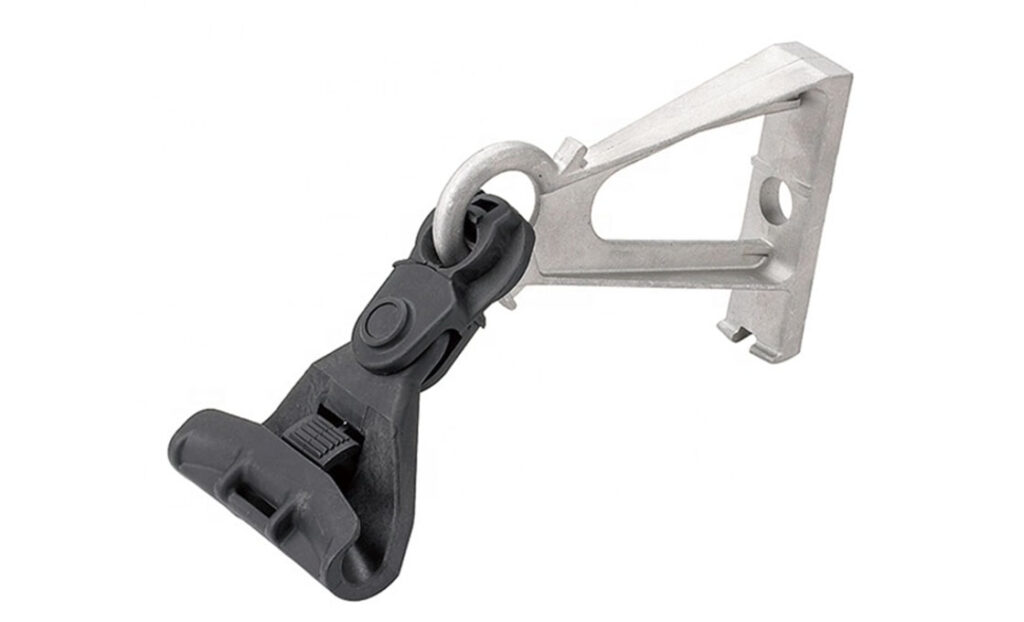
The suspension clamp has a larger clamp body, reinforced hardware, and thicker inserts. It is able to handle high mechanical loads while maintaining electrical insulation. Heavy-duty suspension clamps are reliable for critical transmission corridors, extra-long spans, mountain crossings, or regions with extreme weather loads.
Design and materials for ADSS suspension clamps
The design of ADSS suspension clamps combines a strong aluminum alloy body with vibration-absorbing elastomer inserts, reinforced by armor rods, and secured with corrosion-resistant steel fittings. The clamps provide a mix of materials that ensure mechanical reliability, electrical insulation for dielectric cables, and protection against vibration, bending, and abrasion. Its key design components include a clamp body for structural support, a curved internal profile, and slots for bolts to secure inserts and maintain clamping force. It is crucial to consider mechanical strength, corrosion resistance, electrical insulation, and weather endurance when selecting the materials. Here is the discussion for materials used for ADSS suspension clamps.
- Clamp body—this provides the main structural support to transfer cable load to the tower. It is from high-strength aluminum alloy, which is lightweight but strong for easier installation.
- Elastomer insert—this provides anti-vibration damping against aeolian vibration and ensures non-metallic contact to preserve the dielectric nature of ADSS cables. This insert is UV-resistant neoprene rubber or high-grade polymer elastomer.
- Armor rods—the rods wrap around the ADSS cable before clamping and distribute mechanical stress over a larger area. It provides extra protection against vibration and abrasion. Its spiral shape matches the cable diameter to ensure a firm and gentle grip.
- Bolts, nuts, and fittings—these components secure the clamp to poles and lock the body together. It consists of stainless steel or hot-dip galvanized steel that is corrosion resistant to withstand rain, snow, and coastal salt.
- Support bracket—these connect the clamp body to the crossarm, pole, or tower. It ensures the cable maintains proper sag and alignment. This is from galvanized steel or ductile iron.
Functions of suspension clamps in power transmission and distribution systems
ADSS suspension clamps perform several functions, including securing suspension of ADSS cables, vibration damping, and electrical insulation. Overhead fiber installation on power lines would face premature damage, signal loss, and reduced service life without the clamps. These functions are as discussed below.
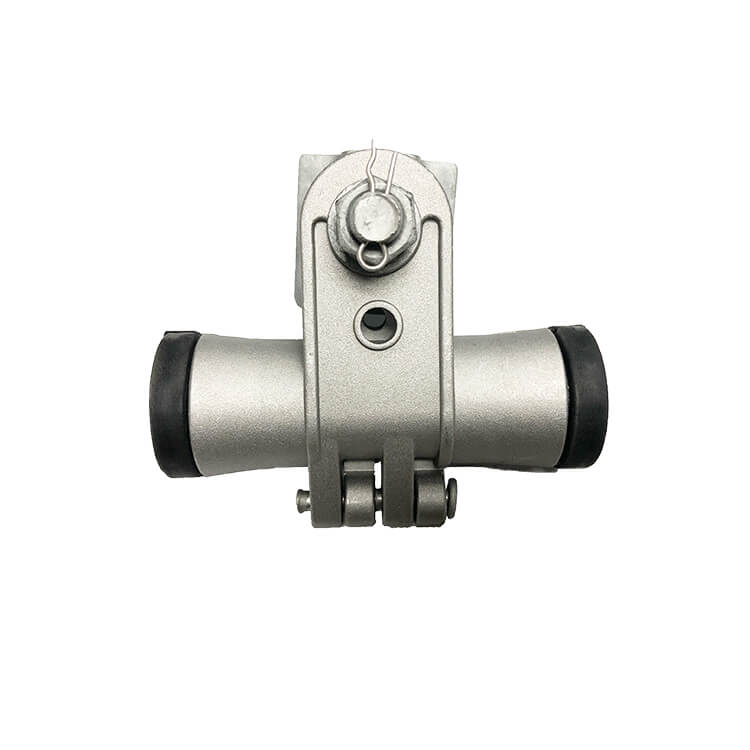
- Cable suspension and support—the primary function is to suspend ADSS fiber optic cables on poles and towers. They hold the cable at intermediate points along spans to maintain proper clearance and sag. It ensures the cable remains secure, stable, and aligned in overhead networks.
- Load distribution—ADSS cables carry mechanical loads from their own weight, wind, and ice. The suspension clamp distributes these loads onto the tower to avoid stress concentration on the cable sheath.
- Vibration damping – overhead lines face aeolian vibration and galloping. The elastomer inserts inside suspension clamps act as shock absorbers and reduce vibration transfer to the ADSS cable.
- Protection of optical fibers – ADSS cables contain glass fibers that are sensitive to bending, compression, and micro-cracks. Suspension clamps have cushioned inserts and proper curvature to prevent sharp bends.
- Electrical insulation—ADSS cables are dielectric and built in high-voltage corridors where corona discharge and tracking can occur. Suspension clamps ensure non-conductive contact between the cable and tower.
Following best practices for fiber optic cable clamps
Proper use of ADSS suspension clamps ensures its longevity, durability, and resilience in power transmission and distribution lines. These include correct clamp selection, use of armor rods where needed, maintaining proper sag and tension, avoiding sharp bends, checking vibration protection, ensuring electrical insulation, proper torque on bolts, corrosion protection, and regular inspection. It also includes following the manufacturer’s installation recommendation and avoiding improper fitting, which can shorten the lifespan of both the clamp and cable. By following these practices, utilities can extend the service life of ADSS cables, prevent costly failures, and ensure reliable data transmission across the grid.