A distribution arrester is a protective device designed to safeguard electrical equipment. It protects equipment like transformers, insulators, and conductors against overvoltages caused by lightning strikes or switching surges. The arrester reduces dangerous transient overvoltages by diverting excess surge energy safely to the ground. The housing of the arrester is usually made of polymer or porcelain to provide insulation and protect internal elements from weather. It also has MOV blocks that respond to overvoltage. Distribution arresters install close to transformers, switchgear, or other critical equipment on distribution poles. It often connects between the phase conductor and ground. It prevents insulation breakdown and equipment failure, reduces outages, and extends equipment lifespan. For instance, it works on an 11 kV distribution feeder to instantly channel the spike to ground to keep the transformer safe.
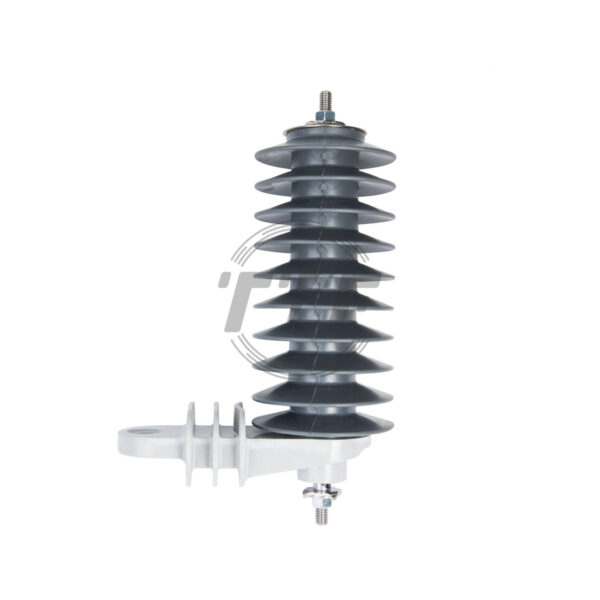
Distribution Arrester
A Distribution Arrester is a high-performance surge protection device designed for installation on overhead power lines to safeguard transformers, insulators, and other distribution equipment from transient overvoltages caused by lightning strikes and switching operations. Utilizing advanced Metal Oxide Varistor (MOV) technology, it offers rapid response and reliable operation, ensuring system stability and extended equipment life.
Key Features:
- Surge Protection: Diverts high-energy lightning and switching surges safely to ground.
- MOV Core Technology: Provides fast, non-linear resistance response to overvoltage events.
- Durable Housing: Available in porcelain or polymer for superior insulation and weather resistance.
- High Energy Handling: Engineered to withstand repeated surge events without degradation.
- Compact & Lightweight Design: Simplifies pole-mount installation.
- Corrosion-Resistant Terminals: Ensures long-term electrical integrity in outdoor environments.
- Safety Disconnector: Automatically isolates faulty units from the system to maintain service continuity.
The working principle of a distribution arrester
A distribution arrester works in overhead power lines by acting like a high-speed surge safety valve and instantly opens when dangerous overvoltages occur, then closes when the danger passes. Under regular line voltage, 11 kV and 33 kV, the arrester’s metal oxide varistor block acts like very high resistance. No current flows through the arrester to ground, where electricity stays in the line. A lightning strike near the line or a switching operation creates a transient overvoltage that can reach hundreds of kilovolts for microseconds. The MOV blocks respond almost instantly to the spike. When overvoltage exceeds the arrester’s spark-over voltage, the MOVs switch to a low resistance state. This creates a short path from the line conductor through the arrester to the ground wire. The arrester absorbs and dissipates some of the surge energy as heat in its MOV blocks.
Significance of surge arresters in overhead power lines
Distribution arresters act as frontline defense against overvoltage damage in overhead power lines. Without arresters, equipment on the line would be vulnerable to lightning strikes, switching surges, and other transient overvoltages. Distribution arrester prevents transformers, insulators, conductors, and switchgear from being destroyed by high-voltage surges. By stopping surges before they reach sensitive components, arresters reduce unscheduled outages. Frequent exposure to overvoltages can weaken insulation and components over time. Arresters absorb the stresses to help equipment operate safely for years longer. Distribution arresters reduce risks of electrical fires, arc flashes, and downed live wires by preventing equipment failures. Distribution arresters provide huge protection benefits to keep the grid stable, equipment safe, and consumers happy.
Features of the distribution arrester
A distribution arrester consists of several engineered components that work together to detect and discharge high-voltage surges on overhead power lines. Each part of the arrester plays a specific role in ensuring the arrester operates quickly, reliably, and safely. The key components include:
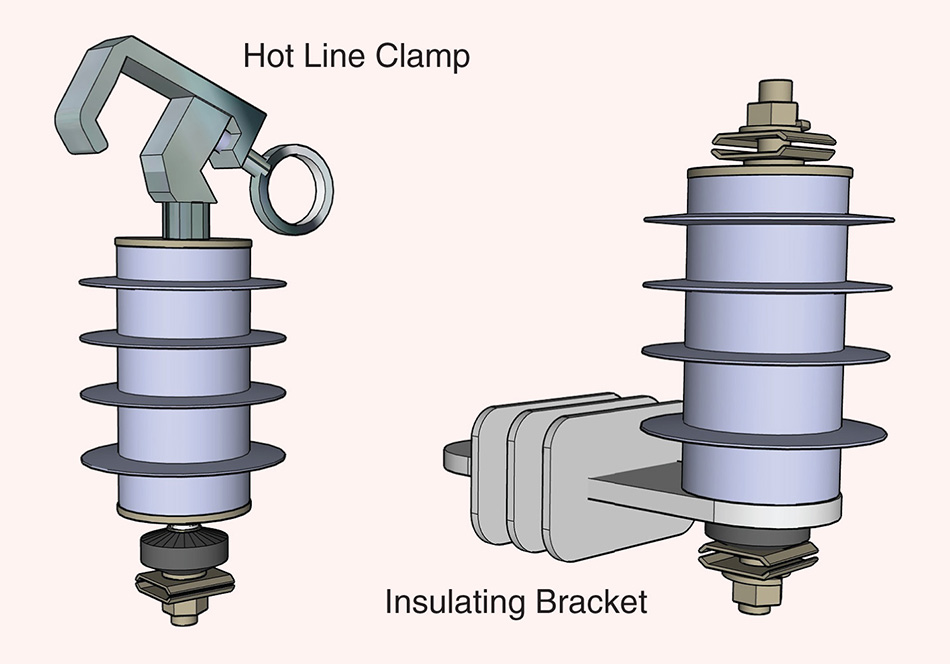
- Metal oxide varistor (MOV) blocks—this is the heart of the arrester that provides the non-linear resistance that makes the arrester respond to overvoltages. It is from zinc oxide with small amounts of other metal oxides for improved performance. It operates at normal system voltage and at surge voltage.
- Insulating body—this is the protective shell that encases the MOV blocks to provide electrical insulation and shielding from environmental damage. It is mostly from polymer that is lightweight and hydrophobic for polluted areas and porcelain for durability and resistance to UV and mechanical damage.
- End fittings—these are the electrical connection points linking the arrester to the phase conductor and the ground lead. It is from corrosion-resistant metals like tinned copper, aluminum, or stainless steel. It is also engineered for secure mechanical attachment and low contact resistance.
- Sealing system—this prevents moisture or contaminants from entering and damaging the MOV blocks. It is from rubber gaskets, epoxy seals, or crimped metal caps. A compromised seal can cause internal tracking, overheating, and eventual failure.
- Ground lead disconnector—this disconnects the arrester from the line if it becomes internally damaged. During a fault, the disconnector blows open to drop the ground lead and prevent the arrester from shorting the line.
- Grading rings—this is the voltage stress controller that distributes the electric field along the arrester’s length to prevent corona discharge.
Common types of surge arresters
Porcelain-housed distribution arresters
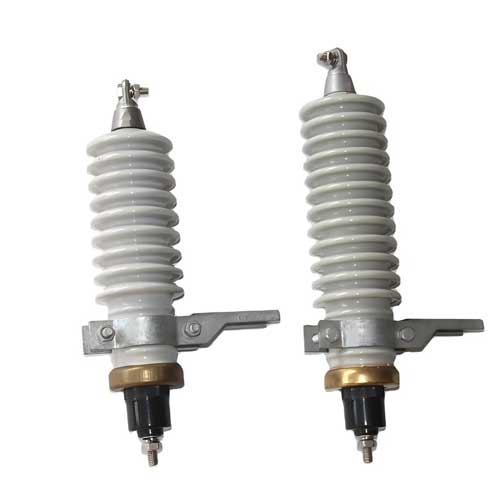
This is the traditional design with a porcelain outer shell enclosing the metal oxide varistor (MOV) blocks. It is durable and resistant to UV and mechanical damage for performance in extreme temperature variations.
Polymer-housed distribution arrester
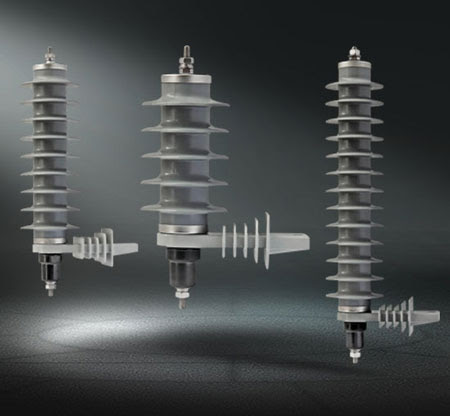
This arrester has a modern design using silicone rubber or EPDM polymer housing over MOV blocks. It is lightweight, hydrophobic, and shatterproof. This makes it easier to handle and install, repels water, and reduces leakage currents. It is commonly used in new installations, coastal environments, and polluted environments.
Station-class distribution arresters
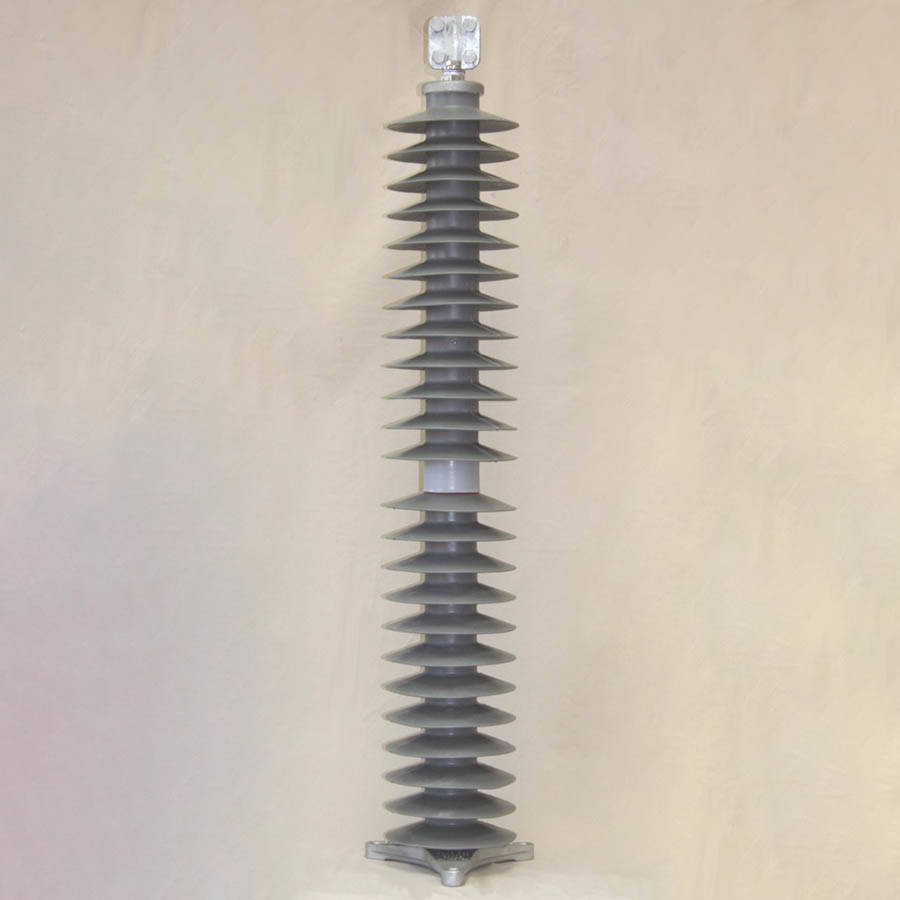
This arrester is able to handle higher energy surges at distribution substations. It has very high energy-handling capacity and is reliable in high lightning areas. It is crucial at substations, near large transformers, or at feeder start points.
Intermediate-class arrester
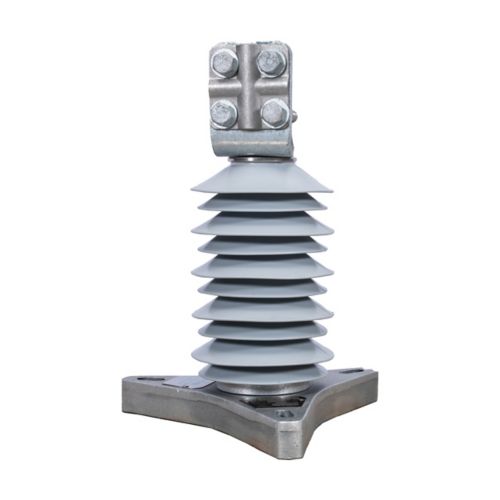
This is a mid-range arrester that bridges the gap between station-class and light-duty designs. It provides a balanced cost and performance and handles moderate lightning and switching surges. It serves as feeder lines in storm-prone areas.
Line surge arresters
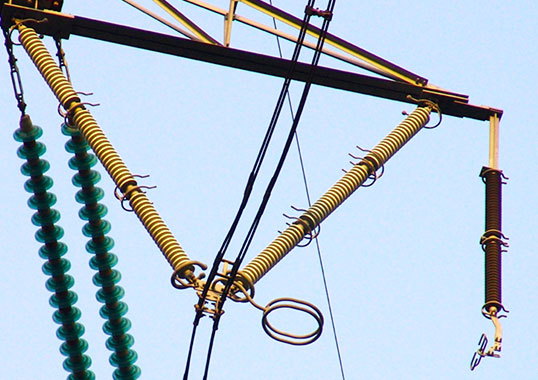
This installs directly along overhead distribution lines between phase and ground to protect line insulation. It reduces flashovers on insulators and improves line reliability in high-lightning density regions. It functions in rural lines, mountain ridges, and lightning-prone zones.
Design and materials for distribution arresters
Distribution arresters are able to survive harsh outdoor environments, handle extreme electrical stresses, and operate reliably. Their design focuses on fast surge response and safety, and their materials are selected for strength, insulation, and durability. A distribution arrester is built around a surge-handling core enclosed within a protective housing and fitted with terminals that connect to the line and ground. The design ensures fast reaction time to overvoltages, controlled energy dissipation to avoid damage, and weather resistance for long outdoor service life. The design consists of a non-linear resistance element, protective housing, sealing and moisture control, terminals and fittings, and safety disorder. It is crucial to consider creepage distance. Mechanical strength, thermal performance, and UV resistance for overhead lines. Here are the materials for distribution arresters.
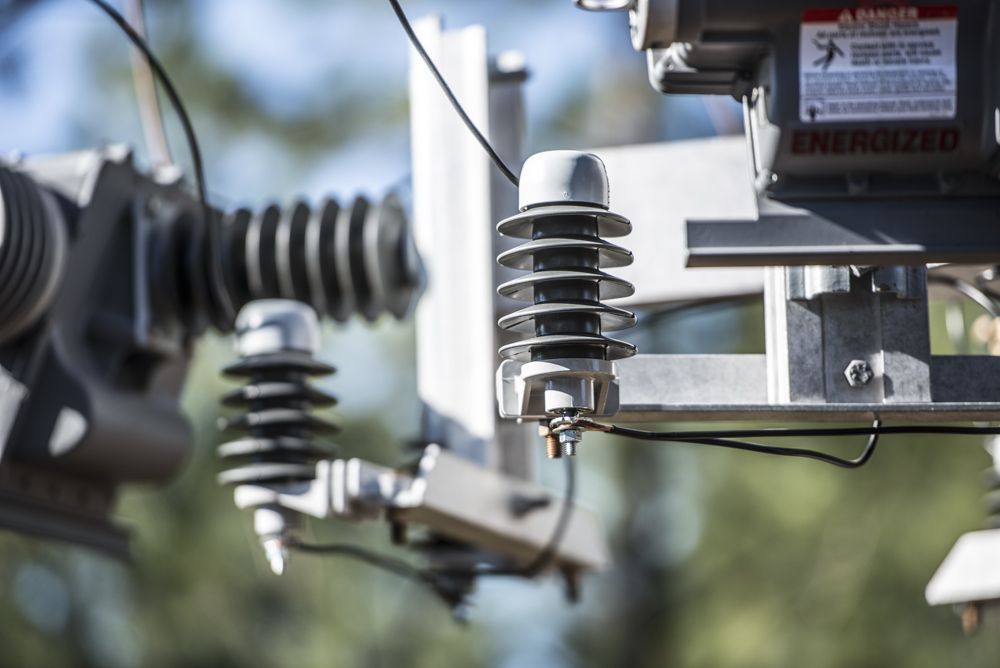
- Internal core—the MOV blocks are from zinc oxide ceramic doped with small amounts of bismuth, cobalt, or manganese oxides. Non-linear voltage-current characteristics for fast surge response.
- Housing—this is from porcelain for strong, UV-resistant, and weatherproof. It is also from a polymer, which is lightweight, hydrophobic, and shatterproof.
- Terminals & fittings—these are from copper, tinned copper, aluminum alloys, or stainless steel. These provide high conductivity and corrosion resistance.
- Sealing components—these are from synthetic rubber, epoxy resin, or silicone-based compounds. These materials ensure long-term moisture exclusion and mechanical resilience.
- Disconnector assembly—this is from plastic housings, stainless springs, and fusible alloy links. It provides mechanical strength, corrosion resistance, and reliable operation.
Functions of a distribution arrester in overhead power lines
Distribution arresters are crucial for the safety and reliability of power distribution networks. Their primary purpose is to protect overhead line equipment from damaging overvoltages caused by natural or switching events. They also contribute to operational safety, cost reduction, and system performance. It absorbs and redirects harmful surges, shielding insulation, extending equipment life, and keeping the grid reliable and safe. A well-designed distribution arrester combines zinc oxide MOV cores for surge suppression. Porcelain or polymer housings for insulation and protection and corrosion-resistant fittings for reliable electrical connections. The functions of the arresters include:

- Overvoltage protection—the arrester limits transient overvoltages from lightning strikes, switching surges, or fault clearing events. The arrester provides a low-resistance path for the surge to safely flow to the ground and prevent it from reaching and damaging equipment.
- Insulation protection—distribution arresters prevent insulation breakdown of electrical components in the line. It keeps transformer windings, cable terminations, and line insulators within their safe voltage limits.
- Equipment longevity—the arresters extend the service life of costly infrastructure like pole-mounted transformers and switchgear.
- System reliability—the arresters reduce unscheduled outages by stopping surge-induced faults before they cause permanent equipment failure. They ensure a more stable and continuous power supply in storm-prone areas.
- Safety enhancement—distribution arresters prevent catastrophic equipment failures that could cause arc flashes, electrical fires, or downed live conductors.
- Reduction of maintenance costs—the arresters reduce emergency repair needs after storms or switching events. They reduce the frequency of equipment replacements due to surge damage.
- Voltage stress control—when installed on distribution lines, arresters reduce flashover risk on the line insulators. This is crucial in rural or open-terrain networks exposed to frequent lightning.
Best practices for using surge arresters in overhead power lines
For most protection and lifespan from distribution arresters in overhead power lines, utilities and engineers must focus on correct selection, installation, inspection, and maintenance. Poor application can reduce their effectiveness and even create safety hazards. These practices include proper selection, correct placement, proper installation, regular inspection, environmental considerations, and replacement criteria. Following these practices ensures the arrester will do its job instantly when lightning or switching surges strike. This is also crucial to keep overhead power lines reliable and safe for a long serviceable life.