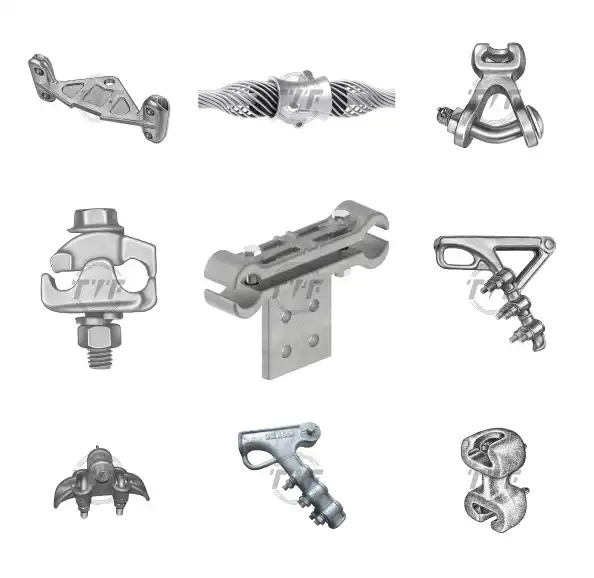
Overhead power networks rely on robust power line fittings to connect critical components such as insulators and clamps. The tri-bundle yoke plate connects the insulator strings and provides attachment points for suspension clamps that hold conductors. The yoke plate is a steel plate with multiple connection points designed to distribute mechanical loads between three bundled conductors and the transmission-line hardware. For this arrangement, three subconductors are positioned around the phase center and connected to a common assembly. The yoke plates provide an interface between the conductors and other fittings such as insulator strings, suspension assemblies, dead-end assemblies, and line hardware. Tri-bundle yoke plates in power networks offer load distribution, bundle stabilization, mechanical connection, and stress management. During manufacturing, the yoke plates undergo quality assurance to prevent conductor failure, unplanned outages, and line drops. QA verifies its reliability through material certification, precise manufacturing, and rigorous testing.
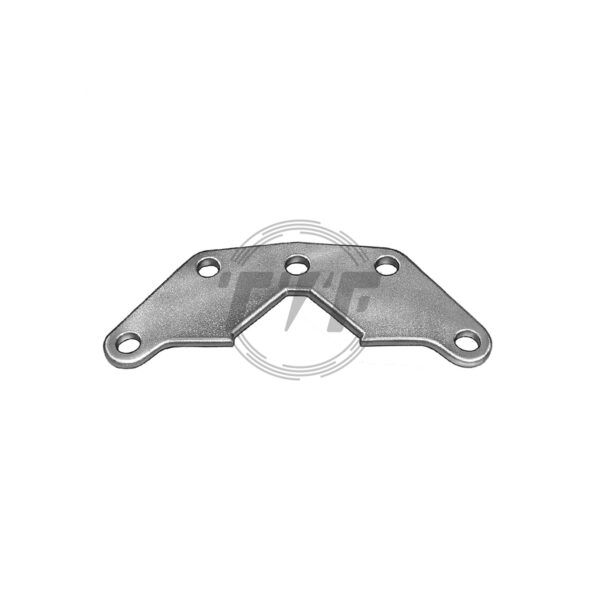
Tri-Bundle Yoke Plate
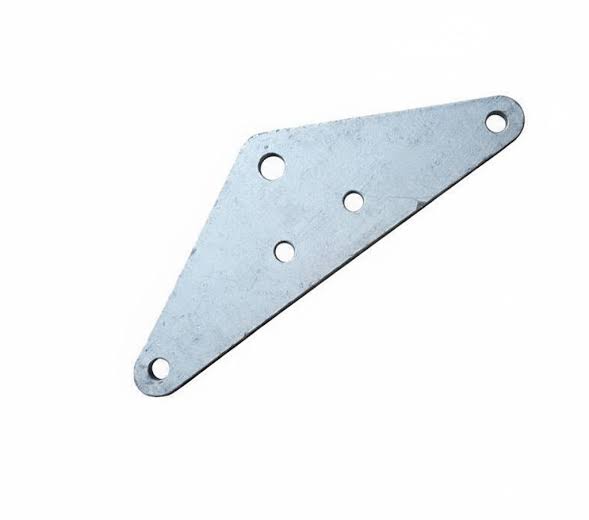
A yoke plate is a critical structural component used in power line construction to connect insulators, crossarms, and transmission hardware, ensuring reliable load distribution and mechanical stability. Engineered for high-strength performance, it maintains alignment of conductors and insulators under dynamic and environmental stresses.
Key Features:
- High-strength steel construction for durability and load-bearing capacity
- Corrosion-resistant coating for extended service life in outdoor environments
- Precision-drilled holes for secure attachment to insulators and crossarms
- Supports uniform mechanical load distribution across power line components
- Compatible with a variety of insulator types and transmission configurations
- Easy installation and maintenance, reducing construction downtime
- Designed to meet industry standards for electrical and mechanical performance
Structure and components of the tri-bundle yoke plate
The yoke plate connects and balances three subconductors in a bundled phase configuration. It is designed to withstand mechanical loads while maintaining the correct conductor geometry and connection with the insulator string. The main structural elements include:
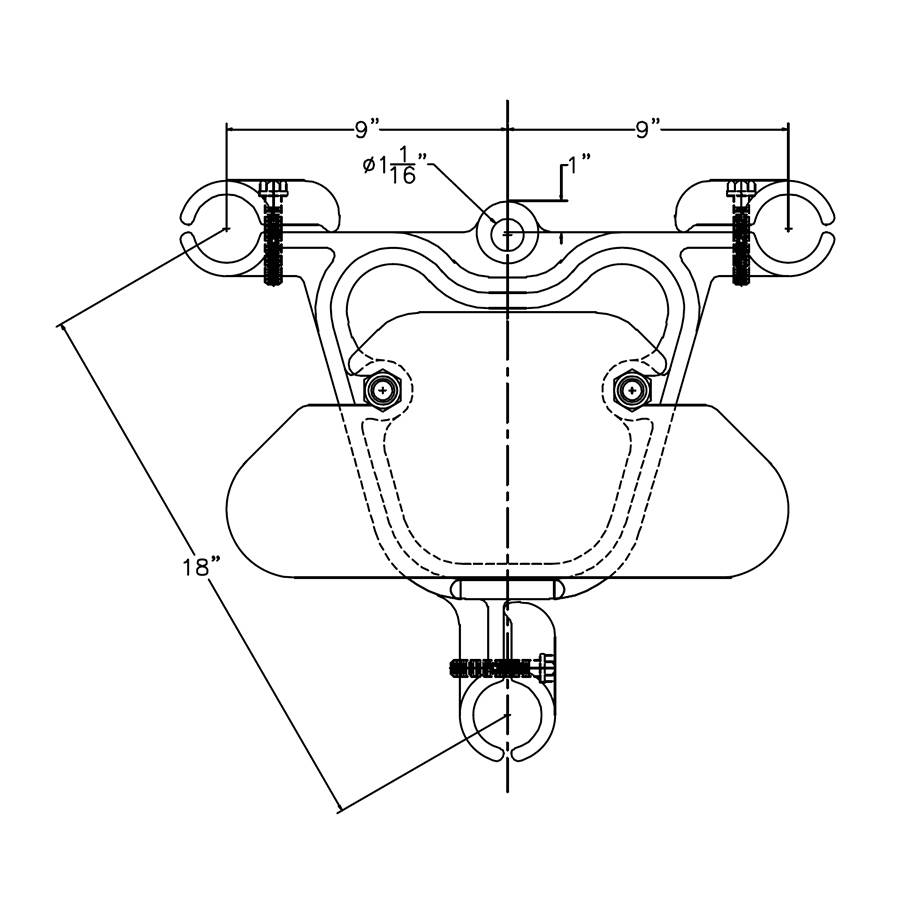
- The main plate—this is the load-bearing body that transfers mechanical forces between the three sub-conductors and the supporting hardware.
- Conductor attachment points—these include the holes, slots, clevises, or other interfaces that connect the sub-conductor fittings.
- Central connection point—this is an attachment interface that connects the yoke assembly to an insulator string, tower-side fitting, or another transmission-line component.
- Connecting hardware—these include bolts, pins, shackles, clevises, nuts, washers, and cotter pins to secure the assembly.
- Reinforced sections—these are areas around high-load connection points that need strength to reduce deformation and stress concentration.
- Rounded edges—these reduce stress concentrations and reduce damage to adjacent components.
The importance of quality assurance during the manufacture of tri-bundle yoke plates
During the manufacture of the tri-bundle yoke plates, quality assurance helps ensure they meet the specifications to secure high-voltage transmission networks. High manufacturing quality reduces the risk of premature hardware failure. It also supports the safety, reliability, and performance of high-voltage overhead transmission networks. Here are the key roles of quality assurance during yoke plate manufacture.
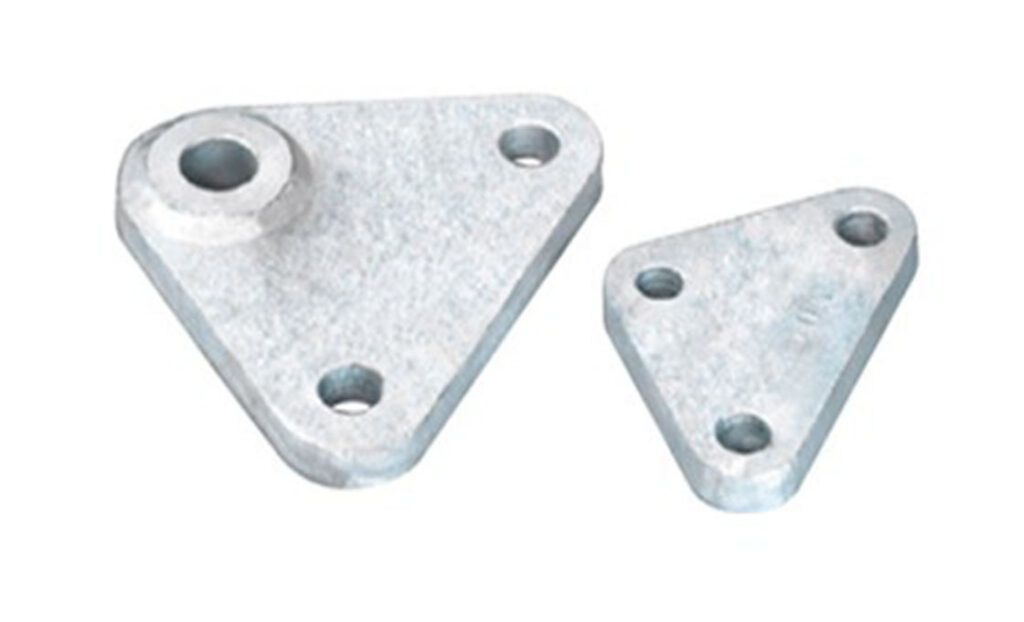
- Ensuring mechanical strength—tri-bundle yoke plates face mechanical forces from conductor tension, wind loading, vibration, and other environmental conditions. QA verifies that the selected material, plate thickness, manufacturing process, and connection points meet the required mechanical specifications.
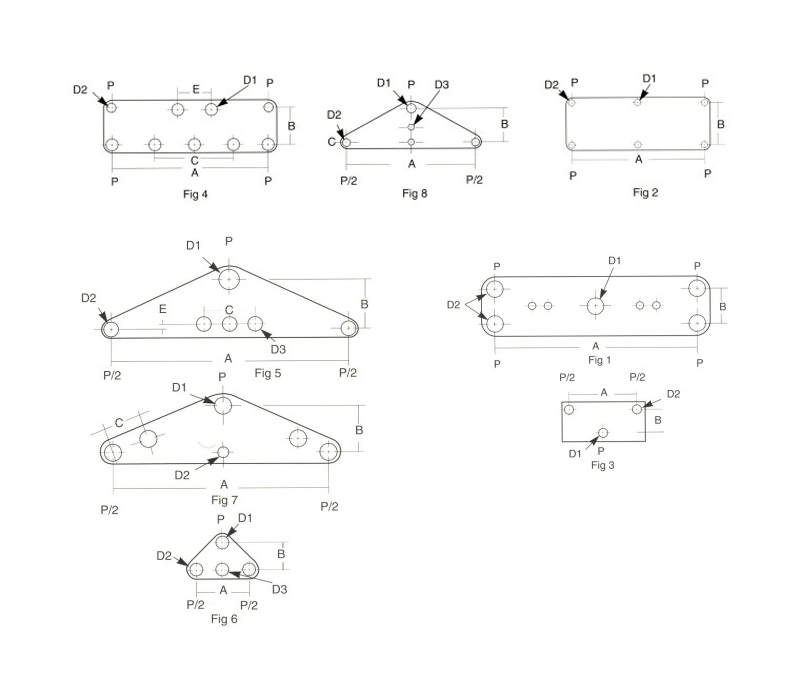
- Maintaining dimensional accuracy—tri-bundle yoke plates have attachment holes, slots, pins, and connection interfaces. QA inspections verify hole diameter and spacing, plate thickness, dimensions, flatness, and alignment. This design is to allow the yoke plate to connect with conductor clamps, clevises, insulator fittings, and other hardware.
- Prevents load imbalance—a tri-bundle configuration depends on maintaining a connection between its three sub-conductors. Manufacturing inaccuracies can cause misalignment and uneven load distribution. QA confirms the three attachment points for load transfer and reduces the likelihood of excessive loading on the fittings.
- Verifying material quality—the material for the yoke plate influences its mechanical performance and service life. QA checks material certification, chemical composition verification, and mechanical-property testing. Manufacturers verify yield strength, tensile strength, hardness, material grade, thickness, and chemical composition.
- Protection against corrosion—QA checks the effectiveness and uniformity of protective treatments such as hot-dip galvanizing. Manufacturers inspect the coating to verify zinc coating thickness, surface coverage, adhesion, uniformity, and absence of significant bare areas.
- Identifying manufacturing defects—quality assurance provides systematic inspection throughout production. It helps manufacturers identify cracks, distortion, burrs, incorrect hole dimensions, surface damage, material defects, and galvanizing defects.
Quality failure modes of tri-bundle yoke plates in power networks
Tri-bundle yoke plates connect and distribute mechanical forces between three subconductors and transmission line hardware. They operate under mechanical and environmental stresses that demand high-quality production to prevent failures. Their failures may arise from manufacturing defects, poor materials, dimensional inaccuracies, and inadequate corrosion protection. Common quality failure modes include:
- Cracking and fractures—cracks that develop in the yoke plate arise from material defects, poor fabrication processes, welding defects, excess mechanical loading, stress concentrations, and fatigue.
- Hole dimensional errors—the attachment holes should have accurate diameters, spacing, and positioning. Incorrect machining can cause poor fitting alignment, excessive clearance, and uneven load transfer.
- Plate deformation—permanent bending and warping can occur when the plate is manufactured incorrectly. Deformation can alter the intended geometry of the conductor assembly and increase mechanical stress on connected components.
- Uneven load distribution—this can result from incorrect attachment-point positioning, dimensional inaccuracies, assembly errors, or deformation.
- Insufficient material strength—use of steel with mechanical properties below the specified requirements can reduce the yoke plate’s load-bearing capacity.
- Welding defects—defects such as cracks, porosity, incomplete fusion, undercutting, and incomplete penetration—can create localized weak points.
- Burrs and sharp edges—during production, poor cutting, punching, or machining can leave burrs and sharp edges around holes and plate boundaries. This can interfere with proper assembly and may create localized stress concentrations.
Materials used for tri-bundle yoke plates and the importance of quality assurance
Tri-bundle yoke plates operate as load-bearing hardware in overhead transmission networks. Material selection influences their mechanical strength, fatigue resistance, corrosion performance, and service life. Quality assurance protects the material properties by controlling the material from procurement through fabrication, surface treatment, inspection, and final testing.
Carbon structural steel
This is the most common material for transmission-line yoke plates because it offers strength, manufacturability, and cost-efficiency. Carbon steel can withstand the tensile and load-bearing forces generated by bundled conductors. Quality assurance verifies the specified steel grade against material certificates, checks chemical composition, confirms tensile and yield-strength requirements, and inspects plate thickness and dimensions.
High-strength steel
This steel provides greater load-bearing capability without the need for excessive plate thickness. Its mechanical properties are crucial around loaded conductor attachment points. QA verifies mechanical properties, conducts hardness testing, performs dimensional inspection, tests for surface and internal discontinuities, and verifies that fabrication processes do not compromise the specified properties.
Hot-dip galvanized steel
Most steel yoke plates contain hot-dip galvanizing coating for outdoor transmission applications. The zinc layer protects the steel from atmospheric corrosion. QA protects the galvanized coating component by checking zinc coating thickness, coating uniformity, surface coverage, adhesion, bare spots, and excessive zinc buildup.
Corrosion-resistant steel
Specialized corrosion-resistant steels or other protective material systems are essential depending on project specifications. They are ideal in environments with high humidity, industrial pollution, coastal salt exposure, or aggressive atmospheric conditions.
TTF-certified tri-bundle yoke plates. Why choose our yoke plates?
TTF’s approach to power line hardware services results in optimal product quality, strict adherence to custom design, and reduced cost. We are constantly checking manufacturing processes, addressing material concerns, and improving staff expertise to ensure the best quality product. Our quality control for the tri-bundle yoke plates begins with the first batch of samples that you received from us. And this continues through all production phases, where our QC staff never stop looking for opportunities to improve product quality. We offer:

- Tolerance Analysis
- Tooling Life Analysis
- Rockwell Hardness Testing per ASTM E18
- Brinell Hardness Testing per ASTM E10
- Magnetic Particle Testing per ASTM E1444 CMM (Coordinate Measuring Machine) Testing
- 24″ Optical Comparator for Complex Measurements
- Tensile/proof load testing up to 160,000 lbs (700 kN)
- Hot Dip Galvanizing Plating Thickness per ASTM E376
- Torque Testing
- Roughness Testing
- Lifetime Sample Retention
- Dimensional Testing
Benefits of tri-bundle yoke plates in overhead power networks
Tri-bundle yoke plates connect and distribute loads between three sub-conductors in a bundled conductor arrangement. They serve on high-voltage and extra-high-voltage overhead lines where bundled conductors improve electrical and mechanical performance. They offer the following benefits to power networks.
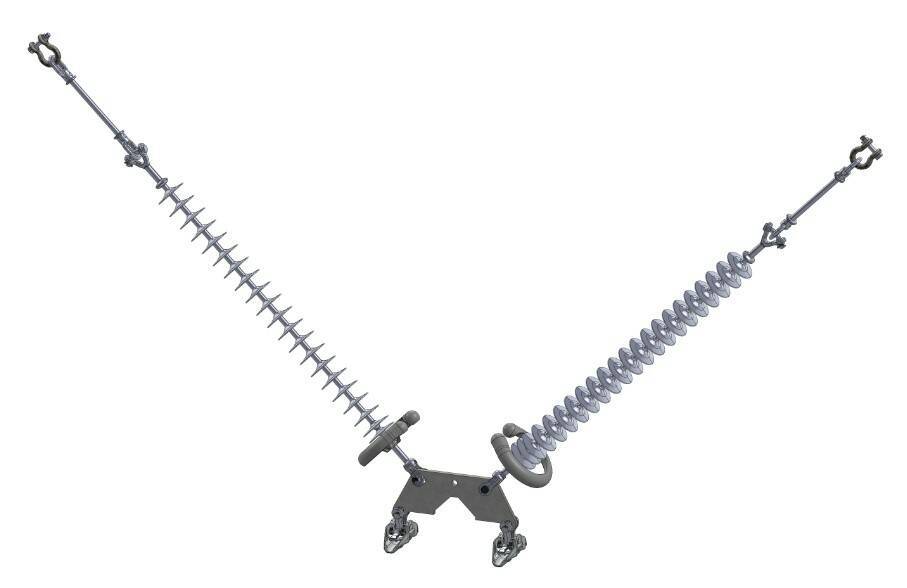
- Balanced mechanical load distribution—the yoke plates distribute mechanical forces among the three subconductors. The plate provides a connection point for the bundle and helps transfer conductor tension toward the insulator string.
- Maintained conductor bundle geometry—the yoke plate attachment point maintains the intended configuration of the three subconductors. This keeps the bundle stable during normal operating and environmental conditions.
- Supports high-voltage transmission—tri-bundle yoke plates provide the mechanical interface needed to integrate three-conductor bundles with the transmission towers.
- Improves mechanical stability—a well-designed yoke plate helps stabilize the bundle by providing a rigid and appropriately aligned connection between the subconductors and supporting hardware.
In summary,
Tri-bundle yoke plates connect and distribute loads among three subconductors in high-voltage overhead power networks. Their structure, precise attachment points, and corrosion-resistance materials help maintain conductor geometry. This is while transferring mechanical loads between the bundled conductors and supporting hardware. Quality assurance during their manufacture verifies material quality, dimensional accuracy, mechanical strength, welding integrity, and corrosion protection. This helps prevent common failures such as cracking, deformation, incorrect hole dimensions, uneven load distribution, material defects, welding problems, and inadequate galvanizing. Properly designed and manufactured tri-bundle yoke plates provide balanced load distribution, improved bundle stability, reliable connections, reduced mechanical stress, and lower maintenance requirements. These make them critical for reliable and durable overhead transmission infrastructure.