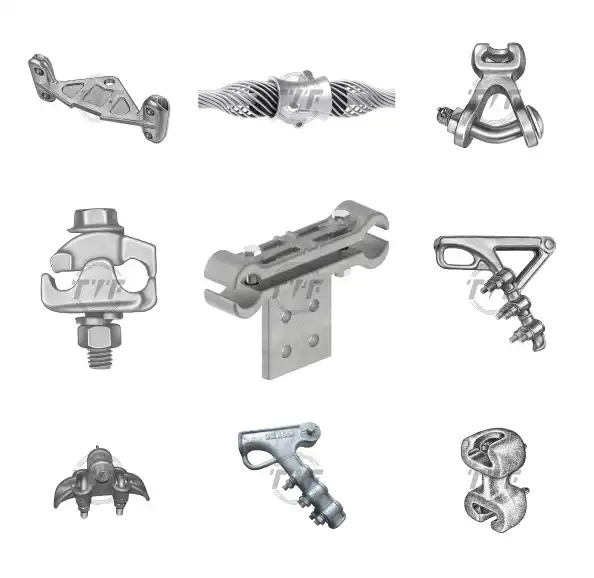
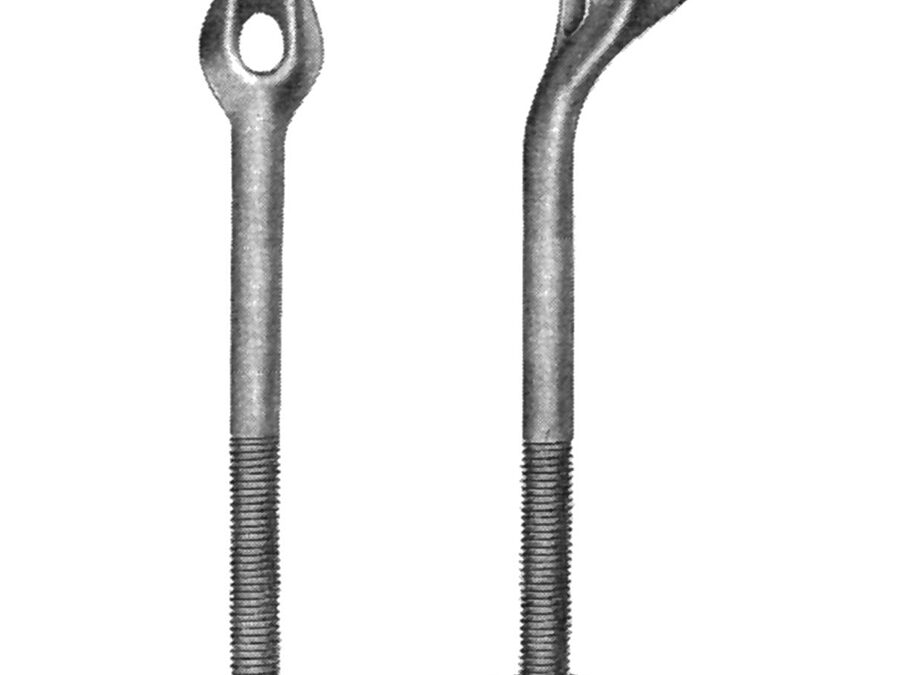
A thimble eye bolt is a fastening component designed to create a reinforced and wear-resistant anchoring point for conductors and guy wires in overhead electrical infrastructure. It is an eye bolt with a closed circular eye used for load attachment. A thimble insert seated inside the eye protects the eye and the connected conductor from abrasion, deformation, and fatigue. The thimble eye bolt is from hot-dip galvanized steel for corrosion resistance. They are also manufactured to ASTM, IEC, and ANSI utility hardware standards. Thimble eye bolts reduce wear, maintain structural integrity, and improve long-term reliability. This makes them crucial components in modern overhead line construction and maintenance.
The working principle of the thimble eye bolt
The thimble eye provides secure load anchoring, controlled stress distribution, and wear reduction at mechanical connection points within line assemblies. On utility poles, the threaded shank of the thimble eye is tightened to form a rigid mechanical anchor. The tensile forces generated by conductors, guy wires, or insulator strings are transmitted through the connected hardware into the eye of the bolt and transferred to the support structure. The thimble maintains a smooth, uniform bearing surface to enforce the correct minimum bending radius for the wire. This prevents sharp bending, which causes strand fatigue and premature failure in overhead lines. Additionally, it reduces friction between moving components and prevents wear and deformation of the eye. This makes it a crucial component in overhead power networks exposed to wind-induced vibration, conductor movement, and thermal expansion. Their stability supports guying systems and dead-end assemblies where forces can compromise pole integrity.
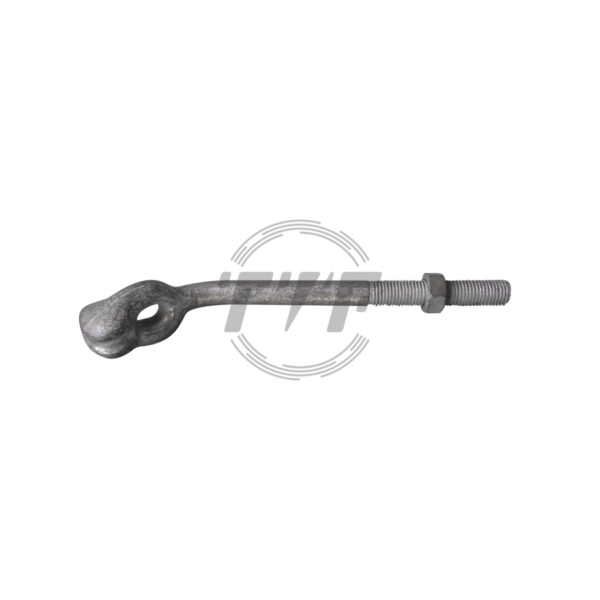
Corrosion Resistant Thimble Eye Bolt
A thimble eye bolt is a heavy-duty utility fastener engineered to provide a reinforced anchoring and connection point in overhead power line construction. It integrates a forged eye with an internal thimble insert to ensure controlled load transfer, abrasion resistance, and long-term mechanical stability in transmission and distribution networks. Thimble eye bolts are commonly used in guying systems, dead-end assemblies, and suspension hardware connections where high tensile forces and dynamic loads are present.
Key Features:
- Integrated Thimble Insert: Maintains correct bending radius and minimizes conductor or guy wire wear
- High Tensile Strength: Designed to withstand heavy mechanical loads in overhead line applications
- Optimized Load Distribution: Reinforced eye reduces stress concentration and fatigue
- Corrosion-Resistant Finish: Hot-dip galvanized for long-term outdoor performance
- Precision Threaded Shank: Ensures secure fastening to poles, crossarms, or steel structures
- Standards Compliance: Manufactured to ASTM, IEC, and ANSI utility hardware specifications
- Application Versatility: Suitable for transmission, distribution, and substation installations
Importance of utility eye bolt in overhead power networks
Using thimble eye bolts in overhead power networks ensures structural reliability, operational safety, and long-term durability of line assemblies. The thimble eye provides a secure anchoring point that reliably transfers the loads to poles. It reduces the risk of loosening, deformation, or mechanical failure at connection points. The thimble protects the eye from abrasion caused by conductor movement and vibration. It reduces strand damage and metal fatigue by maintaining a smooth bearing surface and proper bending radius. Thimble eye bolts prevent conductor drops and outages by maintaining consistent load alignment and preventing sharp bends and stress concentrations. Overhead power networks face wind, thermal expansion, and ice loading that lead to dynamic stresses. Thimble eye bolts absorb and distribute the forces evenly to maintain structural balance and tension control under environmental conditions. Additionally, the thimble eye bolt allows for quick installation and reliable integration with clevises, shackles, and insulator strings.
Features and components of the thimble eye
The thimble eye bolts consist of features and components engineered to meet the mechanical, environmental, and safety requirements of overhead power networks. Each of these contribute to load integrity, durability, and long-term performance under continuous stress. The thimble eye bolt has high load-bearing capacity, optimized stress distribution, corrosion resistance, dimensional accuracy, and resistance to dynamic loads. Here are the components of the thimble eye bolts.
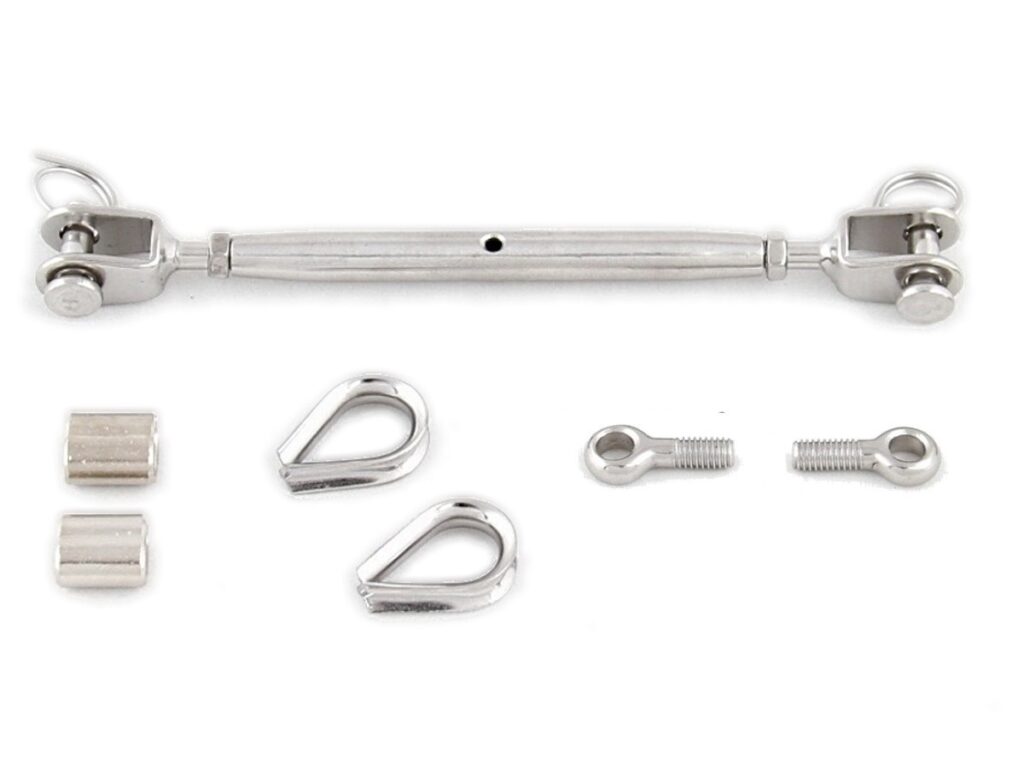
- Eye—this is the load attachment point that serves as the primary connection point for guy wires, conductors, shackles, clevises, or insulator hardware. The eye accommodates standard utility fittings to ensure secure load engagement.
- Thimble—this is the hardened metal liner inside the eye crucial for fatigue resistance in dynamic line conditions. It provides a rounded bearing surface, maintains the correct bending radius for wires, and prevents abrasion and eye deformation.
- Threaded shank—the shank allows the bolt to be secured into poles, crossarms, steel structures, or anchor plates. It ensures firm tightening, maintains axial load alignment, and supports high tensile forces.
- Nut and washer assembly—the thimble eye bolts connect with a hex nut for load locking and a flat or square washer for even load distribution against the mounting surface.
Types of Power line eye bolts
Straight shank thimble eye bolts
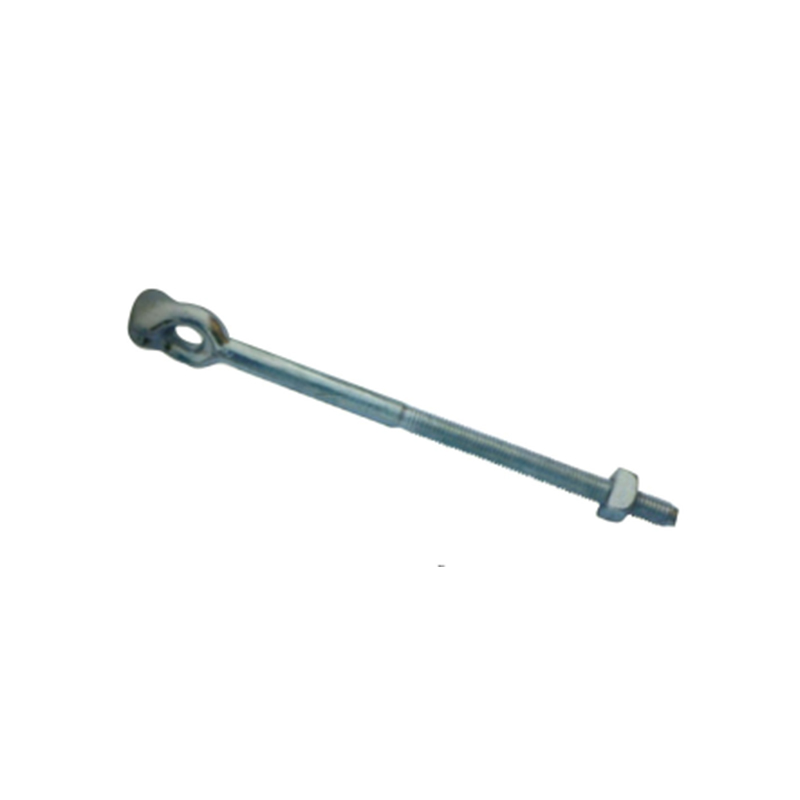
These bolts have a fully or partially threaded shank installed through wooden poles, crossarms, or steel plates. They function in guy wire terminations, anchoring assemblies, and overhead line connections.
Offset eye bolt
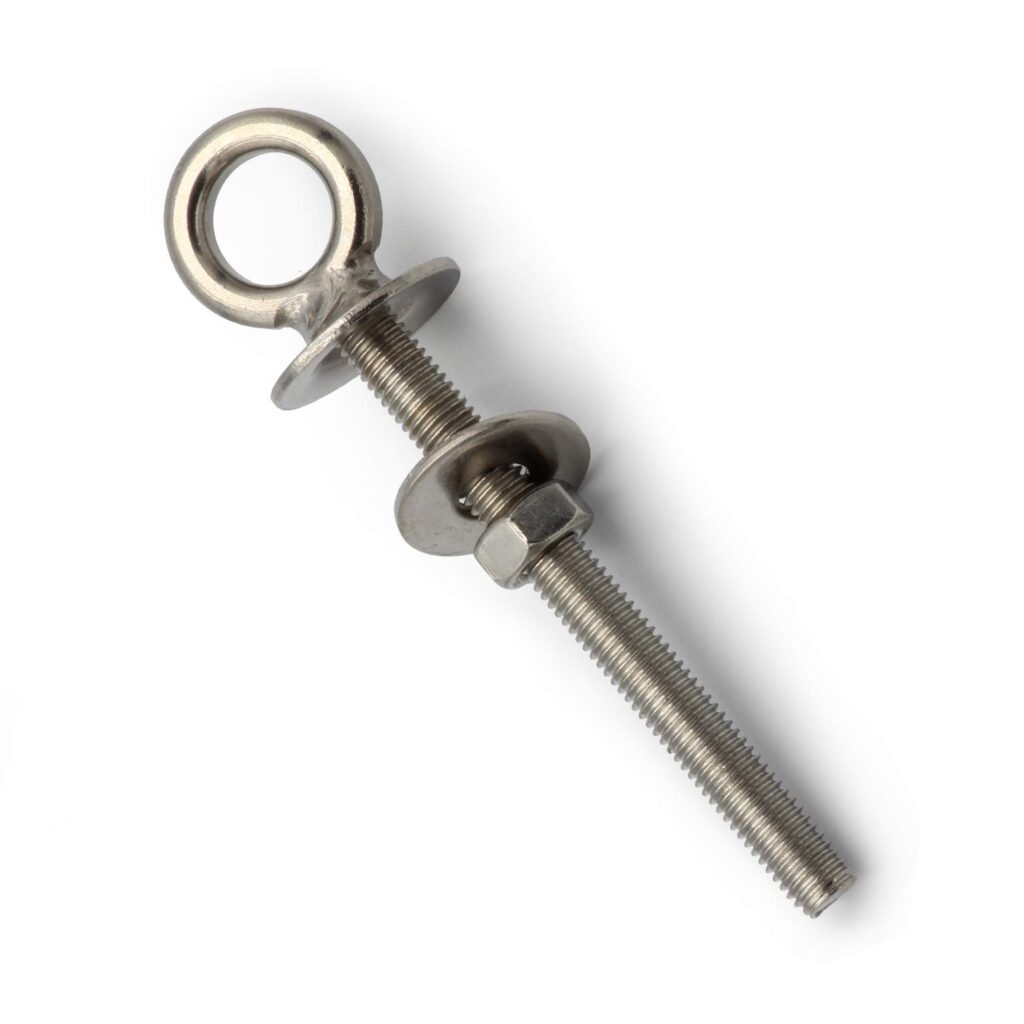
This features a slightly offset or angled shank to improve load alignment. It has an angled shank design and helps align tensile forces with the direction of the load. Offset eye bolts function in poles with limited clearance and situations that need controlled load direction.
Collared thimble eye bolts
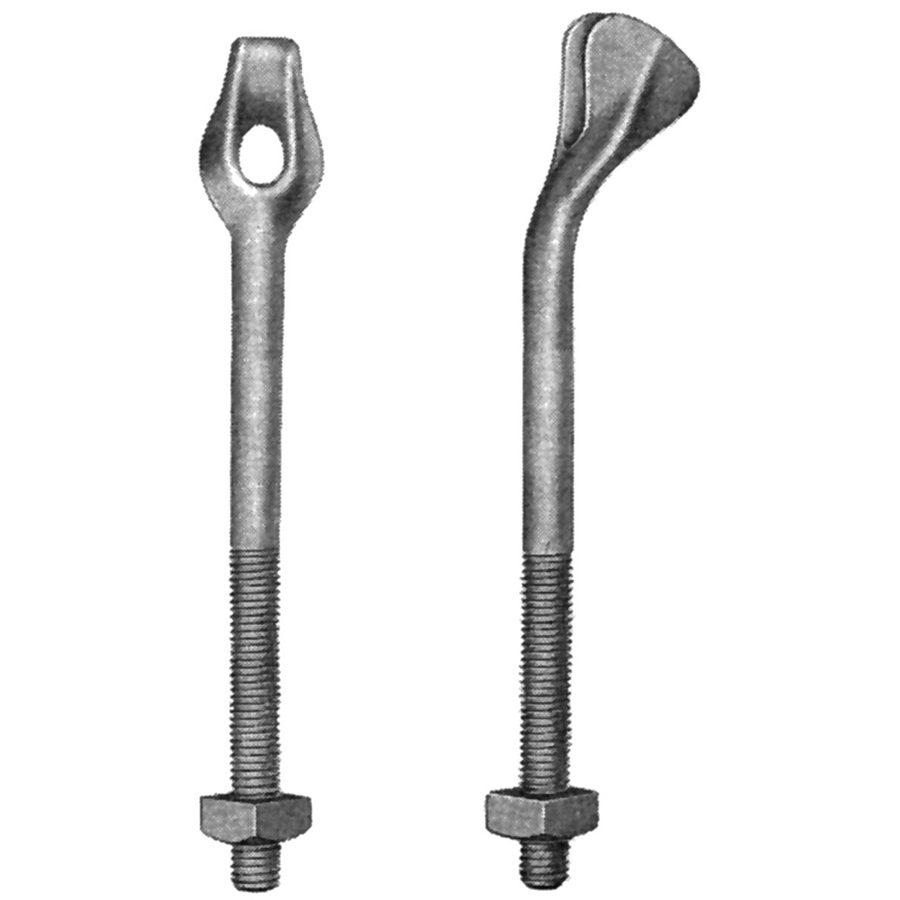
The collared design includes an integrated shoulder near the eye. The collar distributes the load against the mounting surface. It helps reduce dependence on washers and enhances structural stability. Collared eye bolts serve in high-load installations, steel structures, and areas exposed to significant vibrations.
Through-bolt thimble eye
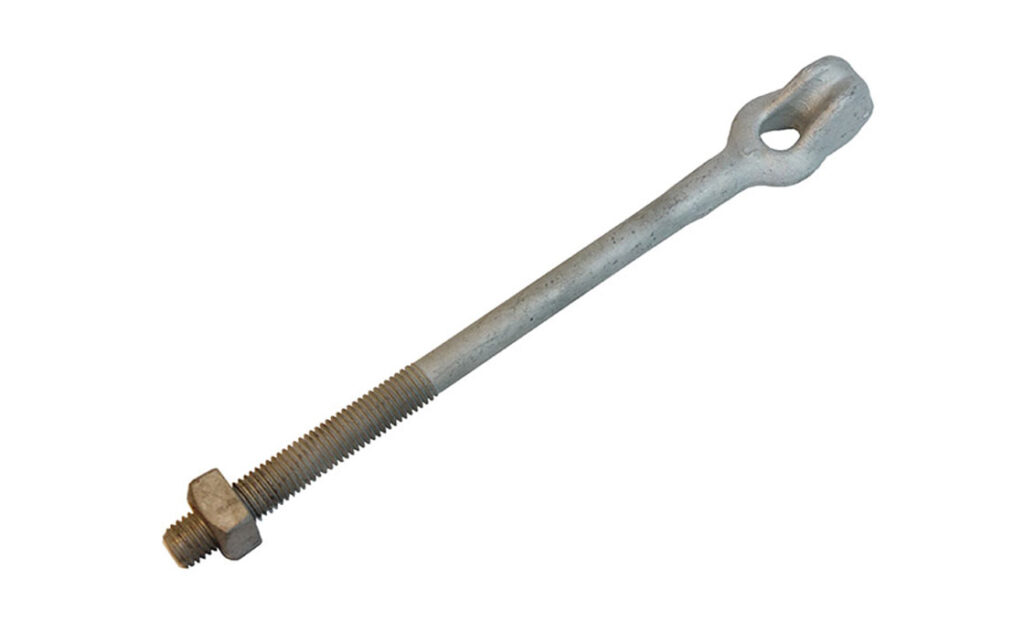
These are designed to pass through the supporting structure. They have long shanks with full threading and need drilling through poles. It works in high-tension guying systems, transmission poles, and permanent structural anchoring.
Standardized eye bolt
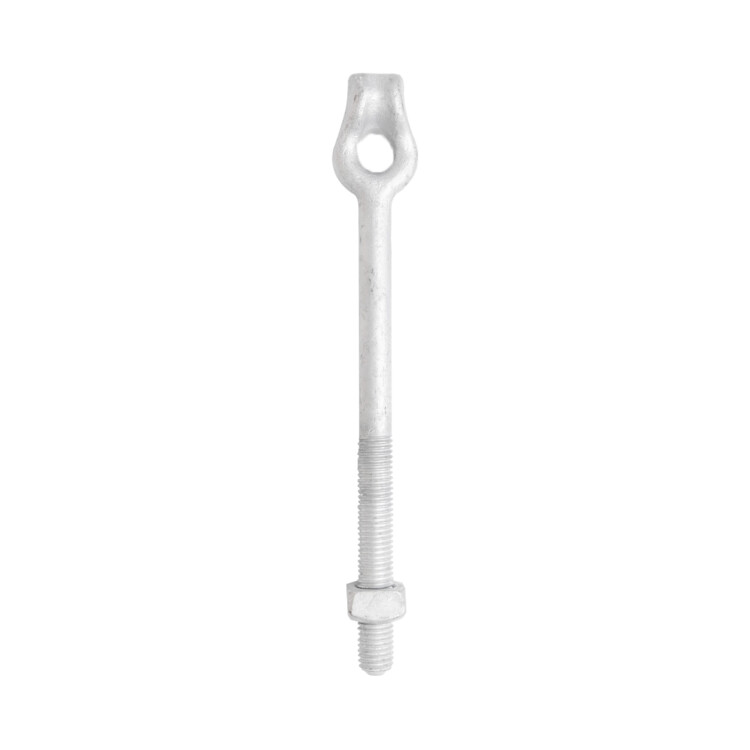
This is an eye bolt that follow ASTM, IEC, or ANSI specifications used in utility projects. There are also custom types manufactured for specialized load ratings, non-standard pole sizes, or unique environmental conditions.
Lag thread eye bolt
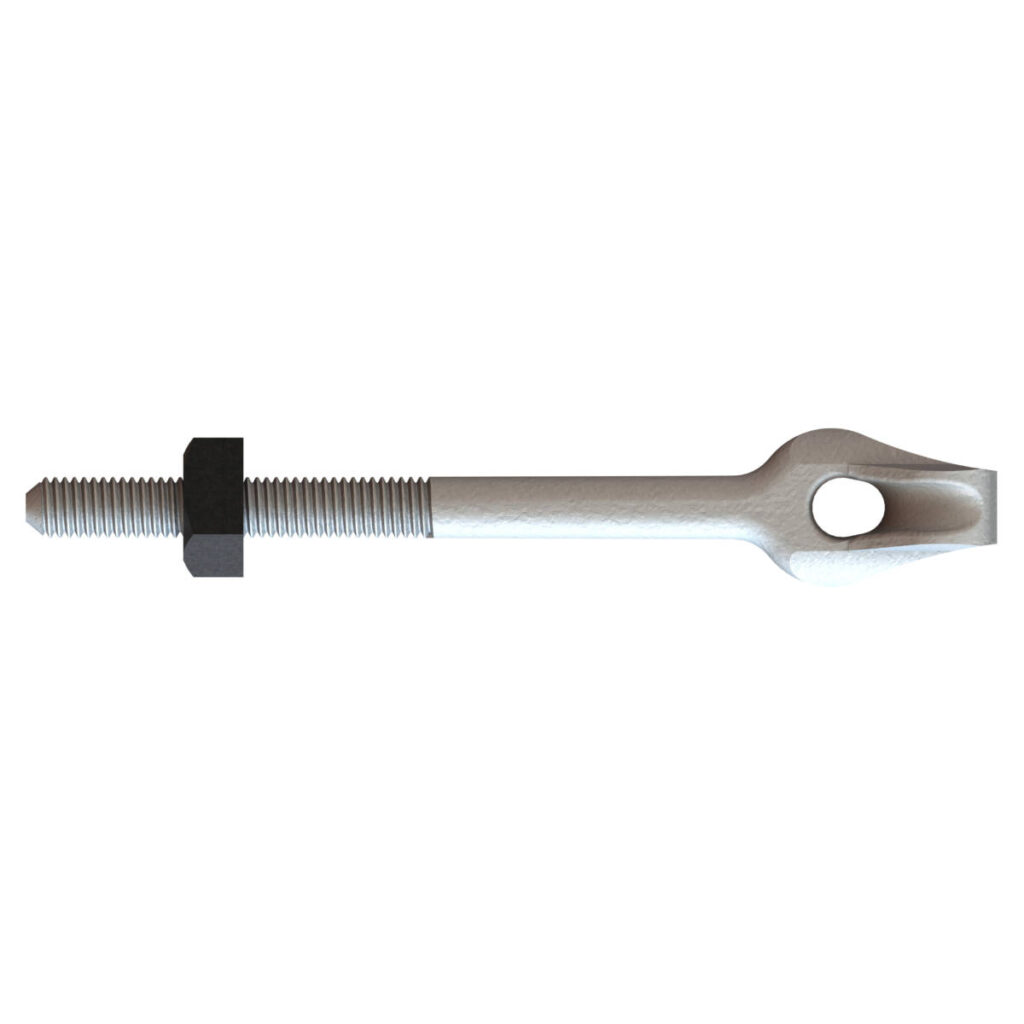
These bolts use lag threads instead of machine threads. It features coarse threads designed for direct insertion into wood. It functions on wooden utility poles, secondary distribution lines, and faster field installation.
Heavy-duty utility eye bolts
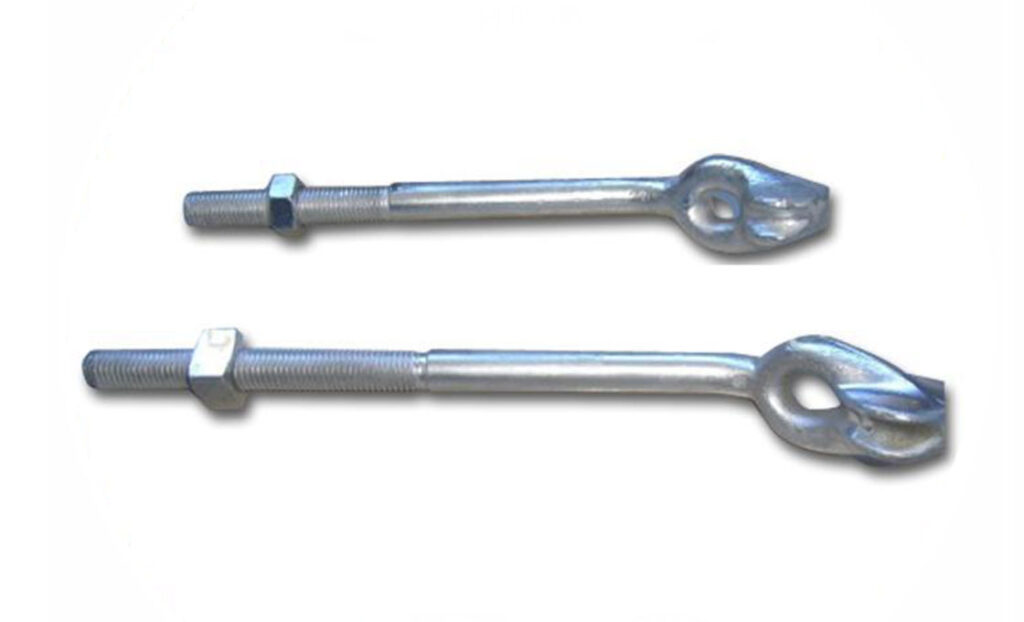
This thimble eye bolt is designed for extreme mechanical demands. It has a larger diameter shank, a reinforced eye and thicker thimble, and higher working load limits. It serves in long-span transmission lines and high-wind or ice-load regions.
Technical specifications for the thimble eye bolts
Considering the technical specifications for the thimble eye bolts helps define their mechanical performance, dimensional accuracy, material quality, and environmental durability. These help ensure safe load transfer, standard compatibility, and long-term reliability. Adhering to these specifications helps achieve safe, durable, and regulation-compliant overhead power network installations. Here are the technical specifications for the thimble eye bolts.
- Material specifications—thimble eye bolts are from carbon steel or forged steel for high tensile strength. The thimble insert is from ductile iron for some designs. These materials help withstand mechanical loading and outdoor exposure.
- Surface treatment and finish—the thimbles are hot-dip galvanized under utility coating standards. They are also designed to meet smallest zinc coating thickness requirements for outdoor conditions. The finish helps protect against moisture, UV exposure, pollution, and temperature extremes.
- Dimensional specifications—the dimensions include the shank diameter, thread type and pitch, thread length, eye internal diameter, and thimble radius. These dimensions ensure interoperability with other line hardware.
- Mechanical load ratings—thimble eye bolts have ratings for ultimate tensile strength, working load limit, and proof load. Load ratings vary by size and design and must align with the mechanical demands of the installation.
- Thread and fastening requirements—the specifications define thread engagement length, nut and washer dimensions, and least tightening torque to prevent loosening under vibration. These parameters ensure secure anchoring and consistent load transfer.
The application areas of utility eye in overhead power networks
The thimble eye bolts are essential in mechanical connection points that need secure anchoring, controlled load transfer, and wear protection. Their design makes them crucial in transmission, distribution, and supporting infrastructure. Their key uses include:
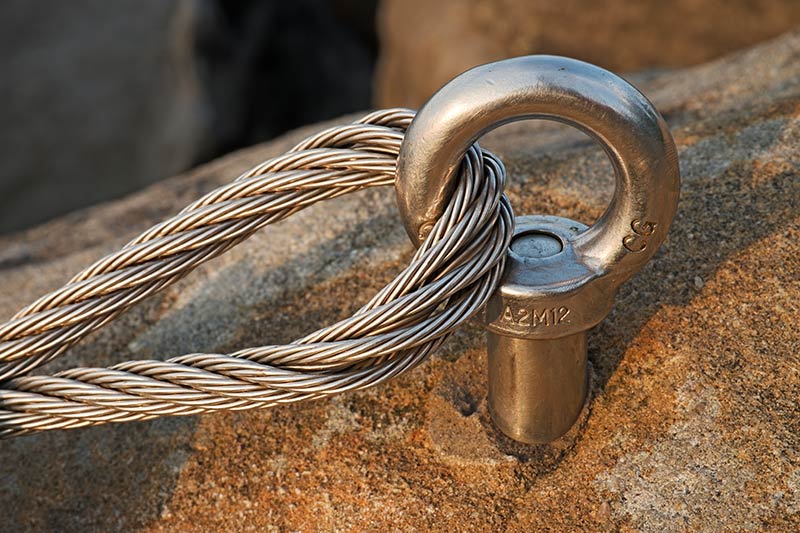
- Guying systems on utility poles—thimble eye bolts end and anchor guy wires that stabilize poles against loads. The thimble protects the guy strand at the eye to reduce abrasion caused by wind movements.
- Dead-end and anchor assemblies—thimble eye bolts serve as primary anchoring points for conductors at line terminations. They transfer high tensile forces to poles without damaging conductors.
- Suspension and hardware connections—the eye bolts connect insulator strings, clevises, shackles, and links within overhead line assemblies. They ensure proper alignment and reduce stress concentration at mechanical interfaces.
- Transmission line structures—the thimble eye bolts serve on steel lattice towers, concrete poles, anchor plates, and crossarms. They withstand high mechanical loads from wind pressure and thermal expansion.
- Distribution networks—the thimble eye supports secondary line anchoring, pole-mounted equipment stabilization, and compact guying arrangements. They offer durable performance with minimal maintenance.
- Substations and switching yards—the eye bolts work in substations to anchor bus support structures, grounding conductors, and mechanical bracing components.
- Renewable energy grid connections—thimble eye bolts work in wind and solar plant overhead interconnections, collector lines, and grid reinforcement projects. They provide mechanical reliability supporting variable power generation.
Following best practices for utility eye bolts in overhead power networks
When using thimble eye bolts, it is crucial to follow recommended practices from manufacturers, industry standards, and experts. This involves focusing on correct selection, proper installation, controlled loading, and ongoing inspection. Adhering to these practices ensures mechanical reliability, safety, and long service life of overhead line infrastructure. It is also crucial to adhere to utility installation manuals, engineering drawings, and safety procedures. It may also involve proper documentation and compliance to reduce risk and support long-term network performance. Other practices include conducting regular inspection and maintenance, controlling dynamic and environmental loads, protecting against corrosion, following correct installation procedures, and using compatible hardware. This ensures the thimble eye bolts perform their roles in overhead power lines. They also enhance system safety, durability, and operational continuity.