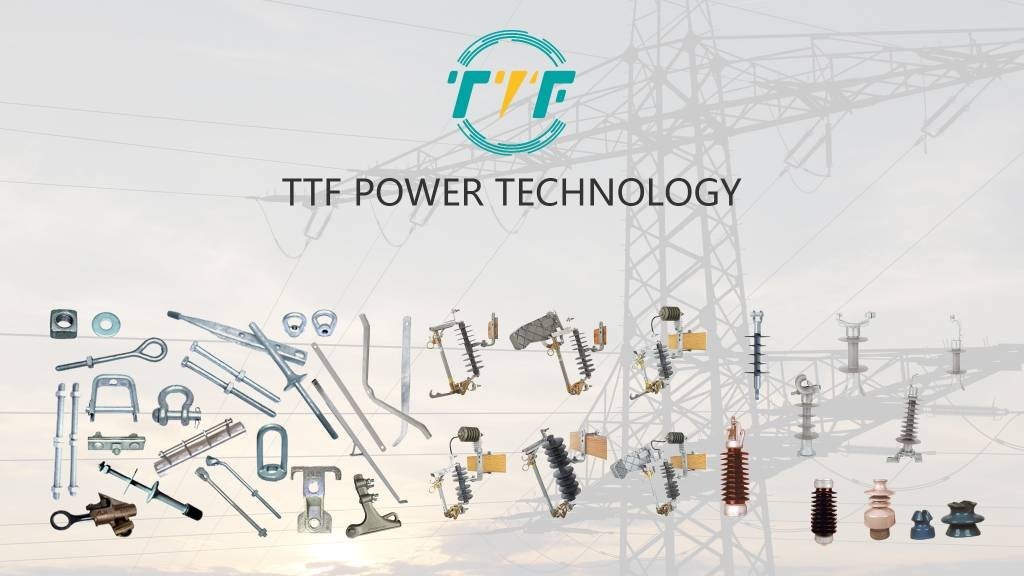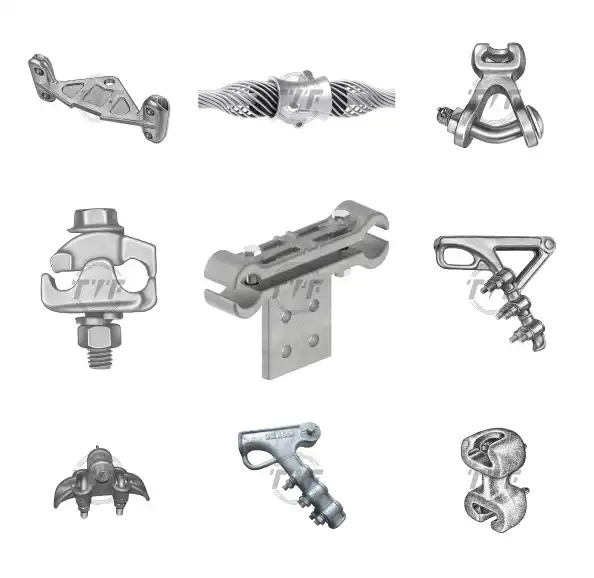
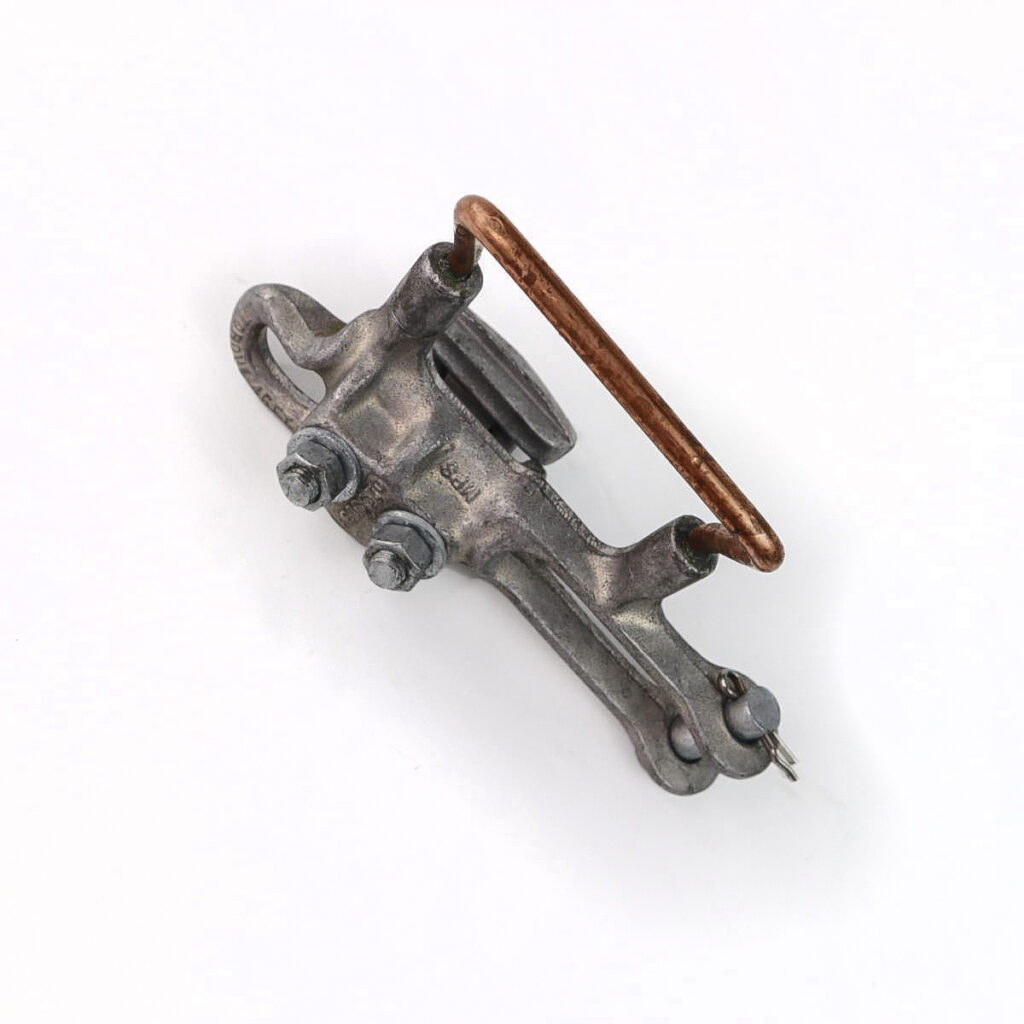
A straight-line stirrup clamp deadend is a line hardware fitting used to terminate, anchor, and secure a conductor at the end of a line section. It is designed to withstand the full tensile load of the conductor without causing damage. The stirrup clamp deadend grips the conductor to prevent it from slipping under mechanical loads. The clamp deadend helps support mechanical loads, keeps the conductor in place, and ensures that power transmission and distribution networks remain reliable and safe over time. Most of the stirrup deadend clamps consist of hot-dip galvanized forged steel, high-strength ductile iron, aluminum alloy, and stainless steel hardware for corrosive environments. These materials provide excellent mechanical strength, corrosion resistance, and durability in outdoor service. The stirrup clamps improve the reliability of distribution and transmission lines by withstanding extreme weather conditions. Quality assurance for the clamps enhances the safety and operational stability of the electrical network.
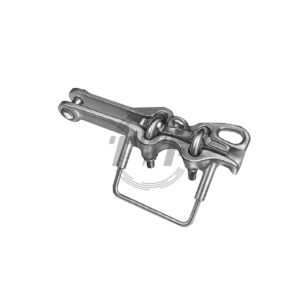
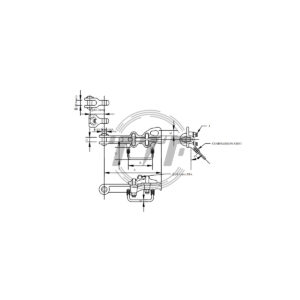
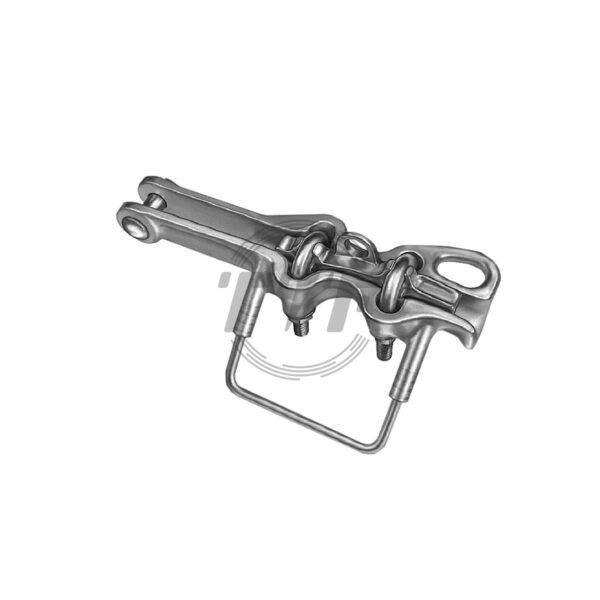
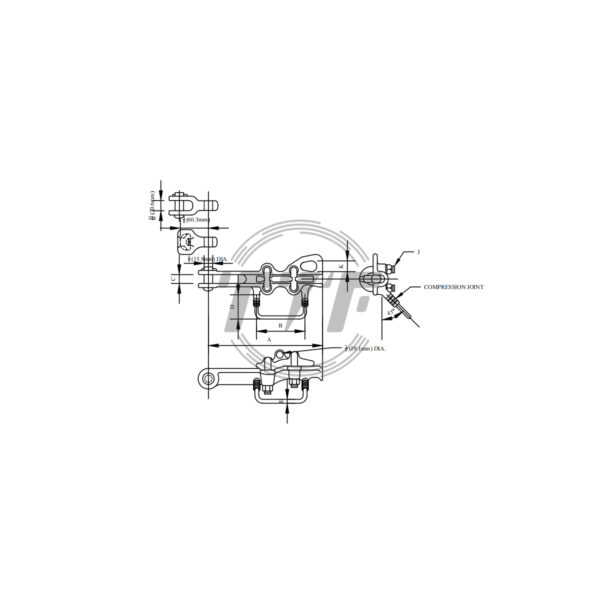
Non-fitting Straight line Stirrup Clamp Deadend
A Straight-Line Stirrup Clamp Deadend is a high-strength tension fitting designed to securely terminate and anchor overhead conductors in power transmission and distribution networks. It transfers the conductor’s tensile load to poles or towers while maintaining proper conductor alignment and minimizing mechanical stress. Manufactured from forged steel or ductile iron with a hot-dip galvanized finish, the clamp provides superior mechanical strength, corrosion resistance, and long-term reliability in demanding outdoor environments. It is suitable for medium- and high-voltage overhead line construction, rural electrification projects, substations, renewable energy installations, and utility infrastructure requiring dependable conductor dead-ending.
Key Features:
- High mechanical strength for secure conductor anchoring.
- Designed for straight-line dead-end applications.
- Uniform clamping pressure minimizes conductor strand damage.
- Forged steel or ductile iron construction for superior durability.
- Hot-dip galvanized coating provides excellent corrosion resistance.
- Compatible with a wide range of conductor sizes and types.
- Precision-machined components ensure accurate fit and easy installation.
- High-tensile bolts and fasteners maintain reliable clamping force.
- Excellent resistance to vibration, wind loading, and thermal cycling.
- Low-maintenance design for extended service life.
- Suitable for transmission, distribution, substations, and renewable energy power networks.
- Manufactured and tested to meet applicable IEC, ASTM, ANSI, and utility quality standards.
Key components of the straight-line stirrup clamp deadend
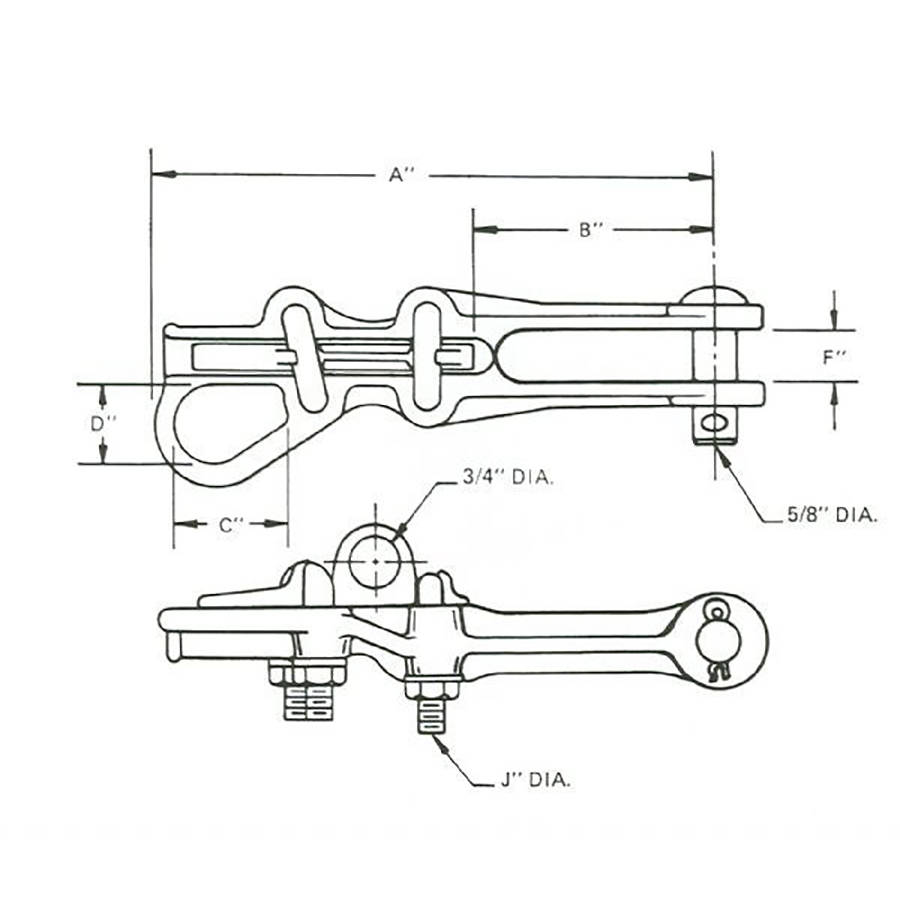
A straight-line stirrup clamp deadend consists of components working together to terminate on an overhead conductor and transfer mechanical loads to the supporting structure. Each of these components performs various functions that contribute to the clamp’s mechanical strength, electrical reliability, and durability. These components include:
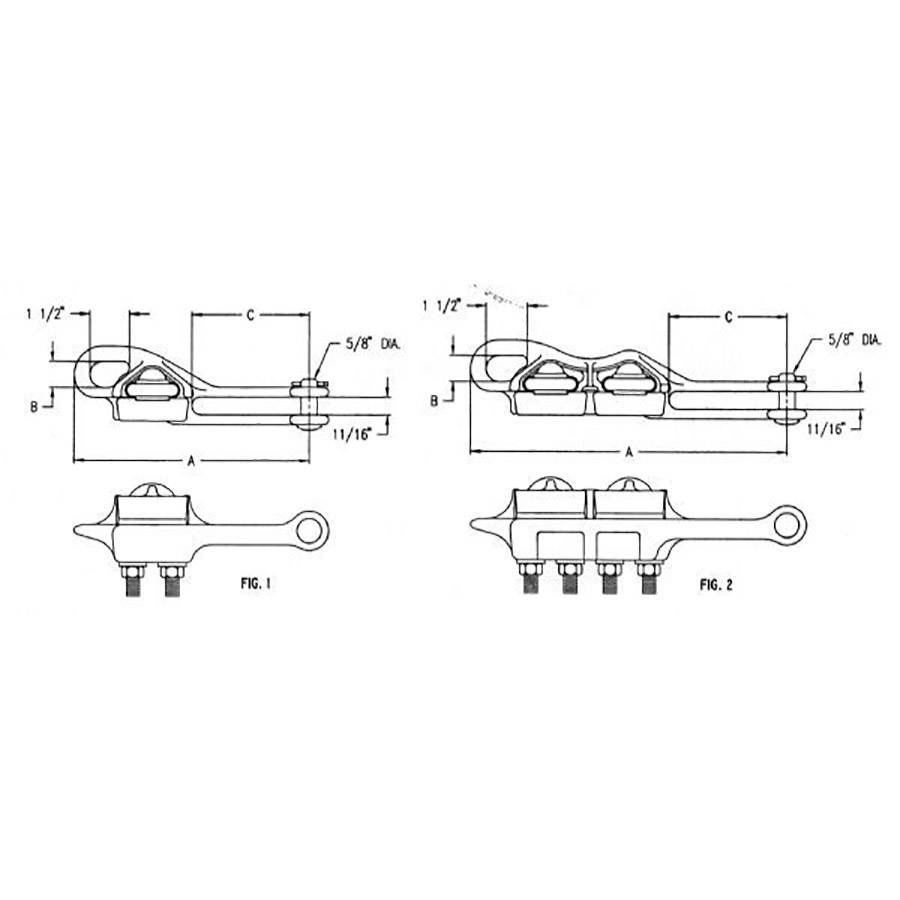
- The clamp body—this supports the conductor and bears most of the mechanical load applied during installation and operation. The conductor sits within a machined groove in the clamp body, which distributes compressive forces across the conductor surface. The body is from forged steel, ductile iron, or aluminum alloy. These materials help provide high tensile strength while resisting deformation under loading.
- Keeper—this clamping plate fits over the conductor and works together with the clamp body to grip the conductor firmly. It creates enough clamping pressure to prevent conductor slippage without crushing the conductor strands.
- Stirrup—this attachment loop links the dead-end clamp to other line hardware. It connects to insulators, clevises, shackles, or yoke plates. It has excellent tensile strength and fatigue resistance to carry full mechanical loads from the conductor. The stirrup’s geometry allows limited articulation that enables load to remain aligned and reduces bending stresses on connected hardware.
- Clamping bolts – these generate the forces needed to secure the keeper against the clamp body. It offers proper bolt tightening to achieve the specified holding strength while avoiding conductor damage.
- Conductor groove—this is the precision-machined channel within the clamp body that accommodates the conductor. The dimensions should match specific conductor sizes and types to ensure maximum contact area and uniform stress distribution.
- Protective surface coating – most straight-line stirrup clamp deadends have hot-dip galvanization under international standards. This coating protects against corrosion and oxidation, reduce maintenance requirements, and preserve mechanical performance.
The roles of quality assurance during the manufacture of stirrup clamp deadends
Quality assurance for the clamps ensures they meet mechanical, dimensional, and corrosion-resistance requirements. QA makes them reliable for overhead power transmission and distribution networks. It also helps detect defects that can lead to conductor slippage, premature equipment failure, or power outages. During manufacturing, quality assurance ensures every clamp delivers consistent performance, long service life, and compliance with international standards. Here are the roles of quality assurance during stirrup clamp manufacture.
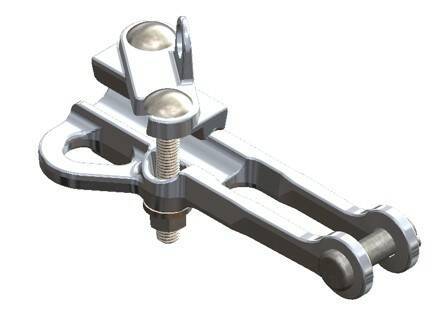
- Verifying raw material quality—QA begins with the inspection of raw materials by checking the chemical composition, mechanical properties, and traceability of materials. Material verification ensures that each clamp passes the required tensile strength, toughness, ductility, and corrosion resistance.
- Maintaining dimensional accuracy—each stirrup dead end must be manufactured within strict dimensional tolerances to ensure compatibility with specified conductor sizes. This ensures proper conductor fit, prevents installation difficulties, maintains uniform clamping pressure, and ensures compatibility with insulators and fittings.
- Monitoring manufacturing processes – QA monitors production stages including forging, casting, machining, drilling, threading, assembly, and finishing. Process inspections identify deviations before defective products progress to manufacturing stages.
- Mechanical strength testing—this verifies that the completed stirrup clamp deadend can withstand specified tensile and mechanical loads. These tests include ultimate tensile strength tests, proof load tests, mechanical load retention tests, and fatigue testing.
- Ensuring proper surface finish – this coating is crucial for preventing corrosion. QA verifies galvanizing thickness, coating adhesion, surface smoothness, and absence of cracks or burrs.
- Verifying fastener quality – QA inspects thread accuracy, dimensional consistency, hardness, and mechanical strength for bolts, nuts, washers, and locking devices. This helps maintain secure clamping force, prevent bolt loosening, and improve vibration resistance.
- Performing non-destructive testing (NDT)—manufacturers use non-destructive testing techniques such as magnetic particle inspection, dye penetrant testing, ultrasonic testing, and radiographic inspection.
Quality failures of straight-line stirrup clamp deadends in power networks
Straight-line stirrup clamp deadend anchor conductors and transfer mechanical loads to power poles. They experience tensile forces, vibration, temperature fluctuations, and environmental exposure. Quality failures in the deadends can result in conductor slippage, hardware failure, increased maintenance costs, and prolonged power outages. Here are the common quality failures in straight-line stirrup clamps.
- Inferior material quality – low-grade steel, poor-quality aluminum alloys, or improperly treated ductile iron lack the strength and toughness needed for tension applications. These materials can deform under load, crack during service, or fail permanently.
- Casting and forging defects – defects during casting or forging can weaken the clamp body or stirrup. Common defects include internal voids, porosity, cold shuts, shrinkage cavities, surface cracks, and non-metallic inclusions.
- Poor machining accuracy – incorrect machining can produce dimensional inaccuracies that prevent the clamp from fitting the conductor. Improper dimensions reduce clamping effectiveness and increase localized stresses.
- Inadequate clamping force – improper manufacturing tolerances can prevent the clamp from achieving specified clamping pressure. Insufficient grip can cause conductor movement, loss of mechanical tension, increased vibration, and possible conductor disengagement.
- Cracking in the stirrup—the stirrup carries the mechanical load transferred from the conductor to the supporting structure. Cracks begin at welds, bends, sharp corners, or casting defects before propagating through the component.
- Improper heat treatment—incorrect heat treatment results in excessive hardness, brittleness, low tensile strength, and reduced fatigue life.
- Improper thread manufacturing – defective threads include cross-threading, incomplete threads, damaged threads, and incorrect thread dimensions.
Materials used for straight-line stirrup clamp deadend and the importance of quality assurance
The performance of a straight-line stirrup clamp depend heavily on the quality of the materials used during manufacture. They anchor conductors under high tensile loads while resisting mechanical fatigue, corrosion, vibration, and extreme weather conditions.
Forged carbon steel
The clamp body consists of forged carbon steel to enhance mechanical strength and toughness. The steel offers high tensile strength, impact resistance, superior fatigue performance, and good machinability. Quality assurance verifies steel’s chemical composition, mechanical properties, and forging quality.
Ductile iron
This is common for clamp bodies since it combines high strength with excellent ductility and casting characteristics. It offers high mechanical strength, wear resistance, good shock absorption, and good machinability. Quality assurance for the iron includes metallurgical analysis, nodularity inspection, dimensional verification, and non-destructive testing.
Aluminum alloy
Manufacturers use aluminum alloy components to reduce galvanic corrosion and reduce weight. It offers high corrosion resistance, good electrical conductivity, strength-to-weight ratio, and compatibility with aluminum conductors. Quality assurance confirms alloy composition, mechanical strength, surface finish, and dimensional accuracy.
Hot-dip galvanized steel
Steel components consist of hot-dip galvanizing to prevent corrosion in outdoor environments. This coating offers excellent corrosion resistance, a long service life, a self-protecting zinc layer, and is suitable for harsh environments. QA verifies coating thickness, adhesion, surface uniformity, and compliance with applicable galvanizing standards.
Stainless steel
Steel is common for fasteners installed in coastal, marine, or industrial environments where corrosion risks are high. Steel has excellent corrosion resistance, high strength, good fatigue performance, durability, and low maintenance needs. Quality assurance ensures the use of the correct steel grade and verifies thread quality, hardness, corrosion resistance, and dimensional accuracy to maintain reliable fastening throughout the service life.
TTF-Certified Straight-line stirrup clamp deadend. Why we certify:
TTF’s approach to power line hardware services results in optimal product quality, strict adherence to custom design, and reduced cost. We are constantly checking manufacturing processes, addressing material concerns, and improving staff expertise to ensure the best quality product. Our quality control for the stirrup clamp deadend begins with the first batch of samples that you received from us. And this continues through all production phases, where our QC staff never stop looking for opportunities to improve product quality. We offer:
- Tolerance Analysis
- Tooling Life Analysis
- Rockwell Hardness Testing per ASTM E18
- Brinell Hardness Testing per ASTM E10
- Magnetic Particle Testing per ASTM E1444 CMM (Coordinate Measuring Machine) Testing
- 24″ Optical Comparator for Complex Measurements
- Tensile/proof load testing up to 160,000 lbs (700 kN)
- Hot Dip Galvanizing Plating Thickness per ASTM E376
- Torque Testing
- Roughness Testing
- Lifetime Sample Retention
- Dimensional Testing
- Mechanical Testing
In summary
Straight-line stirrup clamp deadends ensure the safe anchoring and mechanical stability of overhead power transmission and distribution conductors. Their performance depends on robust design, high-quality materials, precision manufacturing, and quality assurance throughout production. The clamp deadend consist of robust materials that help them withstand heavy mechanical loads, environmental exposure, and operational stresses. Comprehensive testing and compliance with international standards help prevent defects, reduce maintenance, and extend service life. Proper clamp deadend selection can improve network reliability, enhance public safety, and achieve more resilient power infrastructure.