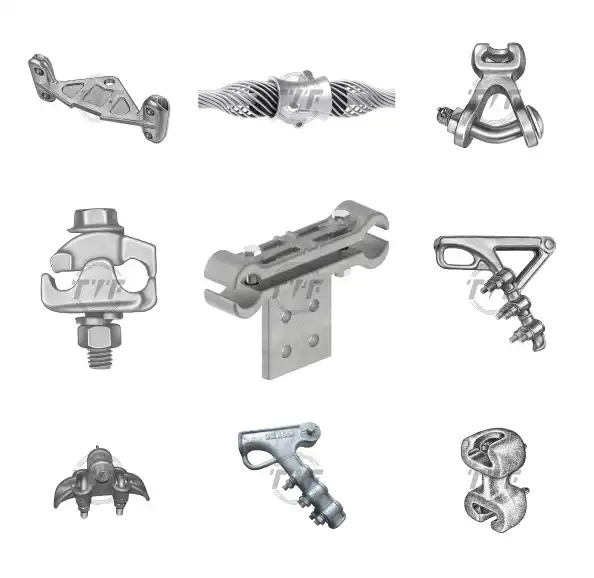
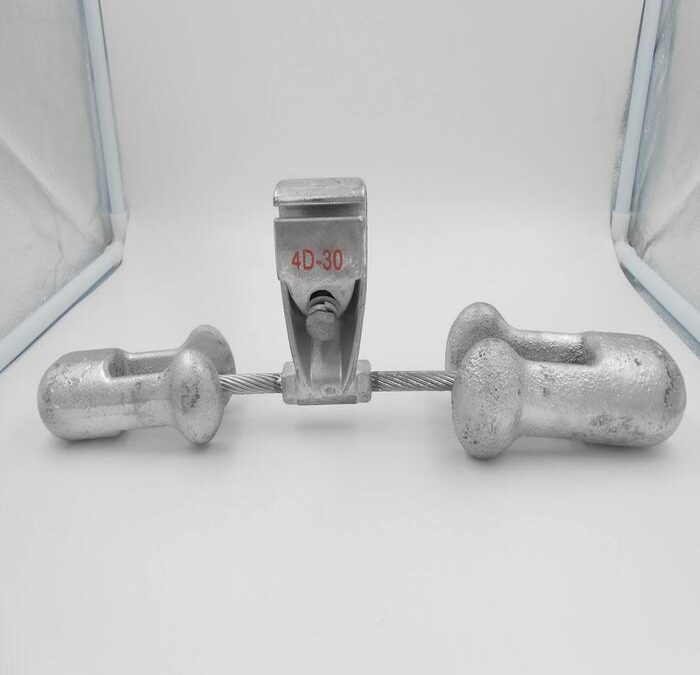
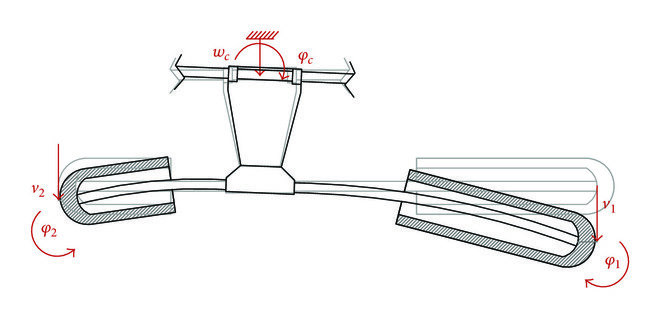
A stockbridge damper is a vibration control device installed on overhead transmission lines to suppress wind-induced oscillations. It is essential for networks experiencing aeolian vibrations that can cause long-term fatigue damage in conductors. When wind flows across a conductor, the damper generates alternating lift forces leading to cyclic vibration. The damper absorbs and dissipates vibrational energy to prevent it from concentrating at critical spots. A stockbridge damper consists of messenger cable, two end weights, and a clamp. These components help convert mechanical energy into heat through internal friction in the messenger cable. The damper functions in high-voltage transmission lines, extra-high-voltage systems, long-span river crossings, and areas with wind regimes. Stockbridge dampers extend conductor life and maintain mechanical integrity. Conducting quality assurance for Stockbridge dampers helps ensure their reliability and safety of overhead power lines.
Importance of conducting quality assurance for stockbridge dampers used in power networks
Conducting quality assurance for stockbridge dampers influences conductor lifespan, structural integrity, and system reliability. Quality assurance verifies correct mass distribution and tuning frequency and proper messenger cable stiffness and damping characteristics. Improper manufacturing can lead to poor crimping between weights and messenger cable, material defects, and surface flaws that initiate corrosion. It does this through conducting tensile testing, fatigue testing, and metallurgical analysis. This ensures the damper withstands cyclic loading. Quality assurance for the dampers reduces stress concentration near clamps, reduces strand breakage, and protects insulators, clamps, and spacers. QA reduces maintenance interventions, emergency repairs, and unplanned outages. It also helps prevent damper failures that lead to conductor snapping, line faults, and safety hazards for maintenance personnel. It helps validate mechanical integrity, vibration performance, and environmental durability.
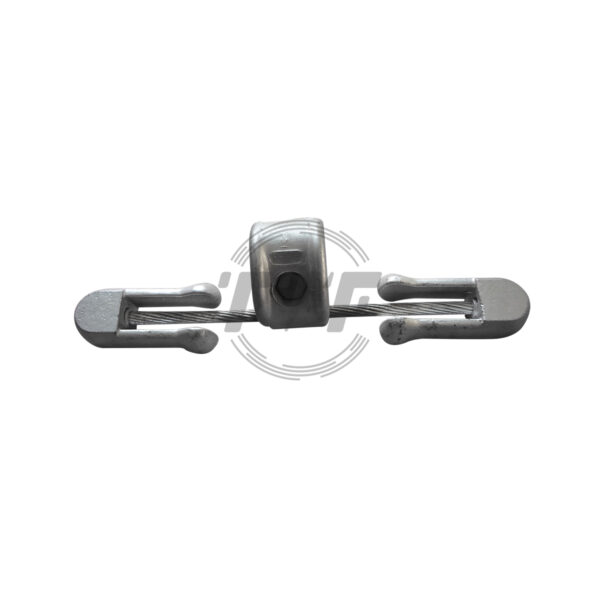
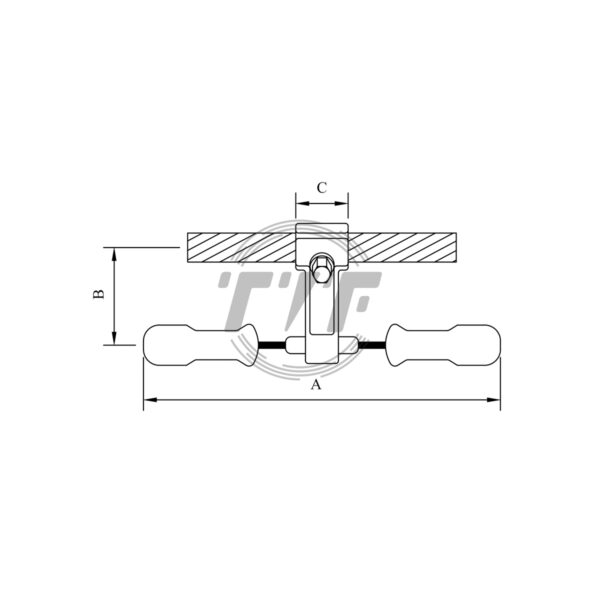
Stockbridge Damper
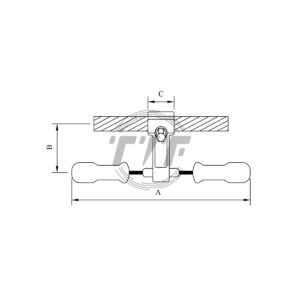
The Stockbridge damper is a mechanical vibration control device used in overhead power line construction to mitigate aeolian vibrations caused by wind. It consists of a short length of stranded steel cable with two weighted end masses, clamped to the conductor. The damper dissipates vibrational energy through flexing and friction, thereby preventing conductor fatigue, damage, and failure.
Key Features:
- Anti-vibration performance: Effectively suppresses aeolian vibrations and reduces stress on conductors.
- Corrosion-resistant materials: Made from galvanized steel or aluminum alloy for long-term outdoor durability.
- Universal compatibility: Designed for use on a wide range of conductor sizes and tensions.
- Tool-less installation: Can be installed with minimal tools and labor in field conditions.
- Optimized weight distribution: Counterweights tuned for specific frequency damping ranges.
- Maintenance-free: Long operational lifespan with no lubrication or servicing required.
The role of quality assurance during the manufacture of stockbridge dampers
Quality assurance during the manufacture of Stockbridge dampers ensures the device meets its functional requirements. During manufacturing, quality assurance ensures precision, durability, and functional reliability of stockbridge dampers. QA ensures that each unit mitigates vibration and protects overhead conductors throughout its operational life. Here are the functions of quality assurance in stockbridge manufacturing.
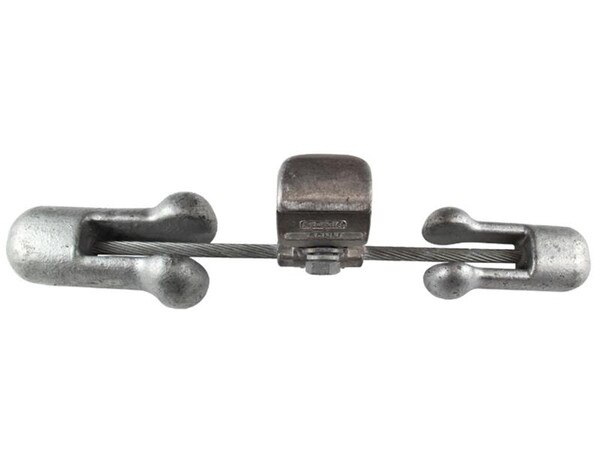
- Raw material qualification—quality assurance verifies tensile strength, fatigue resistance, and metallurgical consistency of messenger cable steel, end weights, and protective coatings. Material traceability systems ensure each batch meets specified mechanical and chemical properties.
- Dimensional and design conformance – the damping performance depends on precise geometry. Quality assurance enforces accurate mass of end weights, correct messenger cable length, and proper center of gravity alignment.
- Process control in assembly – manufacturing steps need QA oversight through crimping of weights onto the messenger cable, clamp fabrication and fastening integrity, and heat treatment processes. QA tracks crimping force and deformation to prevent slippage or stress concentration during service.
- Mechanical and fatigue testing – finished dampers undergo performance validation such as tensile tests, fatigue tests, and dynamic response testing to verify damping efficiency across frequency ranges.
- Functional tuning verification—quality assurance confirms the correct resonant frequency range and effective energy dissipation characteristics.
- Corrosion and environmental resistance verification – QA checks durability against environmental exposure like salt spray testing, coating thickness tests, and resistance to UV and temperature cycling.
Common quality failures facing vibrational dampers used in power networks
Poorly manufactured dampers lead to functional failure, reducing damping efficiency and exposing conductors to fatigue damage. Damper failures arise from lapses in design validation, material control, or manufacturing precision. Conducting quality assurance prevents these failure modes and ensures operational performance. Here are the common quality failures for stockbridge dampers.
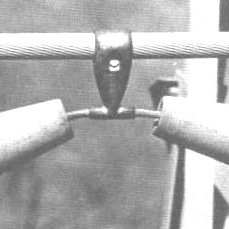
- Improper tuning and design deviations—failure in the damper occurs when end weights deviate from specified mass, messenger cable length, and frequency response. This leads to ineffective suppression of aeolian vibrations.
- Poor crimping – common issues include inadequate crimping force, slippage between components, and micro-cracks induced during swaging. These defects can lead to detachment of weights or reduced energy dissipation capacity under cyclic loading.
- Inferior material quality – weaknesses such as low-grade steel with poor fatigue resistance, casting defects, and inconsistent metallurgical properties speed up crack initiation and propagation, leading to premature mechanical failure.
- Corrosion and coating failures—Stockbridge dampers face environments that lead to inadequate galvanization, coating delamination, or corrosion of messenger cable strands.
- Fatigue failure of messenger cable—poor quality assurance can lead to early fatigue cracking, strand breakage, and loss of flexibility. This compromises the damper’s ability to absorb vibrational energy.
- Clamp and installation-related defects – damper failures can arise from poor clamp design, insufficient grip on the conductor, and incorrect installation torque.
- Inadequate testing and quality control—weakening QA processes lead to undetected manufacturing defects, lack of validation under simulated vibration conditions, and poor batch consistency.
Materials for stockbridge dampers and how quality assurance protects them
The material systems of the stockbridge dampers balance mechanical strength, fatigue resistance, and environmental durability. Quality assurance acts as a control layer that preserves the material properties throughout procurements, processing, and assembly. Quality assurance enforces strict controls on material selection, processing, protection, and testing. This ensures that each component retains its mechanical integrity and delivers sustained vibration mitigation throughout the damper’s operational life. QA verifies materials for the dampers, controls manufacturing processes, protects surface and coating, and conducts mechanical and fatigue testing. Effective QA prevents premature corrosion and fatigue failure, maintains consistent vibration damping characteristics, and extends the service life under harsh field conditions. Here are the common materials used in stockbridge dampers.
Messenger cable
This is made from high-strength galvanized steel and is designed for flexibility and fatigue endurance under cyclic bending. It also incorporates aluminum-clad steel for enhanced corrosion resistance.
End weights
This is from cast iron, forged or cast steel, and zinc or aluminum alloys. It provides mass inertia for vibration absorption.
Clamp
This is from aluminum alloy or ductile iron that provides a secure grip without damaging the conductor. It also provides mechanical compatibility with conductor material. These materials may face poor fit, cracking, or galvanic corrosion between dissimilar metals.
Protective coatings
This includes hot-dip galvanization for steel components and polymer coatings in aggressive environments. These materials may face coating degradation leading to corrosion and reduced structural integrity.
TTF-certified stockbridge dampers. Why we certify.
TTF’s approach to power line hardware services results in optimal product quality, strict adherence to custom design, and reduced cost. We are constantly checking manufacturing processes, addressing material concerns, and improving staff expertise to ensure the best quality product. Our quality control for the stockbridge dampers begins with the first batch of samples that you received from us. And this continues through all production phases, where our QC staff never stop looking for opportunities to improve product quality. We offer:
- Tolerance Analysis
- Tooling Life Analysis
- Rockwell Hardness Testing per ASTM E18
- Brinell Hardness Testing per ASTM E10
- Magnetic Particle Testing per ASTM E1444
- CMM (Coordinate Measuring Machine) Testing
- 24″ Optical Comparator for Complex Measurements
- Tensile/proof load testing up to 160,000 lbs (700 kN)
- Hot Dip Galvanizing Plating Thickness per ASTM E376
- Torque Testing
- Roughness Testing
- Lifetime Sample Retention
- Dimensional Testing
- Mechanical Testing
The advantages of using vibration dampers in power networks
Stockbridge dampers provide operational and economic benefits in overhead power networks. They address wind-induced conductor vibration and its downstream effects. The dampers mitigate vibration, extend asset life, and enhance system reliability, which makes them indispensable in modern power networks. These are the common advantages of stockbridge dampers in power networks.
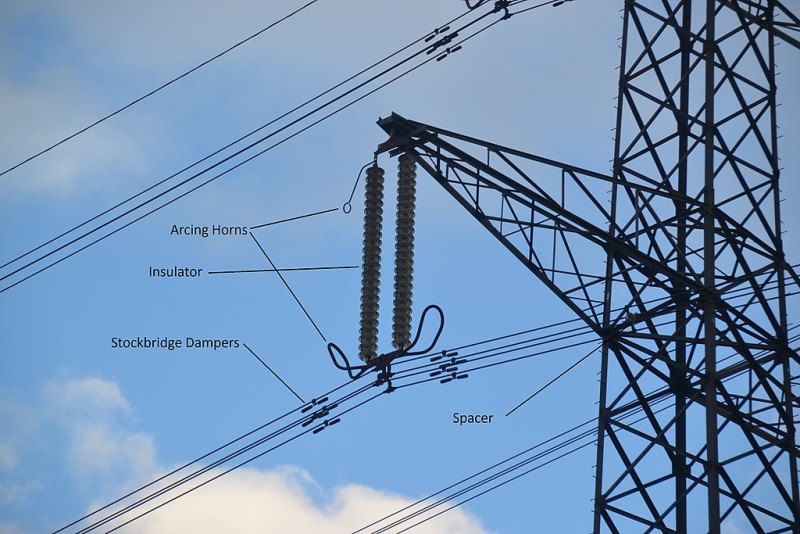
- Effective suppression of aeolian vibration – the dampers reduce high-frequency, low-amplitude oscillations caused by vortex shedding. They are also reducing cyclic bending at suspension points to prevent accumulation of fatigue damage in conductors.
- Extended conductor service life—the dampers reduce strand breakage in ACSR/AAAC conductors, protect against fatigue near clamps and fittings, and delay aging-related degradation. This increases the operational lifespan of transmission lines.
- Protection of line hardware—Stockbridge dampers protect suspension and tension clamps, insulator strings, and spacers and connectors. This helps lower vibration levels to reduce mechanical wear, loosening, and micro-damage across the system.
- Improved network reliability – uncontrolled vibration can lead to conductor snapping, flashovers due to mechanical instability, and forced outages. The dampers ensure stable and continuous power delivery in power networks.
- Adaptability to different line conditions—Stockbridge dampers can be tuned for specific conductor types and spans and are installed on various voltage levels.
- Passive and maintenance-free operation—the dampers operate without external power or control systems. They don’t need active monitoring, minimal maintenance, and high reliability due to simple mechanical design.
- Enhanced safety margins—Stockbridge dampers reduce the likelihood of mechanical failure, improve safety for maintenance personnel, and support compliance with grid safety standards.
- Cost efficiency over lifecycle—the dampers deliver lower maintenance frequency, reduced emergency repair costs, and fewer unplanned outages.
In conclusion,
Stockbridge dampers act as the defense against wind-induced vibration and its cumulative damage. Their effectiveness is rooted in precise material selection, accurate tuning, and robust manufacturing processes. Conducting quality assurance controls the framework that ensures each damper performs as intended under cyclic loading and environmental exposure. Failures in materials, assembly, or tuning can reduce damping efficiency, leading to conductor fatigue, hardware degradation, and increased outage risk. A well-structured quality assurance delivers extended conductor lifespan, reduced maintenance costs, and improved grid stability. Stockbridge dampers performance is proportional to the discipline applied in their quality assurance and manufacturing control processes.