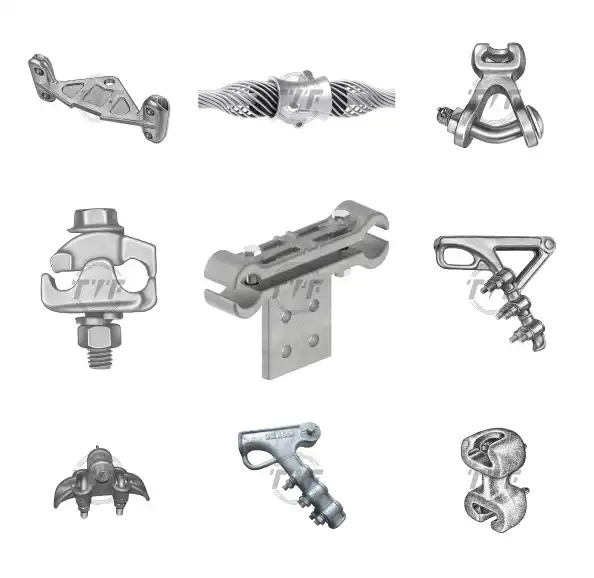
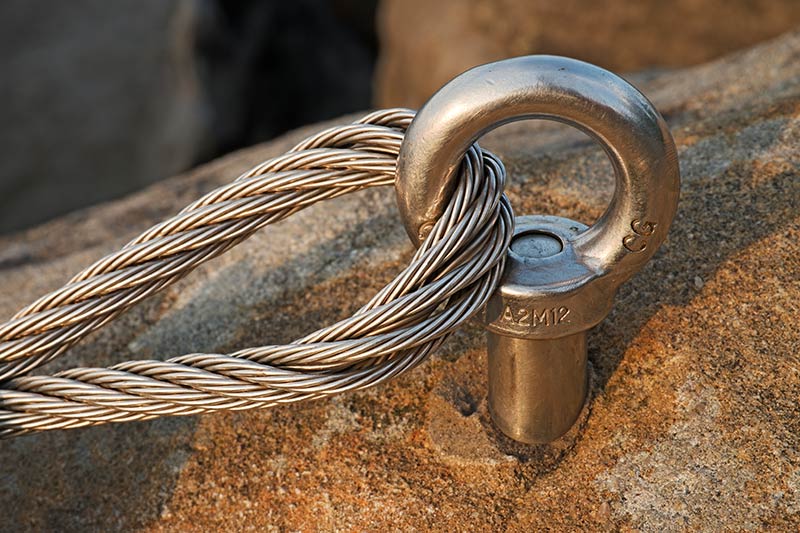
A steel eyenut is a forged fastening device with a threaded hole and a circular ring on one end. It screws onto a threaded bolt, stud, or rod to create a secure attachment point for lifting, rigging, anchoring, or tensioning applications. Steel eyenuts create secure lifting points for heavy equipment, connect guy wires, and attach insulators and hardware in transmission and distribution lines. The Eyenut consists of forged carbon steel, alloy steel, and stainless steel. It also has protective finishes including hot-dip galvanization, zinc plating, mechanical galvanization, and stainless steel passivation. Conducting quality assurance prevents Eyenut defects that lead to equipment damage, service interruptions, safety hazards, and costly repairs. With the FIFA World Cup ongoing, stadiums use steel eyenuts to anchor lightning trusses, broadcast cameras, and suspended equipment above the pitch. The eyenuts enable the matches to proceed without structural or safety compromise.
Key components and configuration of the steel eyenuts
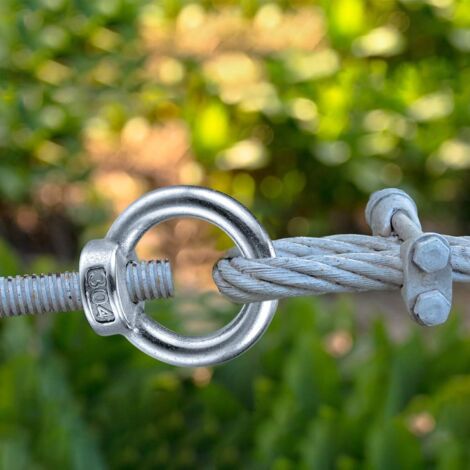
The steel eyenut provides a secure attachment point for lifting, anchoring, guying, and tensioning applications. Its configuration combines strength, load distribution, and ease of installation. Steel eyenuts are configured with guy bolts and anchor rods, deadend and suspension hardware connections, substation grounding, and telecommunications tower guying systems. These elements form a strong configuration capable of handling tensile, lifting, and anchoring loads in power and industrial infrastructure applications. The key components include:
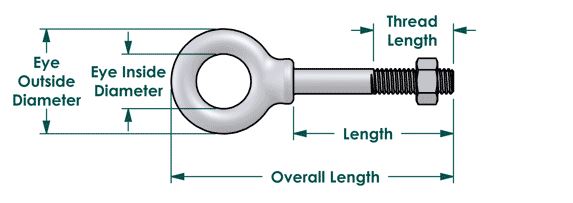
- Ring – this is the circular opening at the top of the Eyenut. It provides a connection point for hooks, shackles, cables, chains, or guy wires. The ring transfers loads from the connected hardware to the threaded body.
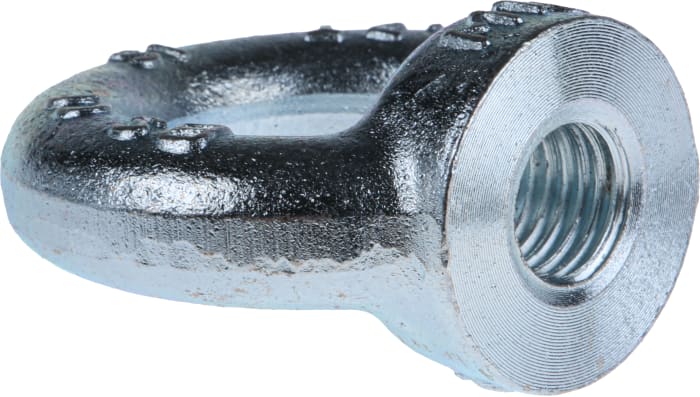
- Threaded body – this is the lower part of the Eyenut containing internal threads. It screws onto a threaded bolt, study, rod, or anchor assembly. It also creates a secure mechanical connection that transmits tensile and mechanical loads to the supporting structure.
- Bearing surface – this is the flat section at the base of the Eyenut that contacts the mounting surface. It distributes loads, reduces stress concentrations, and helps maintain proper alignment during installation.
- Shoulder—this increases strength under angular loading conditions, improves resistance to bending forces, and provides extra structural support in demanding applications.
- Protective coating – Eyenuts have protection surface treatments such as zinc plating, mechanical galvanization, and stainless steel finishes. The coatings prevent corrosion and rust, extend service life, and improve performance in harsh environments.
Quality assurance roles during the manufacture of steel eyenuts
Conducting quality assurance during the manufacture of steel eyenuts prevents failures that compromise safety, equipment integrity, and system reliability. QA ensures that the Eyenut meets specified mechanical, dimensional, and performance requirements before deployment. Here are the roles of quality assurance during the Eyenut manufacture.
- Ensuring material quality – quality assurance verifies that the steel used in manufacturing meets the needed chemical composition and mechanical properties. Material inspections and certifications help prevent the use of substandard raw materials that could reduce strength, toughness, and corrosion resistance.
- Verifying dimensional accuracy – QA procedures include measuring thread dimensions, eye diameter, body thickness, and geometry. This is to ensure compliance with design specifications.
- Detecting manufacturing defects – the manufacturing process includes forging, machining, threading, and heat treatment. QA helps identify surface cracks, internal voids, improper threading, material inclusions, and forging defects.
- Confirming mechanical strength—the Eyenuts must withstand tensile and mechanical loads throughout their service life. The QA program includes mechanical testing to verify that the product meets specified strength requirements. These tests include tensile strength testing, proof load testing, and load-bearing verification.
- Ensuring thread integrity – QA verifies thread profile, pitch, depth, and finish. This prevents thread stripping, ensures secure attachment, and maintains load-carrying capability.
- Validating protective coating quality—the process checks coating thickness, adhesion, surface uniformity, and coverage of threaded areas.
- Improving product reliability – ensuring consistency across production batches reduces performance variations.
Common quality failure modes of steel eyenuts in power networks
Steel eyenuts in power transmission and distribution networks face mechanical loads, vibration, weather exposure, and environmental stresses. Poor manufacturing quality control can result in failure modes that compromise network reliability and safety. Common failures include:
- Thread failure – this arises from incorrect thread dimensions, poor machining quality, material defects, and overloading. These lead to stripped threads, reduced load-carrying capacity, and detachment from anchor rods.
- Cracking in the eye section—the eye section experiences tensile stress that causes forging defects, improper heat treatment, material inclusions, and stress concentrations. This leads to progressive crack growth, sudden fracture, and failure of guy wire.
- Material defects—defects from raw materials reduce performance. Common defects include non-metallic inclusions, voids and porosity, segregation, and surface laminations.
- Corrosion and rusting—corrosion and rusting come from inadequate galvanization, damaged protective coatings, industrial pollution, and moisture penetration. These lead to loss of strength, seized threads, and hardware deterioration.
- Inadequate galvanizing quality – this leads to thin coating thickness, bare spots, uneven coating distribution, and peeling. These lead to premature corrosion, increased maintenance costs, and reduced equipment lifespan.
- Brittle fracture – this comes from improper heat treatment, excessive hardness, hydrogen embrittlement, and poor material selection. The defects may damage connected structures and cause failure.
Steel Eyenut functions in football stadiums hosting the World Cup 2026.
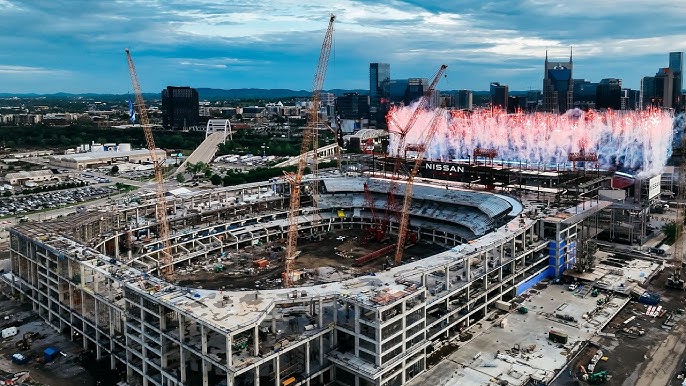
The World Cup 2026 stadiums are serviced by the standard utility grid that supports electricity needs during game days. For the MetLife Stadium, the upper rim features 1,350 building-integrated PV panels that produce 350 kilowatts of electricity. The solar system powers the stadium’s signature exterior LED lighting. The excess power generated by the PV panels feeds back into the local distribution. In this case steel eyenuts provide secure, load-rated connection points within complex rigging, lighting, roofing, and temporary event systems. Here are the key roles of the steel eyenuts in the football stadiums:
Overhead lighting and broadcast rigging
The World Cup stadiums depend on overhead systems for lighting, cameras, and broadcasting equipment. Steel eyenuts secure attachment of lighting trusses and LED arrays and support broadcast camera rigs and moving platforms. This is important since the systems experience high dynamic loads due to wind, vibration, and equipment movement.
Stage and event infrastructure support
Steel eyenuts interface with couplers and truss systems similar to those used in large arena staging setups. The Eyenuts anchor stage trusses and modular steel frames and connect rigging points for suspended LED screens.
Roof and retractable structure load management
Most football stadiums feature long-span roofs or retractable membrane systems. These systems impose complex loads on trusses and support members. The eyenuts help maintain alignment and stability under movement and wind-loading conditions. Steel eyenuts act as connection points for spreader cables and tension members.
Cable tensioning and structural bracing
Large stadiums use extensive bracing networks to resist wind and dynamic crowd loads. The eyenuts function as adjustable termination points for guy wires, tension regulators in bracing systems, and connection interfaces in steel lattice frameworks.
Maintenance and reconfigurable infrastructure
World Cup stadiums require fast reconfiguration between events. The steel eyenuts enable quick installation and removal of rigging systems. They also enable modular adaptation of lighting and AV layouts to reduce downtime between matches.
TTF-certified steel eyenuts. Why do we certify?
TTF’s approach to power line hardware services results in optimal product quality, strict adherence to custom design, and reduced cost. We are constantly checking manufacturing processes, addressing material concerns, and improving staff expertise to ensure the best quality product. Our quality control for the steel eyenuts begins with the first batch of samples that you received from us. And this continues through all production phases, where our QC staff never stop looking for opportunities to improve product quality. We offer:
- Tolerance Analysis
- Tooling Life Analysis
- Rockwell Hardness Testing per ASTM E18
- Brinell Hardness Testing per ASTM E10
- Magnetic Particle Testing per ASTM E1444 CMM (Coordinate Measuring Machine) Testing
- 24″ Optical Comparator for Complex Measurements
- Tensile/proof load testing up to 160,000 lbs (700 kN)
- Hot Dip Galvanizing Plating Thickness per ASTM E376
- Torque Testing
- Roughness Testing
- Lifetime Sample Retention
- Dimensional Testing
- Mechanical Testing
Benefits of steel Eyenuts in power networks
Steel eyenuts provide reliable, standardized, and high-strength connection points for mechanical and structural assemblies. Their use provides safety, durability, and operational efficiency in demanding outdoor environments. Here are their key advantages in power networks.
- High mechanical strength and load capacity – steel Eyenuts handle tensile and dynamic loads in power line structures. They support conductor tensioning and guy wire loads and maintain structural integrity under wind and vibration forces.
- Enhanced structural stability – steel Eyenuts provide secure load transfer between components and reduce stress concentration at connection points.
- Corrosion resistance in outdoor environments—the eyenuts have hot-dip galvanization or coatings that resist rust and oxidation.
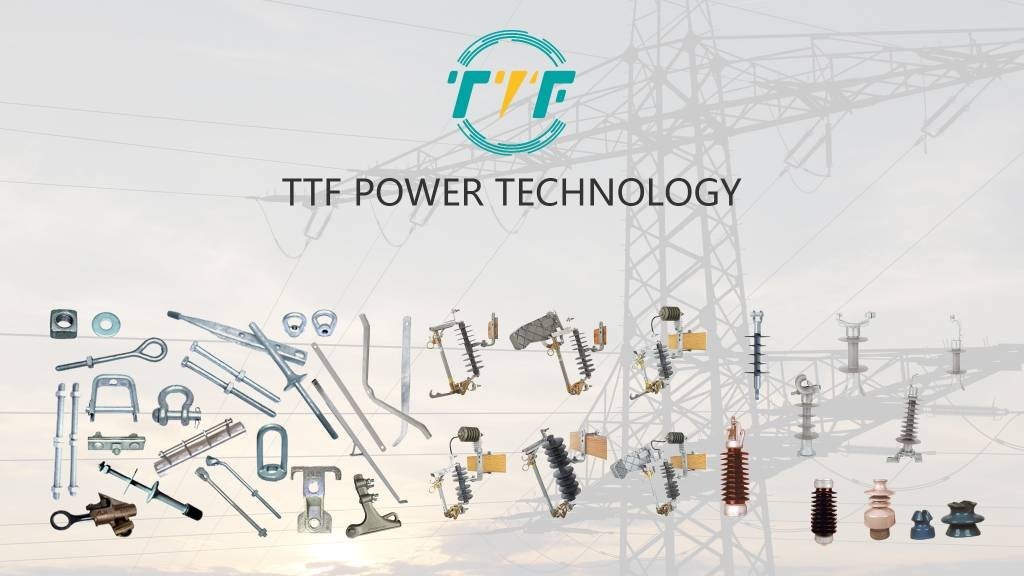
- Compatibility with other hardware systems—the Eyenuts work with insulator strings, clevis fittings, and clamps. They also support modular infrastructure design and simplify procurement and inventory management.
In conclusion,
Steel eyenuts serve in power transmission and distribution systems. Their performance depends on material integrity, dimensional accuracy, coating quality, and proper load rating. Conducting quality assurance helps prevent common failure modes such as thread stripping, corrosion, cracking, and fatigue damage that can compromise network reliability and safety. Steel eyenuts provide durable load transfer points for guying systems, anchoring assemblies, and structural connections. Their configuration supports easy installation, compatibility with other hardware, and efficient maintenance practices.