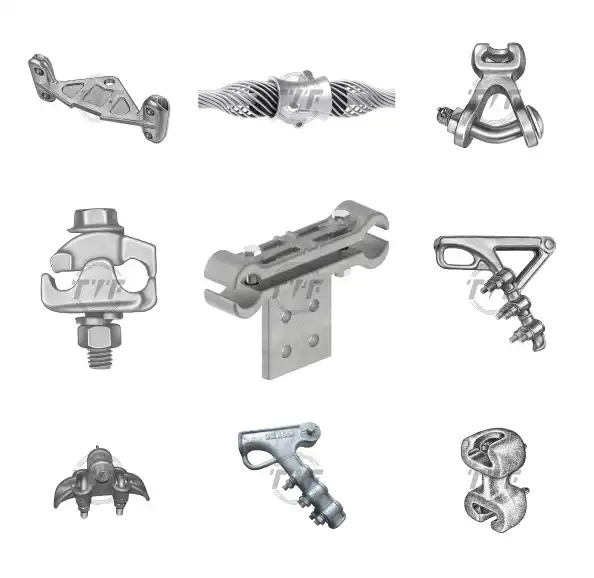
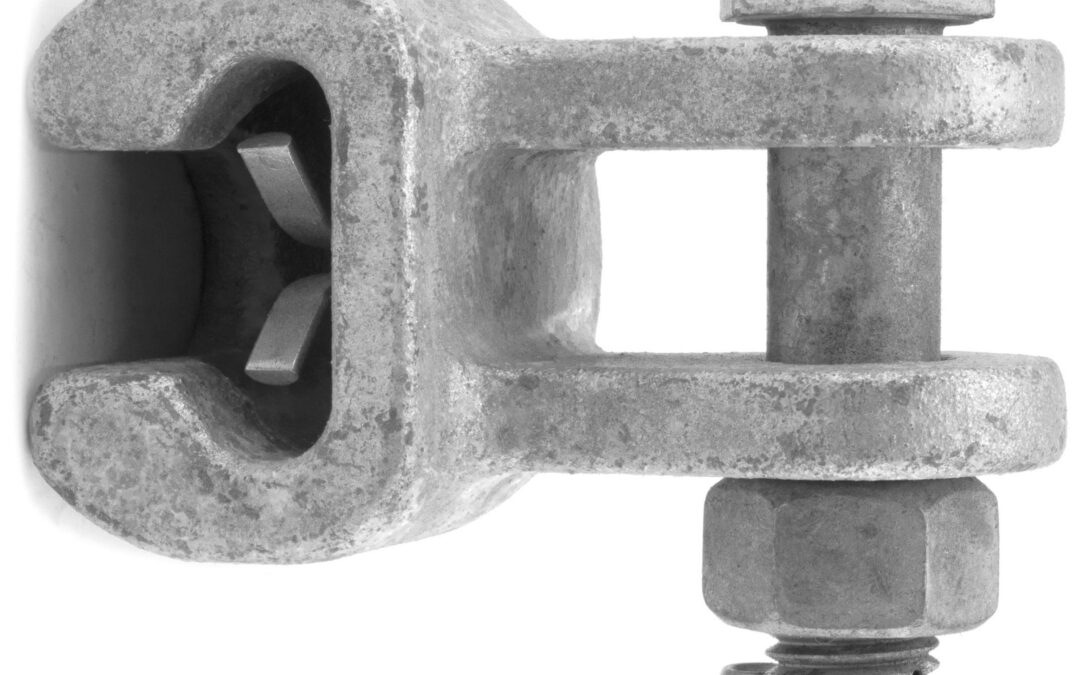
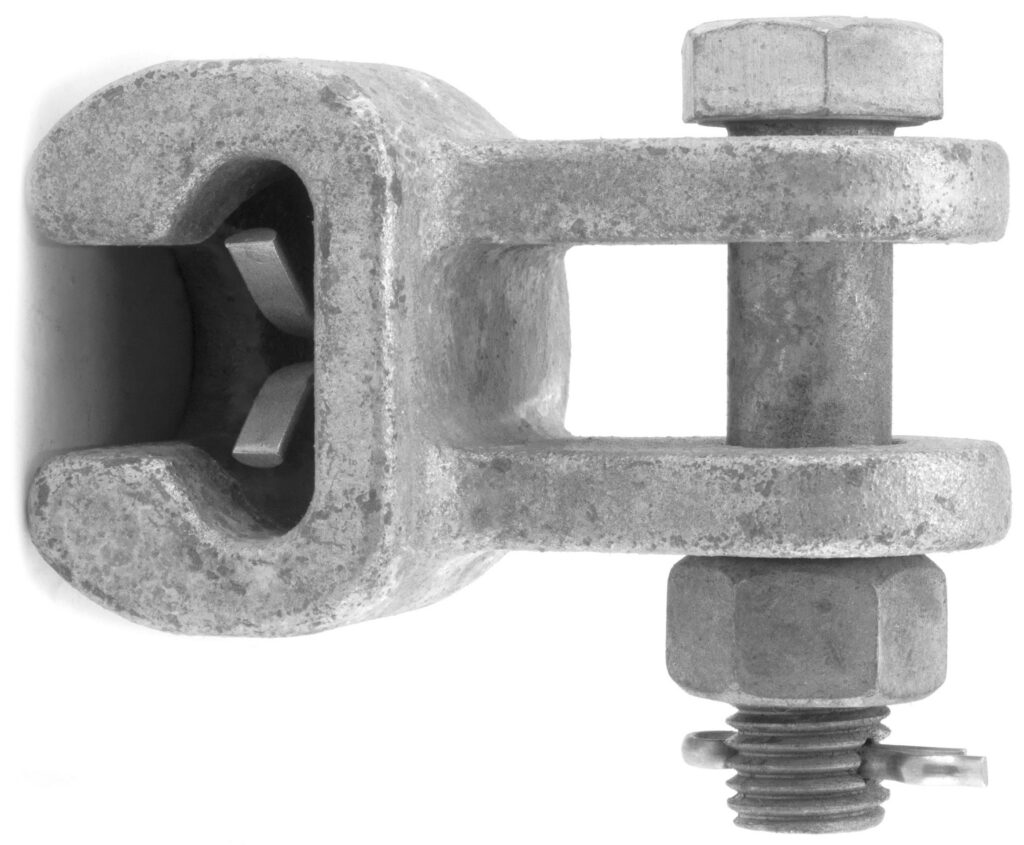
A socket clevis is a forged steel mechanical fitting used in overhead power transmission and distribution networks. It connects insulator strings, conductors, or hardware assemblies to towers and line fittings. The socket clevis combines the socket end and the clevis end. The socket end is designed to receive and lock a ball fitting from an insulator unit while the clevis end attaches other line hardware. Socket clevises provide a secure articulated connection between transmission line components while allowing limited movement under mechanical loading. It helps transfer tensile and mechanical loads, maintain alignment of insulator strings, and reduce stress concentration at connection points. The clevis serves in suspension insulator strings, dead-end transmission assemblies, substation hardware systems, and high-voltage overhead transmission lines. Additionally, the clevis is made from high-strength materials to withstand heavy electrical and mechanical stresses. The clevises undergo quality assurance to prevent failures, corrosion damage, pin loosening, and socket deformation.
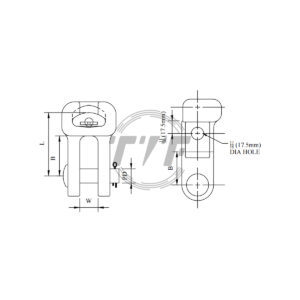
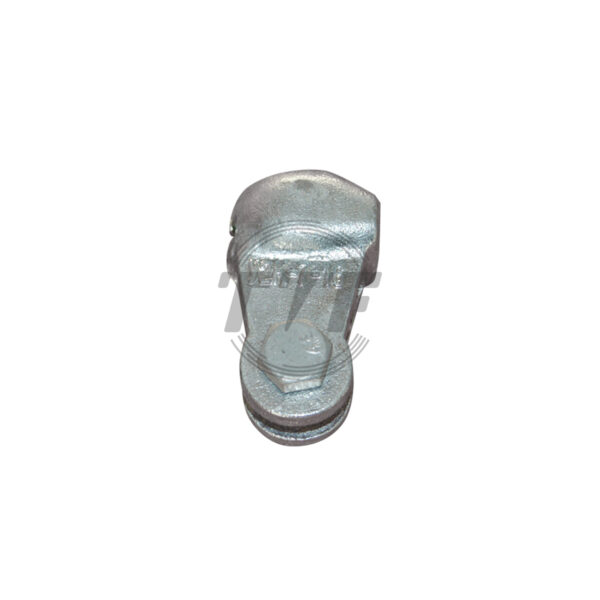
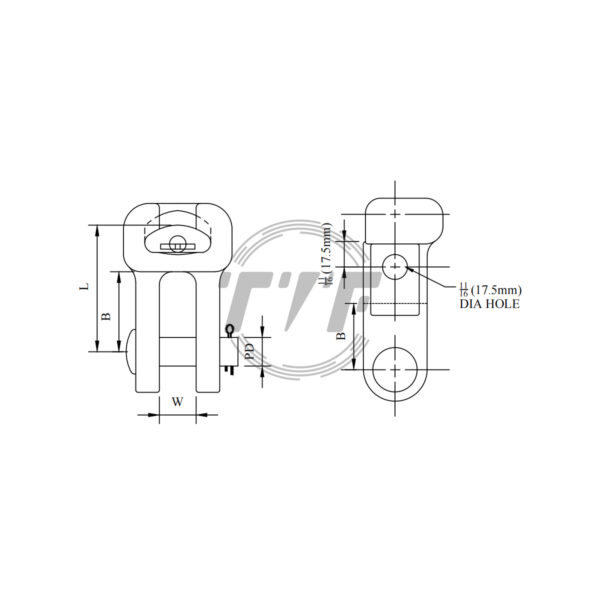
Socket Eye Clevis
A socket eye clevis is a forged steel connection component used in power line construction to link suspension insulators, conductors, and line hardware. It provides a secure mechanical interface that withstands high tensile loads and dynamic forces in overhead transmission systems. Designed for durability and precision fit, it ensures reliable load transfer, vibration stability, and corrosion resistance in harsh outdoor environments.
Key Features
- High-strength forged steel body for heavy load capacity
- Galvanized finish for superior corrosion protection
- Precision-machined pin and cotter design for secure fastening
- Compatible with standard insulator and conductor fittings
- Excellent mechanical stability under wind and vibration stress
- Long service life backed by rigorous industry testing
- Available in multiple pin sizes and load ratings for system compatibility
Importance of conducting quality assurance for the socket clevis
Quality assurance for the socket clevis is crucial because it operates as a load-bearing connection between insulators, conductors, and tower hardware. Poor-quality clevises can compromise the mechanical integrity of an entire transmission line assembly, leading to outages, equipment damage, or safety hazards. QA verifies that the fitting can withstand specified mechanical loads without deformation or fracture. A poorly manufactured socket clevis may crack, deform, or disconnect under operational stress. Clevis failure results in conductor drops, insulator collapse, tower hardware damage, grid instability, and power interruptions. Quality assurance helps improve electrical system reliability, enhances corrosion resistance, verifies dimensional accuracy, and detects manufacturing defects early. It also ensures the clevis can withstand demanding electrical and environmental operating conditions while reducing system failures and maintenance expenses.
Roles of quality assurance during the manufacture of the socket clevis
Quality assurance during the manufacture of the socket clevis ensures that it meets the mechanical, dimensional, and corrosion-resistance requirements for safe operation in power transmission networks. Manufacturing defects can affect transmission line reliability and operational safety. Here are the roles of QA during socket clevis manufacturing.
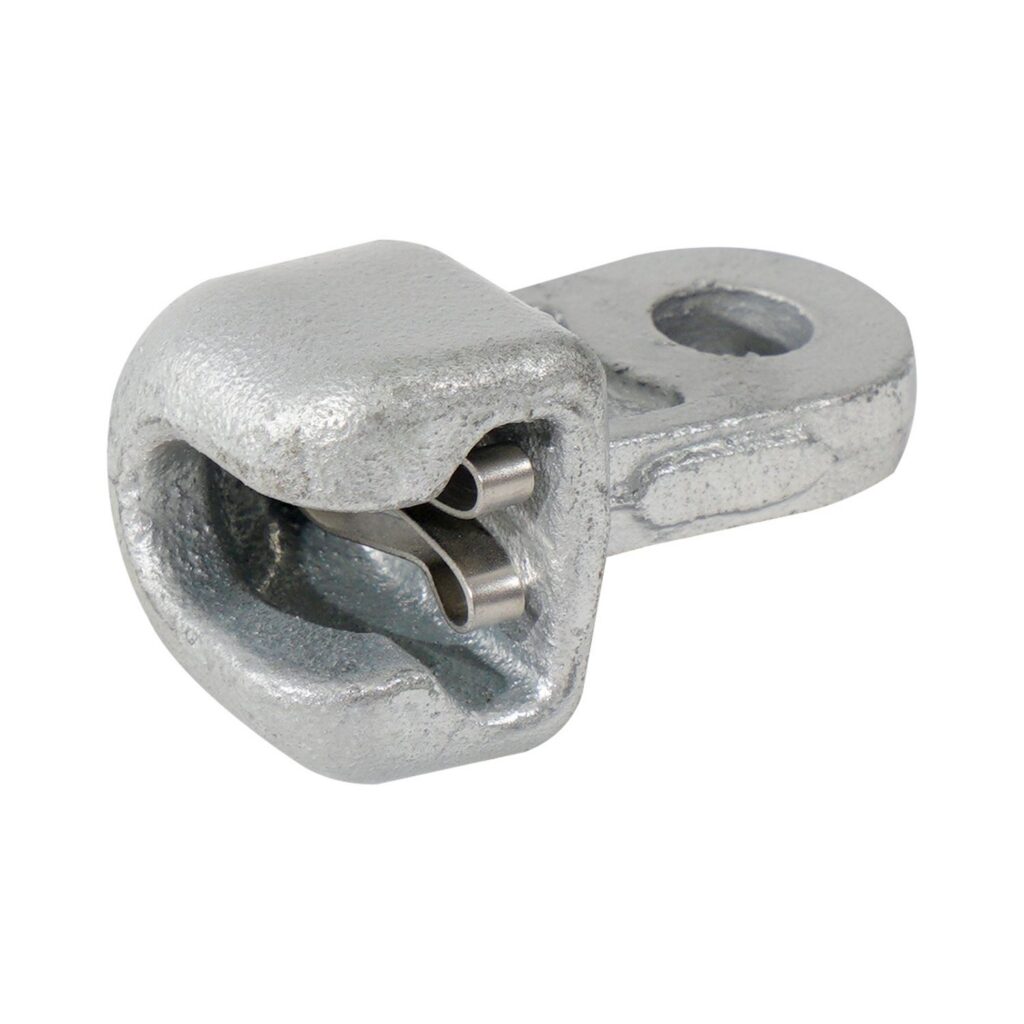
- Raw material verification – quality assurance begins with inspection and verification of raw materials used for forging the socket clevis. QA teams confirm material grade compliance, chemical composition, mechanical properties, and traceability documentation.
- Forging and casting quality control – QA ensures that production processes are controlled to maintain structural integrity. Monitoring activities include forging temperature control, mold quality inspection, metal flow verification, and cooling rate monitoring.
- Detecting surface and structural defects – quality assurance inspections identify visible and hidden defects that can compromise performance. The inspections detect forging laps, surface cracks, inclusions, voids, and incomplete fillings.
- Ensuring dimensional accuracy – the socket clevis fittings must follow strict dimensional tolerances to ensure compatibility with insulators and transmission hardware.
- Monitoring heat treatment processes – heat treatment improves the mechanical strength and toughness of socket clevis fittings. QA supervises heating temperature, holding duration, cooling methods, and hardness consistency.
- Verifying mechanical performance – mechanical tests confirm that manufactured socket clevises meet operational load requirements. These evaluations ensure that the fitting can withstand heavy conductor loads, wind-induced vibration, and thermal expansion stress.
Common quality failures facing the socket clevis
The socket clevises face mechanical loading, environmental stress, and long-term outdoor service conditions. Effective quality assurance, process control, and standards compliance are essential for producing durable and dependable socket clevis fittings. Here are the common quality failures in the socket clevis.
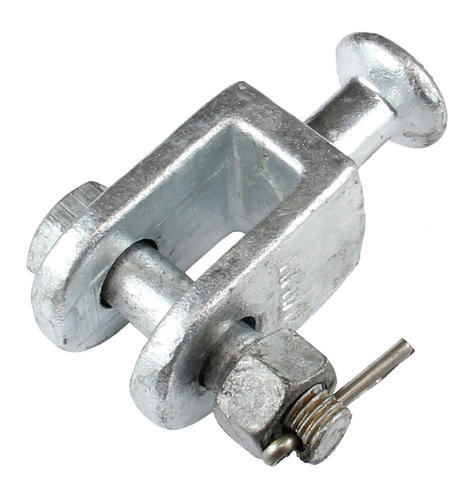
- Surface cracking—these cracks originate during forging, casting, machining, or heat treatment processes. The cracking arises from improper forging temperatures, excessive cooling rates, poor heat treatment control, and material impurities.
- Internal voids and porosity – this arises from gas entrapment, improper molten metal flow, inadequate forging pressure, and shrinkage during solidification. This reduces load-bearing capability and may cause sudden mechanical failure under high tension.
- Incomplete galvanization – galvanization failures include thin zinc coating, bare metal exposure, zinc peeling, and poor surface adhesion. Incomplete galvanization accelerates corrosion in coastal and humid environments.
- Dimensional inaccuracy – socket clevises need strict dimensional tolerances to fit with insulator strings and transmission hardware. Dimensional failures include incorrect socket diameter, misaligned pinholes, and improper clevis spacing.
- Poor mechanical strength – some clevises fail to achieve the specified tensile or proof load requirements. These causes include low-grade raw materials, improper alloy composition, and defective heat treatment.
- Heat treatment defects – improper heat treatment can reduce the performance of the socket clevis. Common issues include excessive hardness causing brittleness, insufficient hardness reducing strength, and residual microstructure.
- Fatigue failure – socket clevises experience repeated cyclic loading caused by wind vibration, conductor galloping, and thermal expansion.
Materials for the socket clevis and how quality assurance protects them.
Socket clevises are from high-strength metallic materials designed to withstand heavy mechanical loads, environmental exposure, vibration, and outdoor operation. Selection of the materials affects the clevis’s strength, corrosion resistance, durability, and service life. Quality assurance protects the materials from defects, degradation, and performance failure during manufacturing and operation. The process prevents material defects, maintains mechanical performance, controls heat treatment quality, protects against corrosion, and ensures compliance with standards. Here are the common materials for the socket clevis and how quality assurance protects them.
Forged carbon steel
This material offers excellent mechanical strength, high tensile strength, good impact resistance, and excellent forging characteristics. It is common in suspension line fittings, deadend assemblies, and high-voltage transmission hardware. Carbon steel faces corrosion, surface cracking, improper hardness, fatigue damage, and material impurities. QA protects carbon steel through chemical composition analysis, tensile strength testing, hardness testing, and galvanization inspection.
Alloy steel
This contains extra elements such as chromium, nickel, or molybdenum to improve mechanical and corrosion protection. It offers higher strength than standard carbon steel, improved fatigue resistance, better wear resistance, and enhanced toughness under dynamic loads. Alloy steel is ideal for extra-high-voltage transmission systems, heavy mechanical loading environments, and long-span transmission lines. QA measures include spectrometric chemical testing, controlled heat treatment, and fatigue performance testing.

Ductile iron
This iron has good casting properties and moderate mechanical strength. It offers good castability, high compressive strength, and better ductility than gray iron. It is ideal in medium-voltage transmission hardware and distribution line fittings. Quality assurance conducts X-ray inspection, microstructure analysis, casting integrity checks, and dimensional inspection.
Stainless steel
Stainless steel offers excellent corrosion resistance, high moisture tolerance, good oxidation resistance, and a long operational lifespan. It serves in coastal transmission systems, industrial pollution zones, and high-humidity environments. Quality assurance protects stainless steel through alloy verification testing, passivation inspection, corrosion resistance testing, and surface contamination checks.
Galvanized steel
Most socket clevises use galvanized steel to combine mechanical strength with corrosion protection. It offers structural performance, protective zinc coating, and improved outdoor durability. It faces uneven zinc coating, zinc peeling, inadequate coating thickness, and surface oxidation. The QA process includes zinc thickness measurement, adhesion testing, salt spray testing, and surface finish inspection.
TTF-Certified socket clevis. Why we certify:
TTF’s approach to power line hardware services results in optimal product quality, strict adherence to custom design, and reduced cost. We are constantly checking manufacturing processes, addressing material concerns, and improving staff expertise to ensure the best quality product. Our quality control for the reinforcing plates begins with the first batch of samples that you received from us. And this continues through all production phases, where our QC staff never stop looking for opportunities to improve product quality. We offer:

- Tolerance Analysis
- Tooling Life Analysis
- Rockwell Hardness Testing per ASTM E18
- Brinell Hardness Testing per ASTM E10
- Magnetic Particle Testing per ASTM E1444
- CMM (Coordinate Measuring Machine) Testing
- 24″ Optical Comparator for Complex Measurements
- Tensile/proof load testing up to 160,000 lbs (700 kN)
- Hot Dip Galvanizing Plating Thickness per ASTM E376
- Torque Testing
- Roughness Testing
- Lifetime Sample Retention
- Dimensional Testing
- Mechanical Testing
Advantages of using socket clevises in power networks
Socket clevises provide a reliable mechanical interface between insulator strings and line hardware. The design supports high-load operation while maintaining flexibility and standardization across network configurations. Their key advantages in power networks include:
- High mechanical strength and load capacity – socket clevises withstand tensile and dynamic loads from conductors and insulator assemblies. The clevises support heavy conductor tension in high-voltage lines and maintain structural integrity under extreme weather conditions.
- Reliable articulated connection – the socket-clevis design allows controlled movement between connected components. The clevises reduce stress concentration at connection points, accommodate conductor swings, and absorb mechanical movement caused by thermal expansion.
- Standardized compatibility – the clevises follow standardized designs used across global transmission systems. They serve interchangeably with insulators and fittings and reduce engineering customization requirements.
- Improved transmission line stability – socket clevises help maintain proper line geometry. They ensure correct phase spacing, stable conductor alignment, and reduced risk of line sag misalignment.
- Enhanced safety in transmission systems – socket clevises contribute to system safety by ensuring secure mechanical connections. This prevents insulator string detachment, reduces the risk of conductor drop, and maintains electrical clearance integrity.
In summary,
Socket clevises connect insulator strings to tower hardware and ensure stable load transfer in overhead line systems. Their performance depends on material selection such as forged carbon steel, alloy steel, ductile iron, and galvanized steel. Conducting quality assurance ensures they meet required strength, durability, and environmental resistance standards. Inadequate quality control may cause defects such as cracking, porosity, dimensional inaccuracies, poor coating, fatigue failure, and corrosion. Socket clevises contribute to efficient load transfer, improved line stability, easier installation and maintenance, and long service life. Rigorous quality assurance ensures the clevises become reliable components that enhance the safety, efficiency, and resilience of power transmission infrastructure.