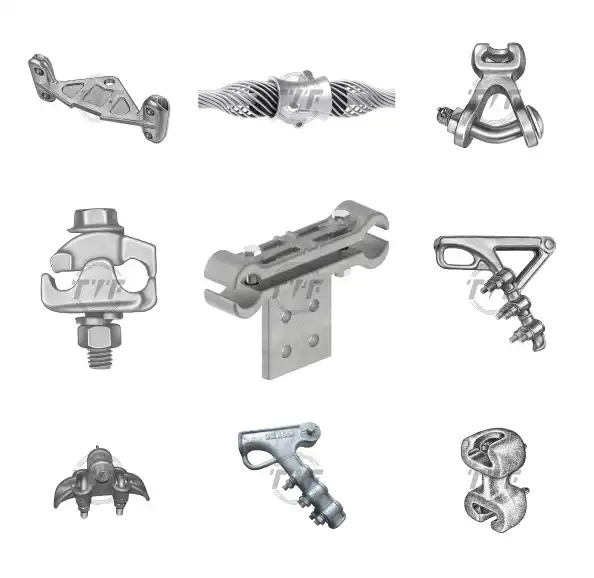
A silicone suspension insulator is an electrical insulator used to support and isolate conductors from poles and towers. It consists of a silicone rubber housing and sheds. The insulator is a high-strength fiberglass-reinforced polymer (FRP) core and metallic end fittings. The rubber shed provides effective insulation and environmental protection. It also carries the mechanical tensile load of the conductors. Silicone insulators are lightweight and offer strong resistance to pollution, moisture, UV exposure, and surface tracking. They are commonly used on medium- and high-voltage overhead power lines. They serve on transmission lines, distribution networks, substations, renewable-energy connections, and mining power infrastructure. Conducting quality assurance for silicone suspension insulators is crucial because their electrical and mechanical performance affects the safety and reliability of overhead power lines. Quality assurance ensures safe operation, stable grid performance, and dependable long-term insulation.
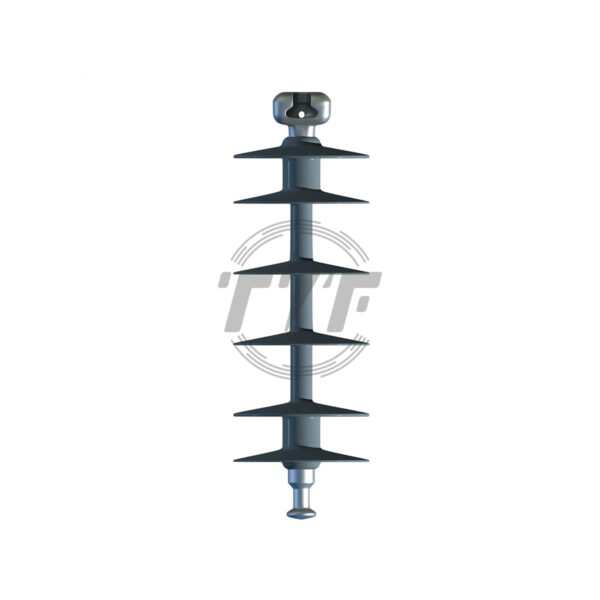
Suspension Insulator
A suspension insulator is a critical component in power line construction, designed to mechanically support and electrically isolate conductors in overhead transmission and distribution systems. It is typically suspended from towers or poles, carrying high-voltage conductors while preventing leakage currents and flashovers. Its modular design allows multiple insulator units to be connected in series to handle higher voltages, ensuring reliability in both medium- and high-voltage networks.
Key Features:
- High Dielectric Strength – Provides excellent electrical insulation to prevent current leakage.
- Mechanical Durability – Engineered to withstand high tensile loads from conductors.
- Weather & Pollution Resistance – Resistant to environmental stresses such as UV, rain, dust, and industrial pollution.
- Modular Design – Units can be assembled in strings to meet voltage requirements.
- Low Maintenance – Smooth surface minimizes dust accumulation and facilitates self-cleaning during rain.
- Versatility – Suitable for both AC and DC transmission systems.
- Long Service Life – Manufactured from porcelain, toughened glass, or polymer composites for durability.
Components and features of silicone suspension insulators
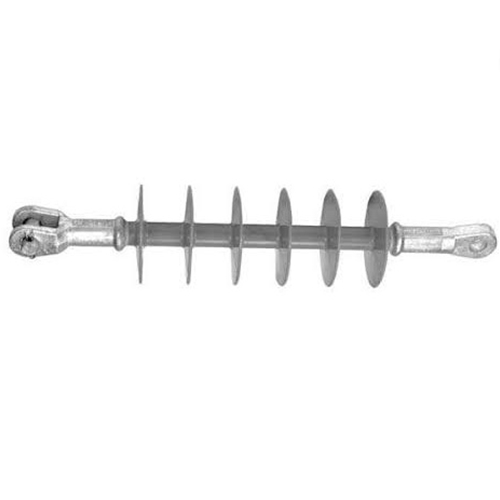
A silicone suspension insulator is designed to provide both electrical insulation and mechanical support in overhead power-line systems. It consists of a high-strength core, silicone rubber insulation, and corrosion-resistant metal fittings. It offers high tensile strength, high creepage distance, hydrophobicity, UV weather resistance, and high electrical withstand capability. Technical components include:

- Fiberglass-reinforced polymer core—the FRP core provides high tensile strength while keeping the insulator lighter than porcelain alternatives. It offers excellent resistance to moisture penetration and mechanical fatigue.
- Silicone rubber housing and sheds—the silicone rubber housing surrounds the FRP core and provides the primary external insulation. The sheds increase creepage distance to help control leakage current in polluted environments. The hydrophobic surface helps water form droplets instead of creating a conductive film.
- Metal end fittings—the end fittings connect the insulator to the conductor assembly, crossarm, tower, or other line hardware. The fittings may include ball-and-socket, clevis, tongue, or eye configurations. High-quality fittings need accurate dimensions and enough mechanical strength.
- Sealing and interface system—the interfaces between the silicone housing, FRP core, and metal fittings need effective sealing. Proper sealing helps prevent moisture ingress that contributes to core degradation and premature electrical failure.
The roles of quality assurance during the manufacture of silicone suspension insulators
Conducting quality assurance during the manufacture of silicone suspension insulators is crucial because their performance depends on the integrity of the silicone housing, FRP core, and metal fittings. The QA system helps manufacturers produce insulators with consistent electrical, mechanical, and environmental performance. Here are the roles of quality assurance during the silicone suspension insulator manufacture.

- Raw material inspection—QA begins by verifying the quality of incoming materials, including silicone rubber, fiberglass-reinforced polymer rods, metal fittings, and bonding materials. Consistent raw materials help prevent variations in insulation performance and mechanical strength.
- Control of silicone rubber processing—QA tracks temperature, pressure, curing time, and material composition. Proper process control helps ensure that the silicone housing and sheds are uniform and securely bonded. It also ensures the housing is free from defects such as voids, cracks, or incomplete molding.
- FRP core quality control—the FRP core carries the mechanical load of the insulator. During manufacture, the manufacturers inspect the core for dimensional accuracy, surface defects, mechanical integrity, and resistance to moisture-related degradation.
- Metal fitting inspection—metal end fittings must have accurate dimensions and enough mechanical strength. QA checks for material quality, dimensions, surface finish, galvanizing, and corrosion protection. This helps ensure reliable assembly with poles, towers, crossarms, and line hardware.
- Interface and sealing verification—quality assurance confirms proper bonding and sealing to reduce moisture penetration and prevent conditions that could contribute to premature insulation.
- Dimensional and visual inspection—the QA process inspects shed geometry, creepage distance, dimensions, alignment, surface defects, and fitting position.
- Electrical and mechanical testing—QA incorporates routine and design-type tests to verify performance. Testing checks dielectric withstand, leakage-related performance, mechanical tensile strength, and environmental durability.
Common quality failure modes of silicone suspension insulators
Silicone suspension insulators may experience manufacturing defects, installation errors, aging, contamination, and excessive mechanical and electrical stress. It is crucial to understand these failures to help improve inspection, testing, and maintenance programs. Common failures include:
- Silicone housing cracking—cracks on the silicone housing arise from material defects, improper curing, mechanical damage, thermal cycling, or environmental exposure. These cracks let in moisture and contaminants to reach the internal components and reduce insulation reliability.
- Tracking and erosion—electrical activity on the insulator surface can produce tracking and erosion under wet and polluted conditions. Leakage current can damage the silicone surface, reduce creepage performance, and increase the risk of flashover.
- Loss of hydrophobicity—silicone rubber aging, contamination, chemical exposure, or excessive surface degradation can reduce hydrophobicity.
- Core damage—the FRP core provides the primary mechanical strength. The presence of manufacturing defects, moisture ingress, and stress concentration can compromise the core.
- Seal failure and moisture ingress—poor sealing around the interfaces between the silicone housing, FRP core, and metal fittings can allow moisture to penetrate the assembly. This may cause core degradation and reduce mechanical reliability.
- Metal fitting corrosion—end fittings face moisture, salt, industrial pollutants, or inadequate surface protection. Severe corrosion may reduce mechanical strength or compromise the connection between the insulator and other line hardware.
- Flashover—this occurs when an electrical arc travels across the external surface of the insulator. The presence of pollution, moisture, inadequate creepage distance, and transient overvoltages can increase the risk.
Materials used for silicone suspension insulators
A silicone suspension insulator is made of several materials that contribute to electrical insulation, mechanical strength, environmental resistance, or connection reliability. Quality assurance ensures that the material meets the specifications and remains compatible throughout manufacturing and service. QA covers material qualification, incoming inspection, process control, assembly inspection, and final testing. Common materials for the silicone suspension insulators include:
Silicone rubber
Silicone rubber forms the external housing and sheds. It provides electrical insulation while providing UV resistance, hydrophobicity, weather resistance, and resistance to tracking and corrosion. Quality assurance protects this rubber by verifying silicone compound composition, controlling molding temperature and pressure, inspecting for cracks and voids, and checking shed dimensions and creepage-distance requirements.

Fiberglass-reinforced polymer (FRP)
The FRP core rod is the mechanical load-bearing element that combines glass fibers with a polymer matrix. This helps provide high tensile strength while maintaining low weight. Quality assurance checks dimensional accuracy, verifies mechanical strength, controls the interface between the FRP core and silicone housing, and ensures enough sealing to limit moisture penetration.
Metal end fittings
These connect the insulators to conductors, crossarms, towers, and other line hardware. The fittings are from galvanized steel, forged steel, aluminum alloys, or other specified corrosion-resistant metals. Conducting QA verifies material grade and mechanical properties, checks dimensions and tolerances, and inspects galvanizing.
Sealing and bonding materials
Sealing, bonding, and interface materials protect the connection between the silicone housing, FRP core, and metal fittings. They create a reliable interface and limit moisture ingress. QA verifies compatibility with silicone and FRP materials, controls application thickness and curing conditions, and inspects bonding quality and interface integrity.
TTF-Certified silicone suspension insulators. Why we certify:
TTF’s approach to power line hardware services results in optimal product quality, strict adherence to custom design, and reduced cost. We are constantly checking manufacturing processes, addressing material concerns, and improving staff expertise to ensure the best quality product. Our quality control for the silicone suspension insulators begins with the first batch of samples that you received from us. And this continues through all production phases, where our QC staff never stop looking for opportunities to improve product quality. We offer:
- Tolerance Analysis
- Tooling Life Analysis
- Rockwell Hardness Testing per ASTM E18
- Brinell Hardness Testing per ASTM E10
- Magnetic Particle Testing per ASTM E1444 CMM (Coordinate Measuring Machine) Testing
- 24″ Optical Comparator for Complex Measurements
- Tensile/proof load testing up to 160,000 lbs (700 kN)
- Hot Dip Galvanizing Plating Thickness per ASTM E376
- Torque Testing
- Roughness Testing
- Lifetime Sample Retention
- Dimensional Testing
The advantages of silicone suspension insulators in power networks
Silicone suspension insulators serve in overhead distribution and transmission networks. Their combination of silicone rubber, FRP core, and metal fittings provides advantages over conventional insulation technologies. Silicone suspension insulators offer:

- Excellent hydrophobicity—silicone hydrophobic properties cause water to form droplets. This helps reduce leakage current and maintain insulation performance during rain, humidity, and contamination.
- Strong pollution performance—the hydrophobic surface and shed design help the insulator’s performance in polluted environments. This reduces the risk of flashovers.
- High mechanical strength—the FRP core provides high tensile strength while supporting the mechanical loads imposed by conductors, wind, vibration, and other operating conditions. This makes the suspension insulators suitable for demanding overhead-line applications.
- Good resistance to tracking and erosion—silicone rubber provides resistance to electrical tracking and surface erosion. This is where leakage current and dry-band arcing can occur under contaminated and wet conditions.
In summary,
Silicone suspension insulators serve in overhead power networks to provide electrical insulation and mechanical support. They combine silicone rubber housings and sheds, FRP core rods, metal end fittings, and sealing materials. The insulators in overhead power lines offer lightweight construction, high tensile strength, hydrophobicity, pollution resistance, weather durability, and resistance to tracking and erosion. Quality assurance for the suspension insulator is crucial throughout manufacturing, covering raw materials, molding, core integrity, fittings, sealing, dimensions, and electrical and mechanical testing. Quality assurance prevents defects such as cracking, tracking, loss of hydrophobicity, moisture ingress, core damage, corrosion, bonding failure, and flashovers.