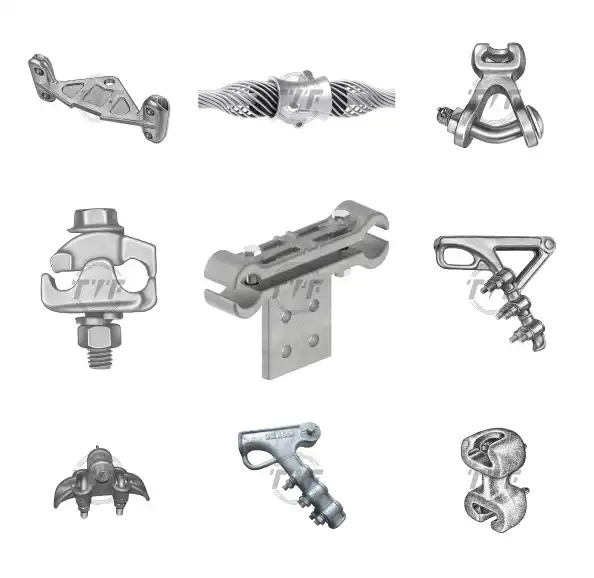
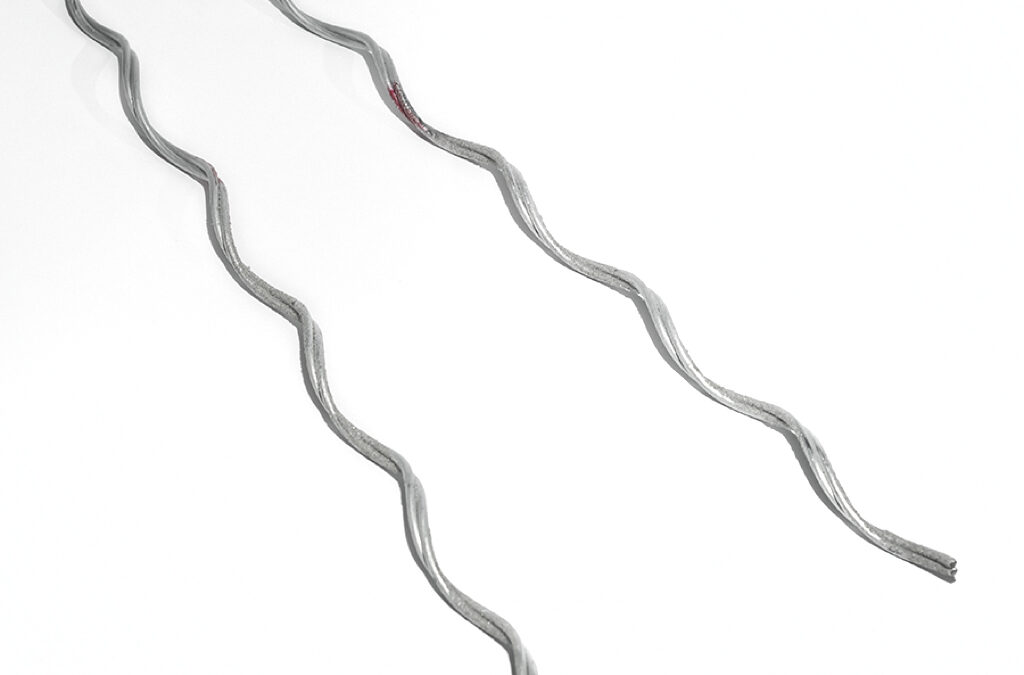
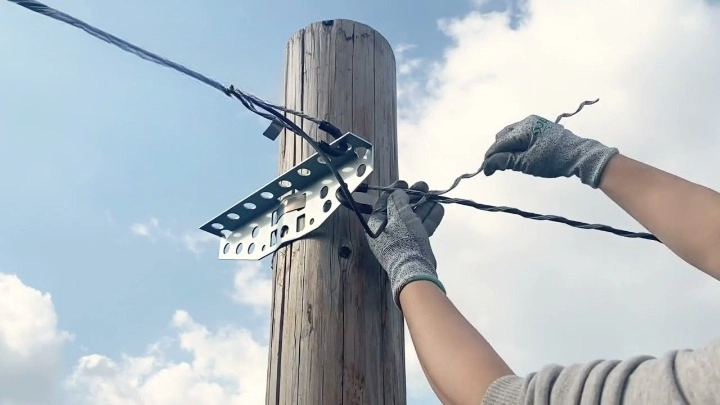
A service grip deadend is a formed wire designed to terminate bare neutral messengers of self-supporting cables used to make service drops. It provides reliable mechanical support while maintaining the cable’s intended installation geometry and reducing excessive stress on the conductor. Service grip deadends anchors service cables to poles, transfers mechanical tension, and prevents cable slippage. The deadend uses a gripping mechanism that surrounds the cable. In the event of tensile force on the cable, the grip tightens around it to increase the holding force. This allows the deadend to support the cable without depending on excessive compression of the conductors. The service grip deadend can be installed at the building-side or pole-side termination to provide a mechanically secure connection. A quality-assured service grip deadend provides high mechanical holding strength, corrosion-resistant construction, compatibility with the specified cable diameter, and secure cable retention without damaging insulation.


Formed Wire Deadend
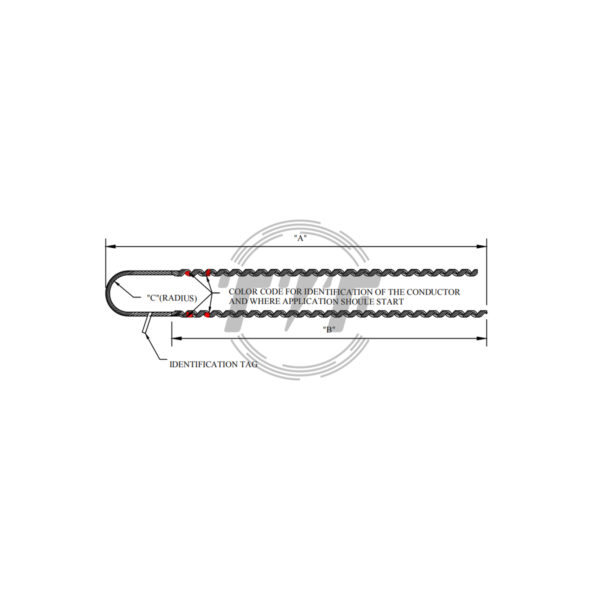
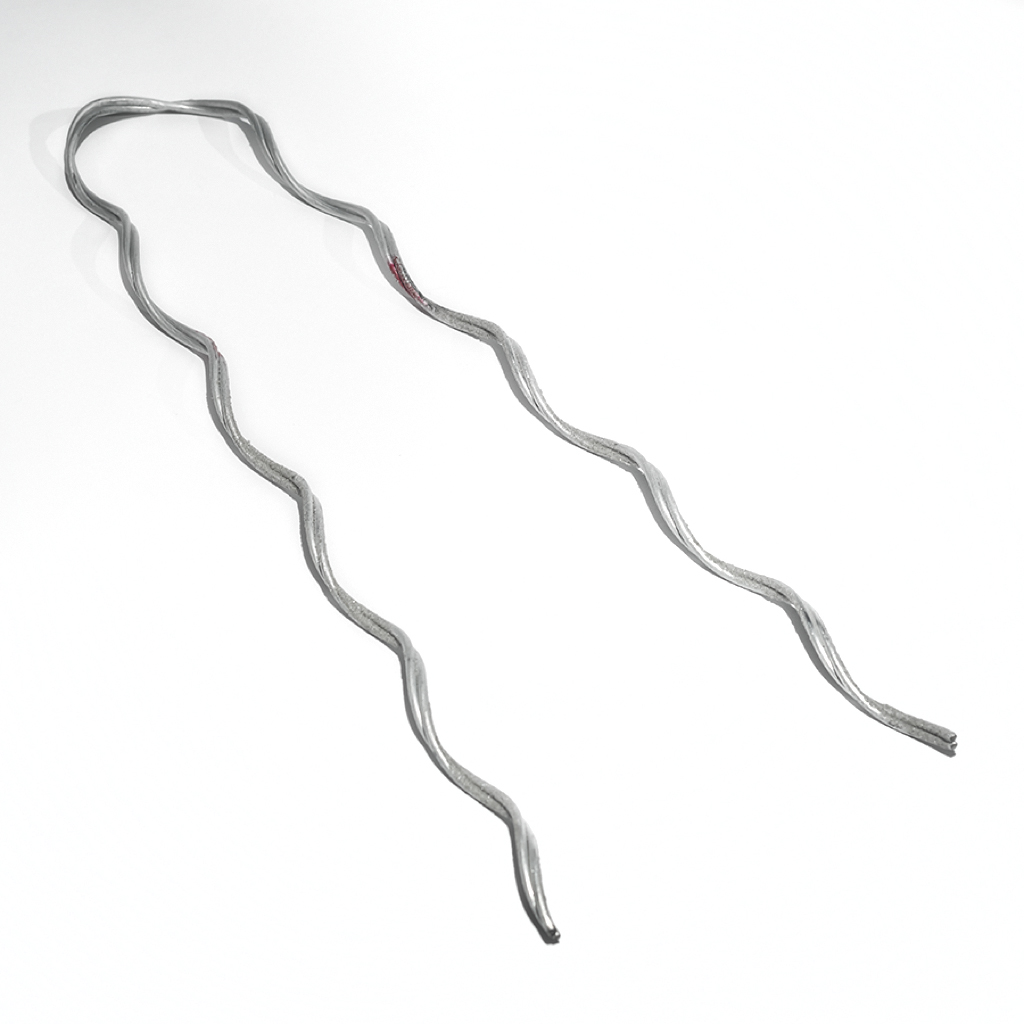
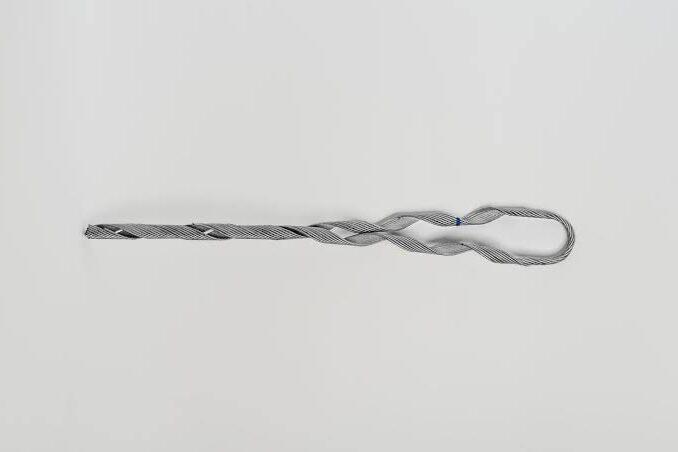
A formed wire deadend is a preformed tension hardware used in power line construction to terminate conductors and shield wires securely at poles or structures. Designed for mechanical strength and reliability, it distributes stress evenly along the conductor, preventing damage to strands while maintaining high holding power. Its helical design ensures quick installation without special tools, making it ideal for overhead transmission and distribution systems.
Key Features
- High Holding Strength – Provides full-rated strength termination for conductors and shield wires.
- Stress Distribution—Uniform gripping reduces strain and prevents conductor damage.
- Corrosion Resistance – Manufactured from galvanized or aluminum-clad steel for durability.
- Ease of Installation—The preformed helical design allows tool-free, quick, and accurate application.
- Versatility—Compatible with a wide range of conductor sizes and types (ACSR, AAAC, OPGW, etc.).
- Electrical Performance – Maintains conductor integrity and minimizes corona and RF interference.
- Long Service Life—Engineered for stability and reliability under varying weather and mechanical conditions.
Structure of the service grip deadend
A service grip deadend consists of various components designed to terminate and support an overhead service cable. The structure allows mechanical tension to be transferred from the cable to a pole or attachment point without damaging the cable. Key components include:
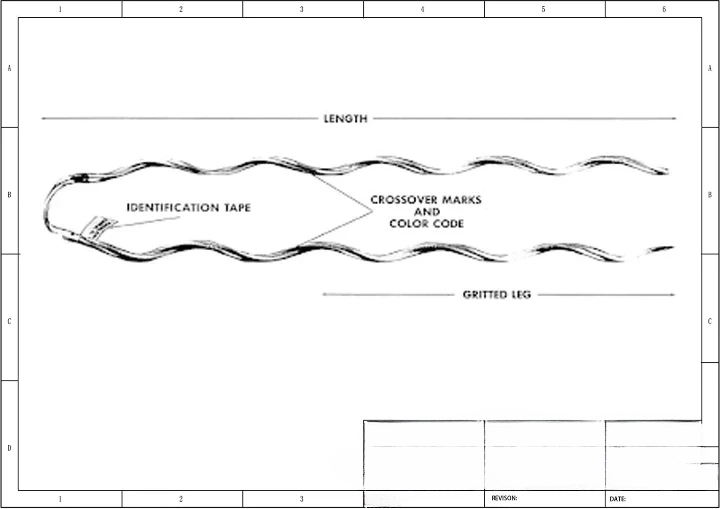
- Gripping section—this section is the primary component that holds the service cable. It consists of high-strength galvanized steel, stainless steel, or other corrosion-resistant materials. The grip conforms to the cable’s outer surface.
- Eye/loop—the dead end has an eye, loop, or formed attachment point at its termination. It connects the grip to a hook, bracket, anchor, pole fitting, or other support hardware. The eye must withstand the mechanical load while maintaining a secure connection through the service life of the installation.
- Connection hardware—the service grip deadend serves with hooks, shackles, eye bolts, pole brackets, and anchoring brackets. These components provide the interface between the cable grip and the supporting structure.
- Cable protection interface—the section where the grip contacts the cable is designed to provide secure mechanical retention without excessive compression. Some of the deadend designs incorporate protective elements to reduce abrasion and localized stress.
The roles of quality assurance during the manufacture of service grip deadends
Conducting quality assurance during service grip deadends helps provide the mechanical anchoring of overhead service cables. QA helps identify manufacturing defects in the grip body, wires, attachment eye, or protective coating. These defects can reduce holding strength and compromise the reliability of the power-line installation. Here are the roles of the service grip deadends during their manufacture.
- Ensuring material quality—QA verifies raw materials used to manufacture the deadends. This helps confirm correct material grade and mechanical properties, tensile strength, dimensional consistency, and corrosion resistance.
- Controlling dimensional accuracy—service grip deadends should match dimensions so that they accommodate the specified cable diameter. QA verifies length, wire diameter, grip diameter, eye dimensions, and cable-entry dimensions.
- Verifying mechanical strength—QA confirms the mechanical performance of the finished deadend. Manufacturers conduct tensile or load tests to determine whether the product can withstand its specified mechanical load. These tests help verify tensile strength, holding capacity, grip performance, deformation behavior, and connection integrity.
- Inspecting the gripping mechanism—QA examines the geometry and condition of the grip wires. QA checks for correct wire arrangement, uniform forming, and manufacturing defects. This helps prevent slippage and reduce the possibility of localized cable damage.
- Controlling surface treatment and corrosion protection—service grip deadends must withstand corrosion to ensure their mechanical performance. QA verifies their coating features such as coating coverage, coating thickness, surface uniformity, and adhesion.
- Checking cable compatibility—QA helps ensure that each deadend is correctly identified according to its compatible cable diameter, cable type, and rated mechanical performance. The process involves checking product markings, dimensional measurements, production records, and inspection documentation.
- Ensuring manufacturing-process consistency—QA process checks wire forming, twisting, heat treatment, cutting, eye formation, surface treatment, assembly, and packaging. Tracking these processes reduces variation between production batches and helps maintain consistent product performance.
Quality failure modes of service grip deadends in power networks
Service grip deadends in power networks should maintain a secure grip on overhead service cables. Quality failures mostly arise from material selection, forming, assembly, surface treatments, installation, or service exposure. Manufacturers aim to prevent these failures through material verification, dimensional inspection, controlled forming processes, and mechanical testing. Utilities should select the right deadend for the cable and follow the manufacturer’s requirements. Common quality failures of service grip dead ends include:
- Cable slippage—slippage occurs when the deadend fails to maintain enough holding force on the service cable. Slippage arises from incorrect grip dimensions, improper helical geometry, and incompatible cable diameter. Slippage changes cable sag and increases mechanical loading on other components in the service connection.
- Wire breakage—the individual wires forming the grip can break from material defects, excessive tensile loading, improper forming, fatigue, or corrosion.
- Grip deformation—deformation arises when the deadend faces loads beyond its design capability. Deformation can change the grip geometry and reduce its ability to retain the cable.
- Cracking at formed sections—cracks develop around formed areas such as loops, eyes, bends, or attachment sections. Cracking arises from poor-quality raw material, excessive forming strain, incorrect tooling, and inadequate process control.
- Sharp edges and burrs—during manufacturing, poor cutting, forming, or finishing can leave sharp edges or burrs on the grip. These defects can damage the cable’s insulation or create localized stress concentrations.
- Material defects—raw-material defects such as inclusions, surface cracks, inconsistent mechanical properties, or incorrect alloy composition can compromise the finished deadend. The QA process offers supplier qualification, material certificates, incoming inspection, and material testing.
Materials used for service grip deadends and the importance of quality assurance
Service grip deadends are from high-quality materials that determine their mechanical strength, corrosion resistance, durability, and compatibility with overhead service cables. Manufacturers must apply QA controls from raw material selection to final inspection. QA helps ensure that the finished service grip maintains reliable cable retention and mechanical performance throughout its service life. Common materials for the dead ends include:
Galvanized steel
This is common for service grip deadends and combines good mechanical strength with corrosion protection. Steel offers the tensile strength needed to withstand cable loading, while the zinc coating helps protect the underlying steel from atmospheric corrosion. QA protects galvanized steel by checking steel grade and mechanical properties, wire diameter, zinc coating quality, and surface defects.
Stainless steel
This steel is ideal for use in aggressive environments such as coastal areas or locations exposed to industrial pollutants. Stainless steel offers high corrosion resistance, good mechanical strength, and resistance to atmospheric exposure. Quality assurance verifies the specified stainless-steel grade, mechanical properties, surface condition, and dimensional accuracy.
Aluminum alloys
Aluminum provides low component weight, good corrosion resistance, electrical system compatibility, and ease of handling during installation. QA can verify alloy composition, mechanical properties, dimensions, surface condition, and forming quality. This helps prevent defects such as cracking during bending or forming.
Insulating materials
Some service grip deadends use polymer components for insulation, cable protection, or environmental protection depending on their design. The materials selected should offer UV resistance, weather resistance, electrical insulation, mechanical flexibility, and resistance to moisture and aging. The QA process includes dimensional checks, visual inspection, material verification, and suitable mechanical testing.
TTF-Certified service grip deadends. Why choose our deadends?
TTF’s approach to power line hardware services results in optimal product quality, strict adherence to custom design, and reduced cost. We are constantly checking manufacturing processes, addressing material concerns, and improving staff expertise to ensure the best quality product. Our quality control for the service grip deadends begins with the first batch of samples that you received from us. And this continues through all production phases, where our QC staff never stop looking for opportunities to improve product quality. We offer:

- Tolerance Analysis
- Tooling Life Analysis
- Rockwell Hardness Testing per ASTM E18
- Brinell Hardness Testing per ASTM E10
- Magnetic Particle Testing per ASTM E1444 CMM (Coordinate Measuring Machine) Testing
- 24″ Optical Comparator for Complex Measurements
- Tensile/proof load testing up to 160,000 lbs (700 kN)
- Hot Dip Galvanizing Plating Thickness per ASTM E376
- Torque Testing
- Roughness Testing
- Lifetime Sample Retention
- Dimensional Testing
Advantages of service grip deadends in power networks
The design of the service grip deadend offers mechanical support while helping maintain the integrity and reliability of the service connection. Service grip dead ends in power networks offer:
- Reliable cable anchoring—the deadend securely holds an overhead service cable to prevent cable movement or slippage. The gripping mechanism distributes the mechanical load along the cable instead of concentrating it at a single point.
- Effective mechanical load transfer—service grip deadends provide a defined load path between the cable and the supporting structure. This allows tensile forces generated by cable weight, wind, installation tension, and other mechanical loads to be transferred to the support structure.
- Reduced cable damage—the grip distributes pressure over the cable surface. This can reduce localized mechanical stress, crushing, and insulation damage.
- Improved network reliability—the deadends offer secure cable termination that reduces mechanical problems such as cable displacement, excessive sag, or termination failure. The deadends maintain mechanical integrity at service connections that contribute to the reliability of low-voltage distribution networks.
- Compatibility with modern distribution systems—service grip deadends are ideal for networks using insulated overhead conductors and aerial bundled cable systems. They support the development of compact and organized overhead distribution arrangements.