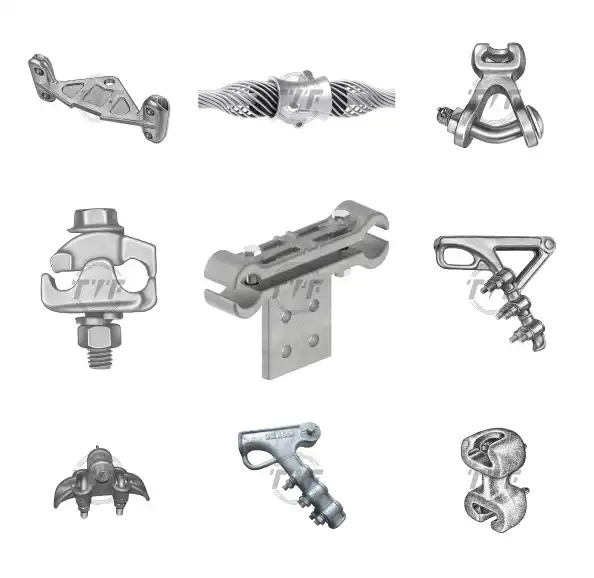
A cable suspension clamp is a fitting that supports and secures conductors to utility poles or transmission towers. It does so while allowing limited movement under mechanical and environmental loads. Cable suspension clamps are crucial for high-voltage transmission lines, medium-voltage distribution networks, renewable energy evacuation lines in solar and wind, and grid expansion and interconnection projects. They offer mechanical strength, electrical clearance, and corrosion-resistance requirements. Common types of clamps used in overhead power networks include standard suspension clamps, armor-grip suspension clamps, armored grip suspension clamps, and trunnion-type suspension clamps. A failure in a suspension clamp can lead to conductor strand damage, line sag imbalance, insulator failure, and forced outages. Power utilities should prioritize material quality, proper torque application, and vibration protection. TTF enhances quality assurance for cable suspension clamps to prevent such failures.
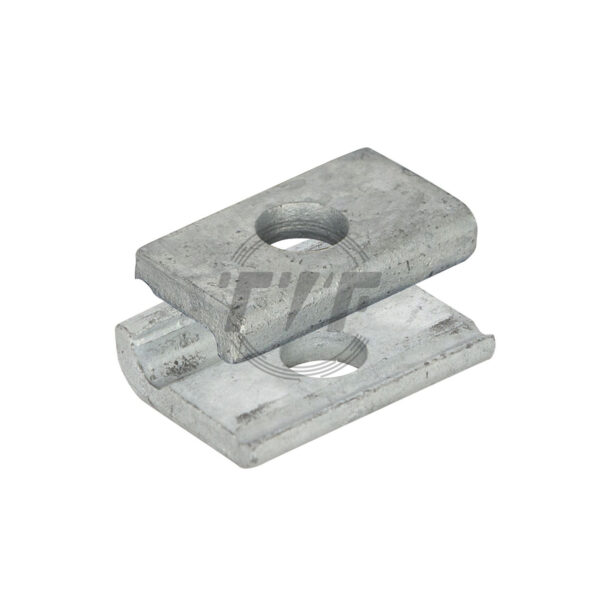
Cable Suspension Clamp with One Bolt
The cable suspension clamp is a mechanical device designed for securing and supporting conductors in overhead power line construction. It ensures reliable suspension of cables at poles or towers while minimizing mechanical stress and maintaining proper alignment. Engineered for durability, the clamp provides strong grip, vibration resistance, and long service life under varying environmental and load conditions.
Key Features
- High Tensile Strength: Withstands mechanical loads and ensures secure cable support.
- Anti-Vibration Design: Reduces conductor oscillation, prolonging cable lifespan.
- Corrosion-Resistant Material: Made of galvanized steel or aluminum alloy for durability in harsh environments.
- Easy Installation: Simple design for fast and secure mounting on poles and towers.
- Wide Cable Compatibility: Accommodates different conductor sizes and types.
- Weather Resistant: Performs reliably under extreme temperatures, humidity, and UV exposure.
- Electrical Safety: Maintains insulation clearance and minimizes risk of line faults.
Importance of quality assurance for cable suspension clamps
It is crucial for manufacturers and utilities to ensure quality assurance for cable suspension clamps for transmission and distribution systems. The clamps operate under mechanical stress and environmental exposure. Failure in these cases can trigger cascading structural and electrical faults. Quality assurance ensures that the cable suspension clamps withstand conductor tensile loads, vertical weight, wind-induced transverse loads, and dynamic vibrations. Quality assurance for cable suspension clamps ensures verified mechanical strength ratings, conformance to IEC and ANSI load requirements, and slip resistance testing. QA ensures proper alloy composition, correct hot-dip galvanization thickness for steel components, and coating adhesion and uniformity. Ensuring corrosion protection leads to reduced mechanical capacity, bolt seizure, and structural weakening. Quality assurance for cable suspension clamps makes them crucial for modern grid expansion and renewable integration projects.
The role of quality assurance in cable suspension clamp manufacturing
Ensuring quality assurance during the manufacture of cable suspension clamps verifies that each unit meets mechanical, metallurgical, dimensional, and performance requirements before use in overhead line systems. Quality assurance ensures the cable clamps meet specified mechanical strength ratings, protect conductors from damage, resist environmental degradation, and maintain traceability and performance accountability. Its key roles are as discussed below.

- Raw material verification—QA begins during material selection, where manufacturers must verify aluminum alloy grade, steel grade for bolts, pins, and clevis components, and galvanizing material conformity. The process involves mill test certificates, chemical composition analysis, and mechanical property validation.
- Casting and forging control—quality assurance controls include mold inspection and process control. It also includes monitoring of pour temperature and cooling rates, and prevention of shrinkage cavities.
- Dimensional accuracy and tolerance control—suspension clamps must match specific conductor diameters and insulator fittings. QA ensures the groove profile matches the conductor size, clamping pressure distribution, bolt alignment, and trunnion dimensions meet standard tolerances.
- Surface finish and edge treatment—QA verifies smooth conductor contact surfaces, the absence of sharp edges, proper polishing, and correct surface roughness values. It helps reduce conductor abrasion, corona discharge in high-voltage applications, and radio interference.
- Mechanical testing—cable suspension clamps undergo tests such as tensile load tests, proof load tests, slip resistance tests, and fatigue endurance tests. These tests ensure the clamps can withstand conductor weight, wind loading, ice loading, and long-term dynamic stresses.
- Galvanization and coating inspection—quality assurance for suspension clamps needs protection for steel components. The tests includes zinc coating thickness measurement, adhesion testing, visual inspection, and salt spray testing.
- Torque control—the QA process verifies correct bolt grade usage, proper torque application, thread engagement depth, and locking mechanism functionality.
Common quality failures in the cable suspension clamps and how quality assurance prevents them
Cable suspension clamps face sustained tensile forces, cyclic wind loading, thermal expansion, and environmental exposure. Failure mechanisms emerge over time when manufacturing or material control is not enough. Enhancing quality assurance helps detect and reduce defects before the clamps enter service. These failures include:
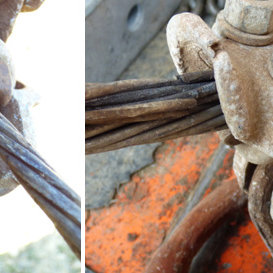
- Material composition defects—these include incorrect aluminum alloy grade, low-strength steel bolts, impurities, and reduced corrosion resistance. TTF prevention measures include mill test certificate verification, spectrometric chemical analysis, mechanical property testing, and heat treatment process validation.
- Casting defects—common failures include internal voids, shrinkage cavities, and slag inclusions. These create stress concentration points leading to crack initiation under cyclic loading. QA measures for prevention include controlled casting temperature monitoring, mold design inspection, and non-destructive testing.
- Dimensional inaccuracy—this results in incorrect groove diameter, improper bolt alignment, and out-of-tolerance clevis fittings. This results in conductor slippage, uneven clamping pressure, and strand crushing. The TTF quality assurance process performs precision dimensional inspection, tolerance compliance checks, and conductor fit verification trials.
- Surface finish defects—these include sharp edges, rough contact surfaces, and inadequate polishing. These failures can cause conductor abrasion, strand scoring, and corona discharge in high-voltage lines.
- QA prevention Inadequate mechanical strength—these include failure below rated ultimate tensile strength, clamp slippage under load, and bolt fracture. They may be from material defects, improper casting, or incorrect assembly. TTF prevents these failures through ultimate tensile load testing, proof load testing, slip resistance testing, and fatigue endurance testing.
- Poor galvanization of coating—this leads to thin zinc coating, uneven galvanization, or coating peeling or flaking. These result in accelerated corrosion, reduced bolt integrity, and seized hardware. QA prevention measures include coating thickness measurement, adhesion testing, salt spray testing, and batch inspection of galvanizing processes.
Cable suspension clamp quality assurance processes
The quality assurance process for cable suspension clamps is designed to ensure mechanical reliability, electrical performance, corrosion resistance, and long-term durability in overhead transmission and distribution networks.
Design verification and standard compliance
This process includes validating the mechanical rating, confirming compatibility with the specified conductor type, and ensuring compliance with applicable standards. The controls include finite element analysis, prototype testing under simulated load conditions, and design approval documentation.
Raw material verification
The clamp undergoes review of mill test certificates, chemical composition analysis, mechanical property, and visual inspection of billets. It includes inspecting aluminum alloy for the clamp body and galvanized steel for bolts and clevis components.
Process control during manufacturing
The casting and forging process for aluminum clamp bodies includes monitoring melt temperature and alloy composition, mold inspection, control of cooling rates, and inspection for shrinkage and porosity. For steel components the process includes controlled forging parameters and heat treatment verification. The dimensional and tolerance inspection includes conductor groove diameter, bolt hole alignment, and clevis pin diameter.
Surface finish and edge control
Surface quality impacts the mechanical and electrical performance of cable suspension clamps. Quality assurance checks smooth conductor contact surface, absence of sharp edges, surface roughness measurements, and proper polishing.
Galvanization and corrosion protection testing
Quality assurance includes zinc coating thickness measurement, adhesion testing, uniformity inspection, and salt spray testing. This ensures durability in coastal, industrial, or high-humidity environments.
Mechanical testing
Mechanical testing confirms the structural performance of the cable suspension clamp in overhead power networks. Standard tests include the ultimate tensile load test, proof load test, slip resistance test, fatigue endurance test, and clamp-conductor interaction test.
Final inspection and factory testing
Before shipment the clamp undergoes visual inspection, dimensional sampling audit, mechanical retesting, and verification of marking and batch numbers.
Documentation and traceability
A robust quality assurance includes full traceability, including batch identification, production date coding, inspection records, test reports, and certificate of conformity.
TTF certified. Why do we certify?
TTF’s approach to power line hardware services results in optimal product quality, strict adherence to custom design, and reduced cost. We are constantly checking manufacturing processes, addressing material concerns, and improving staff expertise to ensure the best quality product. Our quality control begins at the first batch of samples that you received from us. This continues through all production phases, where our QC staff never stop looking for opportunities to improve product quality. We can provide:

- Dimensional Testing
- Mechanical Testing
- Tolerance Analysis
- Tooling Life Analysis
- Rockwell Hardness Testing per ASTM E18
- Brinell Hardness Testing per ASTM E10 Magnetic Particle
- Testing per ASTM E1444 CMM (Coordinate Measuring Machine) Testing 24″
- Optical Comparator for Complex Measurements
- Tensile/proof load testing up to 160,000 lbs (700 kN)
- Hot Dip Galvanizing Plating
- Thickness per ASTM E376
- Torque Testing Roughness
- Testing Lifetime Sample Retention
Benefits of TTF-certified cable suspension clamps in overhead power networks
TTF-certified cable suspension clamps provide verified assurance that the product meets specified mechanical, metallurgical, and performance standards. The certification reduces technical, operational, and procurement risks. Here are the key benefits of TTF-certified cable suspension clamps.
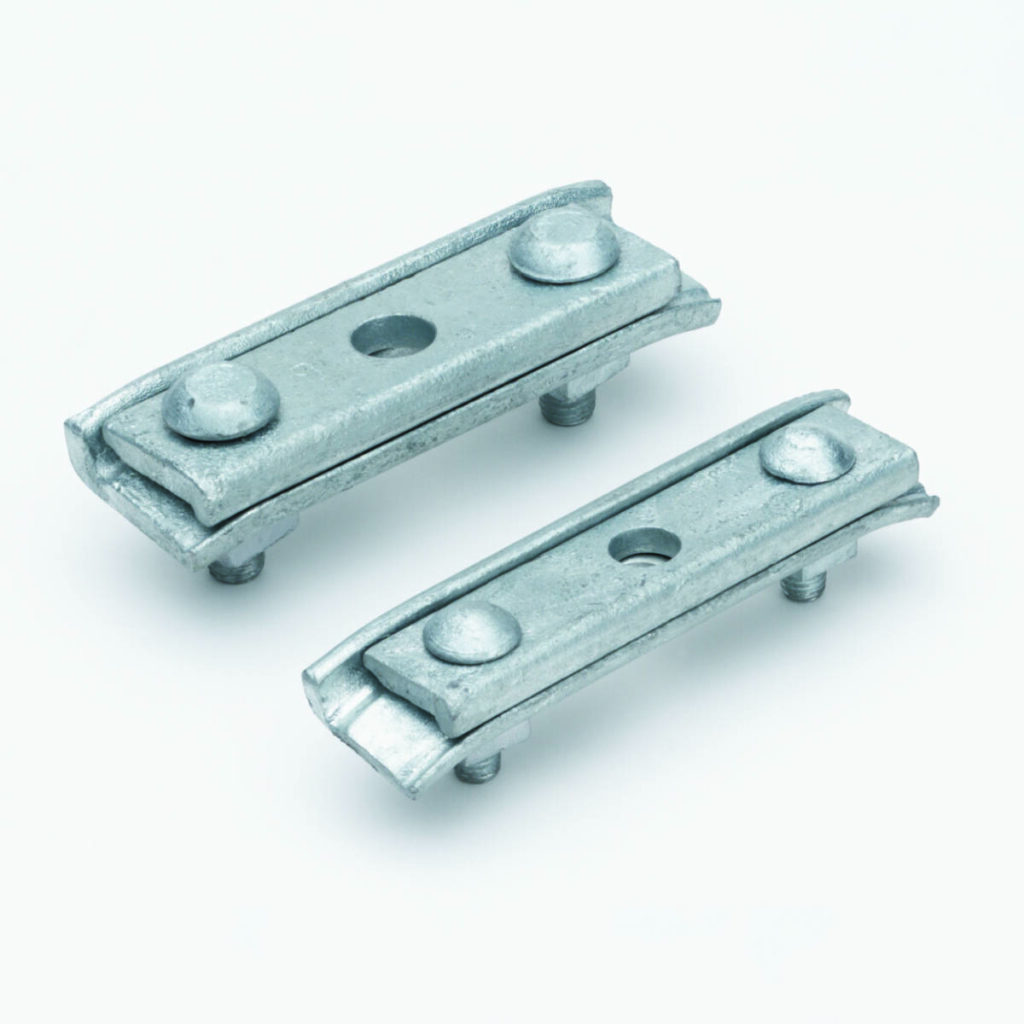
- Verified mechanical performance—suspension clamps should withstand conductor self-weight, wind-induced transverse loads, and ice loading. TTF-certified testing includes proof load testing, tensile strength validation, slip resistance testing, and fatigue endurance testing.
- Independent validation of material quality—the certification ensures verified aluminum alloy composition, confirmed steel bolt grade, zinc coating thickness compliance, and proper galvanization adhesion.
- Reduced field failure risk—common failures include clamp fracture, bolt shear, conductor strand crushing, and slippage under load. TTF-certified products undergo structured testing and audit oversight. This reduces manufacturing inconsistencies, undetected casting defects, and dimensional inaccuracies.
- Enhanced fatigue and vibration resistance—TTF certification needs fatigue cycle testing, clamp-conductor interaction evaluation, and verification of stress distribution.
In conclusion,
Cable suspension clamps act as a load-transfer interface between conductors and support structures. They affect mechanical stability, conductor integrity, vibration resistance, and long-term grid reliability. Common quality failures include material defects, casting porosity, dimensional inaccuracies, inadequate coating, and improper assembly. These failures can cause fatigue cracking, conductor damage, corrosion, or structural failure. TTF certification adds an independent verification layer and ensures compliance with IEC and ANSI standards. This helps confirm mechanical ratings and strengthen procurement confidence.