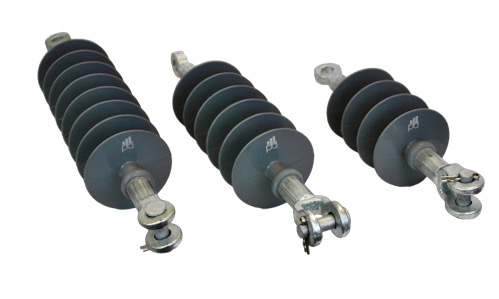
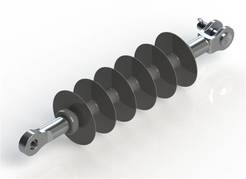
A polymer deadend insulator is an electrical insulation component used to support the mechanical tension of an overhead conductor. It prevents electrical current from passing through the supporting structure. It serves at points where a conductor terminates, changes direction, or needs mechanical tension support. Polymer deadend insulators are able to withstand the tensile loads exerted by overhead conductors while maintaining electrical insulation between the energized conductor and the grounded support structure. The polymer deadend insulator consists of fiberglass-reinforced polymer core that provides tensile strength to withstand conductor loads and mechanical stress. It also consists of a silicone rubber housing that covers the fiberglass core and protects it from moisture, contamination, and UV radiation. Polymer deadend insulators connect to one end of the insulator through a deadend clamp. The insulator keeps the energized conductor electrically separated from the grounded pole. Manufacturers verify the electrical and mechanical performance of polymer deadend insulators.

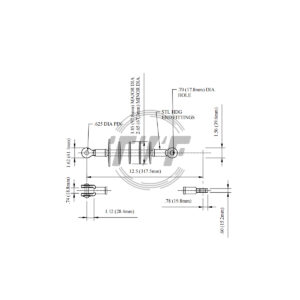


Silicone Polymer Deadend Insulator, 2.37 lb
A deadend insulator is a high-strength insulating component designed for terminating and anchoring conductors in overhead power line construction. It provides mechanical support while ensuring electrical insulation, preventing current leakage to supporting structures. Engineered for reliability, deadend insulators are commonly used in distribution and transmission networks to handle mechanical loads at line ends, angles, and critical tension points.
Key Features:
- High Mechanical Strength: Withstands heavy tensile loads from conductors at termination and angle points.
- Excellent Electrical Insulation: Prevents leakage currents and ensures safe line operation.
- Durable Materials: Manufactured from toughened glass, porcelain, or polymer composites for long service life.
- Weather & UV Resistant: Performs reliably under extreme environmental conditions.
- Corrosion Protection: Resistant to moisture, chemicals, and pollution.
- Wide Voltage Range Compatibility: Suitable for medium and high-voltage transmission applications.
- Easy Installation: Designed for compatibility with standard hardware fittings in power line construction.
Components of the polymer deadend insulators
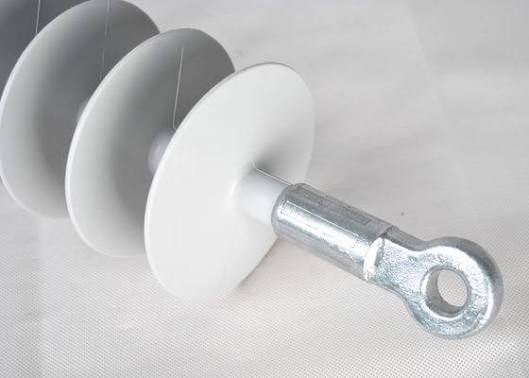
Polymer deadend insulators consist of several components designed to withstand the tensile forces exerted by overhead conductors. They also help maintain electrical isolation between energized conductors and grounded support structures. Their structure combines a high-strength insulating core, an external polymer housing and metallic end fittings. Key components include:
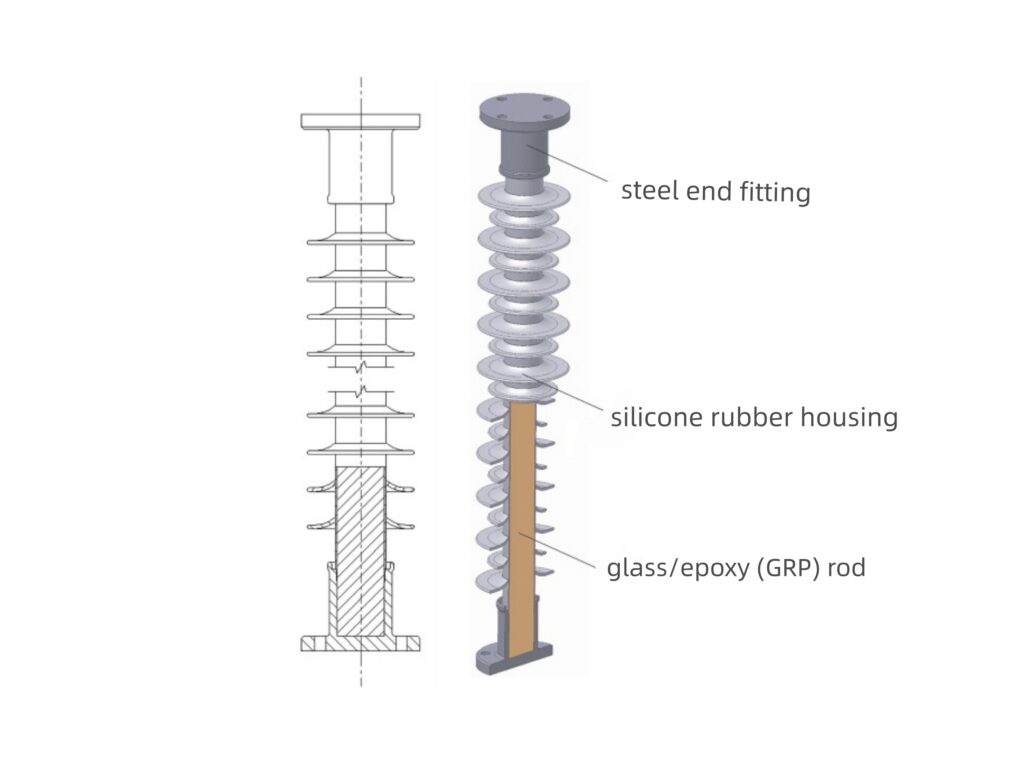
- Fiberglass-reinforced polymer core: the fiberglass-reinforced polymer core runs through the center of the insulator and connects two metallic end fittings. The glass fibers provide tensile strength while the resin binds the fibers together and transfers mechanical stress between them.
- Silicone rubber housing: the rubber covers the fiberglass core and provides electrical insulation. It also protects the core against environmental exposure. The silicone prevents electrical leakage between the energized conductor and grounded support structure.
- Insulating sheds: the sheds are circular extensions along the outer surface of the silicone rubber housing. The sheds increase the surface distance that leakage current travels. They also reduce the risk of flashover under wet and polluted conditions.
- Metallic end fittings: They connect the polymer deadend insulator to the overhead line hardware and supporting structure. The end connects to the conductor assembly while the other connects to a pole or crossarm hardware.
- Sealing and interface system: the sealing system protects the connection between the fiberglass core, silicone rubber housing, and metallic end fittings. The system should prevent water from entering the interface between the housing and metallic end fittings.
Importance of quality assurance during the manufacture of polymer deadend insulators
The manufacture of the polymer deadend insulators should ensure they withstand high mechanical tension and electrical stress. Quality assurance prevents defects in the fiberglass core, silicone rubber housing, metallic end fittings or sealing system that can compromise the insulator. These defects cause electrical flashover, core fracture, fitting separation, or premature equipment failure.
- Ensuring the quality of raw materials: the performance of a polymer deadend insulator depends on the materials used in its construction. The insulator is mainly manufactured from fiberglass-reinforced polymer, silicone rubber compound, and metallic end fittings. Material inspection prevents defective components from entering the production process.
- Verifying the tensile strength of the FRP core: the insulator core carries the tensile force exerted by the overhead conductor. The mechanical performance affects the ability of the deadend insulator to support conductor loads. QA verifies that the core and assembly meet the specified mechanical requirements.
- Inspecting silicone rubber molding and shed formation: the silicone rubber housing protects the fiberglass core against moisture, pollution, UV radiation, and electrical surface discharge. Quality assurance teams track the molding process to confirm that the housing covers the core and maintains the required dimensions. These checks prevent tracking, erosion, moisture ingress, and premature insulation failure.
- Controlling the attachment of metallic end fittings: metallic end fittings transfer the tensile load from the conductor to the supporting structure. Manufacturers use controlled crimping to secure the fittings to the fiberglass core. QA teams inspect end-fitting material and mechanical properties, fitting dimensions, crimping pressure, and crimp dimensions.
- Conducting electrical performance tests: polymer deadend insulators should withstand the electrical stresses related to their operating voltage and environmental conditions. QA teams conduct electrical tests to verify that the housing, sheds, and complete insulation assembly meet the specified electrical requirements.
Quality failure modes of polymer deadend insulators in power networks
Polymer deadend insulators face mechanical, electrical, and material failures due to defective materials, poor production processes, and failure to control product quality. The common defects include:
- Fiberglass core structure: the FRP core carries the tensile load exerted by overhead conductors. Fractures arise from poor-quality fiberglass reinforcement, internal voids and manufacturing defects, and excessive tensile loading beyond the specified mechanical rating. Manufacturers should inspect the FRP core for dimensional defects, material inconsistencies, and surface damage.
- Silicone rubber housing erosion: erosion occurs when electrical discharges and environmental exposure damage the outer insulating housing. Manufacturers should verify silicone rubber formulation and test its resistance to tracking, erosion, and environmental aging.
- Electrical tracking and surface flashover: electrical tracking occurs when electrical discharge activity creates permanent conductive paths across the insulating surface. It develops when pollution deposits, moisture, and electrical stress cause tracking on the silicone rubber housing. QA helps check creepage distance, shed geometry, and silicone rubber tracking resistance.
- Moisture ingress into the FRP core: this is when water penetrates the protective housing or sealing interfaces and reaches the fiberglass core. Manufacturers should inspect the sealing system, verify the quality of the housing-to-core interface, and control molding conditions.
- Metallic end-fitting separation: metallic end-fitting separation occurs when the connection between the FRP core and metal fittings loses its mechanical integrity. QA helps control crimping pressure, dimensions, and assembly procedures. Manufacturers should inspect the completed connections and conduct the specified mechanical load tests to verify fitting retention.
Compatible fittings used with polymer deadend insulators in power networks
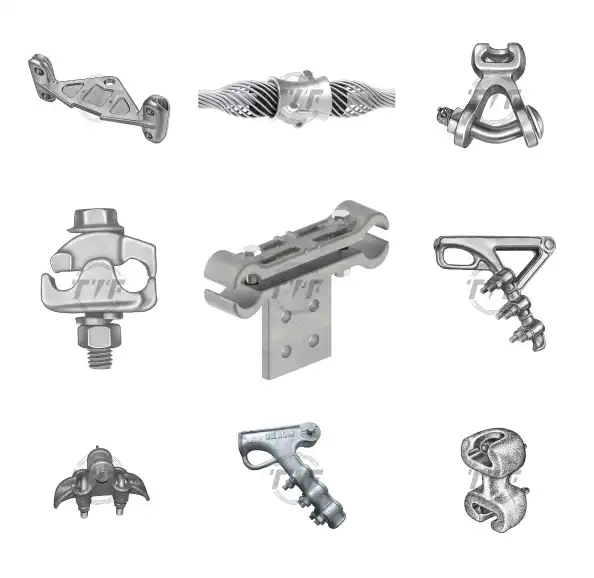
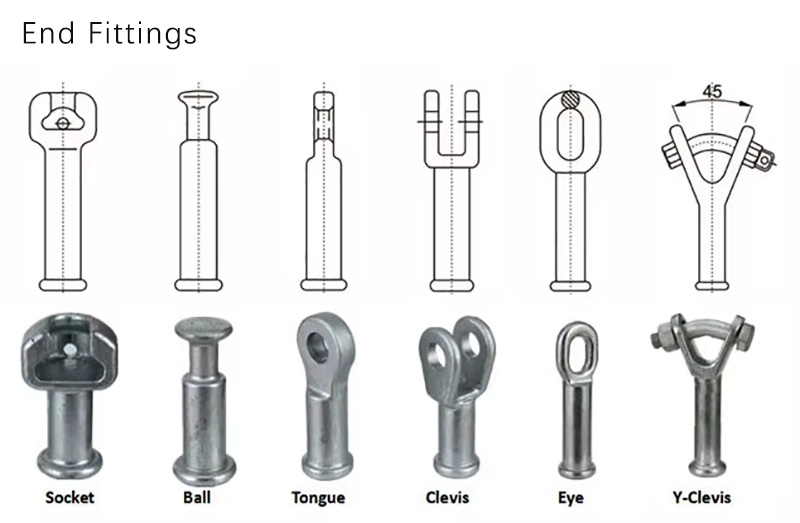
Polymer deadend insulators work with mechanical fittings that connect overhead conductors to poles, crossarms, transmission towers, and supporting structures. These fittings used with the insulator depend on its end-fitting configuration, voltage class, conductor arrangement, and specified mechanical load. These fittings include:
Clevis fittings
Clevis fittings provide a mechanical connection between polymer deadend insulators and other overhead line hardware. They connect polymer insulators to supporting brackets and other fittings. They also transfer tensile loads between connected hardware components and allow articulation at the connection points. The fittings must have compatible pin diameters, hole dimensions, and mechanical ratings. Incorrect dimensions can cause excessive movement, connection wear, or pin failure.
Yoke plates
These are steel connecting components used to distribute mechanical loads across multiple attachment points. A yoke plate connects the insulator assembly to conductor deadend hardware. They distribute mechanical loads across connected components and connect insulators to conductor attachment assemblies. Yoke plates should have mechanical strength and compatible hole arrangements. Their dimensions must match the connected clevises, shackles, and other fittings.
Shackles
These provide detachable mechanical connections between polymer deadend insulators and other line hardware. Their design allows installers to connect components using a removable pin or bolt. Shackles connect polymer insulators to crossarm brackets, provide flexible mechanical connections, and simplify assembly and replacement during maintenance.
Arcing horns and corona rings
Arcing horns and corona rings are electrical protection accessories used in polymer deadend insulator applications. Their use depends on voltage level, insulator designs, electrical coordination, and utility specifications.
Ball and socket fittings
These fittings provide articulated mechanical connections between compatible insulator end fittings and overhead line hardware. The ball fitting connects to a matching socket fitting. This allows controlled movement at the joint while maintaining mechanical continuity.
Oval eye and thimble eye fittings
Eye fittings provide attachment points for shackles, bolts, extension links, and connecting hardware. Oval eye fittings have an elongated loop while thimble eye fittings have a reinforced connection profile that supports mating hardware. They connect polymer deadend insulators to supporting hardware and provide attachment points for shackle and connecting links.
TTF-Certified polymer deadend insulators. Why choose our insulators?
TTF’s approach to power line hardware services results in optimal product quality, strict adherence to custom design, and reduced cost. We are constantly checking manufacturing processes, addressing material concerns, and improving staff expertise to ensure the best quality product. Our quality control for the polymer deadend insulators begins with the first batch of samples that you received from us. And this continues through all production phases, where our QC staff never stop looking for opportunities to improve product quality. We offer:

- Tolerance Analysis
- Tooling Life Analysis
- Rockwell Hardness Testing per ASTM E18
- Brinell Hardness Testing per ASTM E10
- Magnetic Particle Testing per ASTM E1444 CMM (Coordinate Measuring Machine) Testing
- 24″ Optical Comparator for Complex Measurements
- Tensile/proof load testing up to 160,000 lbs (700 kN)
- Hot Dip Galvanizing Plating Thickness per ASTM E376
- Torque Testing
- Roughness Testing
- Lifetime Sample Retention
- Dimensional Testing
Benefits of polymer deadend insulators in power networks
Polymer deadend insulators hold conductors under tension while isolating energized lines from grounded poles and towers. The composite construction combines a fiber-reinforced polymer core, a silicone rubber housing and metallic end fittings. This design makes them crucial in distribution and transmission networks exposed to pollution, moisture, coastal conditions and mechanical stress. Polymer deadend insulators offer high tensile strength for conductor support, lower weight, better performance, resistance to moisture, resistance to impact, and improved electrical insulation performance. Their benefits depend on manufacturing quality and correct installation. Manufacturers verify their characteristics through material inspection, dimensional checks, mechanical testing, and electrical tests.