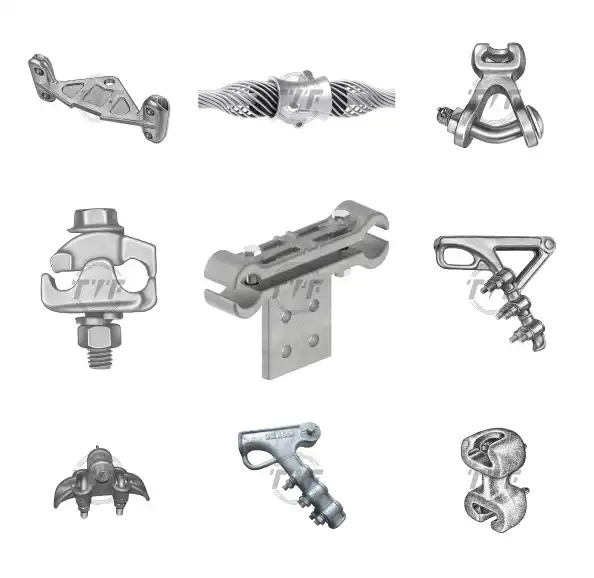

A drop wire clamp is a hardware fitting used to support and secure drop wires connecting overhead telecommunications from a pole to a building. It allows the attachment of cables to a pole, building, or any other kind of support, thereby decreasing the compromise made to the signal transmission capacity of the drop wire cable. The clamp also supports the cable weight and sets the tension on the line, relieving the stress on the points of attachment. It anchors and relieves strain on the drop wire at the customer end. It grips the wire without damaging the insulation and ensures a stable and safe connection. Its structure consists of the body, wedge, loop, and plastic or rubber insert. One of its key functions includes anchoring the drop wire to a house wall bracket to secure the cable before it enters the building.
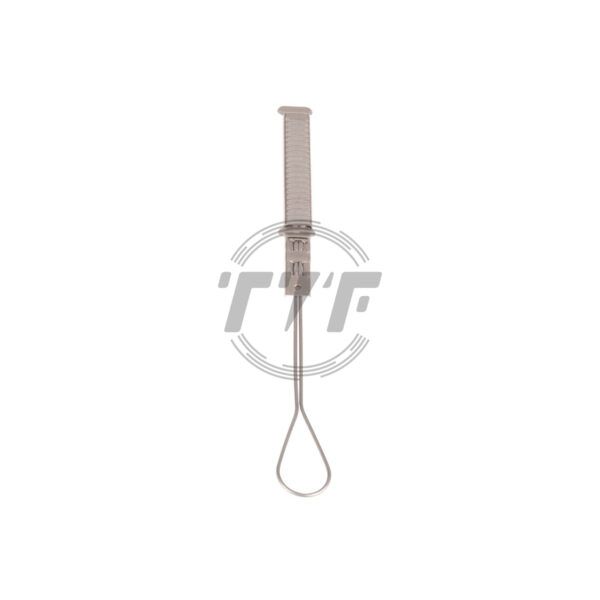
Drop Wire Clamp
A drop wire clamp is a mechanical device designed for securing and supporting drop wires in overhead power line and telecommunication installations. It ensures firm grip and reliable tensioning while preventing slippage or wire damage. The clamp is typically made of corrosion-resistant materials, providing durability and stability in outdoor environments. Its compact design allows for quick installation and long-term performance in aerial distribution networks.
Key Features:
- High Mechanical Strength – Provides secure grip on drop wires under tension.
- Anti-Slip Design – Prevents wire slippage without damaging insulation.
- Corrosion Resistance – Manufactured with stainless steel or UV-resistant thermoplastic for outdoor durability.
- Easy Installation – Tool-free, quick assembly for efficient line construction.
- Wide Compatibility – Supports various wire diameters for power and telecom applications.
- Weather Resistance – Maintains performance in extreme environmental conditions.
Importance of a drop wire clamp in overhead telecommunication networks
Drop wire clamps in overhead telecommunication networks ensure the durability, safety, and efficiency of cable connections between poles. They provide mechanical support, strain relief, and protection to drop cables that link main distribution lines to end users. Their use helps prevent frequent signal disruptions, cable damage, and costly maintenance. Drop wire clamps ensure that the wire remains in place under tension and environmental stress. The clamps prevent mechanical stress from transferring to conductors or connection terminals. The strain relief function extends the service life of the cable and the connectors to reduce failures and signal interruptions. Their smooth, insulated surfaces or protective inserts prevent damage to the cable’s insulation. This is crucial in preventing short circuits, corrosion, or moisture ingress that could degrade communication quality. Their corrosion resistance and high tensile strength make them suitable for outdoor use.
The working of a bail wire clamp
A drop wire clamp provides mechanical and protective roles in overhead telecommunication systems. It ensures that the drop wire connecting the distribution pole is firmly secured, protected from strain, and properly aligned. The drop wire clamp is securely anchored to the distribution pole and the building wall bracket. Its bail or loop connects to a hook, eye bolt, or bracket while the body grips the wire. The anchorage keeps the drop cable taut and prevents sagging under external loads. The drop wire is inserted between two wedge-shaped jaws inside the clamp. In the case of applied tension, the wedge slides deeper into the body to increase the gripping force. The drop wire clamp isolates the cable conductors from mechanical stress. Drop wire clamps isolate the cable conductors from mechanical stress by absorbing the tension. Strain relief helps maintain signal integrity and prevent service interruptions in telecommunication lines.
Key features of the drop wire clamp
The drop wire clamp consists of features that make it essential in telecommunication and broadband networks. The clamp ensures secure cable installation, protection, and long-term network reliability. It is also designed to anchor and relieve tension on drop wires. They combine durability, strength, and precision engineering to handle the challenges of outdoor environments. Here are the key features of the drop wire clamps.
- High tensile strength—drop wire clamps withstand significant mechanical tension from the weight of the drop wire. They consist of stainless steel, aluminum alloy, or reinforced thermoplastic materials. These materials provide excellent tensile strength to hold the cable without slippage.
- Corrosion and weather resistance—drop wire clamps can handle corrosion resistance and UV stability. High-quality materials ensure the clamp maintains its performance under rain, heat, and sunlight exposure.
- Efficient cable gripping mechanism—the self-tightening wedge system or wedge-action design that locks around the wire. It ensures a firm grip without damaging the insulation.
- Strain relief function—drop wire clamps act as strain-relief devices, absorbing mechanical stress that would be transferred to the conductors. This helps prevent cable breakage, improve signal stability, and protect the integrity of telecom connections.
- Easy and tool-free installation—the clamps provide quick and simple installation. This allows the wire to be inserted manually between the wedges with no need for special tools.
- Compact and lightweight design—drop wire clamps are lightweight and compact, which makes them ideal for aerial installations. Their form also ensures neat cable alignment and professional-looking overhead installations.
Types of drop wire clamps
Single-wire drop clamp
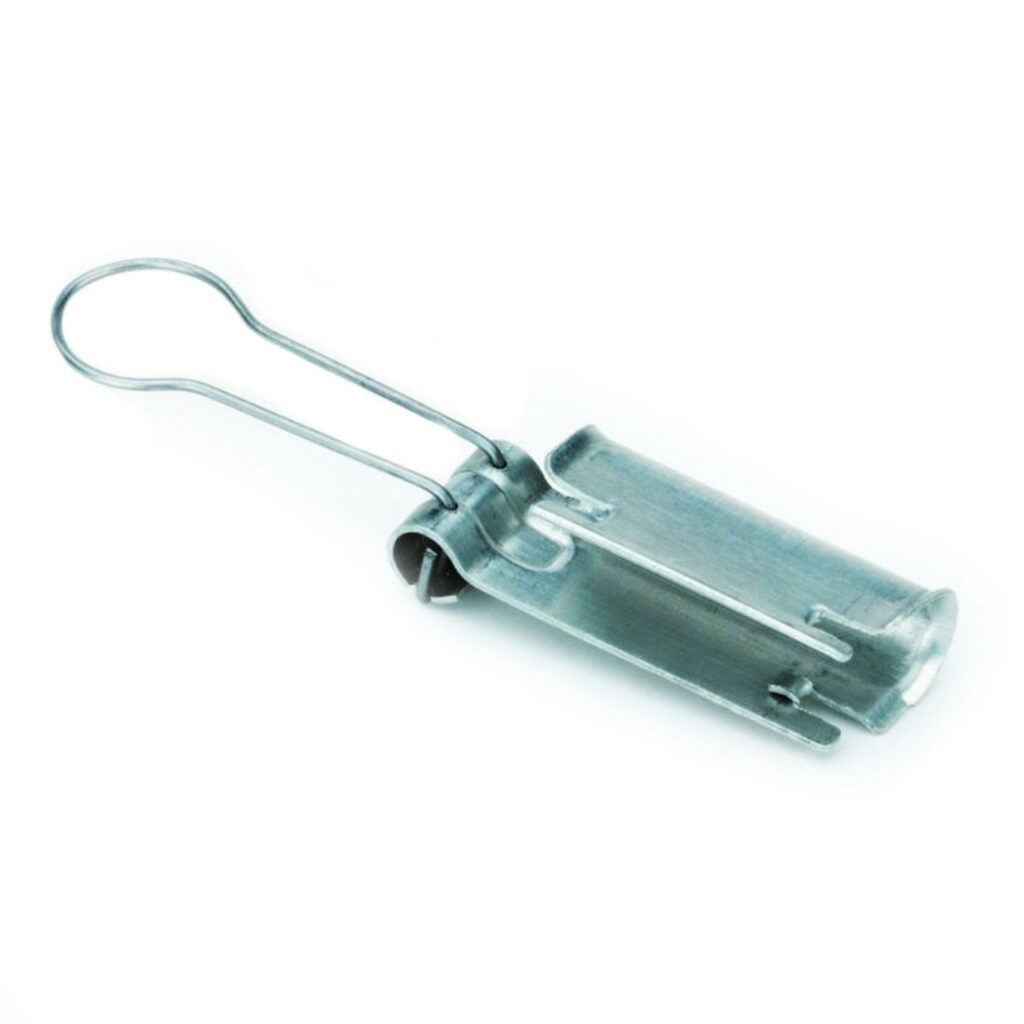
This clamp supports one drop wire or cable, securing a telephone or fiber drop wire between the pole and the building. It ensures tension control and prevents wire damage. Single wire clamps consist of a stainless-steel body, a wedge mechanism for cable grip, and a loop for attachment of a hook.
Double wire bail clamp

The double wire drop clamp can hold two parallel drop wires. It serves where two drop wires are necessary for extra capacity. It features two wire slots, a strong wedge grip, and high-tensile stainless steel. This helps offer a firm grip without insulation damage.
Wedge-type drop clamp

This clamp features a body, movable wedge, and bail. The wedge slides into the body to clamp the wire tightly as tension increases. The self-tightening wedge mechanism provides an automatic, secure grip that strengthens as the load increases.
Suspension-type bail clamp

Suspension drop clamps are functional when drop wires need to hang or curve along poles. It features a curved, smooth body that reduces cable stress. It provides flexible support for cables along suspension spans to allow for slight movement and vibration without damaging the cable.
Insulated drop wire clamp
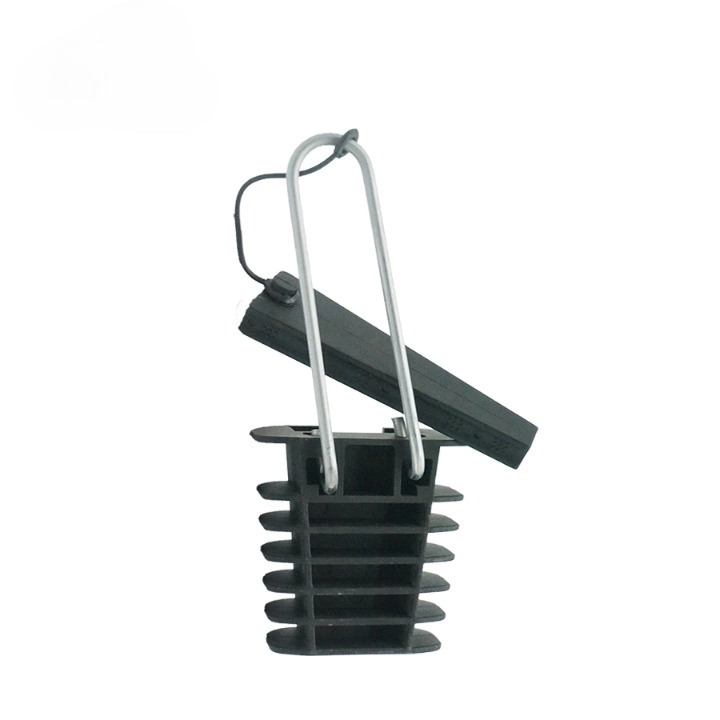
This clamp includes insulated materials to protect the cable’s outer sheath. It serves in environments where electrical isolation is necessary or where the cable insulation is protected from metallic contact and abrasion.
Stainless steel loop clamp

This clamp offers durability and corrosion resistance in coastal and industrial environments. It provides long-term anchorage for cables exposed to harsh environmental conditions. The clamp has high tensile strength and weather resistance.
Technical specifications for a bail wire clamp
The bail wire clamp is a component designed to anchor, support, and relieve strain on aerial drop cables. It ensures reliable performance under various mechanical and environmental conditions. The drop wire clamps have specifications that determine the clamp’s mechanical strength, material composition, cable compatibility, and weather resistance. This helps ensure long service life and signal stability in outdoor installations. Here are the key technical specifications for drop wire clamps.
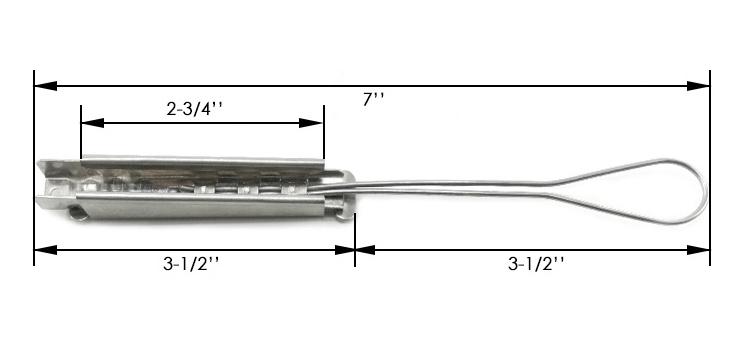
- Material composition—the choice of the material affects the clamp’s durability, strength, and resistance to corrosion. Common materials for drop wire clamps include stainless steel, aluminum alloy, thermoplastic polymer, and rubber inserts.
- Mechanical strength and load capacity—the tensile strength of a drop wire clamp defines how much tension it can withstand without failure. The ultimate tensile strength ranges from 500 to 1000 N, depending on design and material.
- Cable accommodation range—drop wire clamps can fit specific cable diameters. The applicable cable diameter is 2-6 mm. Compatible cable types include telephone drop wire, fiber optic cable, and coaxial cable for broadband connections.
- Design and construction—the structure of a drop wire clamp determines how it grips and protects the cable. Its design requirements include smooth inner surfaces to prevent cable abrasion, an anti-slip design, and tool-free assembly for field installation.
- Electrical and insulation properties—electrical safety is crucial for installations near power lines. Insulation resistance for the clamp is under 500 V DC, dielectric strength is 2 kV AC, and there is non-conductive housing for electrical isolation and safety.
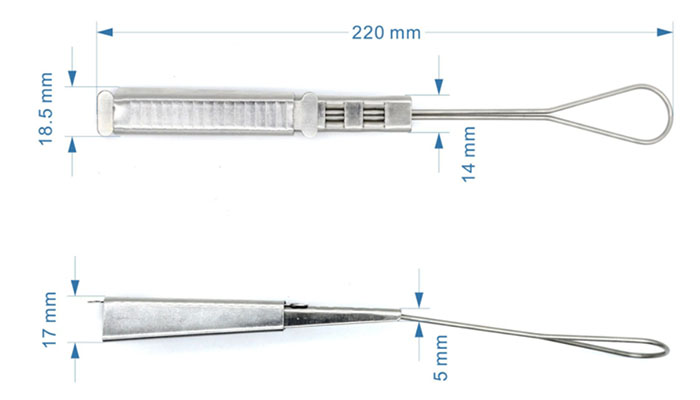
- Dimensions and weight—most drop wire clamps have compact dimensions suitable for lightweight overhead setups. The length ranges between 100 and 150 mm, the width between 15 and 30 mm, the weight between 50 and 120 g, and the cable entry width between 2 and 6 mm.
Functions of bail wire clamps in overhead networks
Drop wire clamps play a crucial mechanical and protective role in overhead telecommunication systems. They anchor, support, and relieve mechanical stress on the drop wires that connect distribution poles to buildings. The following are the functions of drop wire clamps in overhead networks.
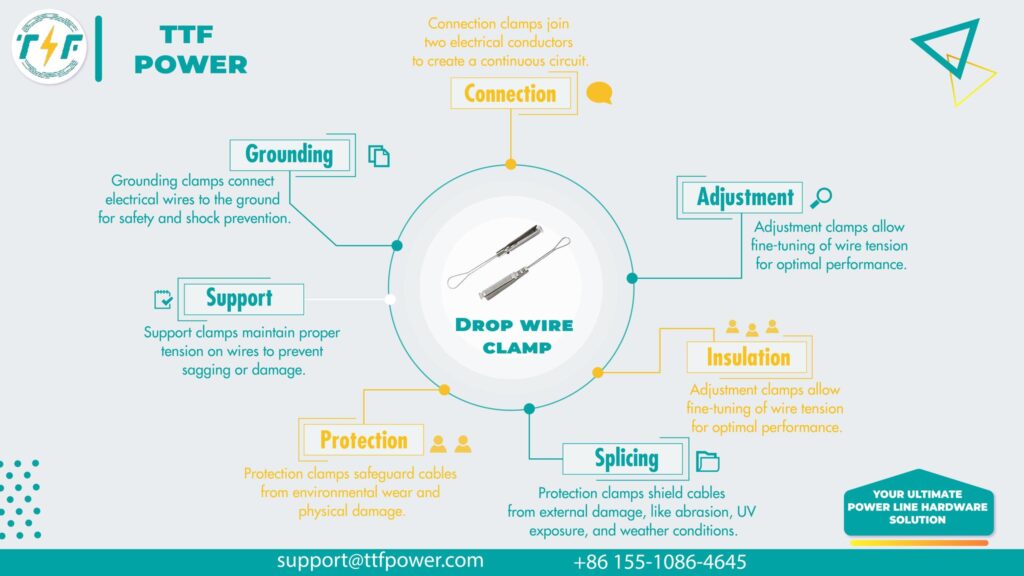
- Anchoring and securing the drop wire—the drop wire clamp anchors the drop cable at both ends between a telecom pole and a building. The cable prevents sagging, slippage, or detachment caused by environmental stress.
- Providing strain relief—overhead drop wires face tension, wind pressure, and vibration. The clamp serves as a strain relief device to absorb mechanical stress and prevent it from reaching the internal conductors.
- Maintain proper cable alignment—drop wire clamps help maintain neat and consistent alignment of overhead cables. They ensure aesthetic installation, reduced cable friction with other fittings, and easier maintenance and fault detection.
- Protecting cable insulation and conductors—the smooth inner surfaces and rubber inserts prevent the wire insulation from damage during tension. This ensures that the cable remains safe and resistant to environmental wear.
Best practices for using bail wire clamps in overhead networks

Proper use, installation, and maintenance of the drop wire clamps ensure the lifespan of the networks. Following the best practices helps improve signal quality and network safety. These measures include selecting the right type of clamp, matching the clamp to the cable diameter, installing at proper tension, ensuring proper anchorage points, using weather-resistant materials, avoiding cable twisting and bending, and providing enough electrical isolation.