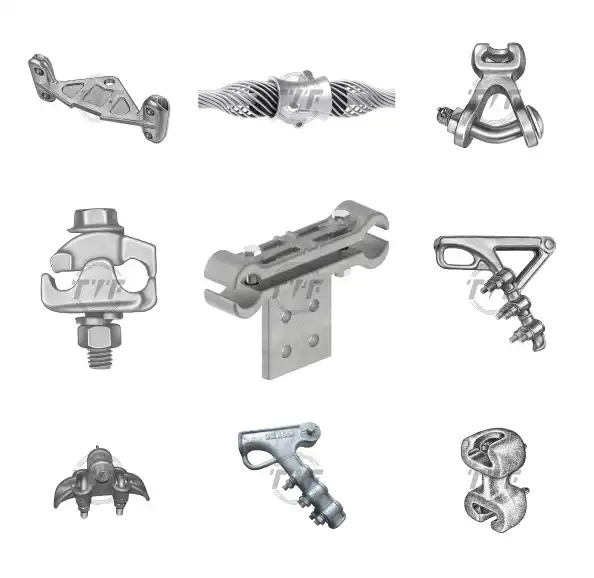
Downlead clamps, also known as downlead cushions, are mechanical fittings used in power transmission and communication line systems. They secure and guide a conductor or fiber optic cable running down the pole. The clamps are metal or polymer clamps designed to hold and support a cable along the structure while preventing movement, vibration, or mechanical stress on the cable. The clamp grips the cable at regular intervals along the pole to keep it fixed in position. It also prevents the cable from swaying due to wind or mechanical vibration, which causes wear over time. Additionally, the clamps distribute the mechanical load along the vertical run, reducing tension on the cable ends and connection points. They help maintain the cable’s bending radius and insulation integrity. Downlead clamps mount along the high-voltage transmission tower to secure the cable and prevent vibration. Their use ensures the integrity of fiber optics within the OPGW.
The working principle of a downlead clamp
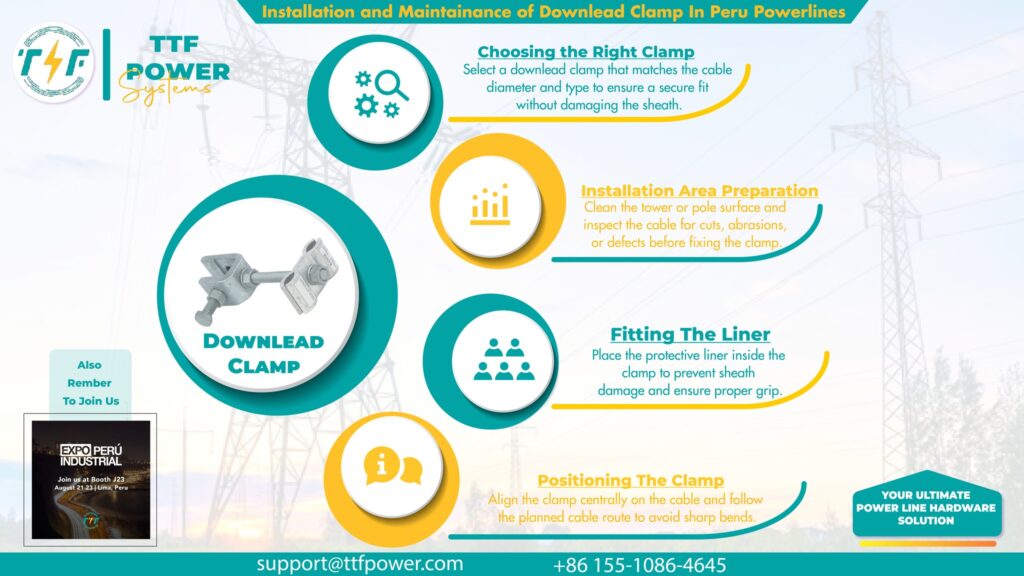
A downlead clamp consists of four attachment portions that boost versatility when dealing with lattice towers. It works by mechanically fastening and stabilizing a vertical section of the cable, such as ADSS, OPGW, or power cable. It ensures that the cable remains fixed, protected from vibration, and free from excessive tension. The cable is placed inside the grooved section of the downlead clamps, which are designed to match the diameter of the cable. The groove or insert is lined with rubber or polymer padding that grips the cable without damaging the sheath. After positioning, the clamp is then tightened using bolts or banding straps to anchor it securely to the pole. The mechanical compression between the clamp halves creates a firm grip that prevents the cable from slipping. The rubber insert absorbs minor vibrations and thermal movements to protect the cable from wear.
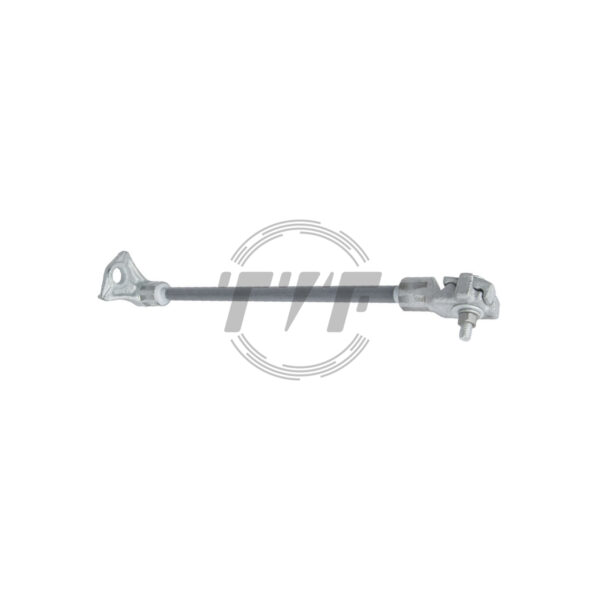
Downlead Bracket
The downlead bracket is a robust mounting accessory used in power line and communication tower construction to securely support downlead clamps and vertical cables such as OPGW, ADSS, or power conductors. It provides a stable interface between the tower structure and cable management system, ensuring proper alignment, load distribution, and mechanical protection.
Engineered for strength, corrosion resistance, and easy installation, the downlead bracket is essential for maintaining safe and organized cable routing along transmission towers, poles, and substation structures.
Key Features:
- High-Strength Material: Manufactured from hot-dip galvanized steel or stainless steel for superior mechanical performance and weather resistance.
- Universal Mounting Design: Compatible with various tower profiles—angle, tubular, or lattice structures.
- Secure Cable Support: Provides a firm base for downlead clamps, ensuring stable vertical cable runs.
- Corrosion & UV Resistance: Designed to withstand extreme environmental conditions for long service life.
- Easy Installation: Pre-drilled holes or banding slots allow quick attachment using bolts or stainless steel straps.
- Adjustable Configuration: Available in multiple sizes and orientations to suit different cable diameters and tower geometries.
- Standard Compliance: Meets IEC and IEEE mechanical safety standards for transmission line hardware.
Why use downlead cushions?
The use of downlead clamps provides safety, reliability, and longevity of cable installations on transmission towers, poles, and substations. They are essential components of cable management systems that protect power conductors and fiber optic cables from damage caused by mechanical stress, vibration, and environmental exposure. The clamps keep OPGW and ADSS cables securely fastened to the tower or pole. By stabilizing the cables, the clamps prevent mechanical wear, signal loss in fiber optics, and safety risks in live power lines. These cables experience tension from their weight, vibration, and thermal expansion. Downlead clamps installed at regular intervals distribute this mechanical load evenly along the structure. Even load distribution prevents strain concentrations at cable terminations or joints. By reducing vibrations, the clamps protect the cable sheath, fiber cores, and connection points. Download clamps reduce friction and prevent galvanic corrosion. Most clamps include UV-resistant and anti-corrosive materials to enhance durability.
Core features of the downlead clamps
The downlead clamp is a cable-support device designed to secure, protect, and stabilize OPGW, ADSS, and power cables. Its design consists of various features that ensure durability, mechanical strength, and protection in challenging outdoor conditions. Their versatility allows utilities to standardize components across systems and simplify procurement and logistics. Here are the features of the downlead clamp.
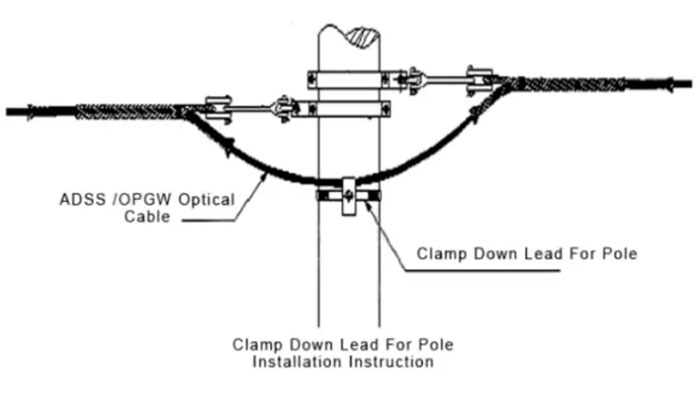
- Durable construction material—downlead clamps comprise materials like aluminum alloy, stainless steel, and UV-resistant polymer. These materials help provide long-term durability, weather resistance, and mechanical stability under environmental stress.
- Rubber or polymer inserts—each clamp consists of a rubber or polymer cushioning insert. The insert surrounds the cable to prevent abrasion, provide vibration damping, and maintain a firm, nondestructive grip on the cable. The insert ensures secure holding without compromising the cable’s insulation.
- Adjustable clamp design—downlead clamps are adjustable to fit a range of cable sizes. They work with bolts, screws, or stainless-steel bands for fastening. Their adjustability provides installation flexibility to fit different cable types.
- Corrosion and UV resistance—the clamps are designed to withstand corrosion, UV exposure, and temperature fluctuations. This ensures the clamps perform under marine, desert, or high-altitude conditions without degradation.
- High mechanical strength—the clamp body and fasteners can handle tensile loads, compression, and vibration stress. They can hold cables even in strong wind or heavy rain conditions without loosening. Their high strength guarantees system integrity and safety in high-voltage and long-span transmission networks.
- Electrical and mechanical isolation—the clamp provides electrical isolation between the cable and the metallic tower structure. This helps maintain system safety and signal integrity in OPGW and ADSS cables.
Types of downlead clamps
OPGW downlead clamps
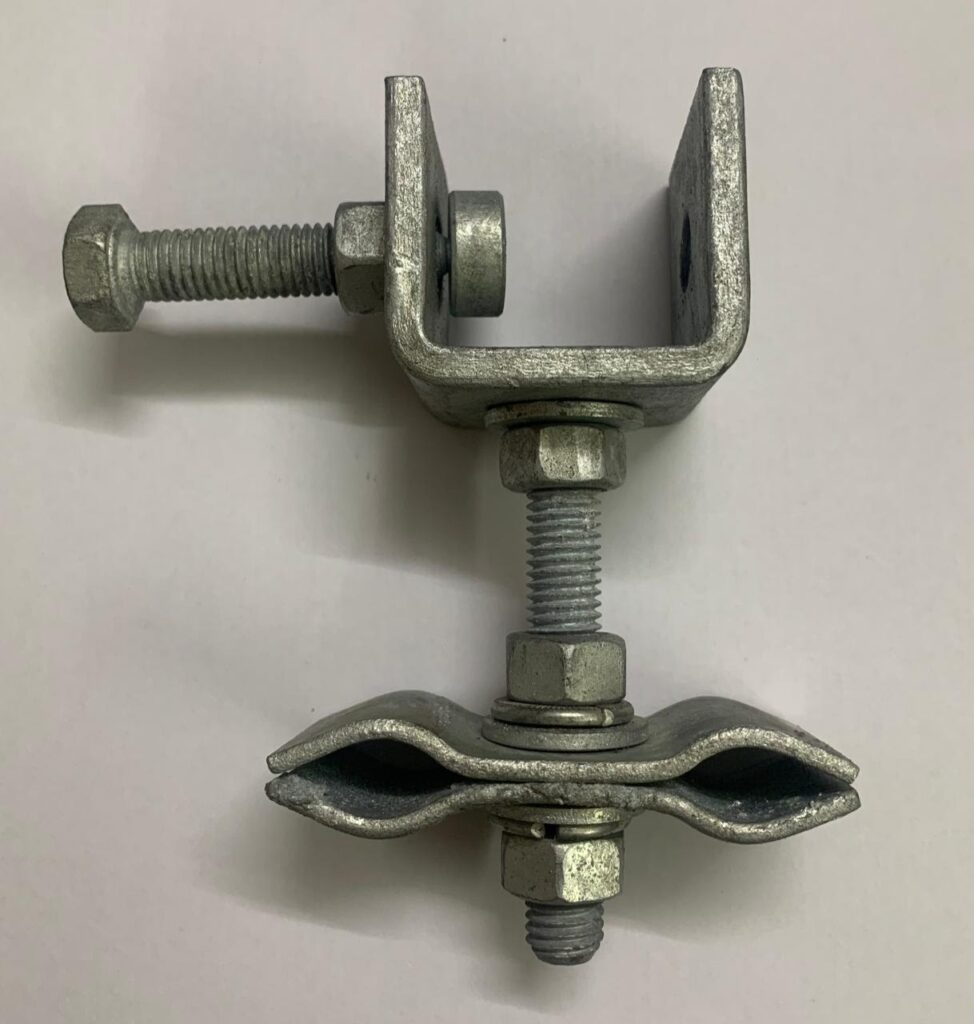
These clamps are specifically designed for optical ground wire cables used in high-voltage transmission networks. They feature a strong mechanical grip, an anti-vibration design, corrosion- and UV-resistant materials, and mounting bands. It ensures the OPGW cable remains tension-free, protected from vibration, and securely positioned for long-term data transmission reliability.
ADSS cable clamps

ADSS downlead clamps are designed for non-metallic fiber optic cables that need electrical isolation from the tower structure. The clamps are made from non-conductive materials, are lightweight, have a smooth inner surface to prevent optical fiber damage, and have high tensile strength. The clamps prevent electrical conduction between the cable and structure to ensure signal integrity and system safety.
Universal downlead clamps
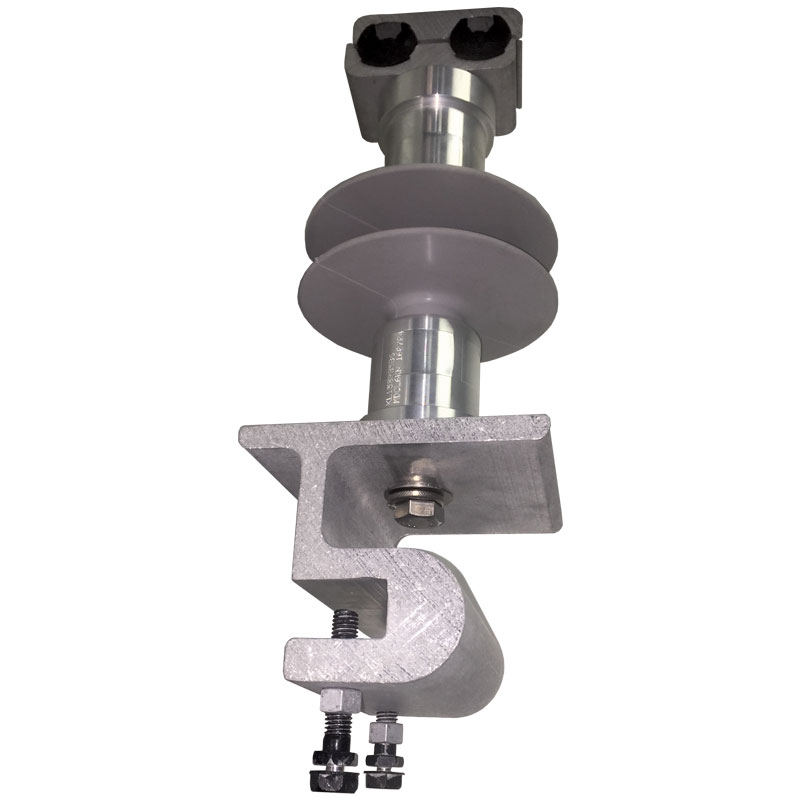
These clamps are compatible with both OPGW and ADSS cables. They are adjustable and come with interchangeable inserts to fit different cable diameters. They feature an aluminum alloy body, adjustable bolts, and high load-bearing capacity.
Single-bolt and double-bolt clamps
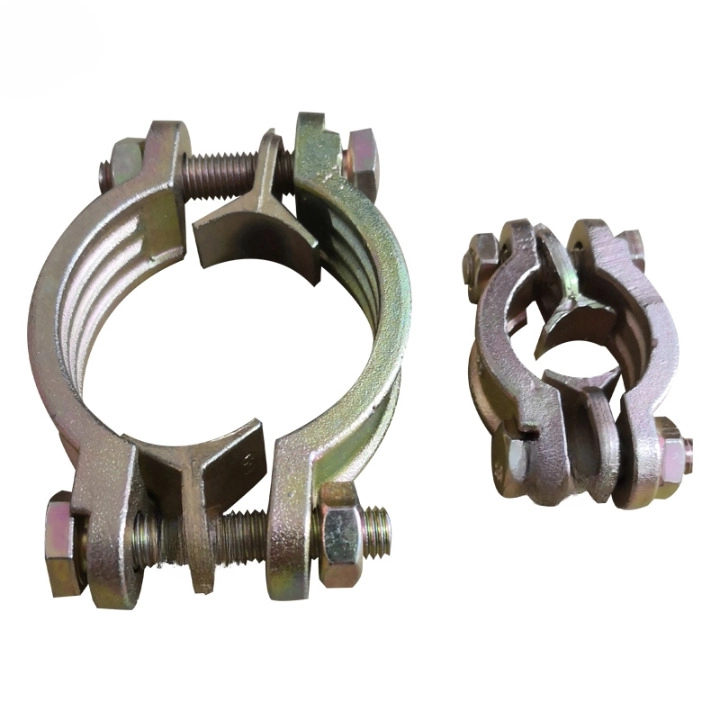
These clamps differ depending on their fastening mechanisms, which include single-bolt and double-bolt clamps. Single-bolt clamps are faster and easier to install, ideal for light- to medium-duty applications. Double-bolt clamps provide greater grip and load distribution, ideal for high-tension environments.
Band-type downlead clamps
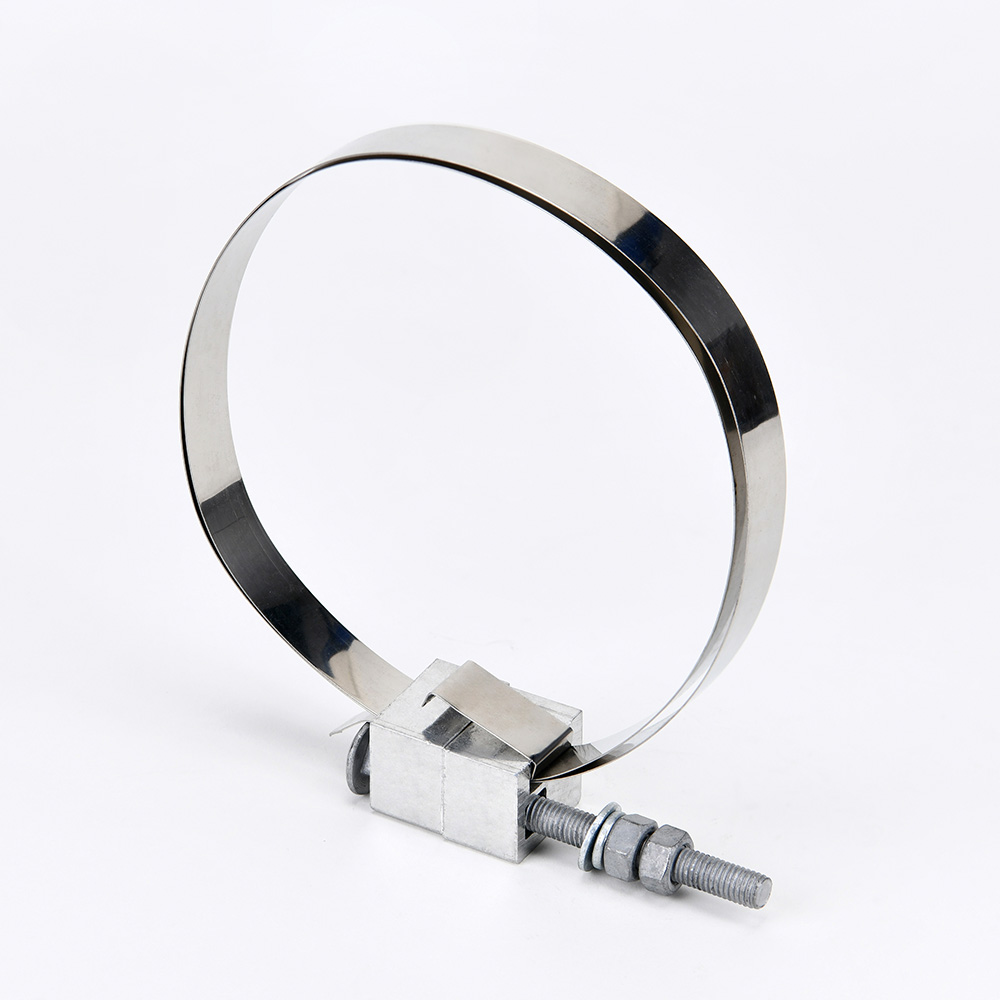
Band-type clamps use stainless steel or galvanized bands to secure the clamp body to round, angular, or lattice structures. They have flexible mounting systems adjustable to different towers and provide consistent clamping pressure. They allow quick and secure installations on existing structures without compromising tower integrity.
Technical specifications for downlead cushions
The specifications for downlead clamps define their mechanical strength, material composition, cable compatibility, and installation standards. Their specifications ensure the clamp performs reliably in harsh outdoor conditions, maintains cable integrity, and meets utility and telecommunication industry requirements. Below is a discussion of the key specifications for down-filled cushions.
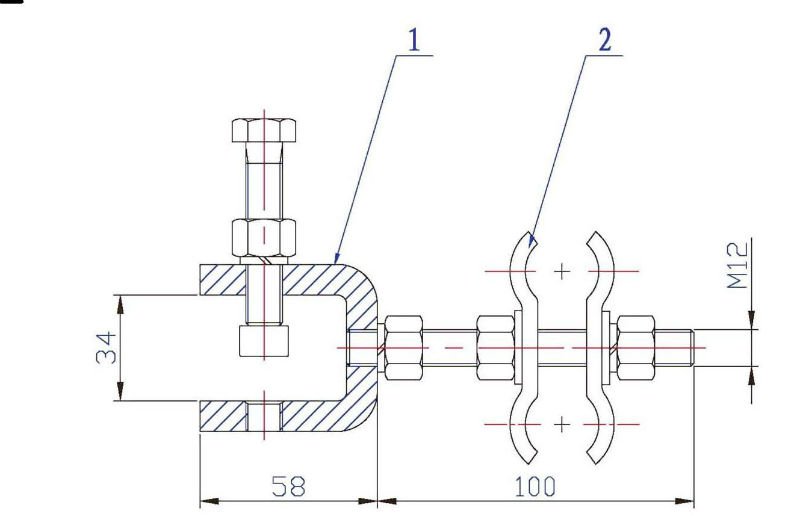
- Material composition—the choice of the material impacts the clamp’s mechanical strength, durability, and corrosion resistance. Common materials used include aluminum alloy, stainless steel, galvanized steel, polymer, or rubber inserts.
- Cable diameter range—downlead clamps fit various cable diameters ranging between 8 mm and 25 mm, depending on the type of cable. They ensure a tight, secure grip without compressing or damaging the cable sheath.
- Mechanical strength—this is the clamp’s ability to withstand vertical load, vibration, and wind pressure without deformation. Specifications include tensile load capacity, slip load, and vibration resistance under IEC or IEEE vibration endurance standards.
- Mounting method—downlead clamps attach using bolts, stainless steel bands, and bracket systems. Specifications include mounting bandwidth (20-40 mm), band material (stainless steel), and bolt torque (15-25 Nm).
- Environmental resistance—the clamps must withstand temperature extremes, UV exposure, and corrosive conditions without degradation. Specifications include operating temperatures ranging from −40°C to +85°C, UV resistance, and corrosion resistance. This is crucial to ensure reliability in harsh outdoor climates.
- Electrical properties—downlead clamps for ADSS cables must ensure electrical isolation from metallic structures. For OPGW, the clamp may include grounding continuity when necessary. The specifications include electrical insulation resistance and dielectric strength. This prevents electrical leakage or signal interference.
- Dimensions and weight—the clamp’s size and weight vary with design and cable type. The specifications include length (100-150 mm), width (50-80 mm), and weight (0.5-1.2 kg). The clamps have optimized dimensions to ensure easy handling, balanced load distribution, and compatibility with standard tower hardware.
Functions of download cushions in power and communication networks
Downlead clamps protect cables as they transition from overhead lines to ground level on poles and transmission towers. The clamps ensure the cables are secure, protected, and properly tensioned. This helps maintain the reliability of transmission and communication systems. Its key functions in power and communication lines include:
- Secure cable fixation—downlead clamps hold the cable in place to prevent it from moving or sliding under its weight, wind, or vibration. They prevent slippage, sagging, and accidental strain on the cable ends.
- Load distribution—the clamps distribute the load along the structure, reducing stress at the top and bottom terminations.
- Vibration and wind load control—the clamp uses rubber or polymer inserts to dampen vibration and absorb mechanical shocks.
- Cable protection against abrasion and damage—downlead clamps prevent the cable from rubbing against the tower surface.
- Electrical and mechanical isolation—the clamp provides electrical isolation between the non-metallic and metallic tower in ADSS systems. In OPGW systems, the clamp maintains mechanical support while allowing electrical grounding.
- Maintaining proper cable bending radius—the cables must follow a safe bending radius to prevent kinking. The clamps guide the cable’s vertical alignment to maintain the radius.