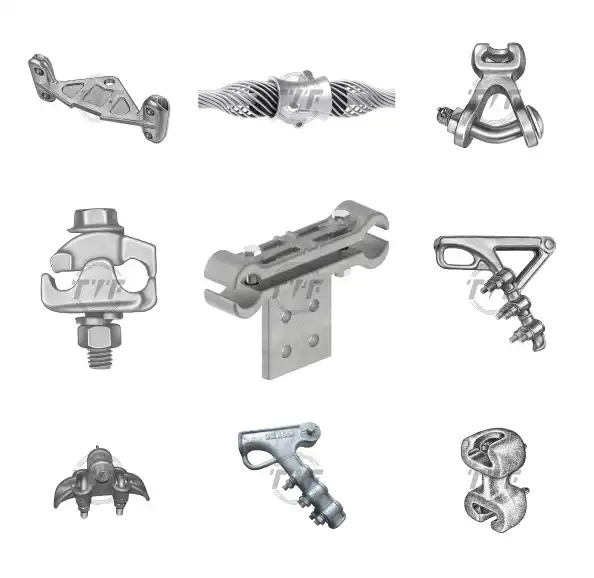
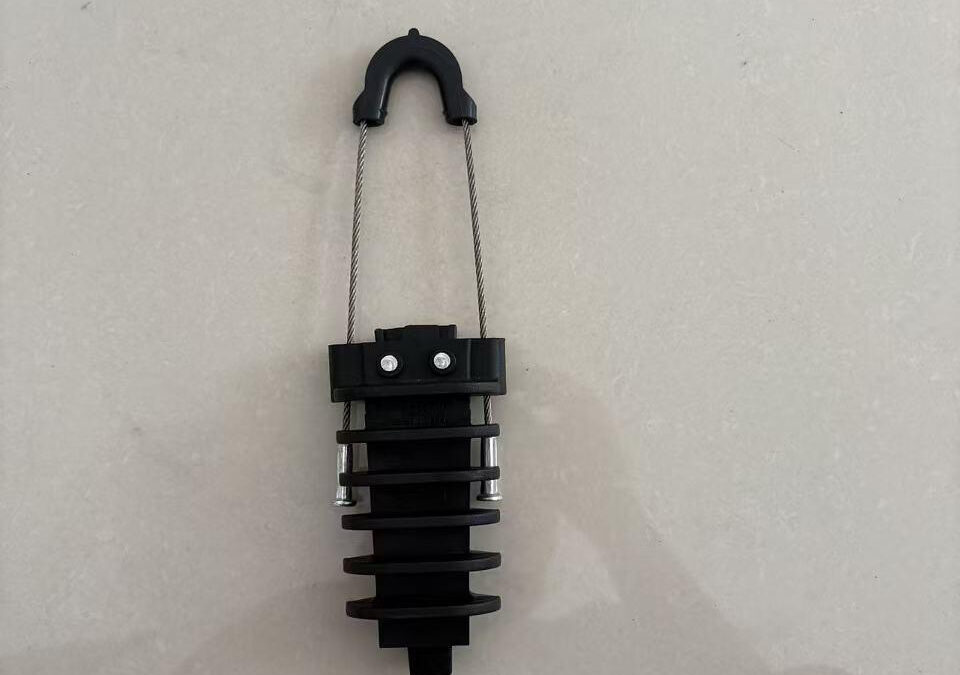
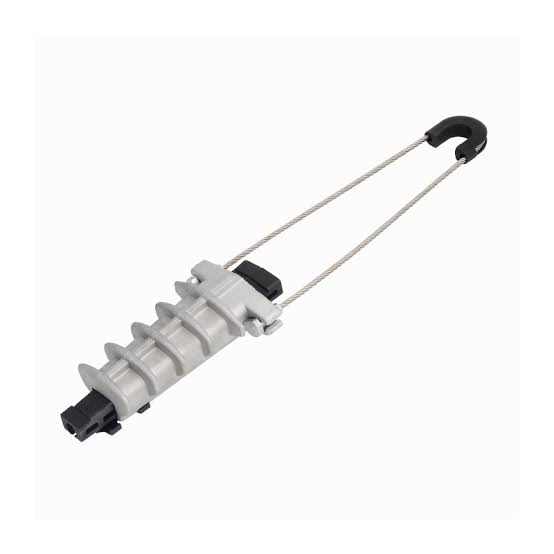
A deadend clamp is a mechanical component used to terminate, anchor, or tension an electrical conductor at the end of a line. It transfers the mechanical tension of the conductor to a pole, tower, or other supporting structure while maintaining the conductor’s position. Deadend clamps consist of materials that are durable and corrosion resistant, such as hot-dip galvanized steel, aluminum alloy, high-strength forged steel, ductile iron, and stainless steel. These materials allow the deadends to work on transmission lines, telecommunication networks, and ADSS and OPGW fiber optic cable installations. The deadend clamps offer high mechanical holding strength, corrosion resistance, reliable conductor retention, and low maintenance requirements. When selecting the deadend clamps, utilities should consider conductor type and diameter, rated mechanical load, applicable standards, and quality assurance. These factors ensure the clamp maintains proper line tension and contributes to the mechanical reliability and safety of power transmission and distribution networks.
Components of the deadend clamp
The deadend clamp consists of several components and features that allow it to terminate and anchor conductors while withstanding high mechanical loads. Deadend clamps offer secure conductor grip, corrosion resistance, load distribution, weather resistance, and high durability. The common components include:
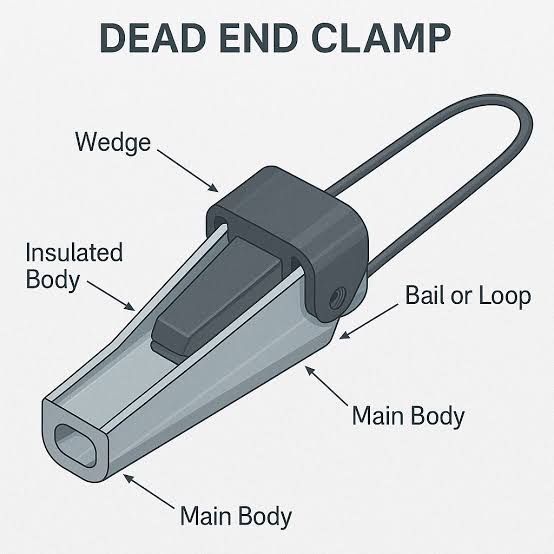
- Clamp body – this is the component that supports the entire assembly of the clamp. It houses the gripping mechanism and transfers the conductor’s tensile load to the supporting structure. The body is made from forged steel, aluminum alloy, or ductile iron for high strength and durability.
- Gripping mechanism – this mechanism holds the conductor without excessive damage. It includes wedges, helical preformed rods, compression sleeves, and serrated gripping jaws.
- Compression sleeve – compression deadend clamps use an aluminum sleeve that is hydraulically compressed onto the conductor. It forms a permanent mechanical and electrical connection with high holding strength.
- Wedge – Wedge-type deadend clamps consist of one or two wedges that automatically tighten as conductor tension increases. The self-locking mechanism improves grip under load.
- Bolts and nuts – bolted deadend clamps use galvanized steel bolts, nuts, and washers to tighten the clamp around the conductor. The fasteners allow installation and adjustment without specialized compression tools.
- Clevis, eye, or socket connection – the attachment point connects the clamp to insulator strings, shackles, yoke plates, crossarms, and pole brackets. This allows the clamp to transfer the mechanical load from the conductor to the support structure.
- Keeper – this component locks wedges or gripping elements in position to prevent accidental loosening during operation.
- Helical rods – preformed dead-end clamps consist of specially shaped helical rods that wrap around the conductor. The rods distribute tensile forces uniformly and reduce localized stress.
Roles of quality assurance during the manufacture of deadend clamps
Conducting quality assurance for the deadend clamps ensures that they meet the needed mechanical, electrical, and environmental performance standards. QA helps detect manufacturing defects that can lead to conductor slippage, equipment failure, power outages, and safety hazards. Here are the roles of quality assurance during deadend clamp manufacturing.
- Ensuring compliance with industry standards – QA confirms that deadend clamps follow international and utility standards. These include IEC standards, ASTM specifications, ANSI standards, IEEE guidelines, and the ISO 9001 quality management system.
- Verifying raw material quality—QA conducts chemical composition analysis, material certification verification, mechanical property testing, and hardness inspection. Common materials inspected include forged steel, aluminum alloy, ductile iron, stainless steel, and hot-dip galvanized components.
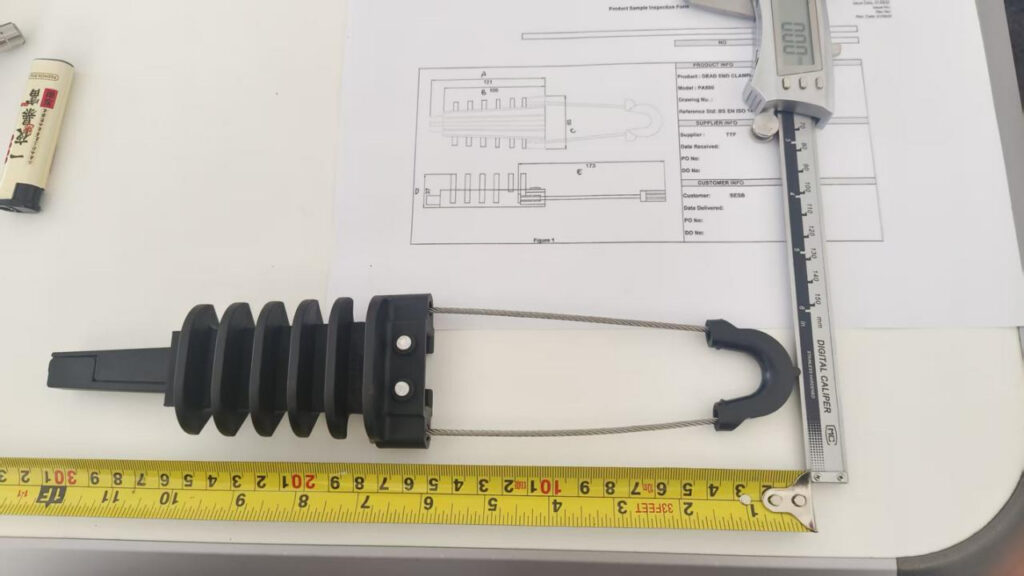
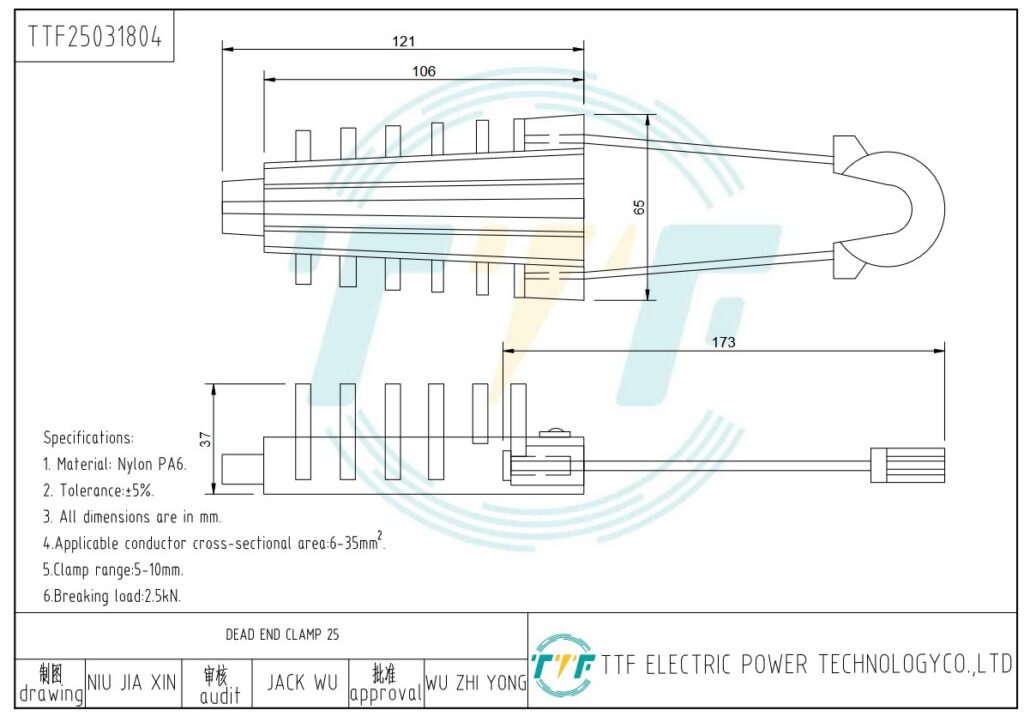
- Maintain dimensional accuracy – accurate dimensions are critical for proper conductor fit and load transfer. QA personnel inspect clamp body dimensions, groove profiles, bolt hole alignment, thread accuracy, and connection interfaces.
- Ensuring proper manufacturing processes—QA checks every production stage to ensure consistency, including forging, casting, machining, heat treatment, surface finishing, and galvanizing. Process control reduces variation between production batches and reduces manufacturing defects.
- Verifying mechanical strength – mechanical testing confirms that the clamp can withstand the load requirements without failure. These tests include ultimate tensile strength test, slip resistance test, load-holding test, mechanical endurance test, and proof load tests.
- Evaluating gripping performance – QA verifies that the clamp grips the conductor without causing excessive strand damage. It conducts conductor pull-out tests, grip efficiency evaluation, slip measurement, and surface pressure assessment.
- Confirming corrosion resistance—quality assurance checks hot-dip galvanizing thickness, zinc coating adhesion, salt spray resistance, and surface coating uniformity.
- Supporting electrical performance—QA checks electrical conductivity, contact resistance, compression quality, and current-carrying capability. This reduces the risk of overheating and energy losses.
Quality failure modes in deadend clamps
The performance of the deadend clamps is due to high manufacturing quality and proper installation. The presence of manufacturing, material, or assembly defects reduces the clamp’s ability to securely anchor conductors and withstand mechanical and environmental loads. Quality assurance helps identify these failure modes to help manufacturers prevent premature failure, improve product reliability, and follow utility standards. Common quality failure modes include:
- Material defects – using substandard materials can reduce the clamp’s strength and durability. Common issues include incorrect material grade, material impurities, poor chemical composition, and low tensile strength. These defects may lead to reduced load-bearing capacity, premature fracture, and shortened service life.
- Casting and forging defects—common defects include porosity, shrinkage cavities, cold shuts, surface cracks, internal voids, and forging laps. These lead to reduced mechanical strength, crack propagation under load, and unexpected component failure.
- Dimensional inaccuracies – inadequate process control can result in components that do not meet design tolerances. These result in poor conductor fit, uneven load distribution, installation difficulties, and reduced gripping performance.
- Insufficient gripping force—the gripping mechanism may fail to generate enough holding force because of manufacturing defects. This may be from poor wedge machining, incorrect groove profile, loose assembly, and surface contamination. These defects lead to conductor slippage, loss of line tension, and network reliability issues.
- Excessive conductor damage—this may arise from sharp internal edges, poorly machined grooves, rough surface finish, and incorrect clamping geometry. These lead to broken conductor strands, fatigue failure, and reduced conductor lifespan.
- Heat treatment defects – improper heat treatment affects the mechanical properties of metal components. These defects arise from over-hardening, under-hardening, uneven hardness, and brittle microstructure. These issues cause brittle fracture, low fatigue resistance, and reduced toughness.
Materials for deadend clamps and the importance of quality assurance
Materials for deadend clamps should provide high mechanical strength, corrosion resistance, electrical performance, and durability in overhead power transmission and distribution networks. Quality assurance verifies that each material meets design specifications and performs throughout its service life. Common materials for the deadend clamp include:
Aluminum alloy
Aluminum alloy is ideal for deadend clamp bodies and compression sleeves. This is because they combine low weight with corrosion resistance and electrical conductivity. They work with aluminum-based conductors such as AAC, AAAC, and ACSR. Quality assurance verifies that aluminum alloy components meet the required chemical composition and mechanical properties. This ensures the alloy provides consistent strength and conductivity without defects.
Hot-dip galvanized steel
This is most common for structural components such as bolts, nuts, clevises, and attachment fittings. Quality assurance focuses on the steel substrate and the protective zinc coating. This is by performing mechanical strength testing, galvanizing thickness measurement, coating adhesion tests, and thread quality inspections for fasteners.
Ductile iron
Some deadend clamps use ductile iron for bodies to provide high strength, toughness, and excellent castability. QA verifies quality through metallurgical analysis, non-destructive testing, hardness testing, and dimensional inspection.
Stainless steel
This is crucial for environments with severe corrosion risks. It is crucial for fasteners, locking devices, and specialized clamp components. Stainless steel offers corrosion resistance, high strength, fatigue performance, minimal maintenance, and long service life. Quality assurance protects steel through alloy grade verification, surface finish inspection, corrosion resistance testing, and mechanical property testing.
High-strength forged steel
Forged steel is ideal for load-bearing components because the forging process refines the grain structure and increases strength and toughness. QA offers protection through forging process monitoring, ultrasonic testing for internal defects, magnetic particle inspection, and heat treatment verification.
TTF-Certified deadend clamps. Why we certify:
TTF’s approach to power line hardware services results in optimal product quality, strict adherence to custom design, and reduced cost. We are constantly checking manufacturing processes, addressing material concerns, and improving staff expertise to ensure the best quality product. Our quality control for the deadend clamps begins with the first batch of samples that you received from us. And this continues through all production phases, where our QC staff never stop looking for opportunities to improve product quality. We offer:

- Tolerance Analysis
- Tooling Life Analysis
- Rockwell Hardness Testing per ASTM E18
- Brinell Hardness Testing per ASTM E10
- Magnetic Particle Testing per ASTM E1444 CMM (Coordinate Measuring Machine) Testing
- 24″ Optical Comparator for Complex Measurements
- Tensile/proof load testing up to 160,000 lbs (700 kN)
- Hot Dip Galvanizing Plating Thickness per ASTM E376
- Torque Testing
- Roughness Testing
- Lifetime Sample Retention
- Dimensional Testing
- Mechanical Testing
In conclusion,
Deadend clamps in overhead power transmission and distribution systems provide secure conductor termination, maintain line tension, and ensure the mechanical stability of electrical networks. Their performance depends on design, high-quality materials, and precision manufacturing. Quality assurance ensures that deadend clamps meet strict industry standards and perform reliably under demanding operating conditions. This prevents common quality failures and protects material integrity. Effective quality assurance enhances production safety, extends service life, and reduces maintenance requirements.