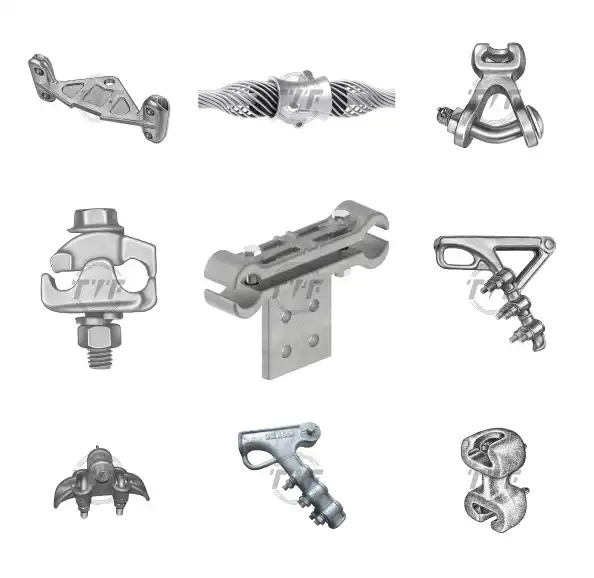
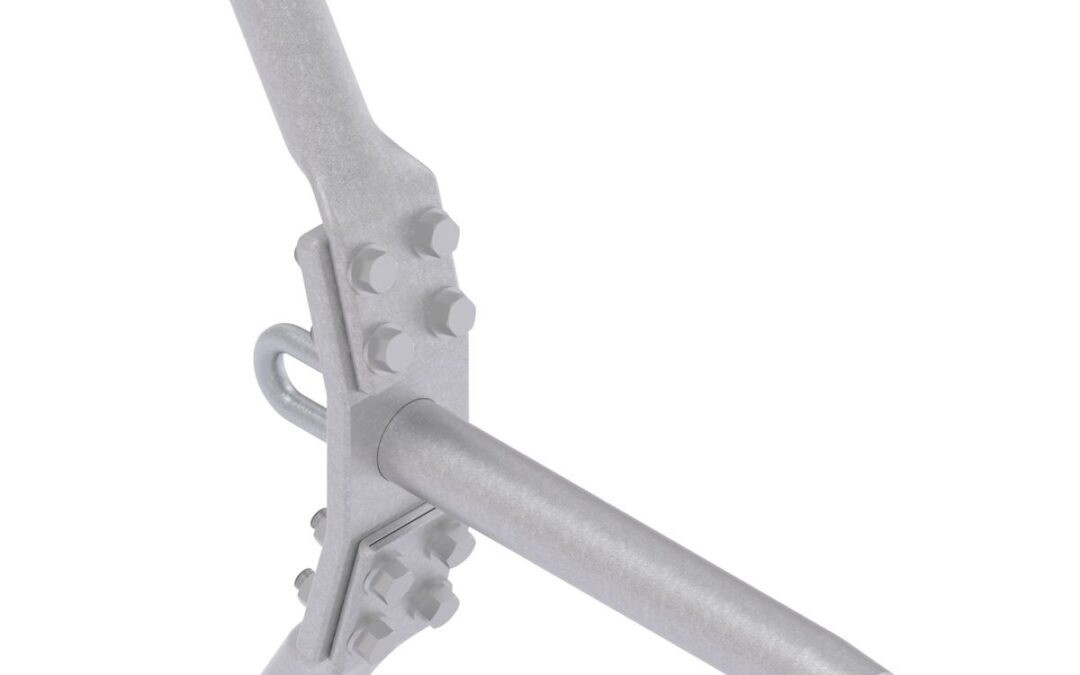
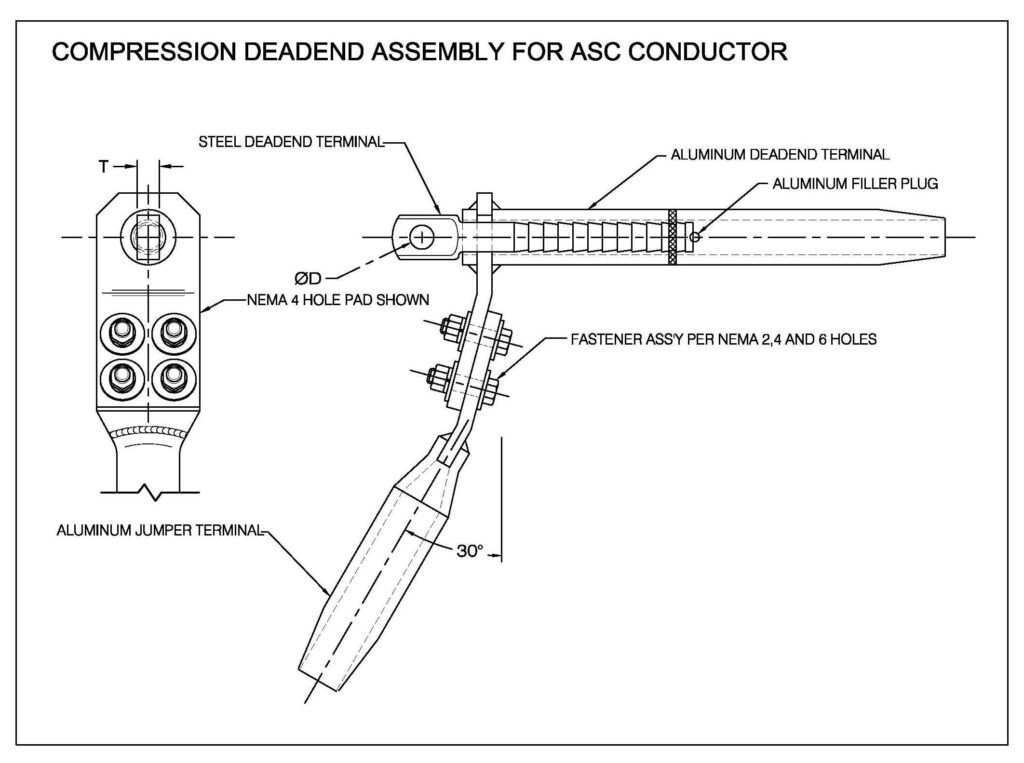
A compression deadend is a mechanical and electrical fitting used in overhead power networks to anchor a conductor at the end of a line. It handles high tensile loads while maintaining reliable electrical continuity. The deadend holds the conductor in place under full line tension and ensures low-resistance current flow across the termination point. Compression deadends also transfer mechanical stress from the conductor to support structures. Compression deadends consist of an aluminum or aluminum alloy sleeve, a steel core component, and a clevis end fitting. The operation of the compression deadends includes inserting the conductor into the deadend sleeve, applying controlled force using a hydraulic press, and compressing the sleeve around the conductor strands. This creates a high-friction, high-strength mechanical grip, and low-resistance electrical interface. Compression deadends work in transmission line terminations, substation entry, and deadend towers. Ensuring quality assurance for dead ends prevents failures that lead to power outages.
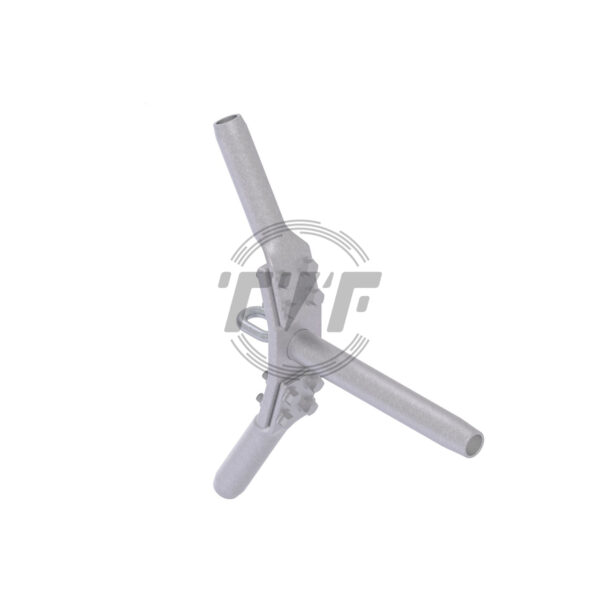
Double Tongue Compression Deadend
Double tongue compression deadends are precision-engineered hardware components designed for terminating and anchoring conductors in high-voltage power line construction. They provide secure mechanical and electrical connections while maintaining conductor integrity under tension and environmental stress. Ideal for both overhead and transmission line applications, these deadends ensure long-term reliability and operational safety.
Key Features:
- High tensile strength: Capable of withstanding extreme conductor loads.
- Durable construction: Made from corrosion-resistant metals for long service life.
- Efficient compression design: Ensures secure grip on various conductor types.
- Easy installation: Compatible with standard compression tools and techniques.
- Reliable electrical continuity: Maintains low-resistance connection under load.
- Versatile application: Suitable for overhead transmission and distribution networks.
Importance of conducting quality assurance for compression deadends used in power networks
Quality assurance for compression deadends is a control process that affects grid reliability, safety, and lifecycle cost performance. Quality assurance for the deadends ensures correct material strength, proper dimensional tolerances for conductor compatibility, and verified compression performance. Proper installation of compression deadends maintains low electrical resistance across the joint. QA validates surface cleanliness and oxide control, adequate compression pressure, and absence of voids. Poor QA leads to high-resistance joints, which cause localized heating and material degradation. Compression deadends work in networks exposed to harsh environmental conditions such as humidity, pollution, and coastal salts. Conducting QA ensures proper material selection, application of inhibitors, and protective coatings. This prevents galvanic corrosion or oxidation that compromises mechanical and electrical integrity. Failure of compression dead ends triggers line outages, failures in interconnected networks, and safety hazards to personnel. QA reduces the risks by identifying defects early in the manufacturing, testing, and installation phases.
The roles of quality assurance during the manufacture of compression deadends
Quality assurance during the manufacturing of compression deadends ensures each deadend meets mechanical strength, electrical conductivity, and durability needs before use in power networks. QA during compression deadend manufacture prevents defects, ensures consistent performance, and reduces the probability of premature failure. Here are the roles of quality assurance during compression dead-end manufacturing.
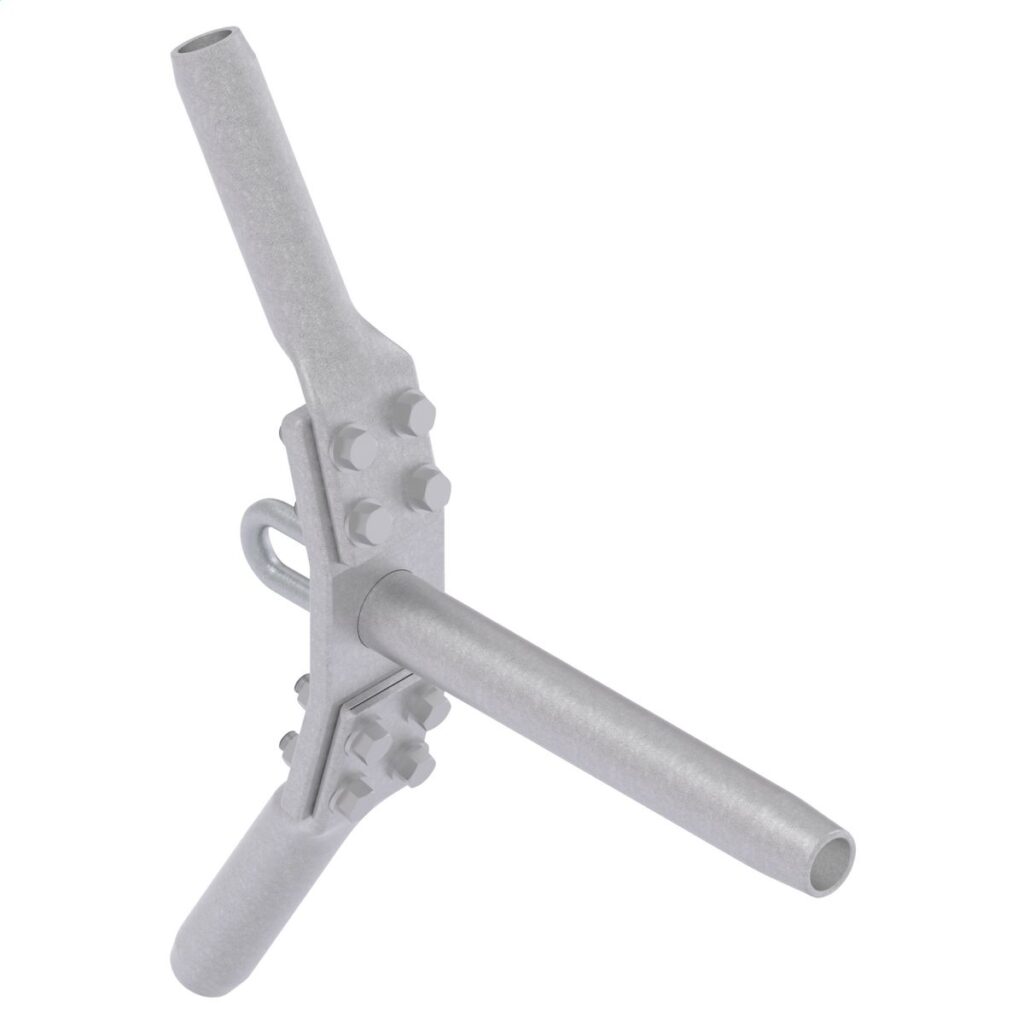
- Raw material verification—QA begins with material inspection to ensure conformity with design specifications. Failure during this stage can lead to mechanical capacity or accelerated corrosion.
- Dimensional control and machining accuracy—compression dead ends need precise internal geometries for effective crimping. QA ensures correct internal diameter tolerances for conductor fit, proper wall thickness for compression strength, and accurate dimensions for hardware compatibility.
- Process control in forming and fabrication—it is crucial to control extrusion, forging, and machining during manufacturing. This helps monitor temperature, pressure, and forming parameters; verification for grain structure; and prevention of defects such as cracks or inclusions. QA ensures the component can withstand mechanical deformation during installation without failure.
- Mechanical testing and validation—the finished dead end must undergo destructive and non-destructive tests. These include tensile tests, compression validation tests, and hardness and fatigue tests.
- Electrical performance testing—quality assurance verifies that the fitting maintains low resistance through contact resistance measurement and thermal cycle testing. This ensures the deadend will not develop hot spots during operation.
- Packaging and handling controls – QA ensures protection against moisture, contamination, and mechanical damage. It also verifies labeling and installation instructions.
Quality failures facing corona rings used in power networks
Quality failures in compression deadends arise from deficiencies in materials, manufacturing processes, or installation practices. These failures manifest as mechanical slippage, overheating, or premature degradation, which compromise transmission line reliability. These failures include:
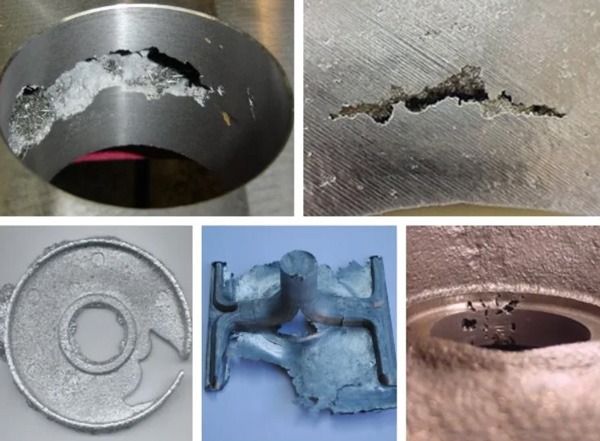
- Under-compression—this is from incorrect die selection, inadequate hydraulic pressure, or an incomplete compression sequence. This results in weak mechanical grip and poor electrical contact that leads to conductor pull-out or increased joint resistance.
- Over-compression – excessive force during crimping can fracture aluminum strands, induce micro-cracks in the sleeve, and reduce fatigue resistance. This leads to structural weakness that may fail under cyclic loading or thermal expansion.
- Incorrect material selection—this is the mismatch between dead-end material and conductor type. It includes incompatible thermal coefficients and galvanic corrosion between dissimilar metals. These lead to degradation, reduced conductivity, and mechanical instability.
- Poor surface preparation—this includes contaminants such as oxides, grease, or dirt inside the sleeve. It leads to increased contact resistance and prevents proper metal-to-metal bonding.
- Internal voids and manufacturing defects—these are defects introduced during production, which include air gaps inside the sleeves, material inclusions, and inconsistent wall thickness. This leads to reduced compression efficiency and uneven stress distribution, leading to premature failure.
- Thermal fatigue and cycling failures—this is repeated heating and cooling cycles due to load variation. These cause expansion and contraction of materials and loose, compressed joints.
- Corrosion and environmental degradation—compression deadends may face moisture, salts, and pollutants that cause oxidation of aluminum components and galvanic corrosion at aluminum-steel interfaces.
Materials for compression deadends and how quality assurance protects them
Compression deadends balance conductivity, tensile strength, and environmental resistance. Quality assurance is applied to each material interface to prevent degradation mechanisms that would compromise performance. Additionally, QA protects the materials by verifying composition, controlling interfaces, preventing corrosion, and validating performance under mechanical and thermal stress. This ensures the deadend operates throughout its service life in power networks. Key materials for compression end-caps include
Aluminum and aluminum alloys
This is the primary current-carrying element that provides corrosion resistance and compatibility with aluminum conductors. The materials include EC-grade aluminum and aluminum-magnesium-silicon alloys. These materials face oxide layer formation, surface contamination reducing conductivity, and mechanical softening under thermal cycling. QA conducts chemical composition testing, surface inspection and cleaning controls, dimensional tolerance checks, and thermal conductivity testing.
Steel core components
This provides high tensile strength for load-bearing capacity and transfers mechanical loads from conductor to structure. Common materials include high-carbon steel and galvanized steel. These materials face corrosion, brittle fracture under cyclic stress, and poor bonding with aluminum sleeves. QA conducts tensile strength and elongation testing, galvanization thickness inspection, non-destructive testing, and interface compatibility checks.
Bimetallic transition zones
This ensures effective load and current transfer between dissimilar metals for use in ACSR compression deadends. These materials face galvanic corrosion due to electrochemical potential difference, differential thermal expansion, and increased electrical resistance at the junction. Quality assurance conducts controlled manufacturing processes, application of inhibitors or sealants, environmental testing, and resistance testing.
Protective coating and inhibitors
This prevents oxidation and corrosion and enhances long-term electrical contact stability. These materials face uneven application and degradation over time due to temperature. QA measures include coating thickness checks, adhesion testing, and environmental durability testing.
Machined end fittings
These offer mechanical connection points to insulators and transfer tensile loads safely. Key materials include forged steel or aluminum alloys. The materials face cracks from poor forging, stress concentration at connection points, and misalignment affecting load distribution. Quality assurance conducts dye penetrant inspection for cracks, dimensional and geometric verification, and load testing to confirm mechanical integrity.
Internal contact surfaces
These provide the frictional and electrical interface during compression. These materials face surface roughness inconsistencies, entrapped air after compression, and contamination before installation. Quality assurance conducts surface finish inspection, cleanliness standards, and compression simulation tests to confirm contact integrity.
TTF-certified compression deadends. Why we certify.
TTF’s approach to power line hardware services results in optimal product quality, strict adherence to custom design, and reduced cost. We are constantly checking manufacturing processes, addressing material concerns, and improving staff expertise to ensure the best quality product. Our quality control for the compression deadends begins with the first batch of samples that you received from us. And this continues through all production phases, where our QC staff never stop looking for opportunities to improve product quality. We offer:

- Tolerance Analysis
- Tooling Life Analysis
- Rockwell Hardness Testing per ASTM E18
- Brinell Hardness Testing per ASTM E10
- Magnetic Particle Testing per ASTM E1444
- CMM (Coordinate Measuring Machine) Testing
- 24″ Optical Comparator for Complex Measurements
- Tensile/proof load testing up to 160,000 lbs (700 kN)
- Hot Dip Galvanizing Plating Thickness per ASTM E376
- Torque Testing
- Roughness Testing
- Lifetime Sample Retention
- Dimensional Testing
- Mechanical Testing
The advantages of using compression deadends in power networks
Compression deadends deliver high mechanical integrity, stable electrical performance, and long service life under diverse operating conditions. The deadends are crucial for high-tension applications where performance and safety are necessary. Here are the advantages of compression deadends.
- High mechanical strength – compression deadends are ideal for high-tension spans, river crossings, and deadend structures.
- Low electrical resistance – the crimped interface creates a large metal-to-metal contact area that reduces contact resistance at the termination point.
- Thermal stability under load cycling – compression joints maintain integrity under repeated thermal expansion and contraction. This lowers the risk of hot spots and thermal fatigue failures.
- Compatibility with high-voltage systems—compression deadends in these systems maintain electrical continuity without losses and integrate well with insulator strings and transmission hardware.
In conclusion,
Compression deadends provide secure mechanical anchoring and reliable electrical continuity at high-tension points. The performance of the deadends depends on precise material selection, controlled manufacturing processes, and correct installation practices. Ensuring quality assurance for the deadends validates material integrity, dimensional accuracy, compression effectiveness, and resistance to thermal and environmental stresses. It prevents quality failures such as under-compression, corrosion, and poor surface preparation.