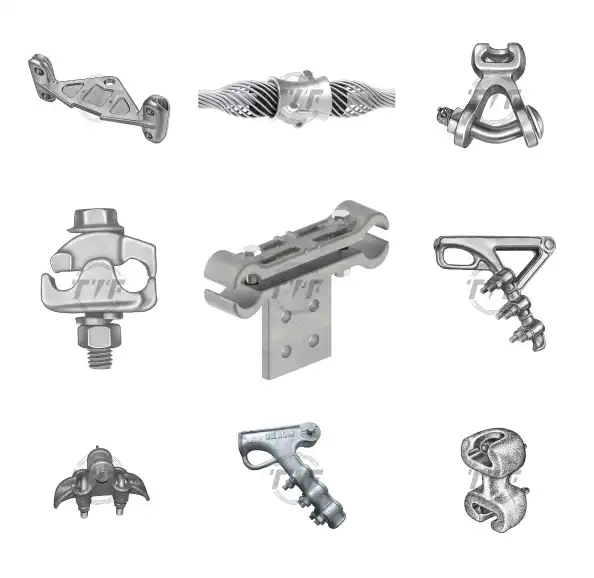
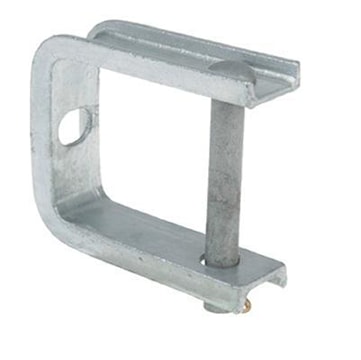
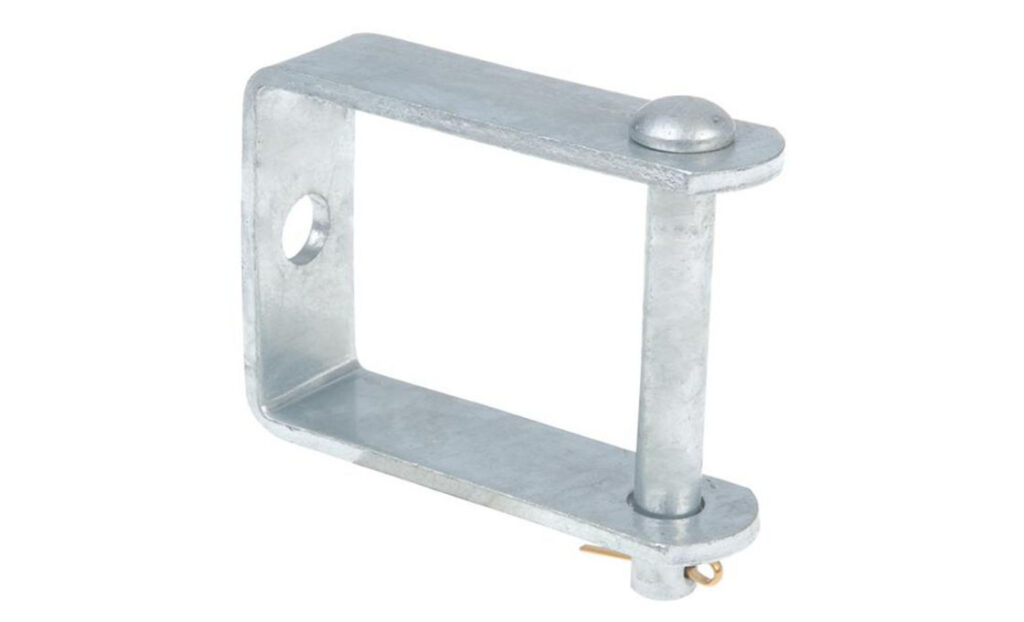
Galvanized steel clevis brackets are mechanical fittings used to connect and support insulators within overhead power distribution and transmission networks. The design of the clevis bracket allows it to connect compatible components in an insulator assembly while transferring mechanical loads between the insulator and the supporting structure. The clevis bracket has a forked end with holes for a clevis pin or bolt. This creates a mechanical connection that allows the attached components to remain secured under the loads experienced during normal line operation. Some brackets attach insulators to crossarms or poles, while others form part of a larger string of insulator fittings. Galvanized steel provides the mechanical strength needed for overhead line construction. In power line networks, the clevis bracket creates a mechanical connection between an insulator and another component in the overhead line assembly. Manufacturers perform quality checks to detect defects in the brackets.

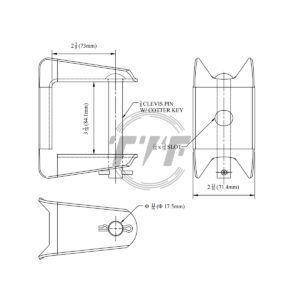


Galvanized Steel Clevis Bracket
Galvanized steel clevis brackets are mechanical fittings used in power line construction to connect insulators and compatible hardware to poles, crossarms, and other support assemblies. Manufactured from steel and protected with a zinc coating, they provide reliable mechanical connections and resistance to atmospheric corrosion in outdoor installations. Their dimensions, pin-hole geometry, and load ratings must match the specified line hardware and operating conditions.
Key Features
- Corrosion protection: Galvanized coating helps resist rust and environmental exposure.
- Mechanical strength: Designed to withstand specified tensile and mechanical loads.
- Secure connections: Clevis ends and pin holes accommodate compatible pins and connecting fittings.
- Dimensional accuracy: Correct hole spacing and geometry support proper fit and load transfer.
- Durable construction: Steel body provides structural support in overhead power line assemblies.
- Installation compatibility: Available in configurations suited to specified insulator and line-hardware arrangements.
- Quality assurance: Material properties, dimensions, coating thickness, and load capacity can be inspected against project specifications.
The structure and components of the galvanized steel clevis bracket are essential for its function.
A galvanized steel clevis bracket connects insulators to supporting structures or other compatible hardware. The clevis bracket should withstand the mechanical loads transferred through the insulator assembly. It should also protect the steel against corrosion during outdoor service. The bracket’s design depends on the intended application, connection arrangement, and mechanical load requirements. These components include:
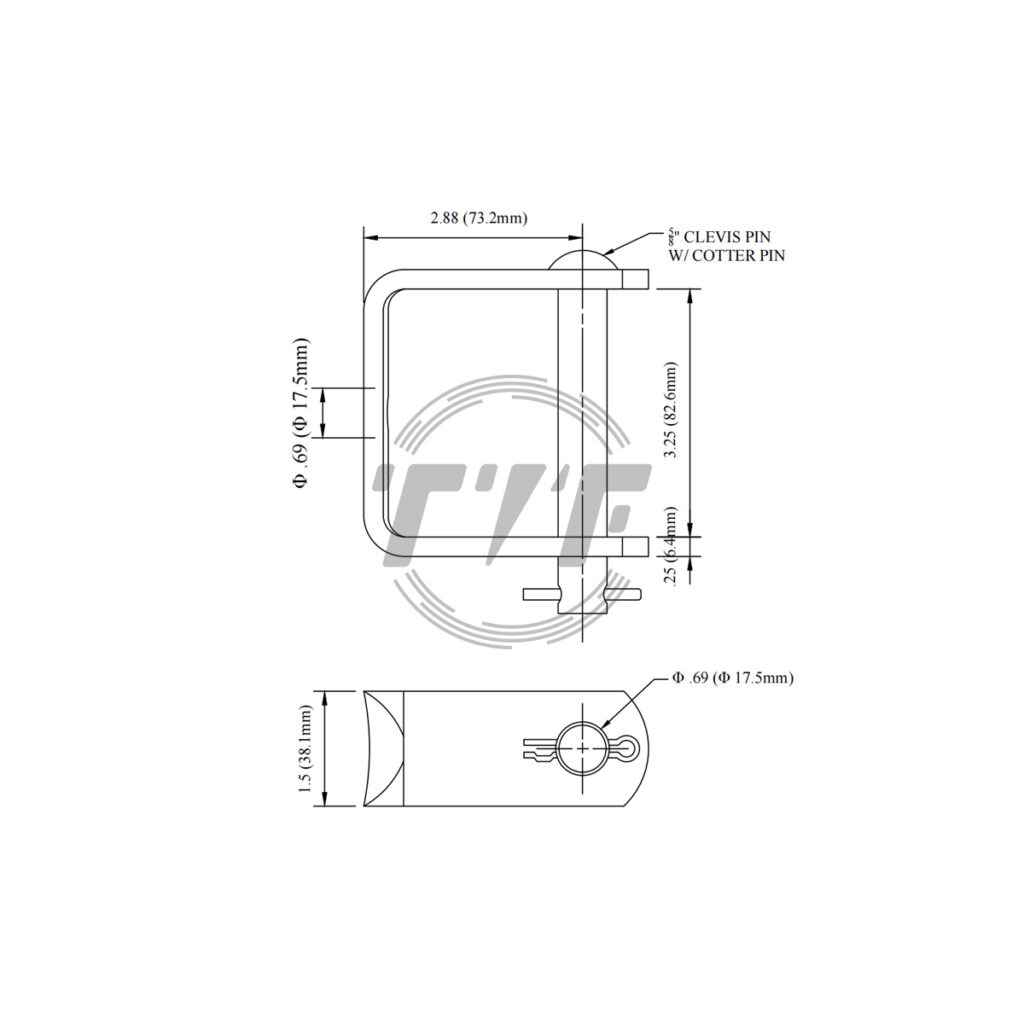
- Steel bracket body: this is the main structural section of the fitting that supports the connection points and transfers mechanical loads between the insulator and the supporting hardware. A properly designed body distributes mechanical forces through its structural sections and connection points without creating excessive stress concentrations.
- Clevis plates: the clevis section forms the mechanical connection with a compatible fitting. It consists of two parallel steel plates or forked arms separated by a gap that accommodates the mating component.
- Pin holes: these provide the connection point for the clevis pin or bolt. Their diameter, spacing, and alignment should match the specified connecting hardware. The areas surrounding the holes also need enough strength because they transfer loads between the pin and the bracket body.
- Connecting pin: the pin passes through the aligned holes in the clevis plates and the mating component. It holds the assembly together and transfers mechanical loads across the connection. The connecting hardware must have the correct diameter, length, material properties, and mechanical rating.
- Mounting section and attachment holes: some clevis brackets have a mounting section with holes for attachment to a pole, crossarm, steel support, or another compatible fitting. The holes allow installers to secure the bracket using the specified bolts.
Importance of quality assurance during the manufacture of galvanized steel clevis brackets
Clevis brackets connect insulators to supporting structures or other hardware in overhead power line networks. Their mechanical strength, dimensional accuracy, and corrosion resistance affect the reliability of the complete insulator assembly. Quality assurance involves controlling the production stage. The controls help manufacturers identify defects before delivery and verify that each bracket meets the technical specifications. QA importance in the clevis bracket manufacturing process include:
- Ensuring mechanical strength and structural integrity: galvanized steel clevis brackets should withstand the mechanical loads transferred through insulator assemblies. Quality assurance helps manufacturers verify that the steel grade, material thickness, bracket geometry, and fabrication processes meet the design requirements. Material inspections confirm that the steel complies with the specified mechanical properties.
- Maintaining dimensional accuracy and component compatibility: QA establishes dimensional tolerances and inspection procedures that help manufacturers maintain consistency across production batches. Accurate dimensions reduce the risk of excessive clearance, forced assembly, and uneven load distribution at the connection.
- Verifying galvanizing quality and corrosion protection: the coating thickness, surface coverage, adhesion, and process quality affect its performance. Quality assurance helps manufacturers verify that the galvanizing process meets the applicable specification. It also helps protect the steel and reduces the risk of premature replacement caused by corrosion.
- Reducing manufacturing defects and product failure: poor-quality raw materials, inaccurate hole positioning, incorrect forming, and defective welds affect the finished product. QA helps manufacturers identify these defects before the clevis delivery.
- Improving manufacturing consistency across production batches: utilities need clevis brackets to maintain consistent dimensions, mechanical properties, and coating quality across the shipment. QA helps manufacturers establish repeatable production procedures and measureable acceptance criteria.
Quality failure modes of galvanized steel clevis brackets in power networks
Galvanized steel clevis brackets connect insulators to supporting structures in power line networks. The quality of the steel, fabrication accuracy, connection design, and galvanizing process affect its performance. Quality failures weaken the bracket, compromise its connection with the insulator assembly, or speed up corrosion during service. Identifying the failure modes helps improve production controls and reduce the risk of premature hardware replacement. Common failure modes include:
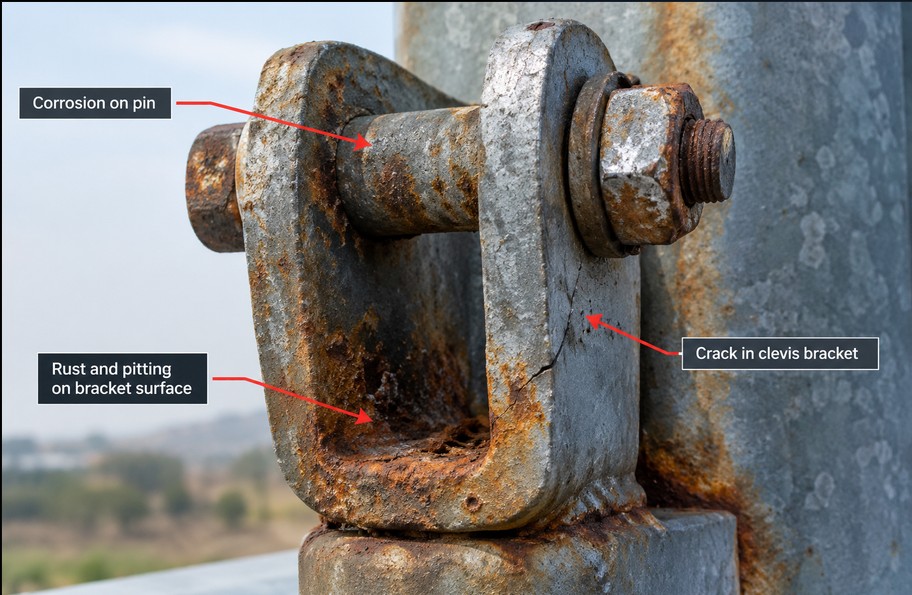
- Corrosion: the clevis bracket experiences rain, humidity, airborne pollutants, and other environmental conditions throughout their service life. The zinc coating acts as a barrier against corrosive agents. Corrosion arises from insufficient zinc coating thickness, bare areas, improper handling, and prolonged exposure to salt and moisture.
- Dimensional inaccuracies: dimensional accuracy determines whether the clevis bracket fits its intended insulator and connecting hardware. The defects originate during cutting, punching, drilling, bending, or welding. Common causes include incorrect fabrication drawings, worn tooling, inaccurate hole positioning, and incorrect plate thickness.
- Insufficient mechanical strength: the clevis bracket must withstand the mechanical loads specified for its application. Insufficient strength can result from unsuitable steel, inadequate material thickness, poor structural design, or fabrication defects.
- Cracking and defects around pin holes: poor fabrication and unsuitable material properties can cause cracks or deformation. They arise from incorrect hole diameter, insufficient material between the hole, and other fabrication defects.
- Defective welds and fabrication joints: some clevis brackets use welded sections to connect plates, mounting features, or reinforcing components. Defective welds may contain cracks, incomplete fusion, porosity, or discontinuities that reduce the strength of the joint.
- Poor zinc coating adhesion: poor coating adhesion, bare patches, excessive buildup, or damage during handling can reduce the effectiveness of the protective layer. This may arise from inadequate cleaning, incorrect process conditions, improper handling after galvanizing, or abrasion during transport.
Compatible fittings used with spool insulator brackets in overhead power networks
Galvanized steel clevis brackets connect insulators to supporting structures in overhead power transmission and distribution networks. Their compatibility with other line hardware depends on the bracket’s design, dimensions, mechanical rating, and connection arrangement. Selecting compatible components helps maintain secure connections, transferring mechanical loads, and preventing premature wear. Here are the most common compatible fittings used with the clevis brackets.
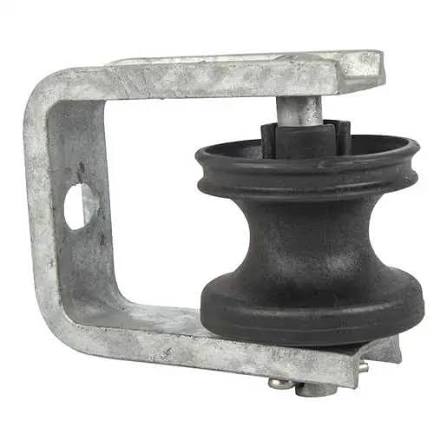
- Clevis pins and cotter pins: the pins connect the bracket to compatible fittings through aligned holes. They transfer mechanical loads across the join and hold the components together. The pin diameter, length, material, and retention arrangement must match the bracket design.
- Insulators: a clevis bracket provides a mechanical connection within the insulator assembly. The bracket may connect to a spool insulator, a cap-and-pin insulator assembly, or compatible insulator fittings.
- Y-clevis fittings: Y-clevis fittings connect insulators to other line hardware. Their forked connection allows a compatible pin to secure the adjoining component. Some of the brackets include a ball connection for use with ball-and-socket insulators.
- Socket clevis fittings: the clevis connects compatible insulator hardware to other mechanical fittings in an overhead line assembly. It provides a clevis connection at one end and a socket connection at the other.
- Crossarms and mounting brackets: crossarms support overhead line hardware on utility poles. The galvanized steel clevis bracket may attach to a crossarm or a compatible mounting arrangement.
TTF-Certified galvanized steel clevis brackets. Why choose our clevis brackets?
TTF’s approach to power line hardware services results in optimal product quality, strict adherence to custom design, and reduced cost. We are constantly checking manufacturing processes, addressing material concerns, and improving staff expertise to ensure the best quality product. Our quality control for the galvanized steel clevis brackets begins with the first batch of samples that you received from us. And this continues through all production phases, where our QC staff never stop looking for opportunities to improve product quality. We offer:

- Tolerance Analysis
- Tooling Life Analysis
- Rockwell Hardness Testing per ASTM E18
- Brinell Hardness Testing per ASTM E10
- Magnetic Particle Testing per ASTM E1444 CMM (Coordinate Measuring Machine) Testing
- 24″ Optical Comparator for Complex Measurements
- Tensile/proof load testing up to 160,000 lbs (700 kN)
- Hot Dip Galvanizing Plating Thickness per ASTM E376
- Torque Testing
- Roughness Testing
- Lifetime Sample Retention
- Dimensional Testing
Benefits of the spool insulator brackets in power networks
Galvanized steel clevis brackets provide a secure connection between components and help transfer mechanical loads through the insulator assembly. They offer structural strength, corrosion protection, connection design, and suitability for outdoor installations. Key benefits include:
- High mechanical strength: the brackets provide the mechanical strength needed to support insulator assemblies under specified operating loads. Proper fabrication helps the bracket withstand the forces without excessive deformation.
- Improved corrosion resistance: hot-dip galvanizing protects the steel bracket against corrosion by applying a zinc coating to its surface. The coating acts as a barrier against moisture and corrosive substances.
- Secure connections between insulators and line hardware: the clevis connection provides a defined mechanical interface between compatible fittings. This allows the bracket to connect with suitable insulator fittings or mounting hardware.
- Support for manufacturing quality control: consistent quality control helps manufacturers deliver brackets that match approved design and customer requirements.