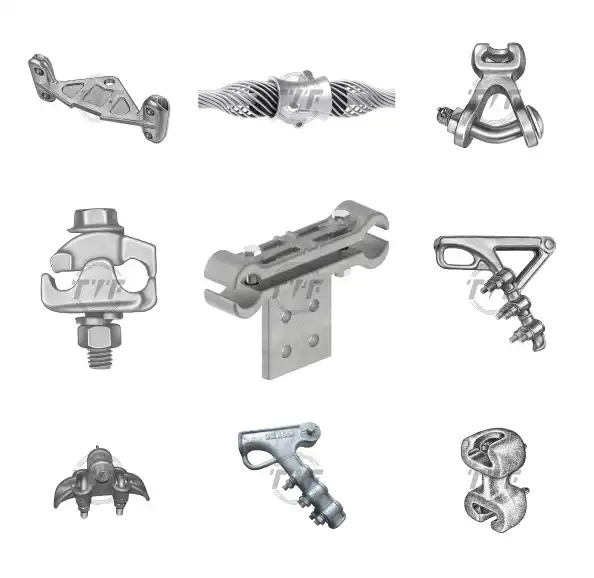
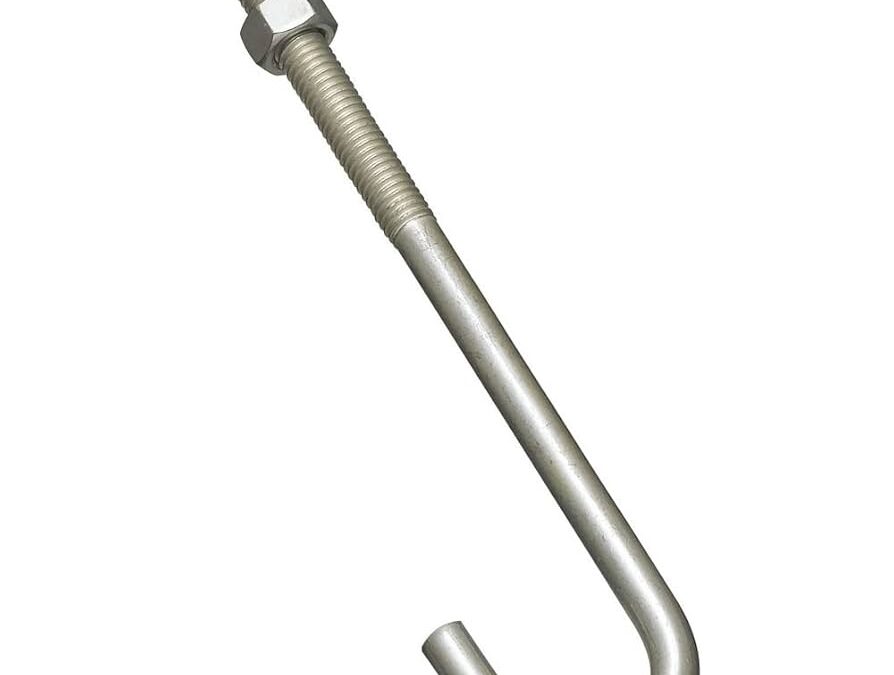
A cable suspension bolt is a specialized hardware component used to secure suspension clamps or insulators to poles. It ensures the conductors can be safely suspended and supported. The heavy-duty suspension bolt is a critical load-bearing component that acts as the link between the main cable and the steel suspenders. It has an open eye at the top of the bolt where the suspender attaches using a pin. Its long, threaded body passes through the cable band and the main cable itself. Additionally, the threads engage with a nut on the other side of the cable band. The bolt supports the vertical load of the conductors while allowing flexibility for small movements. Cable suspension bolts are essential for maintaining conductor stability, reducing mechanical stress, and preventing damage to both the conductor and the supporting structure.
Working of a cable suspension bolt
A cable suspension bolt plays a crucial role in supporting conductors on transmission and distribution lines. It connects suspension clamps or insulators to the supporting structure and ensures the conductor remains suspended while allowing for safe movement. The suspension bolt drills into the pole, crossarm, or tower steelwork, and its threaded body allows tight fastening using nuts and washers. The eye of the bolt provides a connection point for a suspension clamp or an insulator. This ensures the conductor is fully supported without making direct contact with the structure. Cable suspension bolts bear the weight of the conductor, where the bolt’s strength allows it to withstand mechanical loads. These loads include line sag, conductor tension, and the pull of long spans. The suspension clamp allows the conductor to swing and adjust its sag with temperature changes. The flexibility helps reduce stress on both the conductor and the tower.
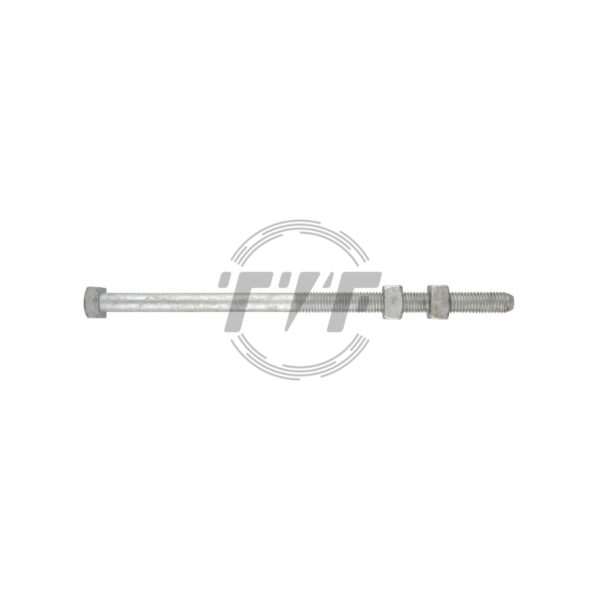
Cable Suspension Bolt
The Cable Suspension Bolt is a high-strength, galvanized steel fastener designed for securing suspension clamps and hardware to utility poles in overhead power line construction. It ensures stable and reliable support for conductors under dynamic mechanical and environmental loads, especially in medium to high-voltage distribution systems.
Key Features:
- High Tensile Strength: Withstands conductor tension and wind-induced vibrations
- Corrosion-Resistant Coating: Hot-dip galvanized for long-term durability in harsh environments
- Precision Threading: Ensures secure and vibration-resistant fastening
- Universal Fit: Compatible with standard suspension clamps and pole hardware
- Available in Multiple Sizes: To suit varied pole diameters and load requirements
- Easy Installation: Suitable for manual or powered installation tools
The importance of cable suspension bolts in overhead power lines
Overhead power fittings ensure the stability, reliability, and safety of various networks. The cable suspension bolt is crucial in holding the power system together. Cable suspension bolts provide a strong anchor point for suspension clamps and insulators. The bolts help maintain the correct sag and alignment of conductors across long distances. Proper sag prevents excessive tension on conductors while ensuring that they remain safely elevated above the ground. Suspension bolts allow conductor movement in response to wind, temperature changes, or vibrations. This reduces mechanical stress and prevents conductor wear, breakage, or fatigue. Heavy-duty suspension bolts consist of galvanized steel or stainless steel for durability and corrosion resistance. These materials allow them to perform under harsh conditions for long-term reliability. Suspension bolts support insulators that prevent electricity from leaking into poles or towers. Using high-quality suspension bolts reduces the risk of line failures, emergency repairs, and unplanned outages.
Key features of the cable suspension bolt
A cable suspension bolt provides strong, reliable, and safe support for conductors in overhead power lines. The suspension bolt has specific features that make it durable and efficient under heavy mechanical and environmental stresses. These features include:
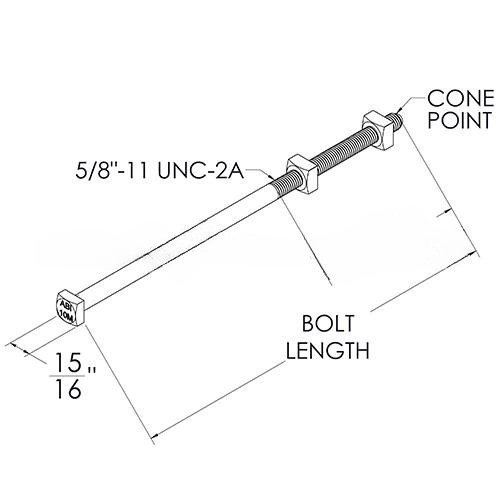
- High mechanical strength—galvanized or stainless-steel suspension bolts can withstand the heavy loads of conductors. They resist bending or breaking to ensure long-term network stability.
- Corrosion resistance—the bolts often have hot-dip galvanization treatments or anti-rust coatings to resist rain, humidity, and pollution. This feature extends their service life and reduces maintenance needs.
- Threaded designs—the threaded shank allows for secure fastening with nuts and washers to make installation firm and adjustable. The design ensures that suspension clamps and insulators are properly anchored to poles.
- Eye or hook ends—the cable suspension bolt has an eye-shaped or hook-shaped head that provides a connection point for suspension clamps. The feature makes it easy to secure conductors while allowing controlled movement.
- Load distribution capability—the design helps distribute the mechanical load of the conductor to prevent stress concentration on the pole. It reduces the risk of cracks or failures in the support structure.
- Vibration and flexibility support—suspension bolts work with suspension clamps to allow slight swinging and sag adjustment of conductors. This reduces damage from wind-induced vibration, galloping, and temperature-related expansion or contraction.
- Compatibility with different structures—cable suspension bolt mounts on wooden poles, concrete poles, crossarms, or steel towers. This makes them handy across distribution and transmission networks.
Common types of cable suspension bolts
Eye bolts
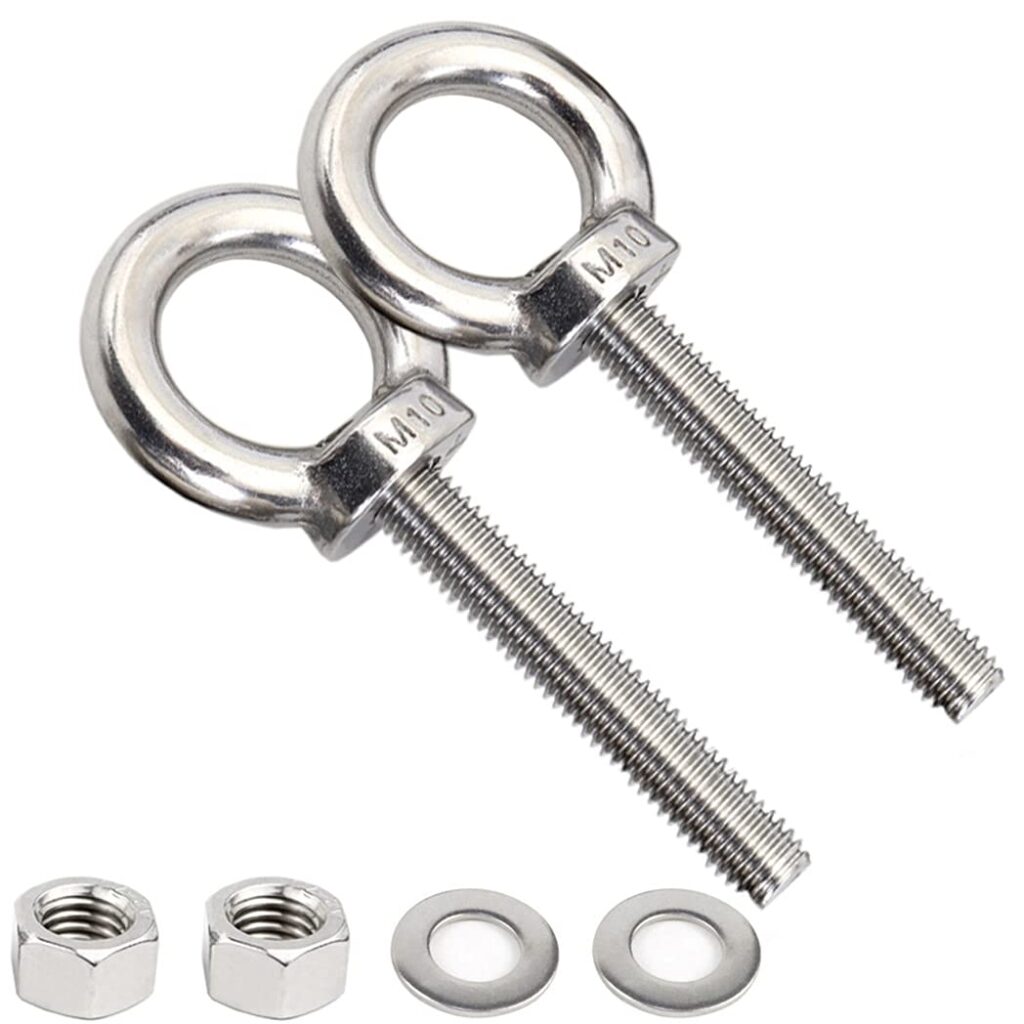
This bolt has a straight threaded shank with a circular eye at one end. The eye provides a closed loop to attach suspension clamps, shackles, and insulators. Eye bolts are strong, secure, and widely used in both distribution and transmission lines.
Hook bolts
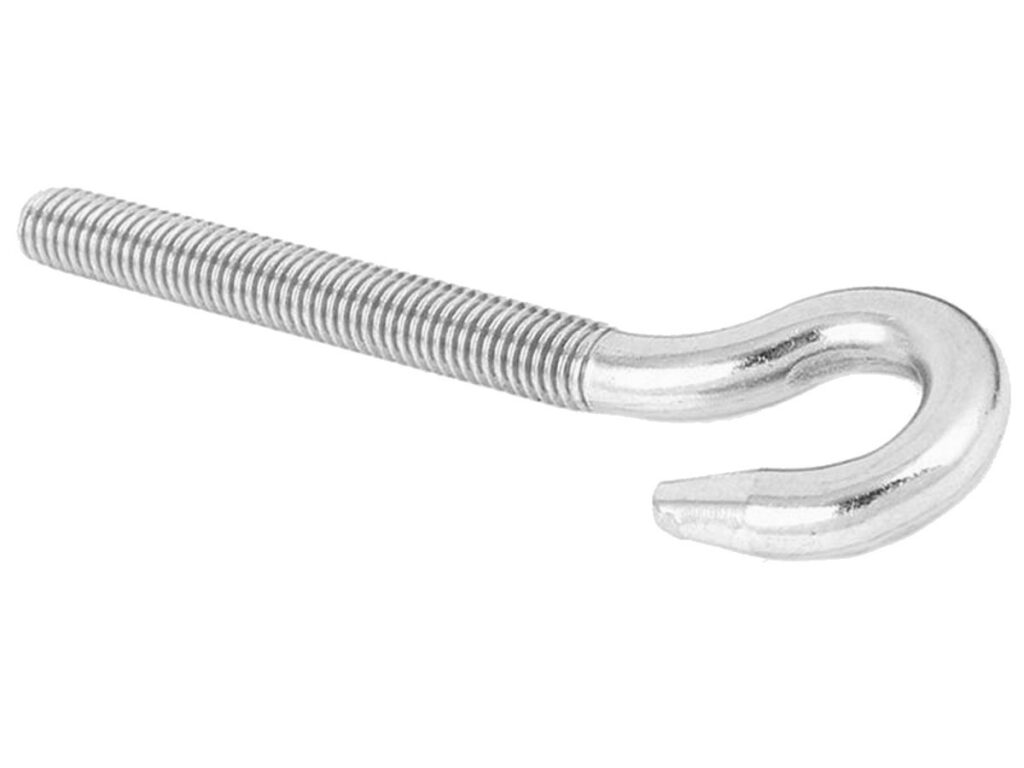
This has a threaded shank with an open hook end instead of a closed eye. It allows for quick connection and disconnection of clamps or fittings. Hook bolts are easy to install and remove without dismantling the entire setup.
J-bolts
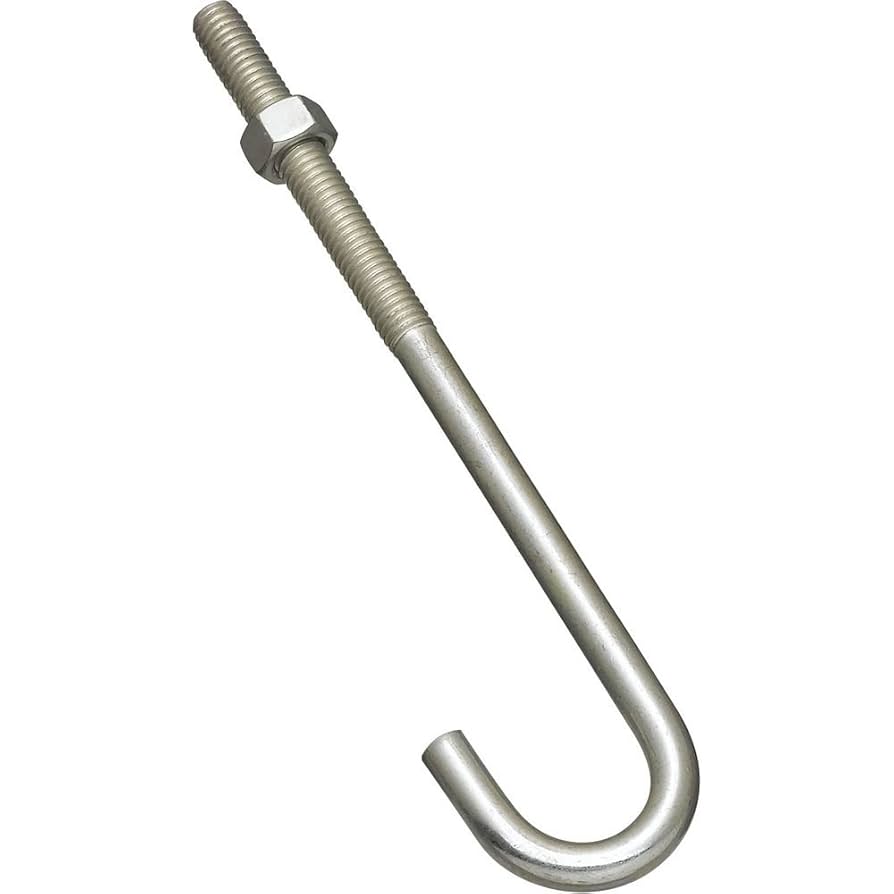
J-bolts have one threaded end, and the curved part acts as the hook. It anchors suspension clamps and holds crossarm-mounted hardware. J-bolts are simple, cost-effective, and versatile.
U-bolts
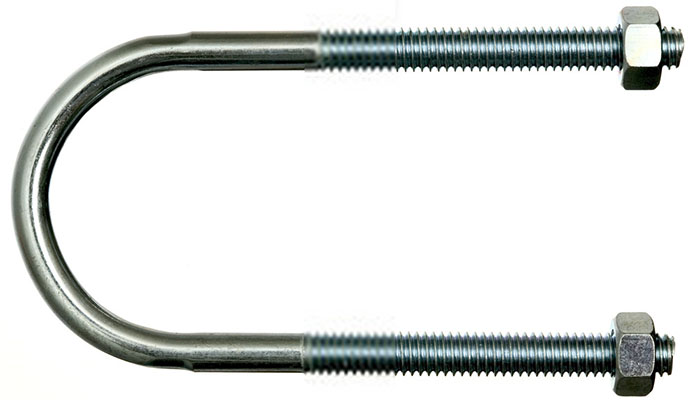
This has a U-shape with threads on both ends used with nuts and plates. It clamps around poles, crossarms, or tower steel members to provide a stable suspension point. They are strong and can secure hardware to round or irregular surfaces.
Thimble eye bolts
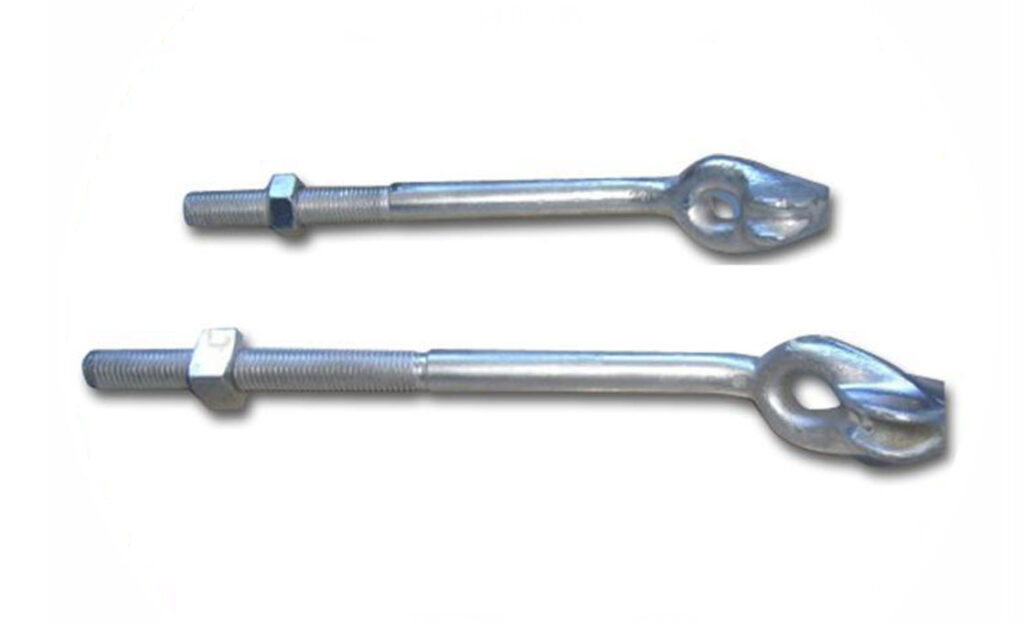
The thimble eye bolt provides extra protection against wear when attaching shackles or clamps. It enhances durability under heavy loads and frequent movement. It works in high-voltage transmission lines with high mechanical stress.
Lag bolts
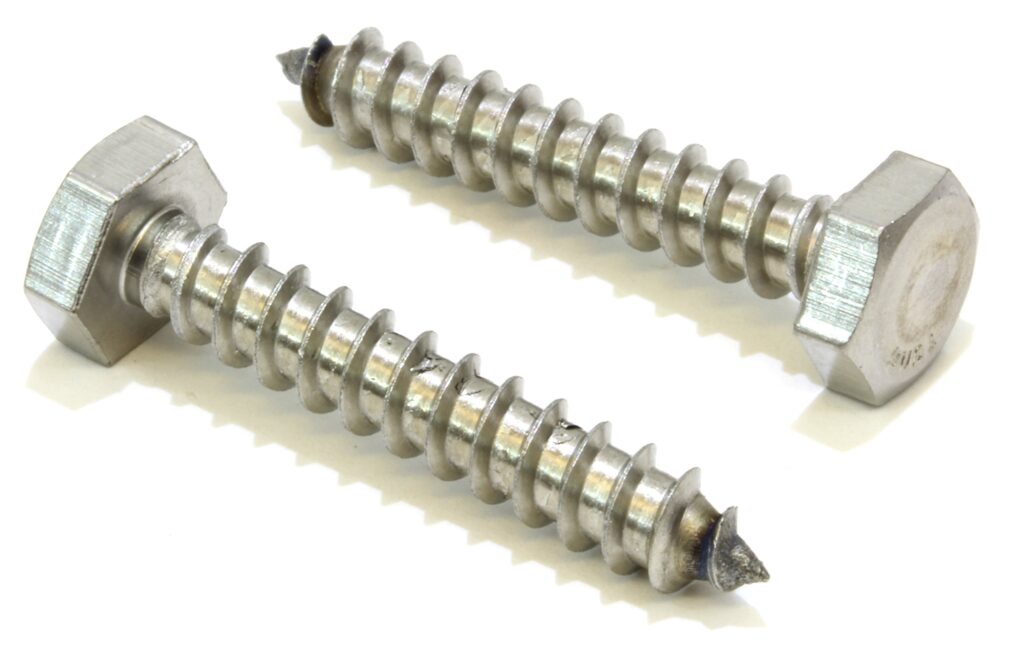
These bolts are threaded with sharp points for direct screwing into wooden poles. It provides a suspension point without needing through-holes in the pole. Screw bolts provide quick installation in wooden structures.
Design and materials for cable suspension bolts
A cable suspension bolt has specific designs and materials engineered to withstand the demanding conditions of overhead power networks. The bolts must handle mechanical loads, environmental stress, and electrical safety requirements. Its design includes the threaded shank head configuration, load-bearing shape, length, diameter, and surface finish. Selecting the right design and materials is crucial for strong, reliable bolts, durability, cost efficiency, and adaptability. Different designs ensure compatibility with poles, crossarms, and towers of various types. Here are the common materials used for cable suspension bolts.
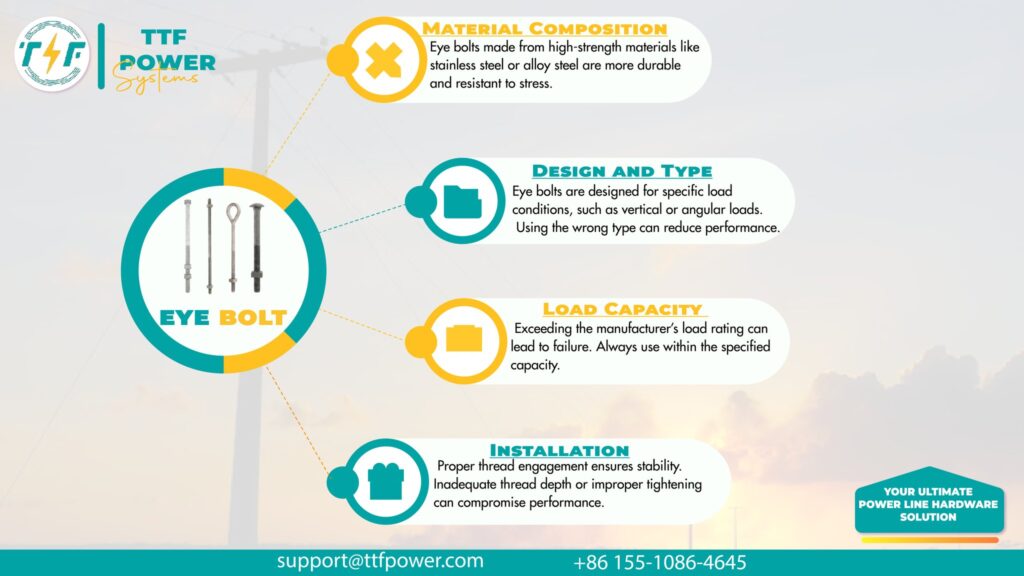
- High-tensile carbon steel—this provides the core strength necessary to bear conductor loads and resist bending under tension. It is heat-treated for toughness and fatigue resistance. It is ideal for transmission and distribution networks where mechanical strength is necessary.
- Galvanized steel—this is a protective zinc coating that shields the steel from rust and corrosion. It can withstand outdoor exposure, rain, and pollution for decades. Galvanized steel bolts are ideal for standard overhead lines in diverse climates.
- Stainless steel—this provides superior corrosion resistance in environments where galvanization may fail. It contains chromium that forms a passive protective layer. Stainless steel bolts are ideal in coastal power networks, chemical plants, and areas with harsh weather conditions.
- Alloy steel—alloying elements like nickel, chromium, or molybdenum improve strength, toughness, and resistance to vibration fatigue. It is ideal where bolts endure extra-heavy mechanical stress. This makes them best for high-voltage and extra-high-voltage networks.
- Protective coatings—use of zinc coatings is standard for corrosion resistance, and polymeric coatings are applied for extra insulation and extended service life. Hot-dip provides thicker and more durable protection for outdoor power lines.
Functions of cable suspension bolts in power networks
Cable suspension bolts are crucial in overhead transmission and distribution systems. They ensure mechanical and safety to ensure conductors remain stable, secure, and long-lasting. Cable suspension bolts function as anchors, load bearers, stabilizers, and safety enhancers in overhead power networks. They help manage sag, vibration, and environmental stress for safe and reliable operation of power lines. Here are the key functions of the suspension bolts in power networks.
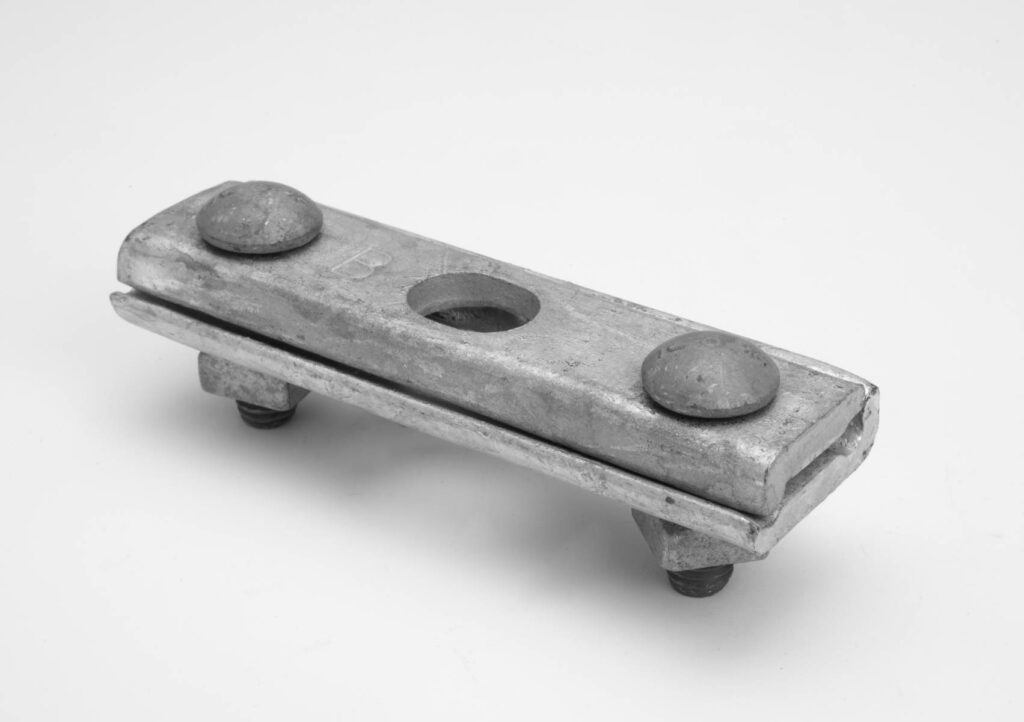
- Anchoring suspension clamps and insulators—the bolts provide a connection point between the conductor-supporting hardware. They ensure proper conductor suspension without slipping.
- Supporting conductor loads—suspension bolts carry the vertical weight of conductors across spans. They handle both static loads and dynamic loads to prevent overstressing the pole.
- Maintaining sag and line stability—the bolts work with suspension clamps to ensure the conductor maintains the correct sag across spans. Proper sag control helps prevent excessive tension and ensures conductors remain elevated above the ground.
- Controlled movement of conductors—a cable suspension bolt allows conductor swings in response to wind or thermal expansion. This prevents breakage and reduces mechanical stress.
- Reducing vibration and fatigue—the bolts help dampen wind-induced vibration and conductor galloping by acting as a stable anchor.
- Electrical safety—the bolts hold insulators that keep conductors electrically isolated from poles or towers. This prevents dangerous current leakage into support structures to improve system safety.
Proper use of cable suspension bolts in power networks
A cable suspension bolt in overhead power systems maximize their efficiency, safety, and longevity. Proper handling, installation, and maintenance help maintain the reliability of the power networks. These practices include choosing the right material, matching the bolt type to the application, ensuring proper sizing and strength, following correct installation practices, avoiding mixing metals, regular inspection and maintenance, and following safety standards. Following these practices extends the service life of the hardware and ensures the safe, reliable operation of power lines.