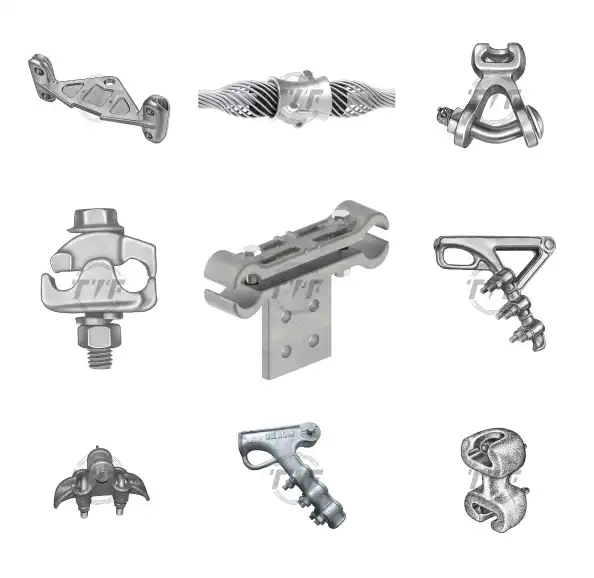
Utility network planners depend on B-cable suspension screws to secure and support a cable suspension assembly in overhead power distribution infrastructure. Its performance depends on cable arrangement, the supporting hardware, mechanical loads, and installation environment. B-cable suspension screws offer mechanical strength, connection integrity, corrosion resistance, installation quality, and service life. The B-cable suspension screw is a threaded mechanical component used in a cable suspension or support arrangement. It connects a suspension fitting to a supporting structure that holds a cable in its intended position. In overhead power networks, the suspension screws maintain the required cable position while withstanding mechanical forces generated by cable tension, wind, vibration, and changes in temperature. B-cable suspension screws are manufactured from galvanized steel, stainless steel, and zinc-coated steel options. Network planners and manufacturers should ensure the quality assurance for the suspension screws. QA ensures the screw meets its specified dimensions, mechanical properties, and coating requirements.

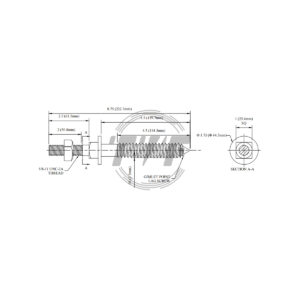


B-Cable Suspension Screw
B-cable suspension screws are threaded power line hardware components designed to secure compatible fittings within cable suspension assemblies. Manufactured to meet specified mechanical and dimensional requirements, they support stable connections and reliable load transfer in overhead power line construction. Appropriate materials and protective coatings help resist corrosion and extend service life under suitable operating conditions.
Key Features:
- Mechanical strength: Designed to withstand specified loads in suspension assemblies.
- Precision threading: Supports secure fastening and compatibility with designated fittings.
- Corrosion protection: Available with protective coatings suited to the installation environment.
- Durable construction: Built for demanding outdoor power line applications.
- Secure connections: Helps maintain assembly stability when correctly installed.
- Installation compatibility: Designed to match specified hardware dimensions and connection requirements.
- Quality assurance: Subject to dimensional, material, mechanical, and coating inspections according to applicable specifications.
Structure and components of the B-cable suspension screws
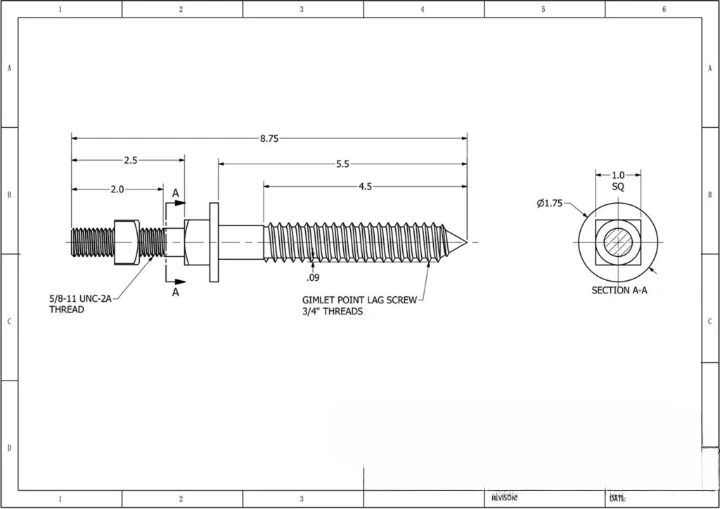
The B-cable suspension screws structure determines how they connect to supporting hardware, transfer mechanical loads, and maintain connection stability in overhead power networks. Each of its components must meet the required dimensions, mechanical strength, corrosion resistance, and compatibility with other fittings. The main structural components include:
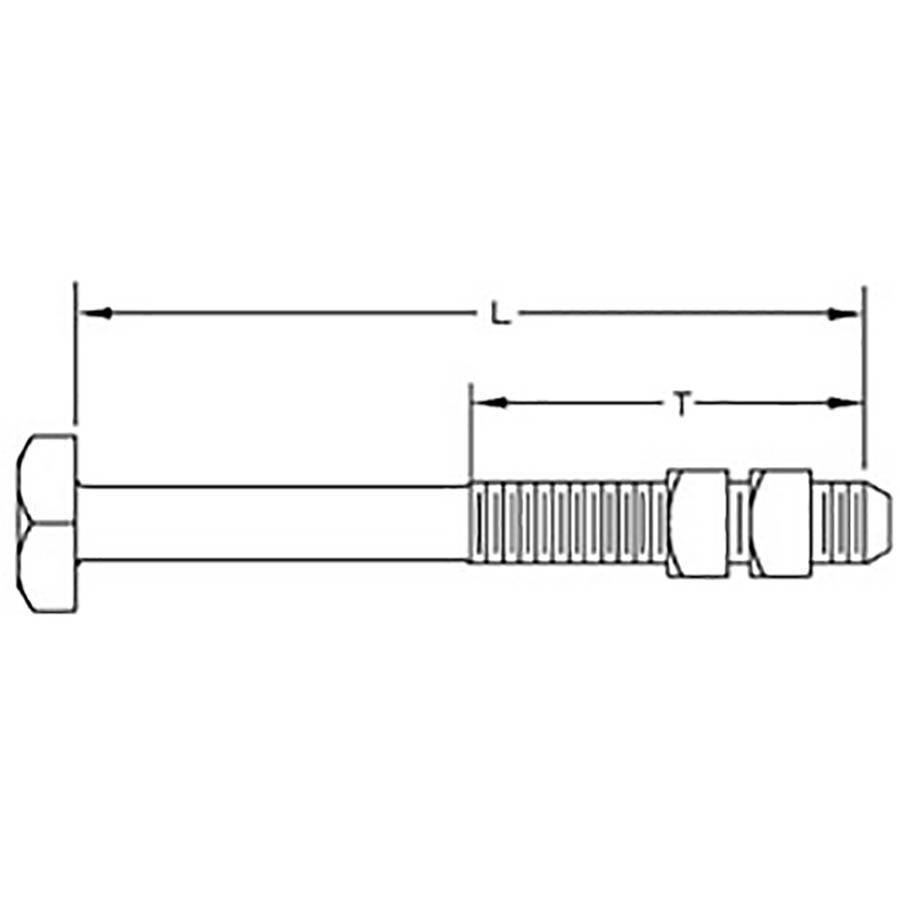
- Screw body: this shank forms the main load-bearing section of the suspension screw. Its diameter, material grade, and effective cross-sectional area influence its resistance to tensile stress. The specified dimensions must match the suspension assembly’s design requirements.
- Threaded section: the thread allows the screw to engage with a compatible nut or threaded component. Its performance depends on thread pitch, profile, diameter, and engagement length.
- Head or drive feature: screw designs use a head or another drive feature that allows an installer to apply the desired tightening force. The head must withstand the specified installation torque without deformation.
- Mating nut and washer: a compatible nut secures the threaded joint, while a washer can distribute bearing pressure and protect the adjoining surface.
- Protective surface coating: the zinc coating protects the steel against corrosion. Its effectiveness depends on coating thickness, coverage, adhesion, and the surrounding environment.
The importance of quality assurance during the manufacture of B-cable suspension screws
Quality assurance during the manufacturing of B-cable suspension screws verifies that each product meets the specified mechanical, dimensional, material, and corrosion-resistance requirements before installation in a power network. QA covers material selection, process control during forming and machining, dimensions and thread inspection, mechanical testing, surface treatment, and product release. Here is the importance of quality assurance in B-cable suspension cable manufacturing.
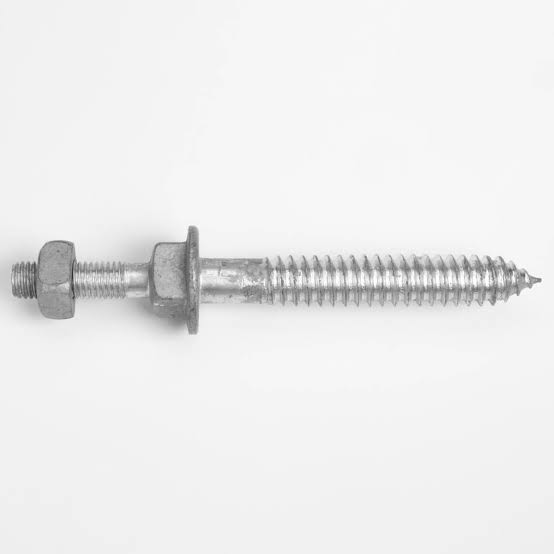
- Ensuring mechanical strength and load-bearing capacity: B-cable suspension screws must withstand loads specified for their intended application. QA helps verify that the selected material and manufacturing processes produce a screw with the required mechanical properties.
- Maintaining dimensional accuracy and thread compatibility: dimensional accuracy determines whether the screw fits correctly into its mating components. Manufacturers must control the screw’s length, shank diameter, thread diameter, pitch, and dimensions specified in the product drawing.
- Improving corrosion resistance: QA verifies the specified coating type, thickness, coverage, and surface condition. Inspection helps identify coating defects that could expose the steel to corrosive conditions. Corrosion control helps preserve the screw’s cross-sectional area, thread integrity, and mechanical performance.
- Reducing premature failures and maintenance costs: manufacturing defects can cause suspension hardware to fail before its expected service life. A preventive QA program identifies defects, reduces the risk of field failures, warranty claims, repeated repairs, and avoidable operating costs for utility companies.
- Supporting compliance and customer confidence: QA provides inspection reports, material certificates, test results, and production traceability records. The records allow network engineers to verify that the supplied B-cable suspension screws correspond to the approved design and quality requirements.
Quality failure modes of B-cable suspension screws in power networks
B-cable suspension screws serve in power networks exposed to diverse environmental conditions, including rain, humidity, salt exposure, industrial pollutants, and temperature changes. Quality failure modes of B-cable suspension screws are defects that reduce the mechanical reliability, corrosion resistance, and service life of the screw. These failures can affect connection stability, increase maintenance requirements, and severe cases compromise the support of cables and other hardware. Common failure modes include:
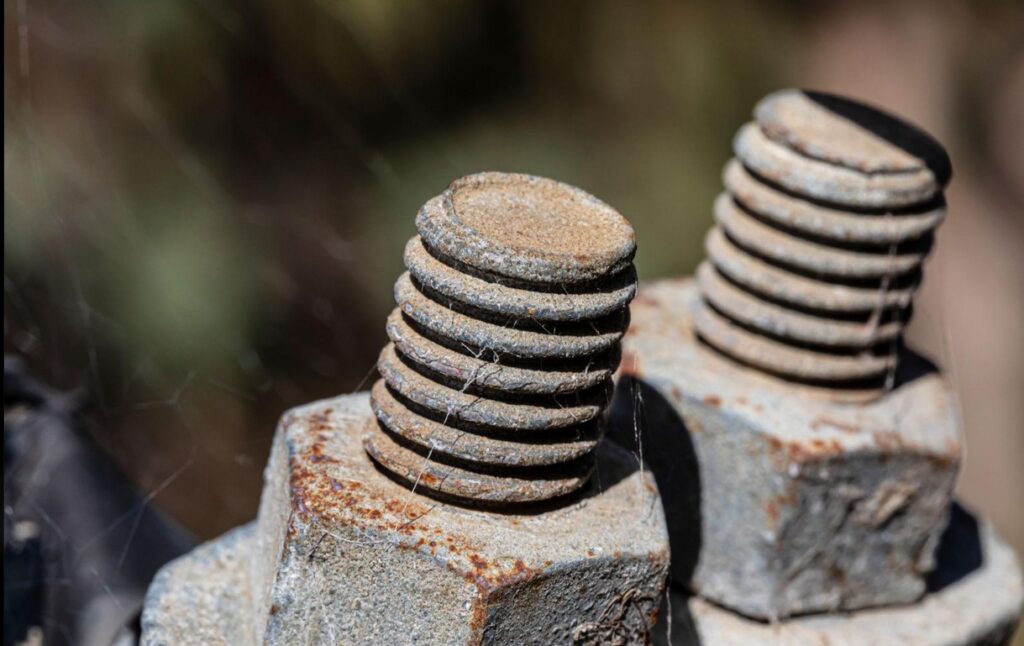
- Thread defects and dimensional inaccuracies: the threaded section connects the screw to its mating nut or fitting. Common defects include incorrect thread pitch, incomplete threads, burrs, cracks, damaged thread crests, and excessive dimensional variation.
- Insufficient mechanical strength: B-cable suspension screws must meet the mechanical requirements established for its assembly. This arises from incorrect raw material grade, material defects, improper heat treatment, and incorrect shank dimensions. Screws with insufficient mechanical strength may fail under tensile loading.
- Corrosion and protective coating failure: corrosion occurs when the screw’s material reacts with its environment. Corrosion leads to insufficient coating thickness, bare patches, coating damage, rust formation, and localized corrosion around threads. Corrosion can reduce the effective cross-sectional area of the screw and damage its threads.
- Fatigue cracking and premature fracture: the screw experiences cyclic loading related to wind-induced movement, vibration, or changing mechanical loads. Fatigue failure arises from stress concentrations at thread roots, surface defects and machining damage.
- Material defects and inconsistent manufacturing quality: material defects remain undetected if incoming material inspection and production traceability are inadequate. The defects include material chemistry outside the specified limits, internal inclusions, and inconsistent mechanical production between batches.
- Deformation and incorrect load transfer: a screw can bend when it experiences installation conditions that exceed its design limits. This arises from loads exceeding the rated capacity, incorrect screw dimensions, misaligned mounting holes, and excessive installation force.
Materials and coating protections for B-cable suspension screws and the importance of quality assurance
B-cable suspension screws are manufactured from various materials and coating protections that determine how they withstand mechanical loads, resist corrosion, and maintain their structural integrity. The specification depends on the screw’s actual design, rated mechanical loads, installation environment, and the requirements of the utility. Quality assurance ensures that the material and coatings selected meet the approved requirements. QA addresses the risks through process qualification, in-process inspection, coating measurements, and final checks. Common materials for the B-cable suspension screw include:
Carbon steel
This is a common option for loaded power line fasteners because manufacturers can select grades with suitable strength and forming characteristics. The specified grade must meet the design requirements for tensile strength, ductility, and any applicable toughness criteria.
Stainless steel
Stainless steel is ideal for applications exposed to corrosive environments such as coastal or industrial locations. It is crucial to verify mechanical strength, cost, and compatibility with connected metals before selecting it. Manufacturers should verify mechanical strength, ductility, manufacturability, corrosion behavior, and compatibility.
Hot-dip galvanizing
The zinc coating provides a barrier against the environment and sacrificial protection where the coating is damaged. It is ideal for B-cable suspension screws used outdoors. Manufacturers must control surface preparation, galvanizing conditions, coating thickness, and the finished thread dimensions.
Corrosion-resistance base materials
Stainless steel reduces the need for separate zinc coating when its alloy is suitable for the environment. It is important to address material grade, surface condition, contact with dissimilar metals, and exposure to chlorides.
TTF-Certified B-cable suspension screws. Why choose our suspension assembly?
TTF’s approach to power line hardware services results in optimal product quality, strict adherence to custom design, and reduced cost. We are constantly checking manufacturing processes, addressing material concerns, and improving staff expertise to ensure the best quality product. Our quality control for the B-cable suspension screws begins with the first batch of samples that you received from us. And this continues through all production phases, where our QC staff never stop looking for opportunities to improve product quality. We offer:

- Tolerance Analysis
- Tooling Life Analysis
- Rockwell Hardness Testing per ASTM E18
- Brinell Hardness Testing per ASTM E10
- Magnetic Particle Testing per ASTM E1444 CMM (Coordinate Measuring Machine) Testing
- 24″ Optical Comparator for Complex Measurements
- Tensile/proof load testing up to 160,000 lbs (700 kN)
- Hot Dip Galvanizing Plating Thickness per ASTM E376
- Torque Testing
- Roughness Testing
- Lifetime Sample Retention
- Dimensional Testing
Benefits of the B-cable suspension screws in power networks
B-cable suspension screws ensure the mechanical reliability of overhead power networks by securing compatible suspension hardware. They also help maintain stable connections within cable support assemblies. Their benefits in power networks include:
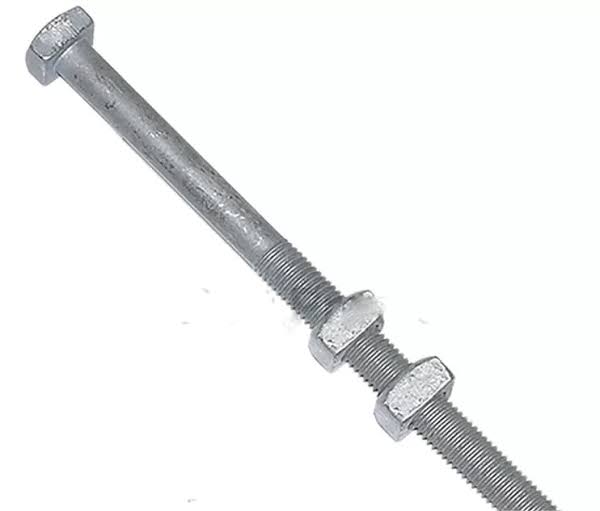
- Improved mechanical stability: the threaded connection helps secure compatible fittings and maintain their intended positions under normal operating conditions.
- Reliable mechanical load transfer: B-cable suspension screws help transfer mechanical forces between connected components when their design incorporates them into the assembly’s load path.
- Better connection integrity: threaded connections allow compatible components to be assembled and secured according to the manufacturer’s instructions.
- Support for power network reliability: B-cable suspension screws contribute to network reliability by forming part of a designed and maintained suspension assembly.
In summary,
B-cable suspension screws secure compatible fittings within cable suspension assemblies. Their performance depends on the correct design, material strength, thread accuracy, and corrosion protection. Conducting quality assurance verifies material properties, dimensional accuracy, mechanical strength, thread compatibility, and coating integrity during manufacturing. Inadequate protection and assurance causes failures such as thread stripping, insufficient mechanical strength, corrosion, fatigue cracking, and connection loosening. Their performance depends on correct installation, environmental conditions, and regular inspection of the complete suspension assembly.