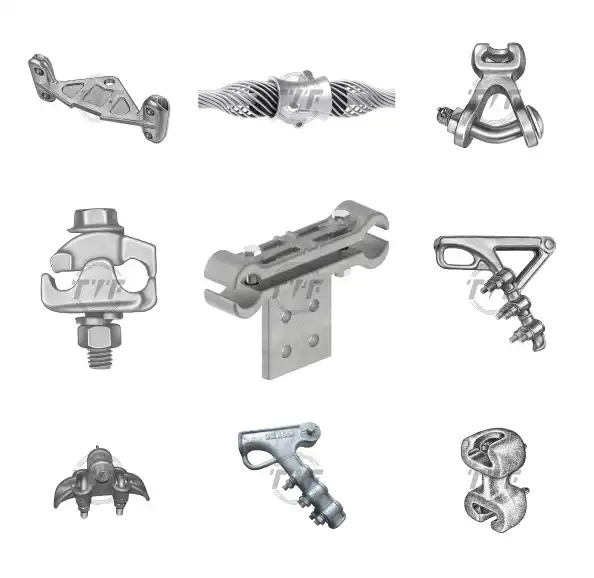
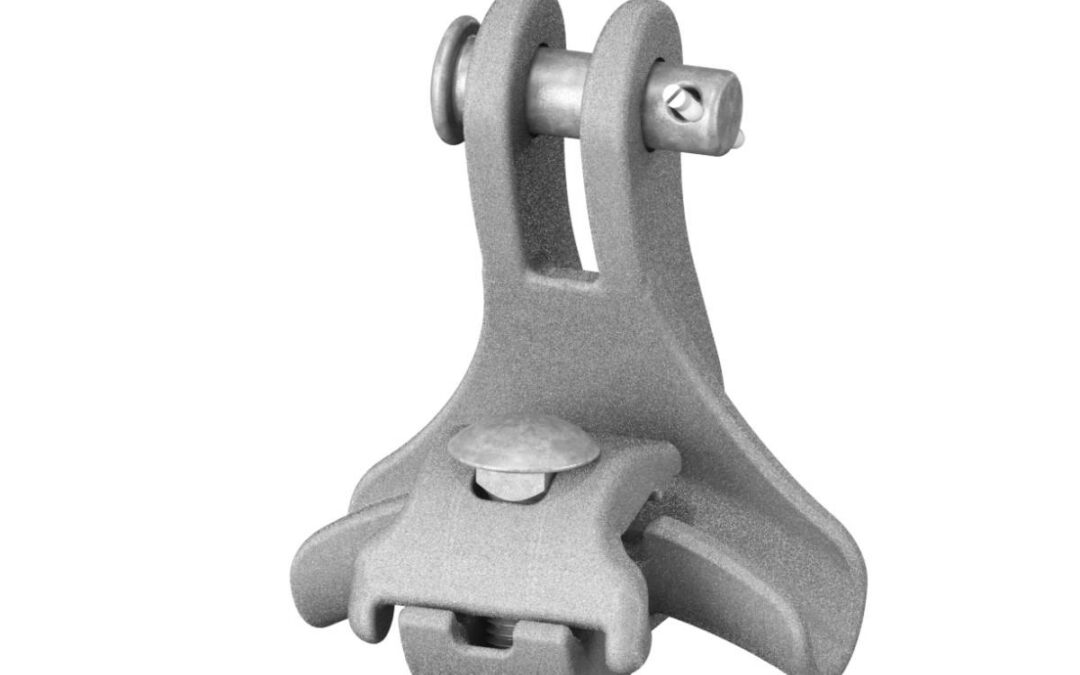
A ground wire suspension clamp serves on overhead power line networks to secure and support a ground wire on a transmission structure. It is installed at intermediate towers where the ground wire continues along the line without being terminated. The clamp holds the conductor securely while allowing it to withstand mechanical loads caused by wind, weight, and vibration. Ground wire suspension clamps connect the ground wire to the grounding or structural attachment point while maintaining conductor position and mechanical stability. The construction of the clamp depends on the conductor type, line voltage, tower configuration, environmental conditions, and mechanical loading requirements. It consists of the clamp body, fastening hardware, suspension component, and protective inserts. Ground wire suspension clamps consist of high-quality materials such as galvanized ductile iron, aluminum alloy, galvanized steel, and stainless steel. Conducting quality assurance protects these materials by enforcing a system of verification, testing, and traceability.
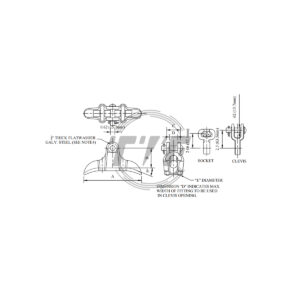
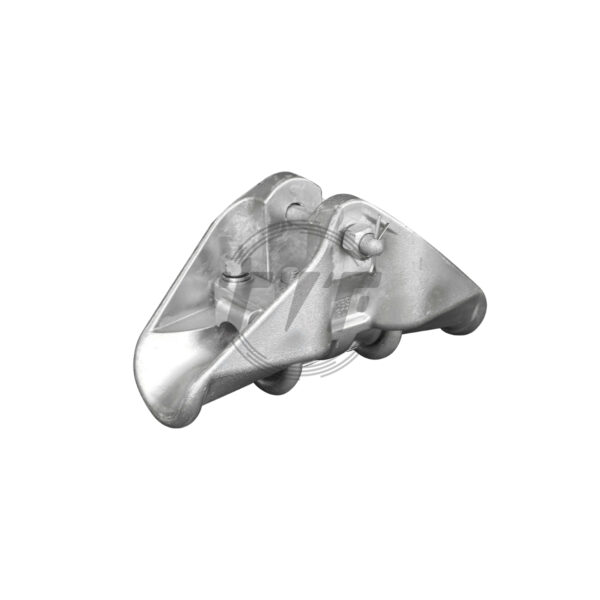
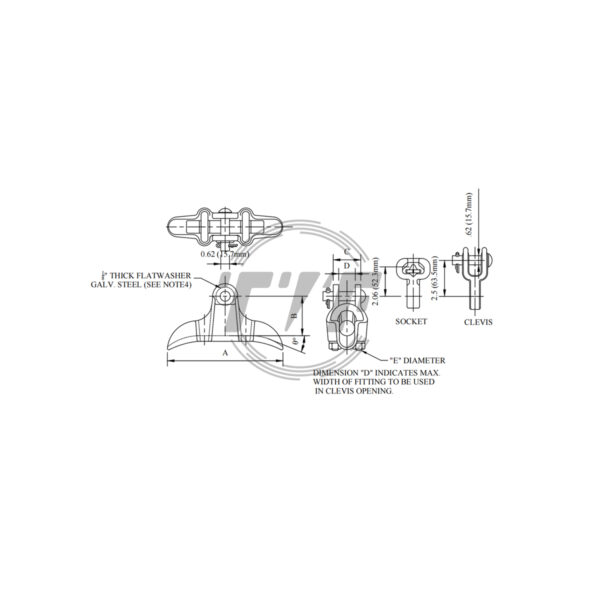
Ground Wire Suspension Clamp
A Ground Wire Suspension Clamp is an overhead line fitting designed to securely support ground wires or shield wires on transmission and distribution structures. It provides stable conductor positioning while transferring mechanical loads to the supporting tower or pole. Manufactured from durable, corrosion-resistant materials, the clamp is engineered for reliable performance under wind, vibration, and outdoor environmental conditions.
Key Features:
- Secure suspension of ground and shield wires
- Accurate conductor positioning and support
- High mechanical strength and load capacity
- Corrosion-resistant construction
- Smooth conductor-contact surfaces to minimize damage
- Compatible with specified conductor diameters
- Robust bolts, U-bolts, and fastening hardware
- Suitable for transmission and distribution networks
- Designed for long-term outdoor service
- Available in different configurations to suit line structure
Core structure and components of ground wire suspension clamps
A ground wire suspension clamp supports an overhead ground wire while controlling mechanical stress. Its construction combines a load-bearing body, conductor-gripping elements, and tower attachment hardware. The design accounts for conductor diameter, rated mechanical load, vibration, wind loading, and corrosion environment. The core structure includes:
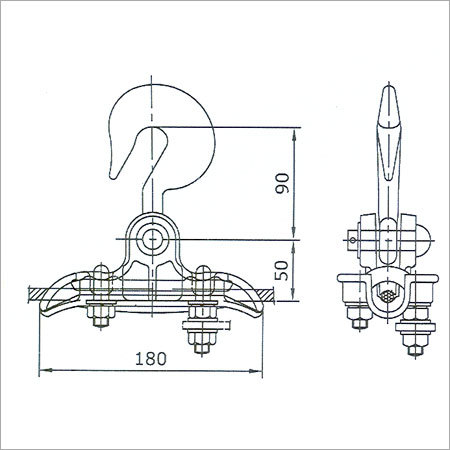
- Clamp body—this is the main load-bearing component of the suspension clamp. It supports the ground wire and transfers mechanical loads from the conductor to the structure. The body is made from aluminum alloy, galvanized steel, malleable iron, or other engineered materials. These materials selected should offer conductor compatibility, mechanical strength, corrosion resistance, and environmental conditions.
- Conductor groove—the inside of the clamp incorporates a groove that matches the diameter and profile of the ground wire. It keeps the conductor positioned, distributes pressure over the conductor surface, and reduces localized mechanical stress.
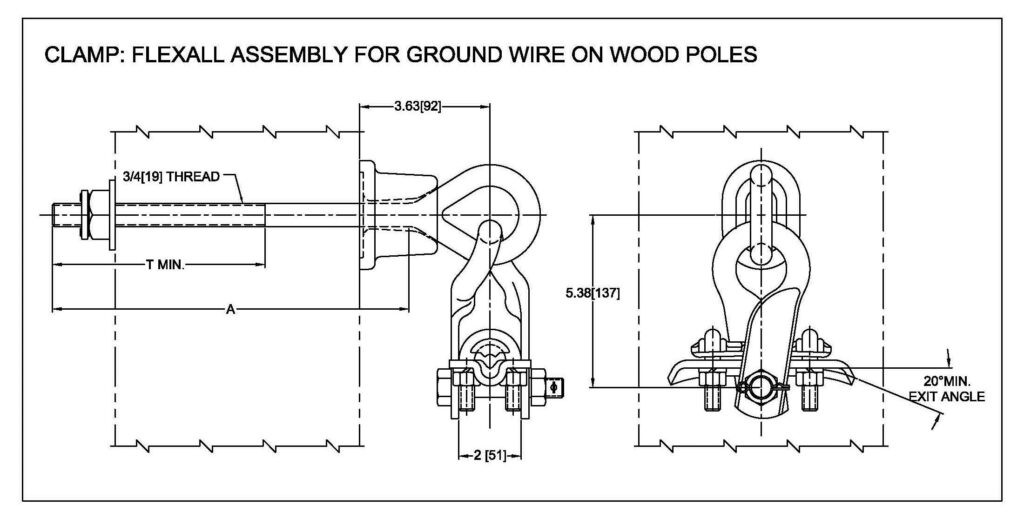
- Suspension attachment—this connects the conductor-holding section to the transmission tower, pole, or other supporting structure. The attachment allows the conductor to remain suspended while transferring its vertical and transverse loads to the structure.
- U-bolts and fastening hardware—these are locking components that provide clamping force without compressing the ground wire.
- Keeper—the suspension clamp consists of a keeper, retaining plate, or upper clamp component. It prevents the conductor from leaving its seat.
- Suspension eye—the eye or clevis provides the interface between the clamp and the tower’s insulator. The connection depends on the transmission structure and the configuration of the overhead ground-wire system.
The roles of quality assurance during the manufacture of ground wire suspension clamps
Quality assurance during the manufacture of ground wire suspension clamps ensures they withstand mechanical loads, environmental exposure, and conductor movement. The system ensures that each clamp meets its specified dimensional, mechanical, material, corrosion-resistance, and assembly requirements before use in power-line construction. It reduces the likelihood of clamp slippage, conductor damage, corrosion, mechanical failure, and premature replacement. Its roles include:
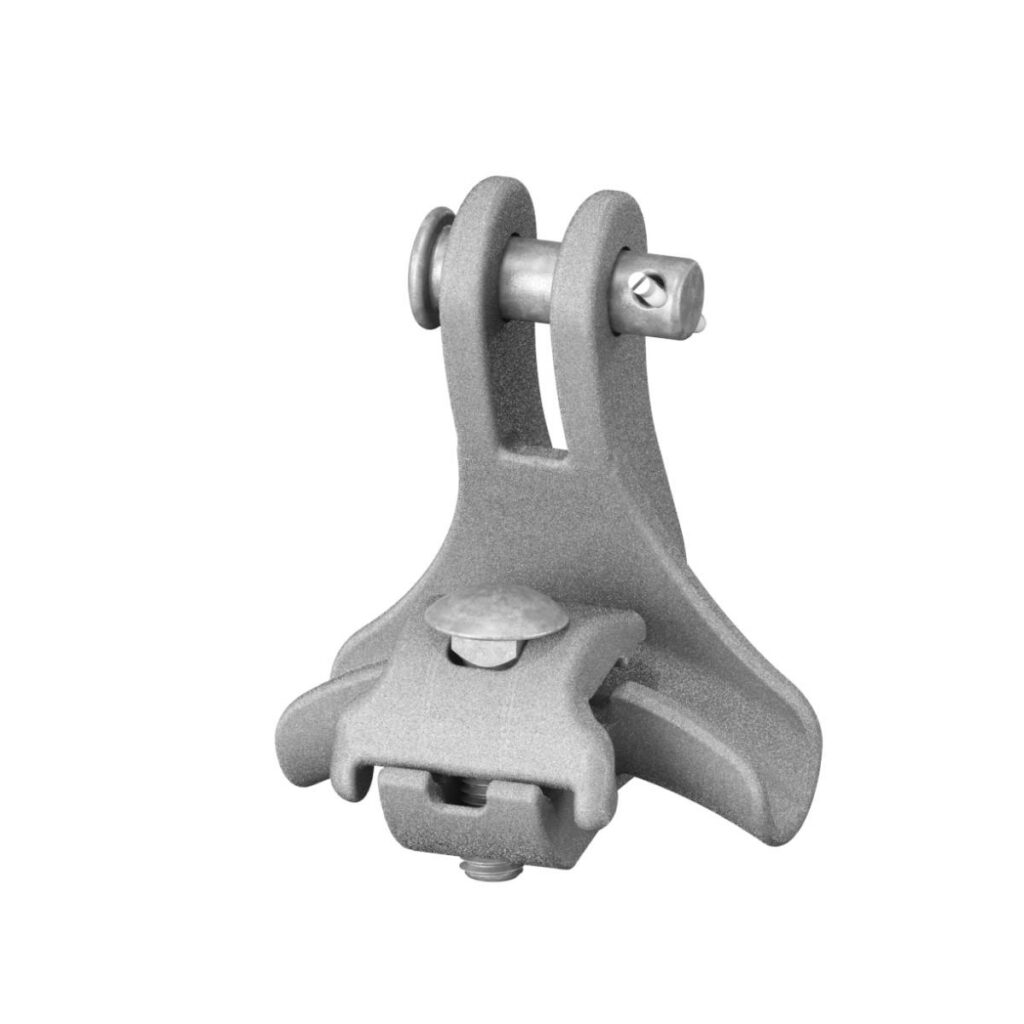
- Verification of raw materials—quality assurance starts with inspection and verification of the materials used to manufacture the clamp body, bolts, nuts, washers, and other components. Manufacturers verify material grade, mechanical properties, aluminum alloy specifications, and steel strength and grade.
- Dimensional quality control—ground wire suspension clamps have accurate dimensions to fit the specified ground-wire diameter and tower hardware. QA inspections verify clamp length and width, conductor groove diameter, thread dimensions, and component alignment.
- Mechanical strength testing—the clamp must withstand the loads imposed by the suspended ground wire without excessive deformation, slipping, cracking, or component failure. Manufacturers conduct tensile testing, load-bearing tests, slip tests, and breaking-load tests.
- Inspection of the conductor-gripping surface—QA inspects the conductor groove, seating surface, and protective inserts. This reduces the risk of conductor abrasion, deformation, or localized stress during service.
- Casting, forging, and machining inspection—QA inspections identify porosity, cracks, inclusions, incomplete filling, and surface defects for cast components. For forged components, QA checks for forging cracks, incorrect dimensions, material defects, and inadequate forming.
- Corrosion-resistance assurance—ground wire suspension clamps experience moisture, salt, industrial pollution, and changing temperatures. QA verifies protective treatments such as hot-dip galvanizing or other specified corrosion-protection systems.
- Load distribution and design verification—QA supports the verification that the clamp’s design distributes mechanical forces. Design and production checks confirm that the conductor seat, clamp body, and suspension connection operate as an integrated load-bearing system.
Quality failure modes of ground wire suspension clamps
Ground wire suspension clamps face diverse environmental and mechanical stresses in power networks. These conditions can cause manufacturing defects, incorrect material selection, poor surface treatment, dimensional inaccuracies, or improper assembly. These defects can reduce their reliability in power networks. Common quality failure modes include:
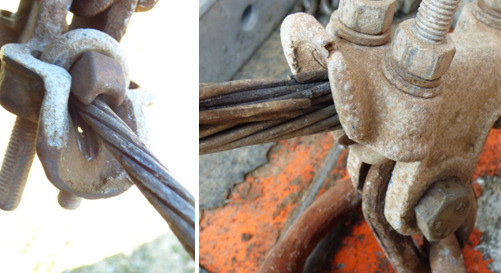
- Clamp body cracking—cracks develop in cast, forged, or machined clamp bodies because of material defects, excessive loading, poor manufacturing processes, or inadequate heat treatment. Cracking can compromise the structural integrity of the clamp and may lead to mechanical failure.
- Conductor slippage—slippage occurs when the clamp cannot maintain enough grip on the ground wire under specified mechanical load. It may arise from incorrect groove dimensions, insufficient clamping force, incorrect bolt torque, and poor surface condition.
- Incorrect dimensions—dimensional deviations can prevent the clamp from fitting the ground wire. Common issues include incorrect conductor-groove diameter, misaligned bolt holes, incorrect bolt dimensions, and excessive manufacturing tolerances.
- Burrs and sharp edges—poor machining, casting, or forging leaves burrs and sharp edges on the conductor-contact surfaces. These imperfections can concentrate mechanical stress and damage the ground wire through abrasion.
- Corrosion and inadequate coating—insufficient galvanizing can expose steel components to premature corrosion. These failures include insufficient coating thickness, uneven coating, bare areas, and poor adhesion.
- Fastener failure—bolts, U-bolts, nuts, and washers often fail because of incorrect material, dimensional defects, damaged threads, inadequate tightening, or corrosion. The defective fastening system can reduce the clamp’s ability to maintain the needed grip on the ground wire.
- Material defects—material inconsistencies can reduce the mechanical performance of the clamp. It may experience porosity, inclusions, laminations, cracks, or incorrect alloy composition.
Materials used for ground wire suspension clamps
Manufacturers select materials for the ground wire suspension clamps according to the mechanical strength, electrical compatibility, corrosion resistance, weight, and environmental conditions of the power line network. Quality assurance controls the material from procurement through final production. Common materials include:
Aluminum alloys
These are common for clamp bodies because they combine low weight with good corrosion resistance and enough mechanical performance for overhead-line applications. Quality assurance verifies the specified alloy and material grade, checks supplier material certificates, controls casting, and inspects for cracks, porosity, inclusions, and other defects. These controls help ensure that the aluminum component has consistent mechanical properties and geometry.
Galvanized steel
Galvanized steel is common for high-strength components such as U-bolts, bolts, brackets, and links. Steel provides high mechanical strength while galvanizing provides a protective zinc coating against atmospheric corrosion. Quality assurance checks steel grade and mechanical properties, chemical composition, fastener dimensions, thread accuracy, galvanizing thickness, surface defects, and adhesion and coverage.
Ductile iron
Some suspension clamps use ductile iron for load-bearing bodies and fittings. Ductile iron provides good mechanical strength and toughness when manufactured. QA controls for the material include chemical-composition verification, metallurgical inspection, casting-quality inspection, tensile and hardness testing, and inspection for cracks and porosity.
Stainless steel
Steel is crucial for environments facing high humidity, coastal exposure, industrial pollution, or other corrosive conditions. QA verifies stainless steel grade, chemical composition, mechanical properties, surface condition, thread quality, and dimensional accuracy. Material identification helps prevent the substitution of an unsuitable stainless-steel grade.
TTF-certified ground wire suspension clamps. Why we certify:
TTF’s approach to power line hardware services results in optimal product quality, strict adherence to custom design, and reduced cost. We are constantly checking manufacturing processes, addressing material concerns, and improving staff expertise to ensure the best quality product. Our quality control for the ground wire suspension clamps begins with the first batch of samples that you received from us. And this continues through all production phases, where our QC staff never stop looking for opportunities to improve product quality. We offer:

- Tolerance Analysis
- Tooling Life Analysis
- Rockwell Hardness Testing per ASTM E18
- Brinell Hardness Testing per ASTM E10
- Magnetic Particle Testing per ASTM E1444 CMM (Coordinate Measuring Machine) Testing
- 24″ Optical Comparator for Complex Measurements
- Tensile/proof load testing up to 160,000 lbs (700 kN)
- Hot Dip Galvanizing Plating Thickness per ASTM E376
- Torque Testing
- Roughness Testing
- Lifetime Sample Retention
- Dimensional Testing
The advantages of the ground wire suspension clamps in power networks
Ground wire suspension clamps support ground wires, earth wires, and shield wires on transmission and distribution structures. Their design provides mechanical support while maintaining the correct position of the conductor. Its main advantages include:
- Reliable ground wire support—a properly selected clamp supports the conductor’s weight and helps maintain its position under normal operating conditions.
- Improved lightning protection—suspension clamps help keep these wires in their intended position above the power conductors. The clamps support the lightning-protection strategy of the transmission line.
- Effective load distribution—the clamp distributes mechanical forces between the ground wire and the supporting structure.
- Protection against conductor damage—the clamp has accurate grooves, suitable clamping pressure, and protective inserts that can help reduce abrasion, deformation, and localized stress.