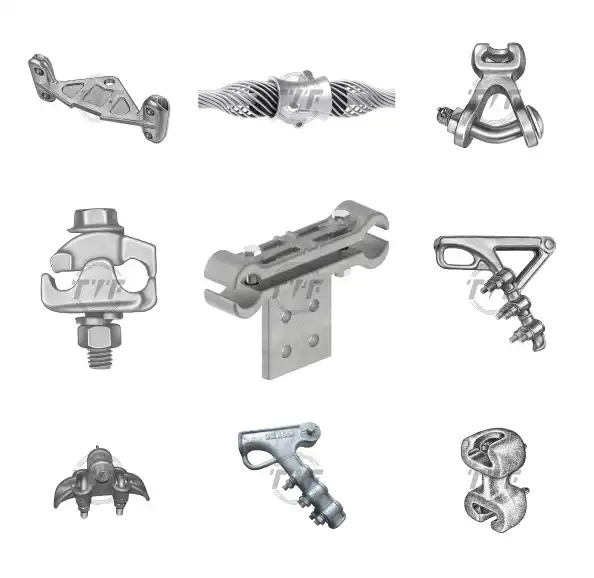
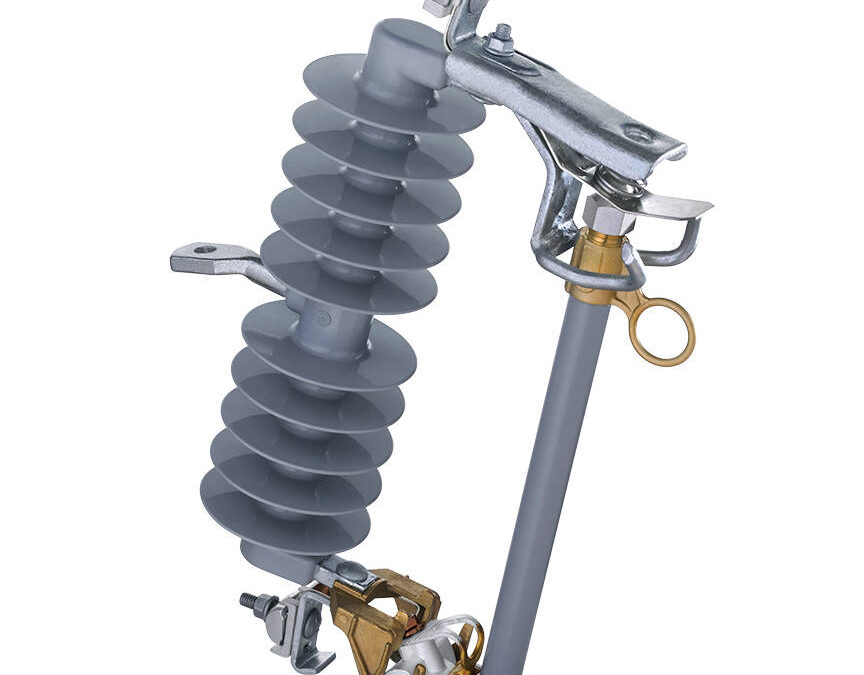
A link-break cutout is a protective device used to provide overcurrent protection and a visible means of disconnecting a section of the electrical network. It consists of a fuse link or fusible element mounted in a removable carrier. In overhead distribution and transmission lines, when a short circuit or overload causes the current to exceed the fuse’s rated value, the fuse element heats up, melts, and interrupts the fault current. The cutout opens the circuit, and the operator can manually remove or open the fuse carrier to create a visible isolation point for maintenance. The “link break” term refers to the ability to break the electrical connection by removing the link or carrier. This provides a physical separation between the energized and de-energized portions of the circuit. This cutout protects the distribution system against fault currents while the open carrier provides a clear point of disconnection during maintenance.
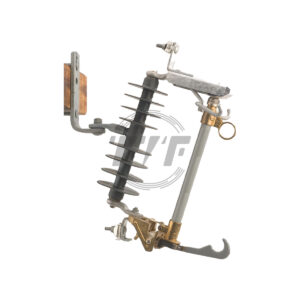
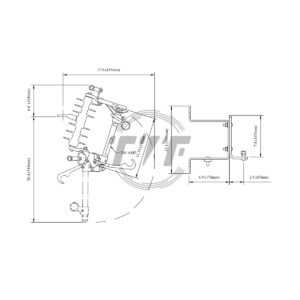
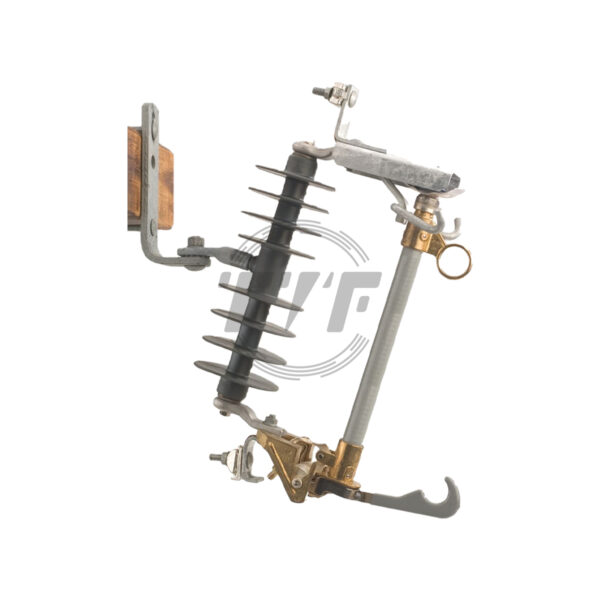
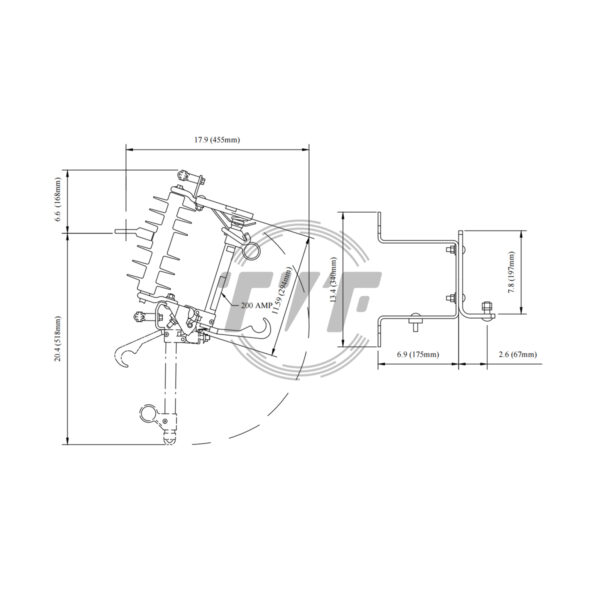
15 kV, 110 kV BIL, D-shape Linkbreak Type C Polymer Cutout with a 100A, 16kAIC Fuseholder
A Link Break Cutout is a medium-voltage overhead line protection device designed to provide overcurrent protection and visible circuit isolation in power line construction. Installed on distribution poles, transformers, and feeder branches, it uses a fuse link to interrupt excessive fault current while allowing authorized personnel to disconnect the protected circuit for maintenance and inspection. Its robust construction and weather-resistant insulation make it suitable for demanding outdoor distribution environments.
Key Features:
- Overcurrent and short-circuit protection
- Visible circuit isolation through a break/drop-out mechanism
- Fuse-link compatibility for specified protection ratings
- High dielectric strength for reliable insulation
- Low-resistance electrical contacts for efficient current transfer
- Corrosion-resistant metal components for outdoor durability
- Robust mechanical construction for pole-mounted applications
- Weather and UV resistance for long-term outdoor service
- Reliable arc interruption during fuse operation
- Easy inspection and maintenance
- Suitable for overhead distribution networks and transformer protection
- Designed for compliance with applicable utility and electrical standards
Components of the link break cutout
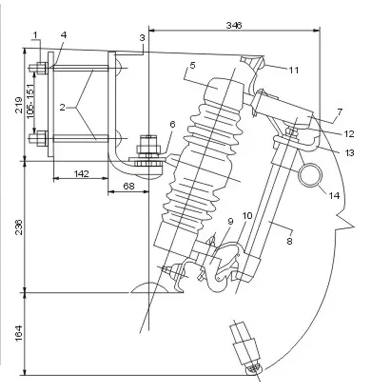
A link break cutout consists of electrical, mechanical, and insulating components that provide overcurrent protection and circuit protection in overhead systems. It is advisable to understand these components for better selection, installation, and maintenance. Here are the key components of the cutout.
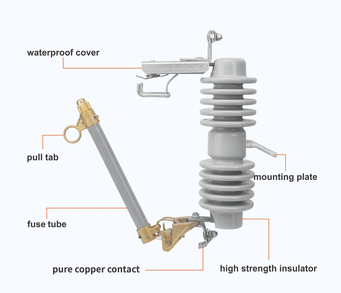
- Fuse link – this element contains a fusible element designed to melt when the current exceeds its specified rating. It interrupts short-circuit and overload currents and protects transformers, conductors, and distribution equipment. It should have the correct current rating, voltage rating, and time-current characteristics for the application.
- Fuse carrier – the fuse carrier holds the fuse link and forms the movable part of the cutout. The carrier can drop when the fuse operates depending on the cutout design. The cutout provides a visible sign of circuit interruption.
- Upper and lower contacts – the electrical contacts connect the fuse carrier to the line and load terminals. The contacts provide low electrical resistance, reliable current transfer, contact pressure, and resistance to heating and oxidation.
- Insulating body – the body electrically separates the energized components from the grounded pole structure. The body consists of porcelain and polymeric materials that help withstand the operating voltages and switching surges.
- Line terminal – this connects the cutout to the incoming overhead conductor. It provides a secure electrical connection between the distribution line and the protective device.
- Load terminal – this connects the cutout to the downstream equipment. It should provide a reliable electrical and mechanical connection under load and fault conditions.
The role of quality assurance in the manufacturing process of link break cutouts is crucial.
Quality assurance in link break cutout manufacturing ensures that every cutout meets the needed electrical, mechanical, dimensional, and environmental performance needs. The manufacturing defects can lead to nuisance operations, overheating, insulation failure, or unsuccessful fault interruption. Here is the role of quality assurance during the manufacturing process.
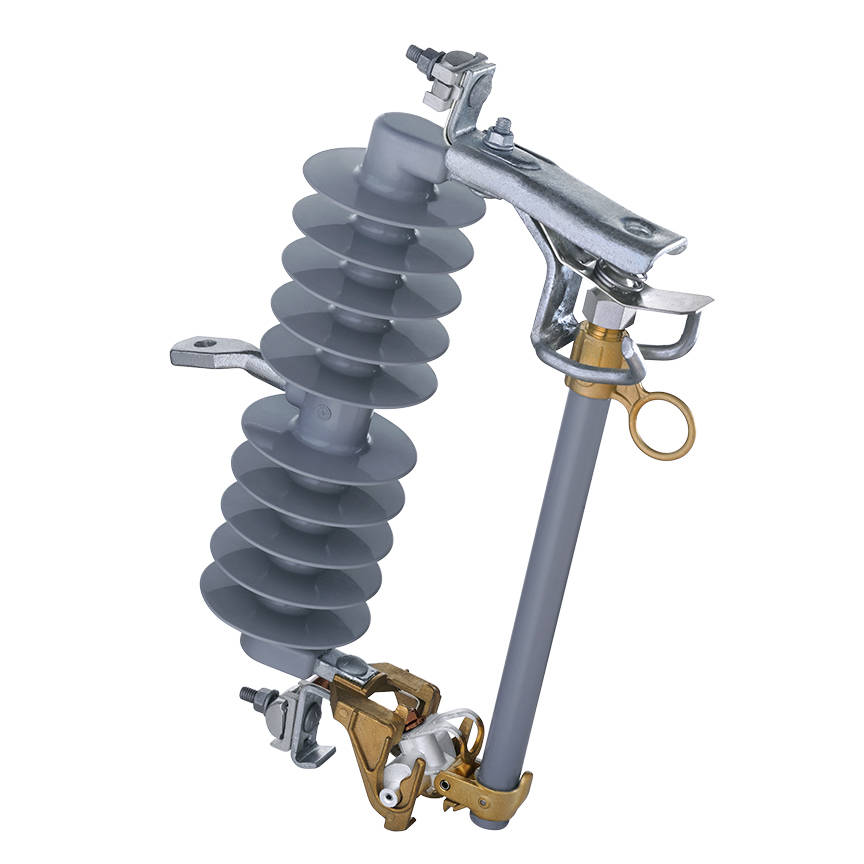
- Material quality control—QA begins with verifying the material used to manufacture the cutout. It also checks material certificates, chemical composition, mechanical properties, and corrosion resistance.
- Dimensional inspection – QA inspections verify dimensions, contact spacing, terminal dimensions, mounting-hole positions, fuse carrier dimensions, and insulator dimensions. Incorrect dimensions can cause poor contact pressure, difficult operation, or inadequate electrical insulation.
- Electrical performance testing—electrical testing includes checking power-frequency withstand voltage, impulse withstand voltage, contact resistance, fuse operation, and insulation performance.
- Mechanical testing – QA checks the mechanical strength and operation of components. Testing includes checking the mechanical strength of the insulator, hinge strength, terminal strength, mounting bracket strength, and mechanical endurance.
- Contact quality inspection – manufacturers inspect contact alignment, contact pressure, surface condition, contact resistance, and signs of oxidation.
- Insulator quality assurance – QA checks for cracks, voids, surface defects, dimensional deviations, poor polymer molding, and contamination. This ensures housing integrity, material consistency, and resistance to environmental degradation.
- Fuse and arc-interruption verification – QA verifies that the selected fuse link and fuse tube operate within their specified characteristics. Testing checks whether the device carries normal operating current without excessive heating.
Quality failure modes of link break cutouts in power networks
Link break cutouts provide overcurrent protection and circuit isolation in overhead distribution networks. However, due to manufacturing defects, poor installation, material degradation, and inadequate maintenance can compromise their performance. These may also lead to quality failure, including
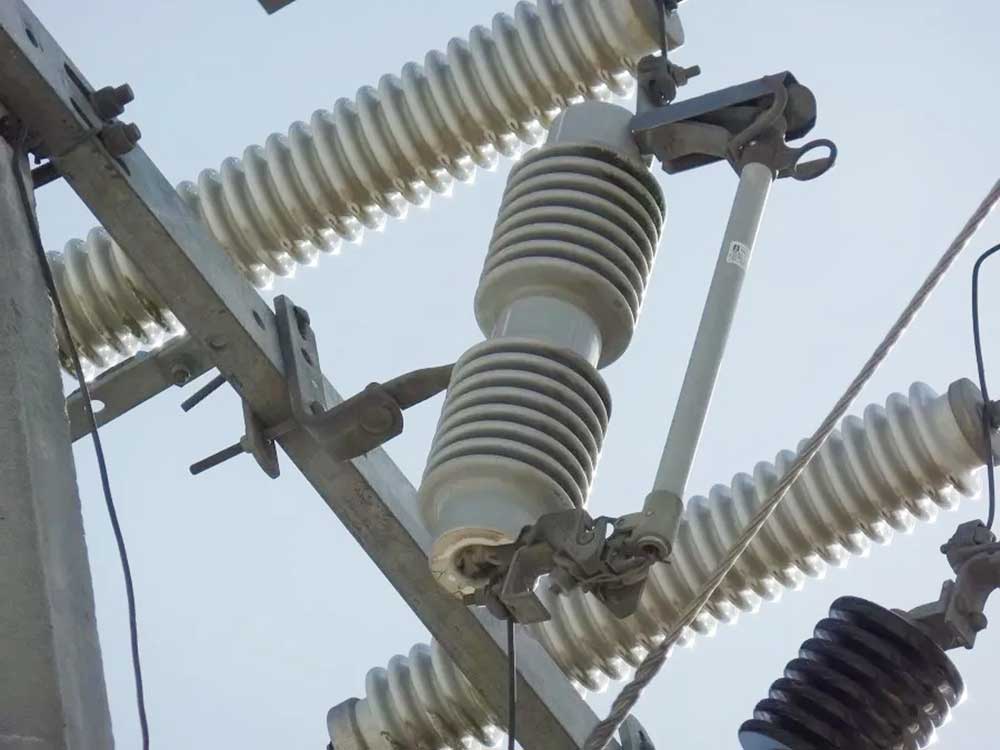
- Poor contact quality – defective contacts can create high contact resistance that causes localized heating during normal current flow. Common causes include incorrect contact pressure, poor surface finishing, oxidation, misalignment, and contamination.
- Insulator defects – these may show as cracked, porous, contaminated, or poorly manufactured insulators. These defects can reduce the cutout’s dielectric performance.
- Incorrect fuse-link characteristics—installing a fuse link with an incorrect current rating or time-current characteristic can cause unreliable protection. Poor fuse selection can operate unnecessarily during normal load conditions, fail to provide enough protection, and coordinate poorly with upstream and downstream protection.
- Fuse carrier malfunction – the fuse carrier must move reliably when the fuse operates or when the circuit is intentionally opened. Quality failures include excessive operating force, misalignment, sticking, deformation, and damaged hinges.
- Poor arc interruption – an electrical arc can develop as the fusible element melts during fuse operation. This might arise from a defective fuse tube, incorrect fuse-link installation, damaged arc-quenching components, and incorrect internal dimensions.
- Terminal connection failures – line and load terminals must maintain secure electrical and mechanical connections. Common failures include incorrect terminal dimensions, poor machining, inadequate clamping, corrosion, and cracked terminal components.
Materials used for link break cutouts and the importance of quality assurance
Link break cutouts combine conductive metals, insulating material, protective coatings, and mechanical components. These help to provide reliable overcurrent protection and circuit isolation in overhead power networks. The quality of these materials influences the cutouts’ electrical performance, mechanical strength, corrosion resistance, and service life.
Porcelain materials
Porcelain is ideal for insulating the body of the fuse and link break cutouts. It provides high dielectric strength and good resistance to outdoor environmental conditions. Porcelain offers high electrical insulation, good mechanical strength, and resistance to UV exposure. Conducting quality assurance helps check for cracks, chips, voids, and surface defects. It also offers electrical withstand tests and mechanical inspections to verify that the finished insulator can withstand its specified operating and fault conditions.
Polymeric insulating materials
This includes materials such as silicone rubber or other weather-resistant polymers. The materials offer lightweight construction, high hydrophobicity, good contamination performance, and resistance to UV radiation. QA checks include checking polymer material consistency, inspecting molding quality, and performing electrical insulation tests.
Copper and copper alloys
These are common for electrical contacts, terminals, connectors, and other current-carrying components because of their high electrical conductivity. QA inspection includes verifying chemical composition, checking electrical conductivity, inspecting dimensions, and measuring contact resistance.
Aluminum
This is essential for terminals and other conductive components because it combines high conductivity with low weight. QA focuses on alloy verification, dimensional accuracy, electrical conductivity, mechanical strength, and surface condition.
Galvanized steel
The steel provides mechanical strength while the zinc coating protects it against atmospheric corrosion. QA protects galvanized components by checking steel grade, zinc coating thickness, coating uniformity, adhesion, and surface defects.
TTF Certified link break cutouts. Why we certify:
TTF’s approach to power line hardware services results in optimal product quality, strict adherence to custom design, and reduced cost. We are constantly checking manufacturing processes, addressing material concerns, and improving staff expertise to ensure the best quality product. Our quality control for the link break cutouts begins with the first batch of samples that you received from us. And this continues through all production phases, where our QC staff never stop looking for opportunities to improve product quality. We offer:

- Tolerance Analysis
- Tooling Life Analysis
- Rockwell Hardness Testing per ASTM E18
- Brinell Hardness Testing per ASTM E10
- Magnetic Particle Testing per ASTM E1444 CMM (Coordinate Measuring Machine) Testing
- 24″ Optical Comparator for Complex Measurements
- Tensile/proof load testing up to 160,000 lbs (700 kN)
- Hot Dip Galvanizing Plating Thickness per ASTM E376
- Torque Testing
- Roughness Testing
- Lifetime Sample Retention
- Dimensional Testing
- Mechanical Testing
The advantages of cutouts in power networks
The cutouts combine a fusible element with a manually operable or drop-out disconnecting mechanism. They help protect distribution equipment while making faulted sections easier to isolate. Here are their benefits in power networks.
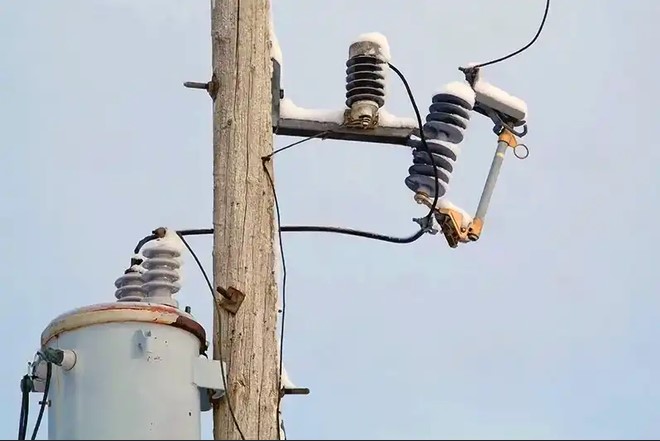
- Overcurrent protection—the link-break cutout protects distribution equipment against excessive current. It protects distribution transformers, overhead conductors, feeders, and downstream electrical installations.
- Protection against short circuits—a short circuit can produce high fault currents within a fraction of a second. A rated cutout can interrupt these currents before they cause severe damage.
- Visible circuit isolation – by providing a visible sign of circuit interruptions, the cutout helps technicians identify the section easily.
- Low maintenance requirements – the mechanical design ensures maintenance focuses on fuse condition, contact condition, insulator condition, and corrosion.
In summary,
Link break cutouts are critical protection and isolation devices in overhead power networks. They combine fuse-based overcurrent protection with visible circuit disconnection. Their main components include fuse links, carriers, contacts, insulators, terminals, hinges, mounting brackets, and arc-interruption elements. The cutouts are from materials such as porcelain, polymers, copper, aluminum, galvanized steel, stainless steel, and specialized fuse alloys. Conducting quality assurance protects the materials through material verification, dimensional inspection, electrical and mechanical testing, corrosion control, and final inspection. Common failures include poor contacts, insulation defects, corrosion, incorrect fuse characteristics, and insufficient arc interruption. Quality assured cutouts improve network safety, reliability, equipment protection, fault isolation, and maintenance efficiency.