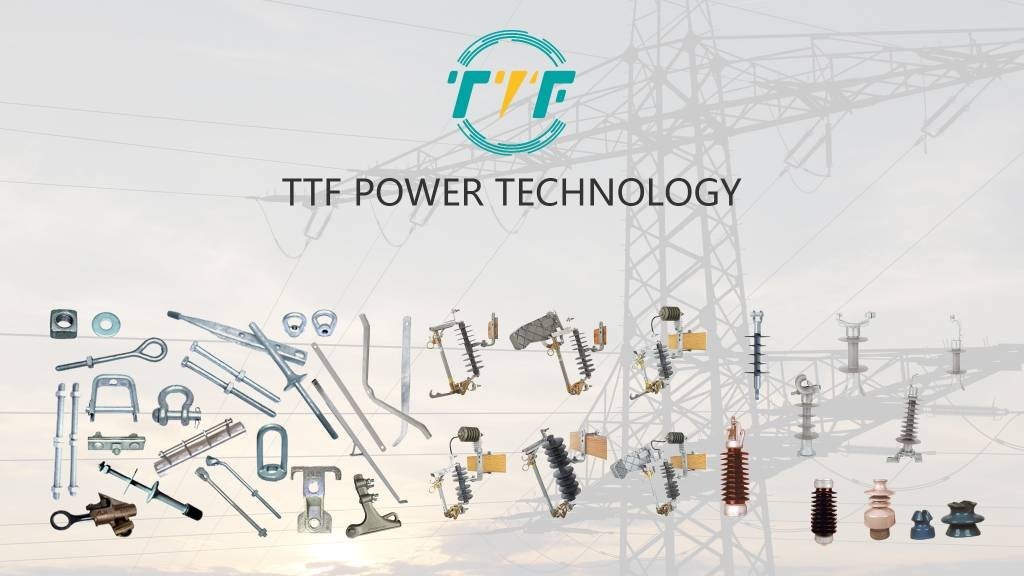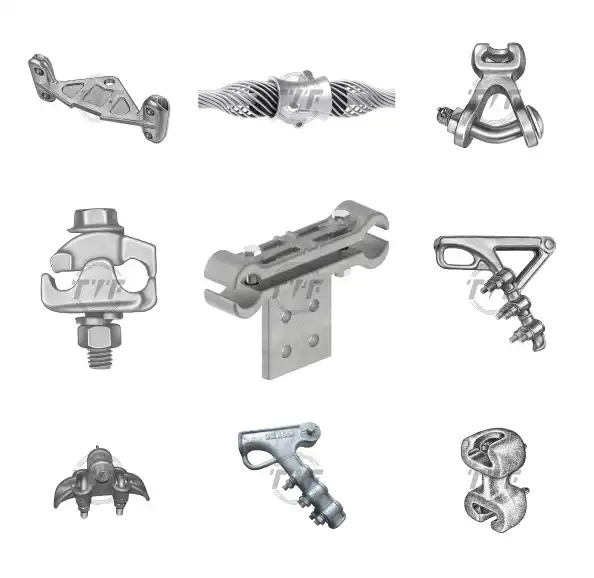
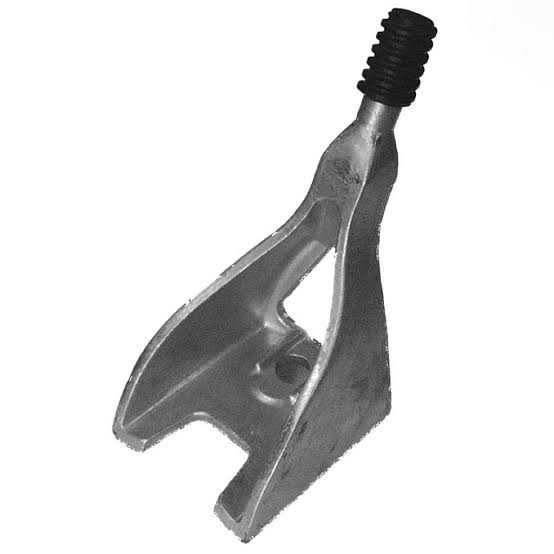
Angled crossarm insulator pins secure a pin-type insulator to a utility pole crossarm at a specific angle. The insulator pin provides mechanical support and a mounting point for overhead conductors where conductor alignment changes. An angled crossarm insulator pin has a bent shank that allows the insulator to be positioned at an angle to accommodate conductor geometry and mechanical loading. The pins secure the attachment of pin insulators, maintain proper conductor spacing and electrical clearances. These insulator pins consist of robust materials such as forged steel or hot-dip galvanized steel. The pins are used in areas where conductors deviate from a straight path or where optimized conductor positioning is necessary where conductors deviate from a straight path or where optimized conductor positioning is needed to meet mechanical and electrical design standards. Additionally, the insulator pins undergo quality assurance to prevent failures, corrosion damage, pin loosening, and deformation.
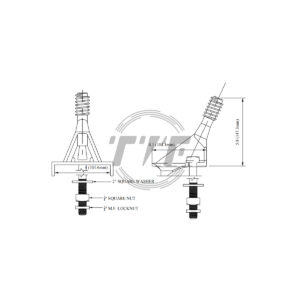
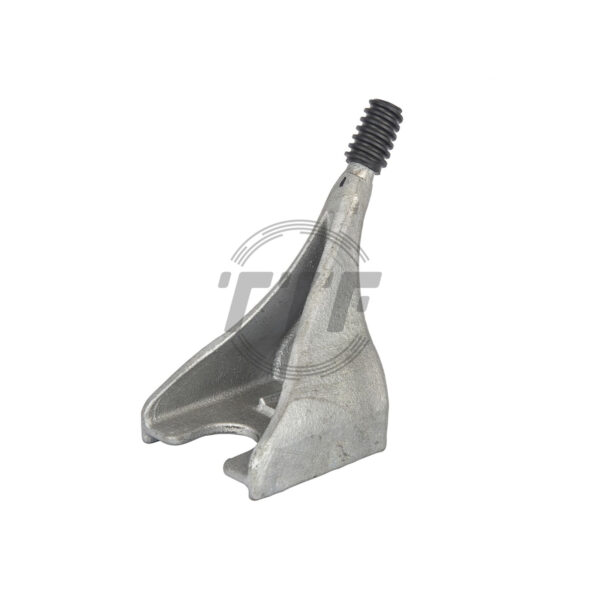
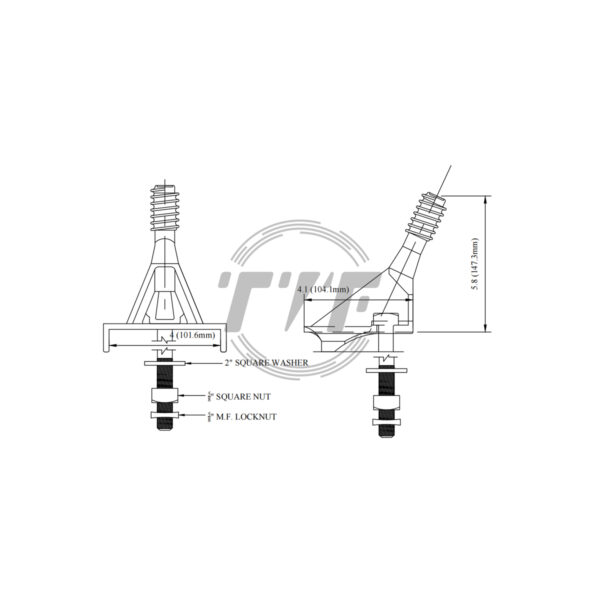
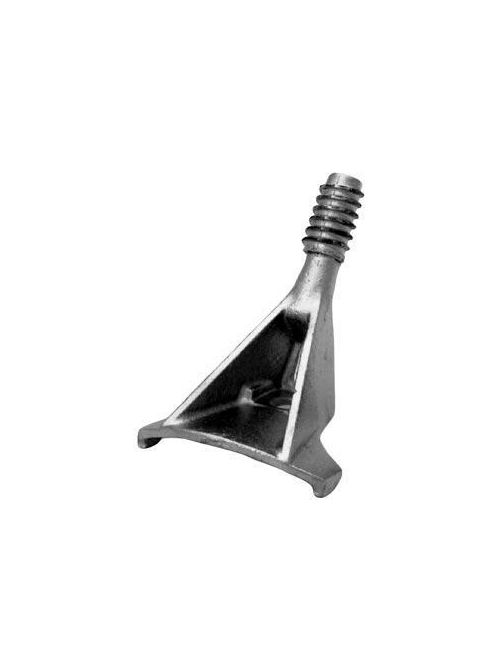
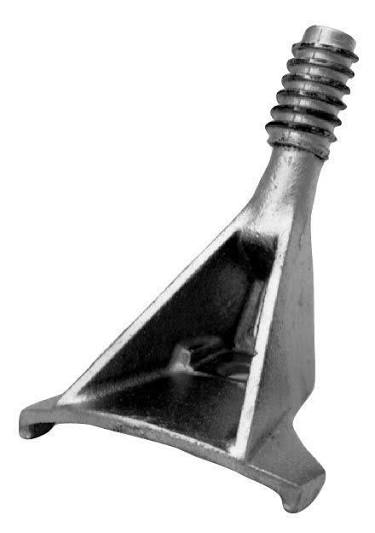
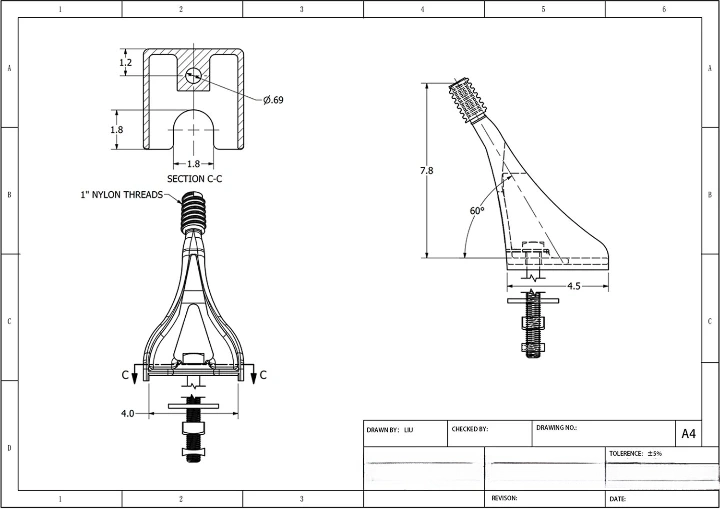
Angled Crossarm Insulator Pin, 60 Degree
The angled crossarm insulator pin is a heavy-duty pole line fitting designed to mount pin-type insulators on wooden or steel crossarms in overhead power distribution systems. Manufactured from high-strength forged steel and protected with a hot-dip galvanized coating, it provides secure mechanical support, maintains proper conductor alignment, and withstands conductor tension, wind, and environmental loading. Its angled design improves conductor positioning on line deviations while ensuring reliable electrical clearances and long-term structural performance in medium- and high-voltage distribution networks.
Key Features
- Manufactured from high-strength forged carbon or alloy steel
- Hot-dip galvanized for superior corrosion resistance
- Precision-machined threaded head compatible with standard pin-type insulators
- Angled shank design for improved conductor alignment and clearance
- High mechanical strength to withstand tension, wind, and ice loads
- Excellent fatigue and impact resistance for long service life
- Suitable for wooden and steel crossarm installations
- Available in multiple thread sizes and mounting configurations
- Complies with ANSI, IEC, ASTM, and utility-specific standards
- Ideal for overhead transmission and distribution line construction, upgrades, and maintenance.
Components of the angled crossarm insulator
An angled crossarm insulator pin consists of components working together to provide secure mechanical support and reliable electrical insulation for overhead distribution lines. Each of these components helps the pin withstand mechanical loads, environmental conditions, and service requirements. These components include:
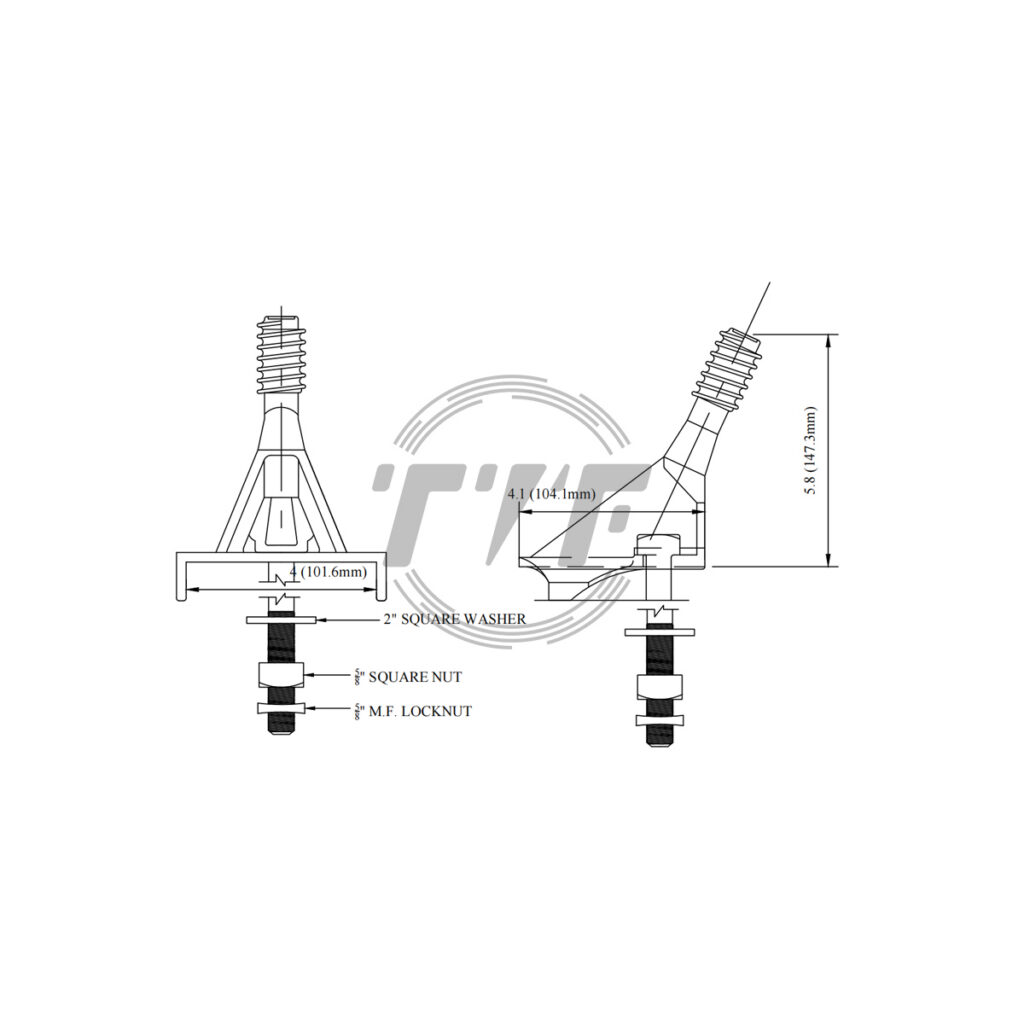
- Threaded head – the upper section of the insulator pin is threaded to connect to the pin-type insulator. It prevents loosening caused by conductor vibration and ensures proper load transfer between the conductor and the supporting structure. The threaded head consists of forged carbon steel, medium-carbon steel, and high-strength alloy steel.
- Angled shank – the shank is the defining feature of the insulator pin. It incorporates a bend or offset that positions the insulator at a predetermined angle. It improves conductor positioning, reduces excessive bending stress on the insulator, and distributes mechanical forces evenly.
- Shoulder surface – this is the enlarged part located between the threaded head and the mounting section. The shoulder acts as a load-bearing surface, prevents excessive movement, and transfers mechanical loads to the crossarm.
- Mounting shank—the shank passes through the crossarm and anchors the pin in place. It holds the pin on wooden or steel crossarms, supports conductor loads, and prevents displacement during high winds and conductor tension.
- Fasteners – these include nuts, bolts, and washers that secure the mounting shank between the crossarms. These fasteners lock the pin in position, prevent loosening, and maintain consistent clamping force.
- Forged steel body – this forms the main structural framework of the angled crossarm insulator pin. The body provides high mechanical strength and resists bending, impact, and fatigue. Forging improves the structure of the steel and load-carrying capacity.
The roles of quality assurance during the manufacture of angled crossarm insulator pins
Quality assurance ensures each component meets the mechanical, dimensional, and corrosion-resistance requirements for safe and reliable operation in power networks. Quality assurance reduces manufacturing defects, improves product consistency, and ensures compliance with international and utility standards. This results in a reliable product that enhances the safety, durability, and long-term performance of overhead electrical networks. Here are its roles in the manufacture of angled crossarm insulator pins.
- Verifying raw material quality—quality assurance begins with the inspection of incoming raw materials to confirm they meet specified chemical composition and mechanical property requirements. QA confirms tensile strength, yield strength, and hardness to meet design specifications.
- Ensuring dimensional accuracy – angled crossarm insulator pins must be manufactured within tight tolerances to ensure compatibility with crossarms and pin-type insulators. This helps confirm pin length and shank dimensions.
- Monitoring the forging process – forging determines the structural integrity of the insulator pin and influences its mechanical performance. It verifies correct forging temperatures, prevents overheating, and ensures proper grain flow within the steel.
- Inspecting machining quality – machining operations produce the finished threaded section and mounting surfaces. It confirms thread accuracy and surface finish and detects burrs, sharp edges, or machining marks.
- Verifying bend angle accuracy – QA confirms that the bend angle complies with design requirements. Correct bend geometry helps maintain electrical clearances and balanced mechanical loading.
- Evaluating mechanical strength – mechanical testing verifies that the finished product can withstand operational loads throughout its service life. This ensures reliable performance under conductor tension, wind, and ice loading.
- Detecting surface defects – these inspections help identify manufacturing imperfections before products are shipped. It helps detect cracks and fractures, identifies dents and deformation, and verifies smooth surface finishes.
Quality failures of angled crossarm insulator pin in power networks
Quality failures in angled crossarm insulator pins can affect the mechanical stability and electrical reliability of overhead power distribution systems. The insulator pins support pin-type insulators and conductors under mechanical and environmental stress. Manufacturing defects or poor materials can lead to equipment damage, power outages, increased maintenance costs, and safety hazards. These quality failures include:
- Inferior raw material quality—low-grade steel or materials—leads to reduced tensile strength, premature deformation, increased risk of fracture, and shortened lifespan.
- Incorrect bend angle – the angled section must be manufactured to precise specifications. An incorrect bend angle can affect conductor alignment and load distribution. This comes from a poor forming process, incorrect bending dies, and an inaccurate manufacturing setup. This causes improper conductor positioning, uneven mechanical loading, reduced electrical clearances, and difficult installation.
- Thread defects – the threaded head secures the pin-type insulator. Defective threads compromise the mechanical integrity of the assembly. Common defects include incorrect thread pitch, incomplete threads, burrs, and damaged threads. These cause loose insulator installation and thread stripping.
- Poor hot-dip galvanization—the zinc coating protects the steel from corrosion. Deficiencies in the galvanizing process reduce the pin’s durability. This defect arises from thin zinc coating, poor surface preparation, uneven galvanization, and flaking coating.
- Forging defects – these defects reduce the structural integrity of the entire component. These include cold shuts, laps, voids, inclusions, and incomplete die filling. These cause lower load-carrying capacity, reduced fatigue resistance, and hidden structural weaknesses.
- Dimensional inaccuracy—failure to maintain dimensional tolerance can make the pin incompatible with standard insulators and crossarms. These defects include incorrect pin diameter, improper shank length, oversized shoulder, and incorrect mounting section. These lead to installation difficulties, improper load transfer, and reduced structural stability.
Materials used for angled crossarm insulator pins and the importance of quality assurance
Angled crossarm insulator pins are from high-strength, corrosion-resistant materials that support pin-type insulators and overhead conductors. Material selection influences the strength, durability, and service life of the insulator pin. Quality assurance ensures that the materials meet the required specifications throughout manufacturing. It prevents premature failures and maintains the reliability of power distribution networks. Common materials include:
Carbon steel
This is the most common material for angled crossarm insulator pins because of its excellent balance of strength, machinability, and cost-effectiveness. It consists of high tensile and yield strength, good toughness, and excellent machinability. Carbon steel insulator pins serve in medium-voltage distribution networks, rural overhead power lines, and utility crossarm installations. Quality assurance verifies steel grade through material certificates, conducts chemical composition analysis, and performs tensile, yield, and hardness testing.
Alloy steel
This is ideal for higher mechanical strength or improved fatigue resistance. It offers higher tensile strength than carbon steel, improved wear resistance, greater fatigue life, and enhanced toughness. Alloy steel insulator pins are suitable for heavy conductor installations, long-span distribution lines, and high-wind environments. Quality assurance protects alloy steel by confirming alloy composition meets specified standards, monitoring heat-treatment parameters, and conducting impact and fatigue testing.
Hot-dip galvanized zinc coating
The zinc coating applied through hot-dip galvanizing protects the steel from corrosion. It offers excellent corrosion resistance, sacrificial protection of exposed steel, and minimal maintenance needs. QA measures zinc coating thickness using calibrated gauges, verifies coating adhesion, and inspects for bare spots, runs, drips, and uncoated areas.
Forged steel
This steel has refined grain structure, higher fatigue resistance, greater impact strength, and improved structural integrity. Quality assurance controls forging temperature and deformation processes and inspects forged components for laps, folds, and voids. These ensure the forging process produces sound components.
TTF-certified angled crossarm insulator pins. Why we certify:
TTF’s approach to power line hardware services results in optimal product quality, strict adherence to custom design, and reduced cost. We are constantly checking manufacturing processes, addressing material concerns, and improving staff expertise to ensure the best quality product. Our quality control for the stirrup clamp deadend begins with the first batch of samples that you received from us. And this continues through all production phases, where our QC staff never stop looking for opportunities to improve product quality. We offer:

- Tolerance Analysis
- Tooling Life Analysis
- Rockwell Hardness Testing per ASTM E18
- Brinell Hardness Testing per ASTM E10
- Magnetic Particle Testing per ASTM E1444 CMM (Coordinate Measuring Machine) Testing
- 24″ Optical Comparator for Complex Measurements
- Tensile/proof load testing up to 160,000 lbs (700 kN)
- Hot Dip Galvanizing Plating Thickness per ASTM E376
- Torque Testing
- Roughness Testing
- Lifetime Sample Retention
- Dimensional Testing
- Mechanical Testing
In conclusion,
Angled crossarm insulator pins provide secure support for pin-type insulators while maintaining proper conductor alignment and electrical clearances. Their performance depends on robust design, high-quality materials, precision manufacturing, and comprehensive quality assurance throughout production. The insulator pins undergo inspection of raw material, forging, machining, galvanizing, dimensional accuracy, and mechanical strength. This helps reduce defects such as corrosion, cracking, thread damage, and structural failure. Angled crossarm insulator pins should meet international standards and utility specifications to deliver reliability and enhance network safety.