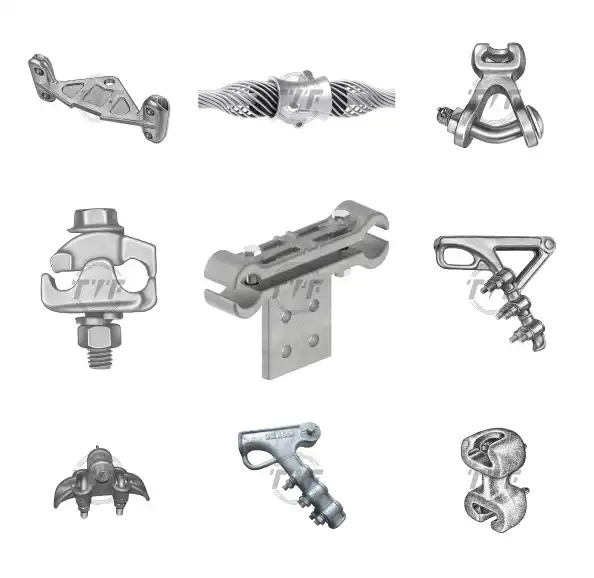
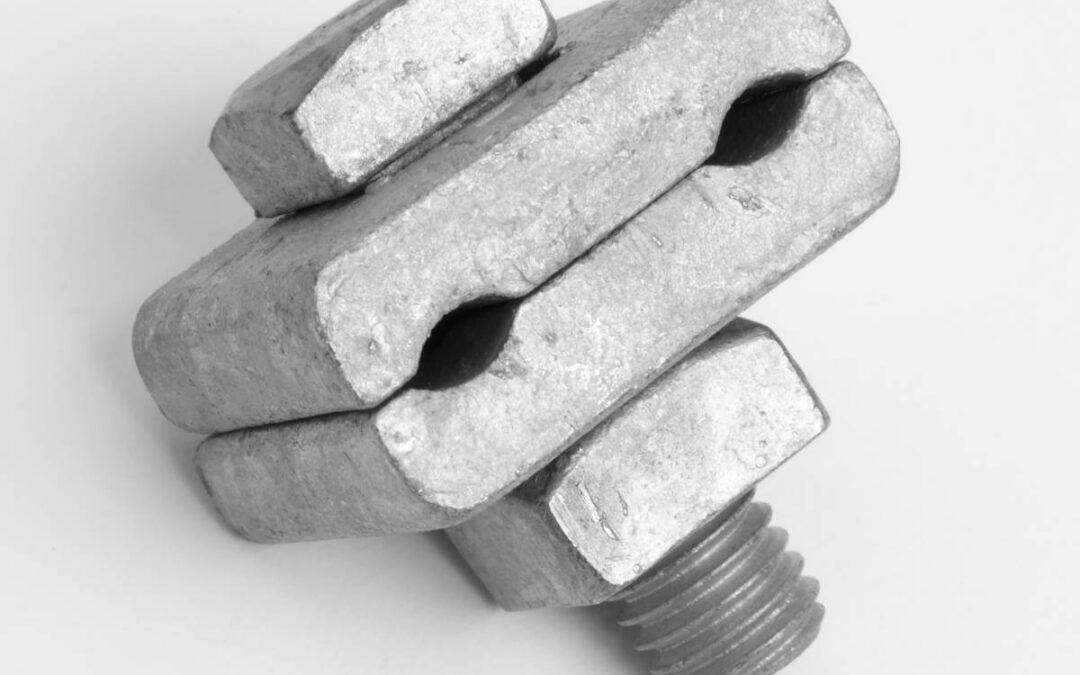
A guy clamp is a mechanical component that attaches a guy wire to a pole, anchor rod, or other support structures. It maintains the stability of utility poles by counteracting the mechanical forces exerted by conductors, wind loads, and line tension. Guy clamps transfer mechanical loads from the pole to the ground anchor and help the pole withstand conductor tension. It also reduces concentrated stress points on the guy wire and reduces wire damage. The guy clamps consists of the clamp body, clamp bolts and nuts, washers, and grooved gripping surfaces that hold wires. They consist of hot-dip galvanized steel, forged steel, and ductile iron. These materials provide high tensile strength, corrosion resistance, and long service life in outdoor environments. Utilities and engineers should consider guy wire diameter, required tensile strength, corrosion resistance, quality assurance, and environmental conditions when selecting the guy clamps.
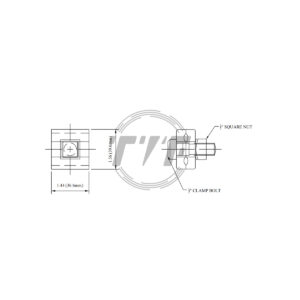
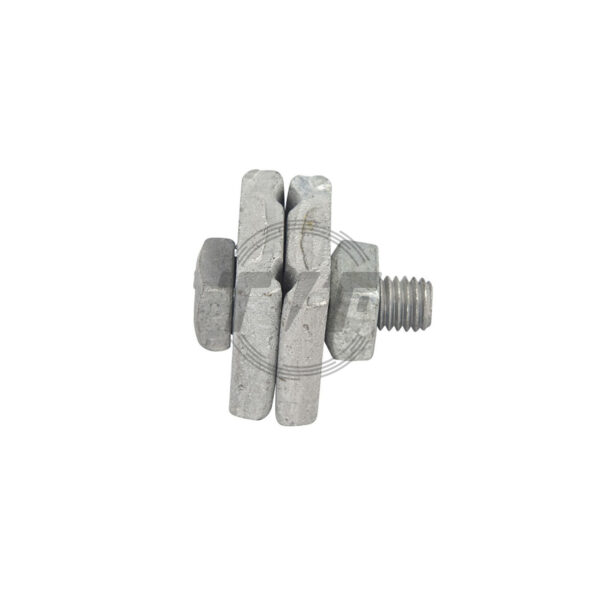
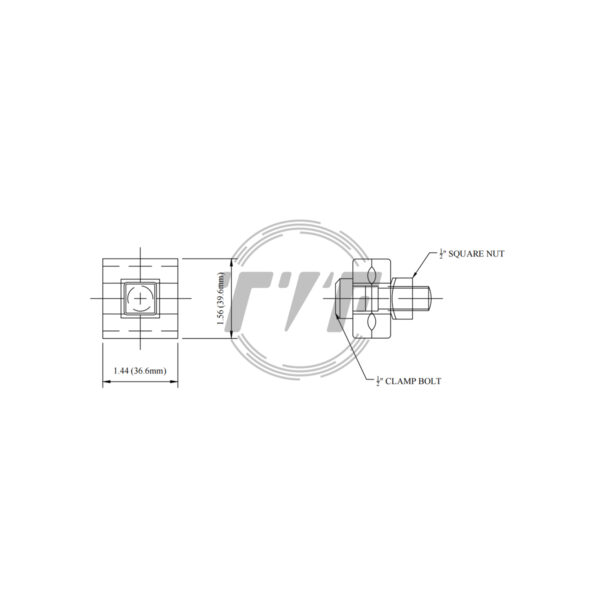
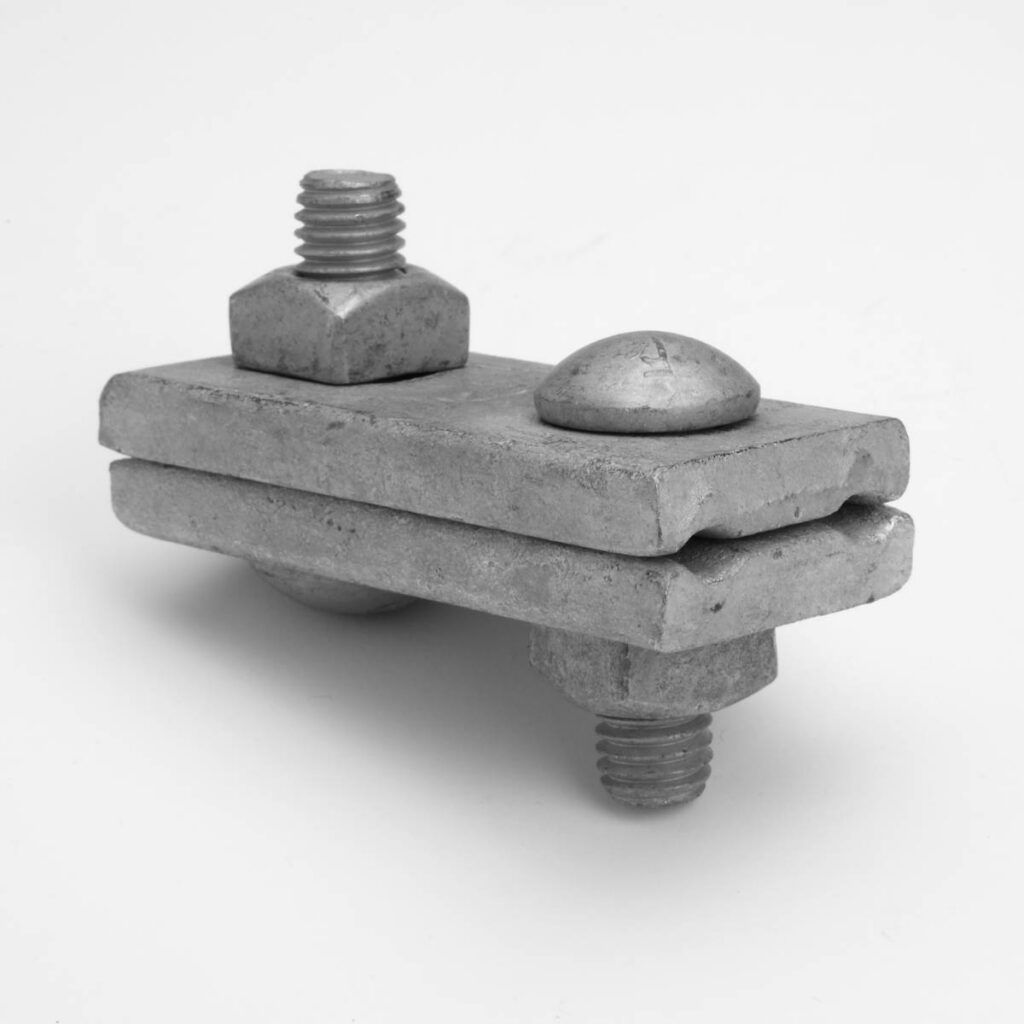
One Bolt Guy Clamp
The One Bolt Guy Clamp is a robust hardware component designed for securing guy wires to utility poles in power line construction. Engineered for quick installation and strong grip, it features a single-bolt design that clamps down tightly on the strand, ensuring reliable tensioning and anchoring for overhead line structures. Suitable for use with galvanized steel and EHS guy strands, it provides excellent corrosion resistance and mechanical strength for long-term field performance.
Key Features:
- Single-bolt design for fast and efficient installation
- High holding strength for secure guy wire retention
- Compatible with standard guy strand sizes (e.g., 3/16″–5/8″)
- Galvanized steel construction for corrosion resistance
- Used in pole line, tower, and anchor guying applications
- Tool-friendly design allows for field adjustment and removal
Components and features of the guy clamp
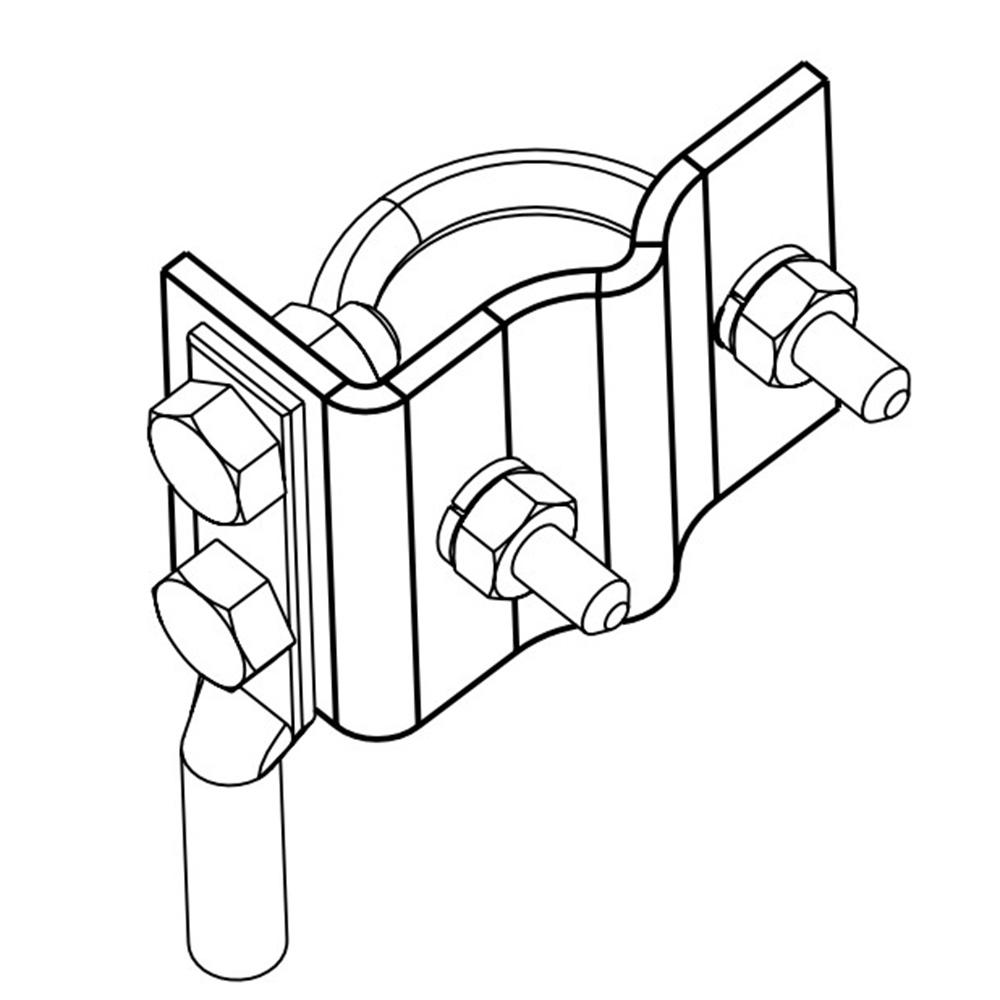
The guy clamp consists of several parts working together to grip and support a guy wire in power line networks. The clamp offers high mechanical strength, corrosion resistance, secure wire grip, durability, compatibility, and easy installation. These features make guy clamps ideal for maintaining the stability and reliability of overhead power line structures. Common components of the guy clamp include:
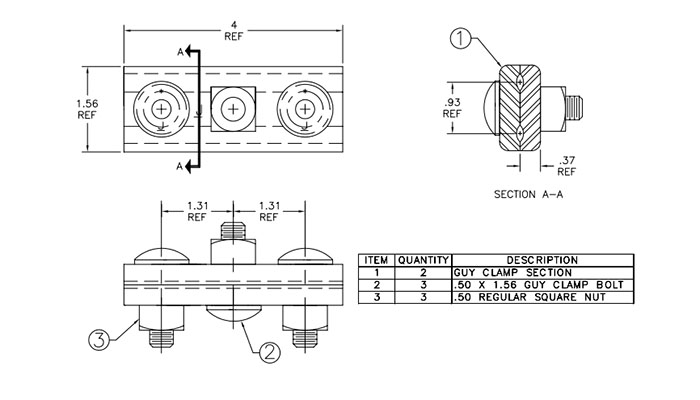
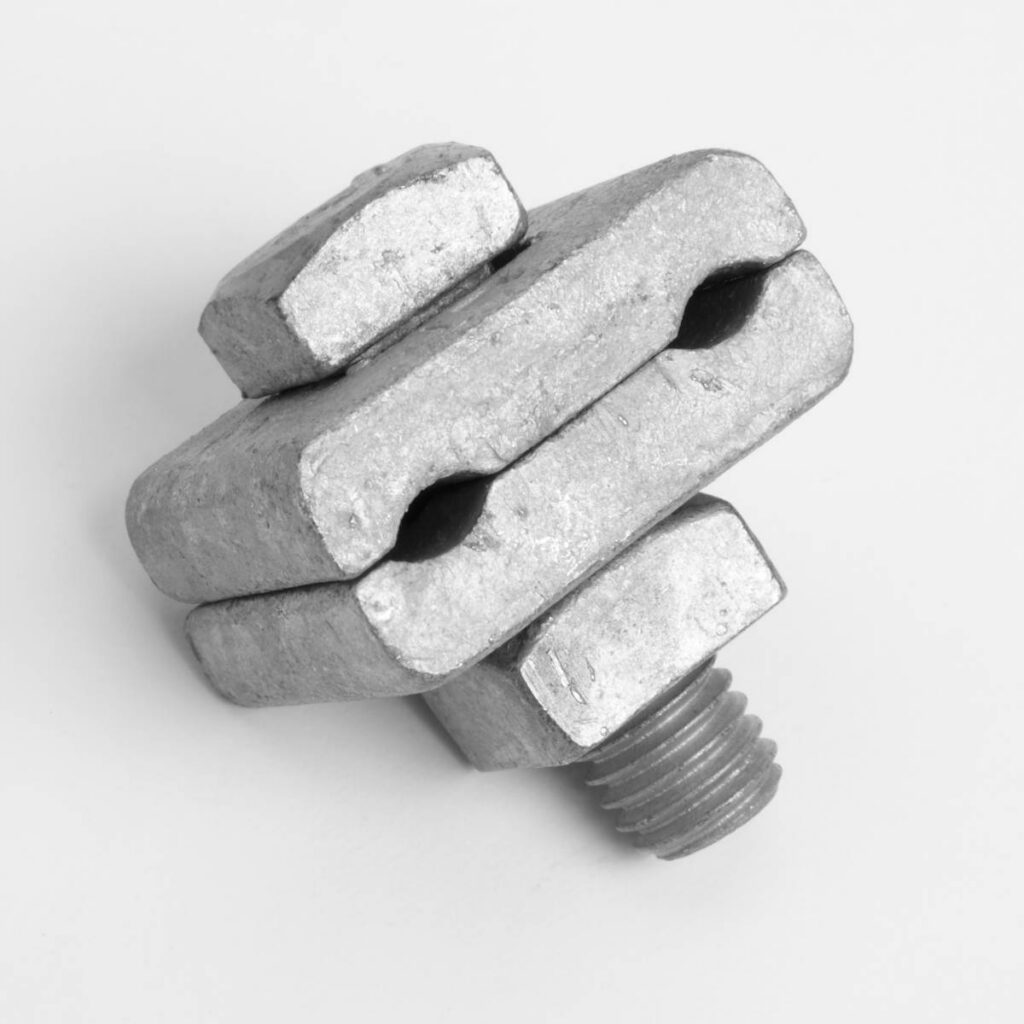
- Clamp body – this is the main component that holds the guy wire in place. It provides mechanical support, houses the gripping surfaces, and transfers tensile loads from the guy wire to the anchor system. It consists of galvanized steel, forged steel, or ductile iron. It is designed to withstand high mechanical loads and harsh weather conditions.
- Clamp plates – these are the sections that come into contact with the guy wire to grip it and prevent wire movement and slippage. It features serrated surfaces for improved holding strength and is designed to distribute pressure along the wire.
- Bolts – the bolts connect the clamp components and generate the clamping force. They tighten the clamp around the guy wire and maintain consistent compression over time. The bolts have high-strength steel construction and are hot-dip galvanized for corrosion protection.
- Nuts and washers—nuts and washers work with bolts to secure the clamp assembly. They lock the clamp components in position and prevent loosening due to vibration and wind loads. They have corrosion-resistant coatings and are compatible with standard utility installation tools.
- Wire groove – the wire groove is a channel inside the clamp that accommodates the guy wire and improves gripping performance. It is sized according to specific wire diameters and reduces damage to wire strands.
Roles of quality assurance during the manufacture of guy clamps
Guy clamps secure guy wires and maintain pole stability in power networks. Quality assurance ensures the guy clamps meet the mechanical, safety, and durability requirements of power transmission and distribution networks. Any defects in the clamps can compromise the integrity of the power line structure. Conducting quality assurance helps deliver reliable guy clamps that can support guy wires and maintain line stability of the power line structures. Here are the roles of quality assurance during guy clamp manufacture.
- Raw material verification – QA processes include raw material verification, which inspects steel, ductile iron, or forged components. This prevents the use of substandard materials, ensures the clamp can withstand design loads, and improves product reliability.
- Maintaining dimensional accuracy—guy clamps must have precise dimensions to ensure proper fit and performance. The process includes measuring the clamp body dimensions, verifying bolt hole spacing, and inspecting wire groove sizes. This ensures compatibility with specified guy wire sizes, easy installation, and reduced field failures.
- Verifying mechanical strength – this includes tensile load testing, proof load testing, and non-destructive testing. These tests confirm structural integrity, prevent mechanical failure, and enhance network safety.
- Monitoring manufacturing processes—QA oversees each production stage to ensure consistency and compliance with specifications. It includes process audits, in-process inspections, monitoring forging and casting operations, and verifying torque requirements.
- Ensuring galvanization quality – this is through measuring zinc coating thickness, adhesion testing of galvanized coatings, and surface inspections. This process protects against rust degradation and reduces maintenance costs.
- Detecting manufacturing defects – QA focuses on cracks and fractures, surface irregularities, casting voids, and improper threading. This prevents installation of defective products, improves operational safety, and reduces warranty claims.
- Ensuring compliance with industry standards – quality assurance ensures that the guy clamps follow relevant utility and international standards.
Common quality failure modes of guy clamps in power networks
Guy clamps secure guy wires and maintain the structural stability of utility poles. Quality defects in these components lead to guy wire slippage, pole instability, and line failures. Manufacturers should understand the failure modes to put in place effective preventive measures. Conducting quality assurance helps detect these modes before deployment in power networks. Common failure modes include:
- Corrosion and galvanization failure—guy clamp corrosion comes from inadequate zinc coating thickness, poor hot-dip galvanizing process, surface contamination, and mechanical damage. Corrosion leads to reduced mechanical strength, premature hardware failure, and increased maintenance costs. QA prevents this through zinc coating thickness testing, salt spray testing, and galvanization adhesion inspection.
- Insufficient mechanical strength – the clamps must withstand high tensile loads generated by guy wires and environmental forces. This arises from the use of substandard raw materials, improper forging processes, and inadequate heat treatment. These lead to clamp deformation under load, fracture during service, and pole instability and structural failure. QA offers tensile strength testing, proof load testing, and metallurgical analysis.
- Bolt and nut failure—these maintain the clamping force needed to secure the guy wire. Failures arise from the use of low-grade fasteners, defective threads, and improper heat treatment. These lead to bolt fracture, thread stripping, loss of clamping force, and guy wire slippage. Quality control measures include thread inspection, hardness testing, torque verification tests, and fastener dimensional checks.
- Guy wire slippage – clamp failure to grip the guy wire allows movement under tension. Slippage comes from poor groove design, incorrect clamp dimensions, inadequate bolt tightening force, and poorly machined gripping surfaces. This leads to reduction of guy wire tension, pole leaning, increased structural stress, and network failure. Quality assurance conducts grip strength testing, dimensional inspections, surface profile verification, and functional load testing.
Materials for guy clamps and importance for quality assurance
The performance and service life of a guy clamp depend on the quality of the materials used during manufacture. Quality assurance ensures safe and reliable operation in power transmission and distribution networks. It also ensures that the clamps maintain their strength, durability, and reliability in power transmission and distribution networks. Here are the common materials for the clamps and how QA protects them.
Hot-dip galvanized steel guy clamps
This material has a combination of strength and corrosion resistance. It consists of high tensile strength, load-bearing capacity, and good resistance to mechanical deformation. Hot-dip galvanized steel is ideal for distribution line guying systems, transmission line support structures, and utility pole stabilization. QA protects galvanized steel through chemical composition verification, tensile strength testing, hardness testing, and adhesion of zinc coatings.
Forged carbon steel
Forged steel offers superior toughness, high fatigue resistance, excellent impact strength, and uniform grain structure after forging. These guy clamps are ideal for high-load transmission structures, extra-high-voltage line installations, and areas exposed to stresses. QA activities for forged steel include raw material certification reviews, forging process inspections, grain structure analysis, and heat treatment verification.
Ductile iron guy clamps
Ductile iron combines strength with casting flexibility for the guy clamps. It provides good tensile strength, wear resistance, ductility, and cost-effective manufacturing. Ductile iron clamps serve in pole line hardware, medium guying systems, and utility distribution networks. QA procedures for ductile iron clamps include metallurgical testing, ultrasonic testing, and dimensional verification.
Stainless steel
Stainless steel offers exceptional corrosion resistance, high durability, and good mechanical strength. Steel guy clamps function on coastal power networks, industrial areas with chemical exposure, and marine utility installations.
TTF Certified guy clamps. Why we certify.
TTF’s approach to power line hardware services results in optimal product quality, strict adherence to custom design, and reduced cost. We are constantly checking manufacturing processes, addressing material concerns, and improving staff expertise to ensure the best quality product. Our quality control for the guy clamps begins with the first batch of samples that you received from us. And this continues through all production phases, where our QC staff never stop looking for opportunities to improve product quality. We offer:
- Tolerance Analysis
- Tooling Life Analysis
- Rockwell Hardness Testing per ASTM E18
- Brinell Hardness Testing per ASTM E10
- Magnetic Particle Testing per ASTM E1444 CMM (Coordinate Measuring Machine) Testing
- 24″ Optical Comparator for Complex Measurements
- Tensile/proof load testing up to 160,000 lbs (700 kN)
- Hot Dip Galvanizing Plating Thickness per ASTM E376
- Torque Testing
- Roughness Testing
- Lifetime Sample Retention
- Dimensional Testing
- Mechanical Testing
In conclusion,
Guy clamps provide stability and secure guy wires under mechanical loads. Their performance depends on high-quality materials, precise manufacturing, and rigorous quality assurance. The quality assurance process for the guy clamps includes material verification, testing, inspection, and corrosion protection. QA ensures reliable, durable, and safe guy clamps for network operations. Effective QA helps prevent failure modes such as corrosion, cracking, dimensional inaccuracies, and slippage.