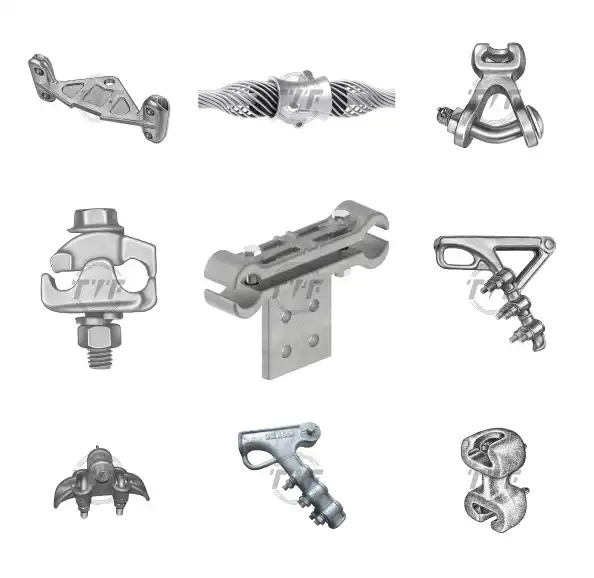
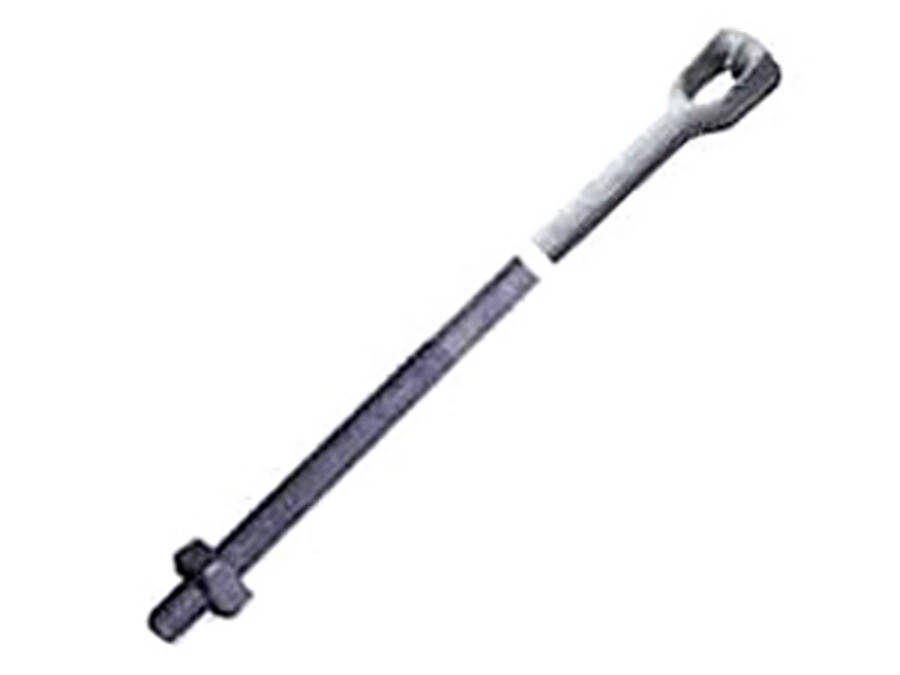
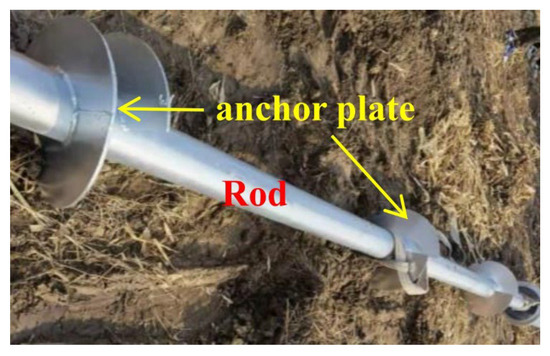
Cross-plate anchors are anchoring devices used in overhead power line systems to secure guy wires into the ground. The anchors stabilize poles, towers, and related infrastructure facing mechanical loads. Cross plate anchors provide resistance against tensile forces from line tension, wind loading, and uneven terrain. They distribute forces into the surrounding soil through a buried plate. The anchor consists of a steel plate, an anchor rod connected to the guy wire, and a corrosion-resistant coating. These components help the anchor increase the surface area in contact with soil to improve load-bearing capacity and pull-out resistance. Cross plate anchors work in guyed poles and towers, angle and dead-end structures, substation support structures, and hybrid infrastructure. Conducting quality assurance for the cross-plate anchors ensures the safety, reliability, and longevity of structures anchored. QA ensures the anchor can withstand the required load without failing.
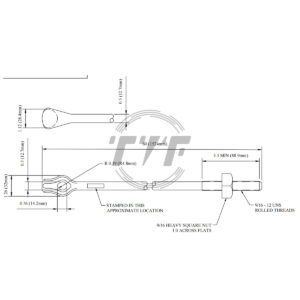
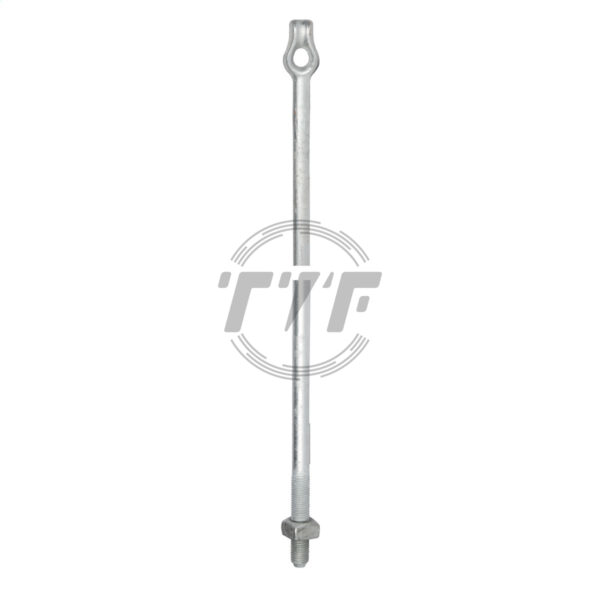
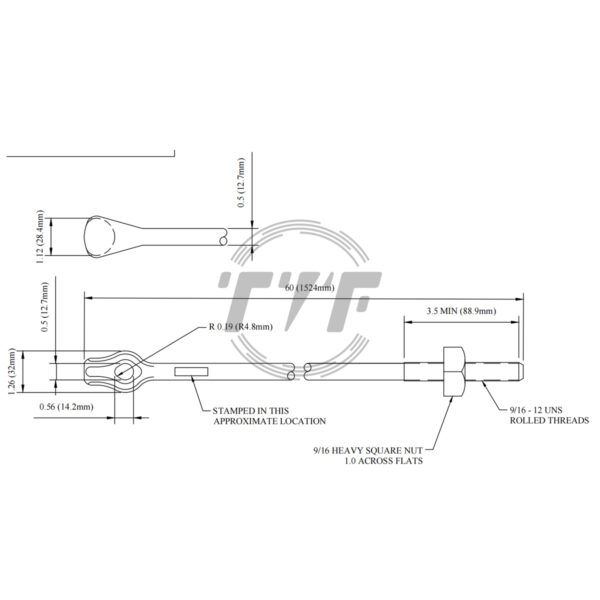
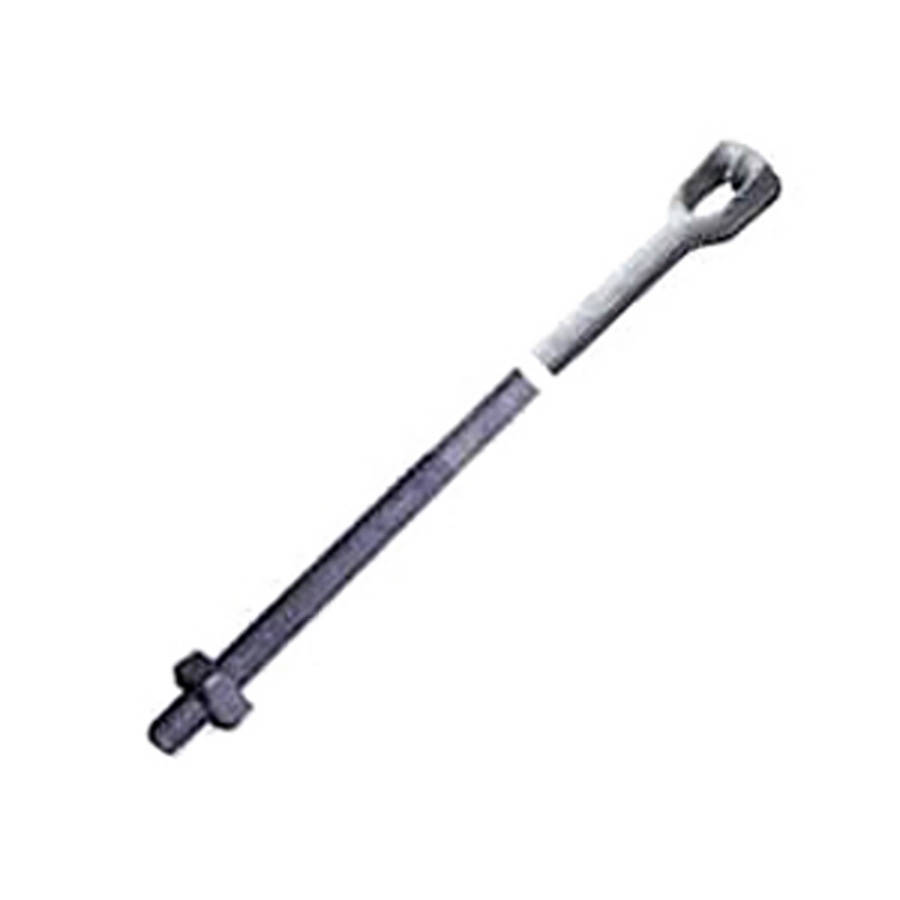
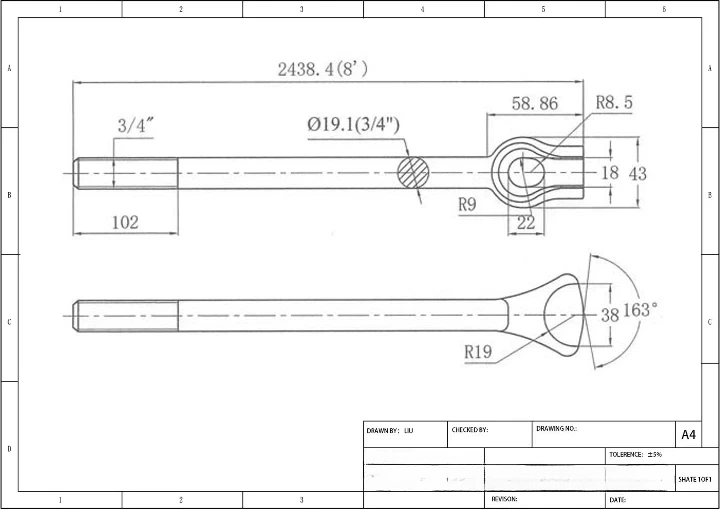
Expanding or Cross-Plate Anchor Rod with Single Eye, 0.5 in x 5 ft
The Plate Anchor Rod is a foundational component used in power line construction to provide secure anchorage for guy wires supporting poles and towers. Engineered from high-strength galvanized steel, the rod is welded to a broad anchor plate that delivers superior load resistance by distributing tension forces into the surrounding soil. Ideal for transmission and distribution lines, it ensures structural stability in varied terrain and soil conditions.
Key Features:
- Material: Hot-dip galvanized steel for corrosion resistance
- Anchor Plate: Welded square or round plate for enhanced holding capacity
- Rod Diameters: Typically available in 5/8″, 3/4″, 1″, and custom sizes
- Lengths: Standard lengths from 5 to 10 feet (custom lengths on request)
- Threaded End: Compatible with standard eye nuts or thimbles
- Installation: Designed for direct burial with mechanical or hand-driven tools
- Standards: Meets ASTM A123 and ANSI C135.1 specifications
- Ideal for securing overhead line structures in utility, telecom, and energy infrastructure projects.
Significance of conducting quality assurance for cross plate anchors
Quality assurance for cross-plate anchors is a control mechanism that influences structural reliability, safety margins, and cost of the entire system. Conducting quality assurance prevents premature pull-out or mechanical failure under peak loading conditions. Cross-plate anchors are designed to resist specific tensile loads from guy wires. QA ensures compliance with design load ratings and mechanical strength, proper weld integrity, and absence of material defects. It also validates correct plate dimensions and geometry for enough bearing area, surface condition and coating integrity, and manufacturing tolerances that influence embedment behavior. Since the anchors are buried and exposed to moisture and chemicals, QA processes verify galvanization thickness, resistance to corrosion, and durability under underground conditions. Quality assurance checks thread quality and rod straightness, plate alignment and connection points, and compatibility with guy clamps. It prevents anchor failure that results in pole collapse, conductor sagging, and electrical outages.
The role of quality assurance during the manufacture of cross plate anchors
Quality assurance during the manufacture of cross plate anchors ensures the anchors meet mechanical, dimensional, and durability requirements before use in power networks. Quality assurance goes through the entire production lifecycle. QA eliminates defects, enforces standards, and validates anchor performance. Here is the role of quality assurance during the manufacture of cross-plate anchors.
- Raw material verification – QA validates steel grade against specifications, reviews mill certificates and chemical composition, and detects defects. This ensures the anchor can sustain required tensile and shear loads without brittle failure.
- Process control in fabrication – quality assurance enforces dimensional tolerances for plate size, thickness, and rod length. It also enforces forming processes and welding procedure qualification and welder certification.
- Welding quality assurance – the process includes non-destructive testing and verification of weld penetration, continuity, and absence of cracks.
- Surface treatment and corrosion protection – QA ensures the proper application of protective coatings. It does this by monitoring hot-dip galvanization parameters and measuring coating thickness and uniformity.
- Mechanical and performance testing—the anchors undergo validation tests such as tensile load testing, proof load, and impact tests for toughness.
- Dimensional and thread inspection—QA verifies thread accuracy for compatibility with guy wire hardware, straightness of rods, alignment of plates, and compliance with specified tolerances.
- Final inspection and release control—quality assurance performs visual inspection for surface defects, coating damage, or deformation; verification of marking, labeling, and packaging.
Common quality failures facing cross plate anchors used in power networks
Failures in cross plate anchors arise from material defects, poor fabrication control, or inadequate corrosion protection. Failures and defects in the anchors can lead to structural failures. These failures affect anchoring performance and increase the likelihood of structural instability, pole misalignment, or network failure under load conditions. Quality assurance systems are crucial to mitigate these risks. Here are the common quality failures facing cross-plate anchors.
- Material deficiencies—this arises from the use of substandard or incorrect steel grades with insufficient yield strength, internal defects, and poor ductility leading to brittle fracture under dynamic loads.
- Weld failures – common defects include incomplete penetration or weak fusion, porosity, slag inclusions, cracks, and inconsistent weld profiles. These defects lower tensile strength and cause in-service failure.
- Dimensional inaccuracies—these include incorrect plate size, misaligned rod-to-plate connections, and improper thread cutting leading to poor fit with guy hardware.
- Inadequate corrosion protection – the issue includes damaged galvanized coatings, poor surface preparation before coating, and exposure of bare steel at weld zones. Corrosion leads to section loss that weakens the anchor over time.
- Manufacturing defects – this includes sharp edges, burrs, or surface cracks from poor machining. It also includes warping during fabrication and residual stresses from improper forming processes.
- Insufficient mechanical testing – these failures include lack of proof load, inadequate sampling during quality checks, and acceptance of products without performance validation.
- Coating adhesion failures—this includes peeling of protective coatings, poor bonding between steel surfaces, and inconsistent coating thickness.
Materials for cross plate anchors and how quality assurance protects them
Cross plate anchors are from materials that offer tensile strength, ductility, weldability, and resistance to underground corrosion. Quality assurance preserves these properties to ensure the anchor performs as designed in power networks. QA ensures that supplied material meets specified standards, controls mechanical properties, and performs weld quality assurance. It also includes surface preparation and coating integrity, corrosion resistance validation, and structural consistency. Quality assurance protects the materials to prevent reduced anchor capacity, degradation, and increased risk of structural failure in power networks. Here are the common materials for cross-plate anchors.
Carbon structural steel
This is the common material for the plate anchor and the anchor rod. It provides a balance of strength, toughness, and cost efficiency. Carbon steel is ideal for welding and forming processes.
High-strength low-alloy steel
This serves in networks that need higher load capacity or reduced cross-section. It offers improved yield strength, fatigue resistance and better performance under cyclic loading. Alloy steels are more sensitive to improper welding and heat treatment.
Galvanized steel
Zinc coating provides sacrificial corrosion protection and extends service life in aggressive soil environments. However, the risk of coating defects exposes the base steel to corrosion.
Stainless steel
This offers corrosion resistances without coatings and has lower maintenance needs. However, it has a higher cost and potential over-specification for standard applications.
TTF-certified cross plate anchors. Why we certify:
TTF’s approach to power line hardware services results in optimal product quality, strict adherence to custom design, and reduced cost. We are constantly checking manufacturing processes, addressing material concerns, and improving staff expertise to ensure the best quality product. Our quality control for the cross plate anchors begins with the first batch of samples that you received from us. And this continues through all production phases, where our QC staff never stop looking for opportunities to improve product quality. We offer:

- Tolerance Analysis
- Tooling Life Analysis
- Rockwell Hardness Testing per ASTM E18
- Brinell Hardness Testing per ASTM E10
- Magnetic Particle Testing per ASTM E1444
- CMM (Coordinate Measuring Machine) Testing
- 24″ Optical Comparator for Complex Measurements
- Tensile/proof load testing up to 160,000 lbs (700 kN)
- Hot Dip Galvanizing Plating Thickness per ASTM E376
- Torque Testing
- Roughness Testing
- Lifetime Sample Retention
- Dimensional Testing
- Mechanical Testing
The benefits of using cross plate anchors in power networks
Cross plate anchors serve in overhead power networks to provide mechanical efficiency and cost-effective solutions for anchoring guy wires. They also stabilize structures under high tensile loads. The anchors provide reliable anchoring with minimal installation complexity. This helps stabilize overhead power network structures. Discussed below are the advantages of using cross-plate anchors in power networks.
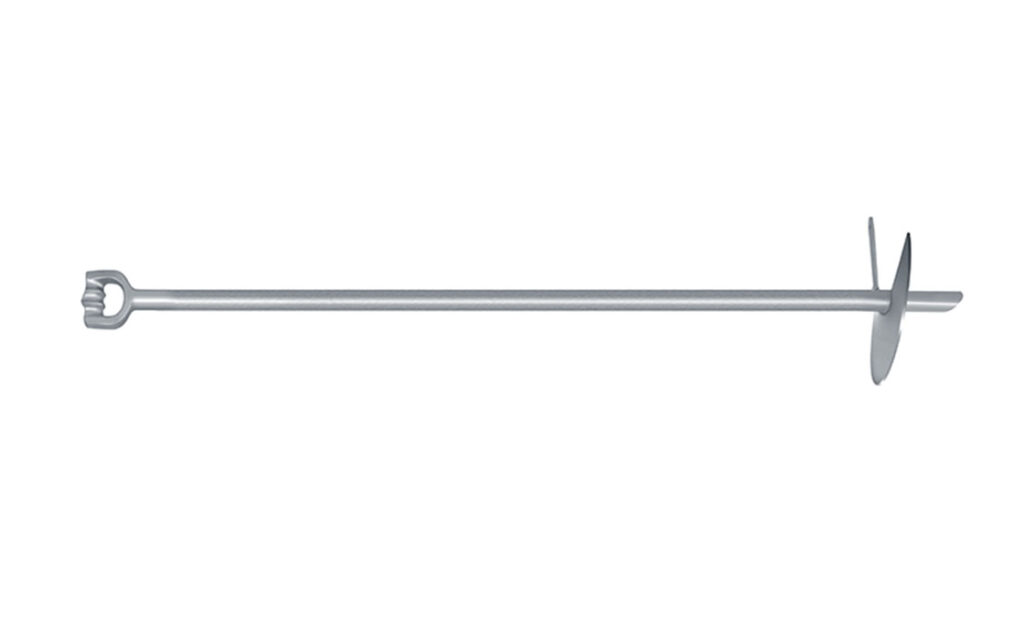
- High-load bearing capacity – the plate increases the bearing surface area in the soil. This enables strong resistance to pull-out forces and handling of high tensile loads from conductors and guy wires. This makes them suitable for distribution and transmission systems.
- Enhanced structural stability – cross plate anchors improve the stability of utility poles, angle and deadend structures, and towers in uneven terrain. They reduce the risk of pole leaning or collapse.
- Efficient load distribution – the plate design distributes forces over a wider soil volume to reduce localized stress concentration. They also improve interaction with surrounding soil and enhance performance in weak soils.
- Ease of installation—the anchors are simple to install as they do not need basic excavation and backfilling. Cross-plate anchors do not need specialized machinery and are compatible with guying hardware.
- Durability with proper protection—cross plate anchors from galvanized steel or corrosion-resistant coatings reduce maintenance needs and are resistant to environmental degradation.
- Compatibility with standard guying systems—cross plate anchors integrate with guy wires, guy clamps, and tensioning hardware. This ensures efficient load transfer and simplifies system design.
In conclusion,
Cross-plate anchors are load-transfer components in power networks that ensure the stability of poles and towers under dynamic mechanical stresses. The anchors are from high-quality materials with protective coatings that enhance their performance and durability in power networks. The performance of the anchors depends on manufacturing quality and environmental exposure. Lack of proper selection leads to weld defects, material inconsistencies, dimensional inaccuracies, and inadequate corrosion protection. Conducting quality assurance for the anchors helps them deliver high load capacity, structural reliability, cost efficiency, and durability. Lack of robust quality assurance compromises the integrity of the power network. Consistent quality assurance practices ensure safe, durable, and resilient infrastructure.