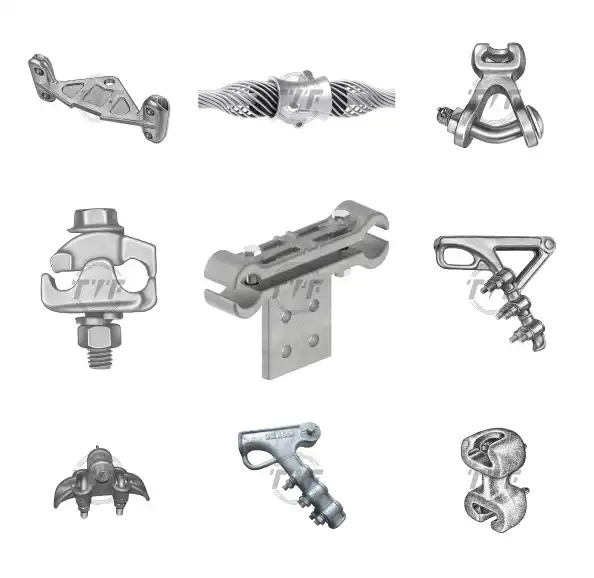
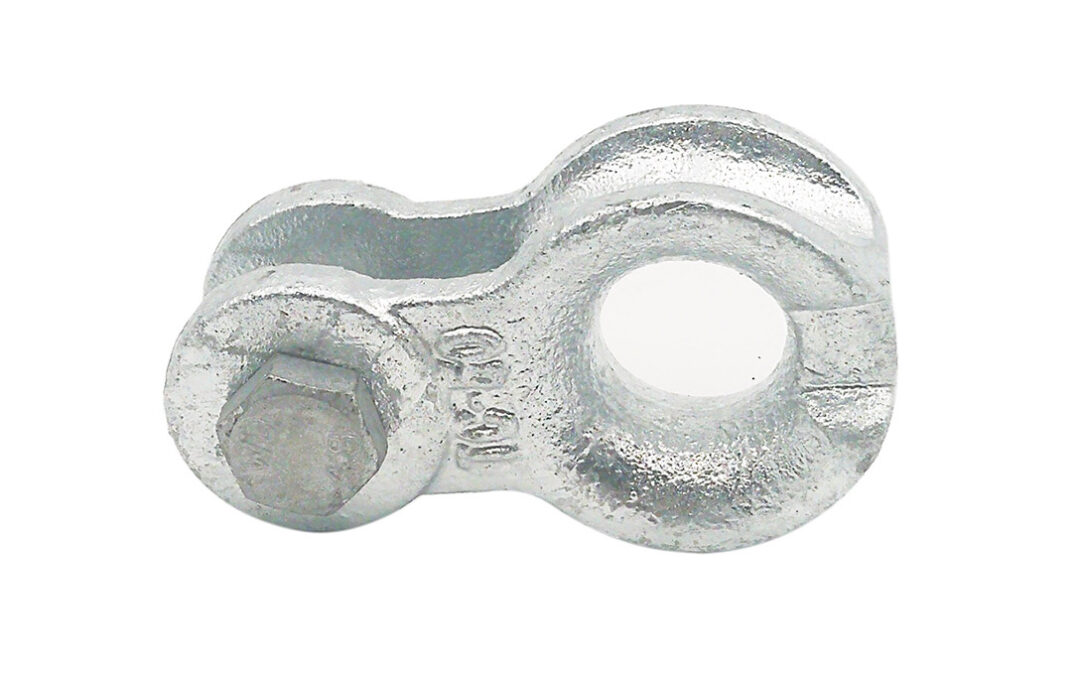
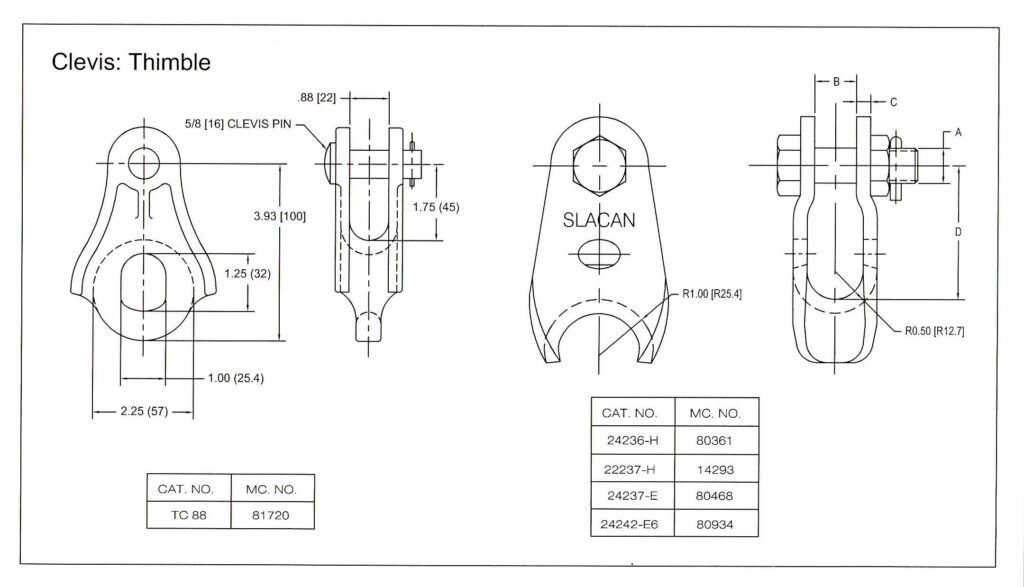
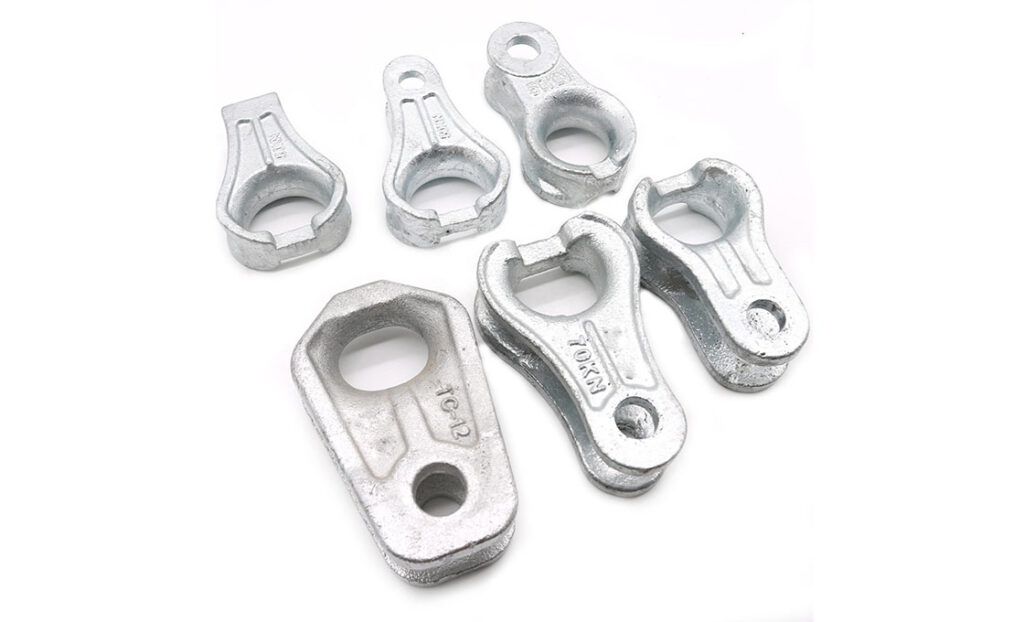
A deadend clevis is a mechanical connector used to link a deadend hardware assembly to other line hardware. It connects insulators, yoke plates, or crossarm fittings. The clevis forms the tension hardware system that secures conductors at termination or high points along a power line. The deadend clevis is a U-shaped forged metal fitting with a pin connection designed to attach deadend clamps to an insulator string. It transfers mechanical tension from the conductor to the support structure while maintaining a secure pivot connection. The clevis consists of a clevis body, clevis pin, and cotter pin. These components enable slight movement and alignment adjustments in the hardware assembly. A deadend clevis is manufactured from high-strength forged steel to withstand mechanical loads and environmental exposure. These materials include hot-dip galvanized carbon steel, forged alloy steel, and corrosion-resistant coated steel. Ensuring quality assurance for the clevis prevents failures that disrupt their operation.
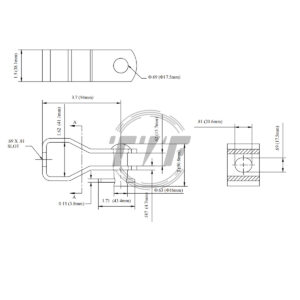
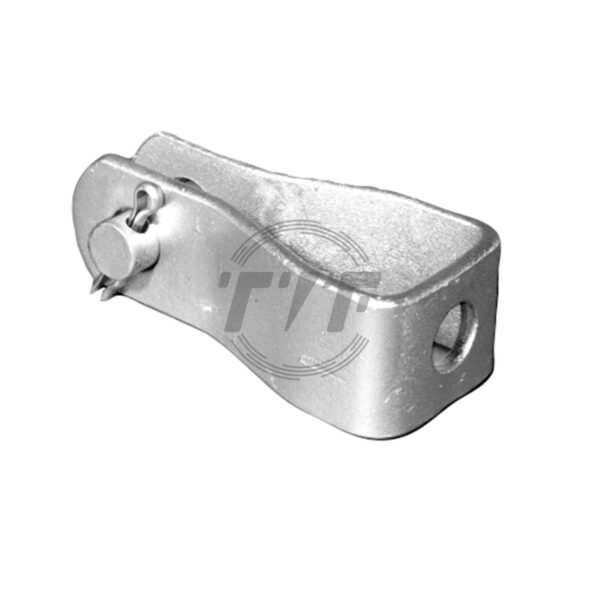
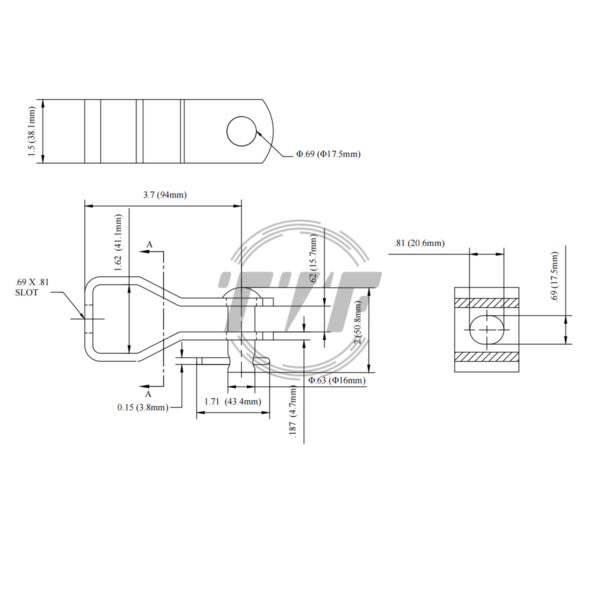
Hot Dip Galvanized Deadend Clevis with 5/8 in Cotter Bolt and Pin
The Deadend Clevis is a high-strength mechanical connector designed for overhead transmission and distribution lines. It securely links dead-end clamps to insulator assemblies, transferring conductor tension to supporting structures while ensuring reliable alignment and load distribution. Manufactured from forged steel and protected with hot-dip galvanization, it delivers long-term durability under harsh environmental conditions.
Key Features:
- Forged high-strength steel construction for superior tensile performance
- Hot-dip galvanized coating for corrosion resistance
- Precision-engineered dimensions for accurate hardware compatibility
- Removable clevis pin with secure locking mechanism
- Designed to withstand dynamic mechanical loads from wind, ice, and conductor tension
- Compliant with IEC, ASTM, and ISO standards for transmission hardware
- Suitable for high-voltage transmission and distribution line applications
Significance of conducting quality assurance for the deadend clevis
Enhancing quality assurance for deadend clevises is crucial for use in high-tension conductor termination assemblies. The clevis carries mechanical loads and acts as a connection point between the conductor and deadend hardware. Quality assurance prevents defects that compromise the integrity of the entire line section. QA also ensures that the clevis meets specified mechanical load ratings, maintains structural integrity under high tensile stress, and withstands dynamic loading conditions. It also ensures the clevis conforms to strict engineering standards and tolerances. The quality assurance process includes galvanization thickness measurement, coating adhesion testing, and corrosion resistance evaluation. Quality assurance ensures that each deadend clevis meets design specifications before installation. This helps reduce long-term operational and maintenance expenses for utilities. Proper quality control supports grid reliability, operational safety, and long-term infrastructure performance.
The roles of quality assurance during deadend clevis manufacture
Quality assurance during the manufacture of deadend clevises ensures the component meets mechanical, dimensional, and durability requirements for use in power systems. Strict quality assurance control during production helps guarantee reliability and long service life. Here are the roles quality assurance during the manufacturing process.
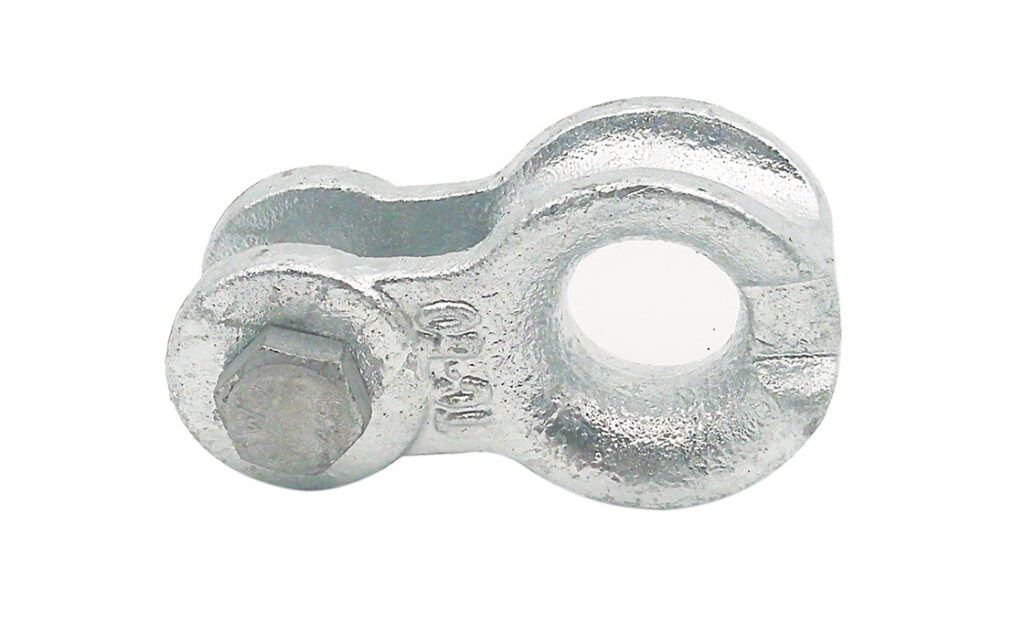
- Raw material verification—the manufacturing process begins with the selection of high-strength steel or alloy steel. Quality assurance ensures that raw materials conform to required chemical composition standards. It ensures the deadend have the necessary yield strength and tensile strength.
- Control of forging and forming processes—quality assurance during the forming process corrects forging temperature and pressure, proper grain flow orientation, and absence of cracks, folds, and internal voids.
- Dimensional inspection and tolerance control—deadend clevis components should meet precise design specifications. This helps to ensure compatibility with other components. Enhancing quality control verifies clevis opening width, pin hole diameter and alignment, and length and thickness.
- Surface treatment and galvanization quality—QA ensures that the protective coating adheres to the steel surface and has enough zinc thickness.
- Mechanical performance testing—the tests include testing to verify structural performance. These tests include tensile strength testing, proof load testing, and fatigue resistance testing. These tests confirm that the clevis can withstand conductor tension, wind loading, and other mechanical stresses.
Common quality failures facing the deadend clevis used in overhead transmission networks
Deadend clevises operate in high-tension sections of power networks where they connect deadend clamps to insulator assemblies. Manufacturing or materials defects lead to reliability problems in power infrastructure. Most failures occur during production, installation, or field service. Here are the common quality failures facing deadend clevises in overhead transmission networks.
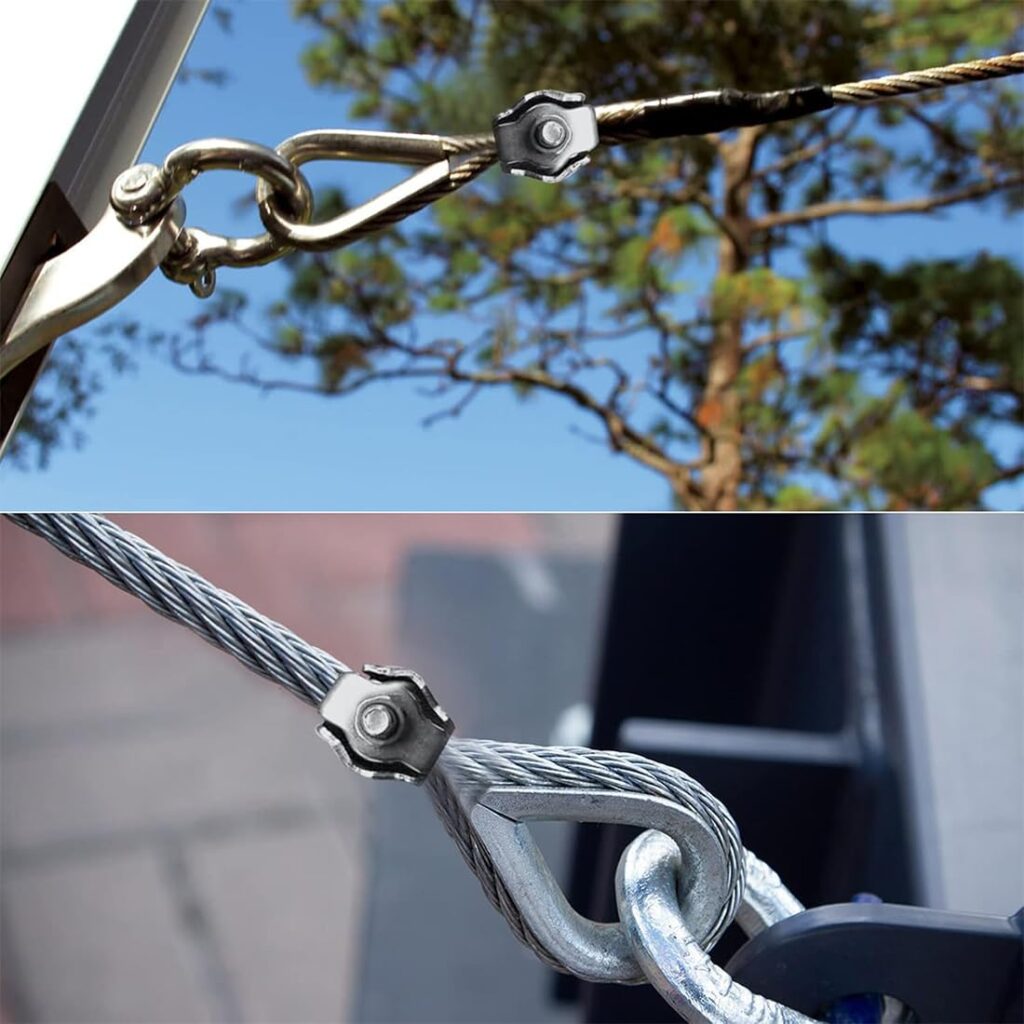
- Material defects—poor material quality results in reduced tensile strength, brittleness under mechanical stress, and risks of cracking. Material defects come from improper alloy composition, impurities, or poor heat treatment.
- Forging and manufacturing defects—deadend clevis forging improves strength by aligning the metal grain structure. Poor forging can result in surface cracks, internal voids and porosity, and incomplete metal flow during forming.
- Dimensional inaccuracy – dimensional issues include incorrect clevis opening width, misaligned pin holes, and improper pin diameter tolerance.
- Poor galvanization and corrosion protection—deadend clevis face harsh outdoor conditions such as moisture, pollution, and temperature fluctuations. Common failures include thin galvanized zinc layers, peeling coatings, and uncoated surfaces.
- Pin and locking mechanism failures—the clevis pin and locking mechanisms help maintain secure connections. Quality failures include incorrect pin hardness, poor fit between pin and hole, and weak locking devices.
- Mechanical strength deficiencies—deadend clevises must withstand high tensile forces from conductors and environmental loads. Insufficient mechanical strength results from inadequate material thickness, poor forging quality, and improper heat treatment.
Materials for deadend clevises and how quality assurance protects them
Deadend clevis fittings serve in strain assemblies of overhead transmission and distribution lines. Using proper materials helps deliver high mechanical strength, corrosion resistance, and durability. Applying quality assurance verifies that these material properties are preserved and reliability. QA helps verify chemical composition, mechanical strength, heat treatment quality, and dimensional accuracy. The common materials for a deadend clevis include:
Forged carbon steel
Forged steel provides high tensile and yield strength, good ductility and toughness, and the ability to withstand dynamic mechanical loads. Quality assurance ensures carbon steel performs as intended. This is through chemical composition testing and nondestructive testing.
Alloy steel
Manufacturers use alloy steel, which provides greater mechanical strength, improved fatigue resistance, and enhanced impact toughness. Quality assurance verifies alloy steel integrity through metallurgical analysis, heat-treatment inspection, and microstructure examination.
Hot-dip galvanized steel
Hot-dip galvanization coating protects the steel from corrosion. It offers corrosion protection, resistance to moisture, pollution, and salt exposure, and extended service life in harsh climates. Quality assurance ensures effective corrosion protection through adhesion testing and visual inspection for coating defects.
Stainless steel
This is a crucial material for clevis pins or locking components. Stainless steel provides high corrosion resistance, strong mechanical durability, and reduced risk of rust-related seizure between moving parts. Quality control measures ensure stainless steel components meet specifications. This helps verify material grade certification, surface finish quality, and dimensional accuracy.
Protecting surface treatments
Some deadend clevis components have coatings such as anti-corrosion sealants or passivation treatments. Quality assurance verifies these treatments by checking coating uniformity, resistance to environmental degradation, and compliance with industry corrosion standards.
TTF-certified deadend clevis. Why we certify.
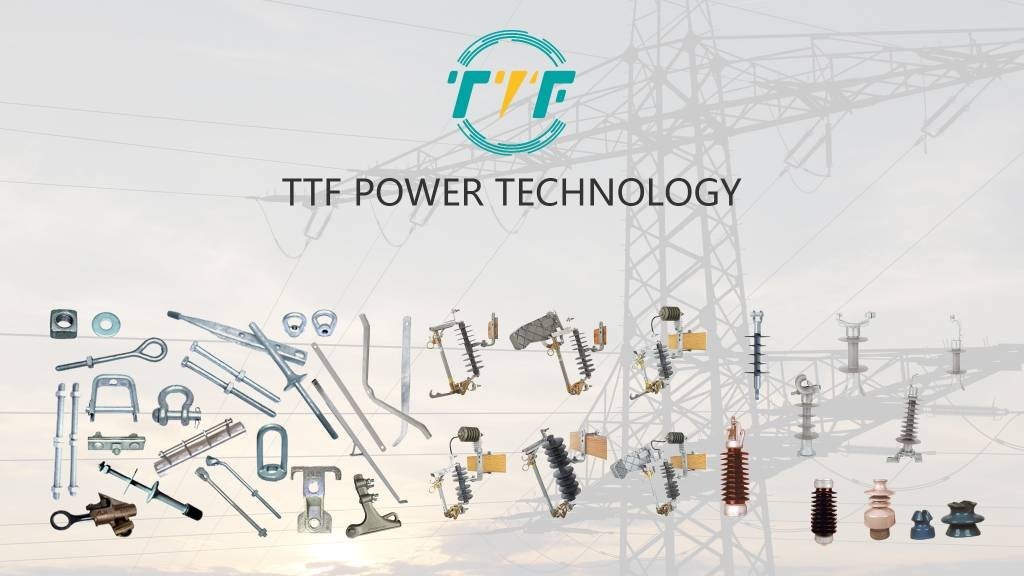
TTF’s approach to power line hardware services results in optimal product quality, strict adherence to custom design, and reduced cost. We are constantly checking manufacturing processes, addressing material concerns, and improving staff expertise to ensure the best quality product. Our quality control for the deadend clevis begins with the first batch of samples that you received from us. And this continues through all production phases, where our QC staff never stop looking for opportunities to improve product quality. We offer:
- Tolerance Analysis
- Tooling Life Analysis
- Rockwell Hardness Testing per ASTM E18
- Brinell Hardness Testing per ASTM E10
- Magnetic Particle Testing per ASTM E1444
- CMM (Coordinate Measuring Machine) Testing
- 24″ Optical Comparator for Complex Measurements
- Tensile/proof load testing up to 160,000 lbs (700 kN)
- Hot Dip Galvanizing Plating Thickness per ASTM E376
- Torque Testing
- Roughness Testing
- Lifetime Sample Retention
- Dimensional Testing
- Mechanical Testing
Benefits of quality assurance for the deadend clevis in overhead power networks
Quality assurance provides operational and engineering advantages for deadend clevis fittings used in power networks. The clevis acts as a mechanical connector in high-tension conductor termination assemblies. QA ensures the clevis performs reliably throughout the service life of the power line. Here are the key advantages of conducting quality assurance procedures for the clevis.
- Improved mechanical reliability—the deadend clevis withstands tensile loads generated by conductor tension, wind pressure, and environmental forces. Quality assurance verifies that the clevis meets mechanical strength standards through testing and inspection. Quality assurance improves the reliability of transmission and distribution hardware assemblies.
- Enhanced safety in power infrastructure—quality failure of the deadends results in conductor detachment, equipment damage, or safety hazards. QA enhances safety by detecting manufacturing defects before installation, confirming compliance, and ensuring secure hardware connections.
- Increased durability—the deadend clevis fitting faces diverse environmental conditions that cause corrosion. Quality assurance ensures that protective coatings meet specifications, materials resist corrosion, and surface finishing prevents wear.
- Accurate hardware compatibility—the clevises must connect with other transmission hardware components. These components include deadend clamps, insulator strings, yoke plates, and tower fittings. Quality assurance confirms dimensional accuracy and manufacturing tolerances. This ensures that the clevis integrates into the hardware assembly.
- Reduced maintenance costs—poor-quality fittings need frequent inspection, repair, or replacement. This increases operational expenses for utilities. Conducting quality assurance helps reduce costs by ensuring the clevis meets design specifications.
In conclusion,
Deadend clevises transfer conductor tension to insulator assemblies and supporting structures. Their performance and operation depend on material quality, proper manufacture, and quality control procedures. Deadend clevises are made from durable materials such as forged and galvanized steel. During inspection, manufacturers ensure the clevis can withstand heavy mechanical loads and harsh environmental conditions. Implementing quality assurance practices helps prevent common failures such as material defects, dimensional inaccuracies, and corrosion issues. This ensures the deadend clevis components achieve reliability, longer service life, and safer operation within power infrastructure. Effective quality assurance supports long-term infrastructure performance while reducing maintenance costs and operational risks for electric utilities.