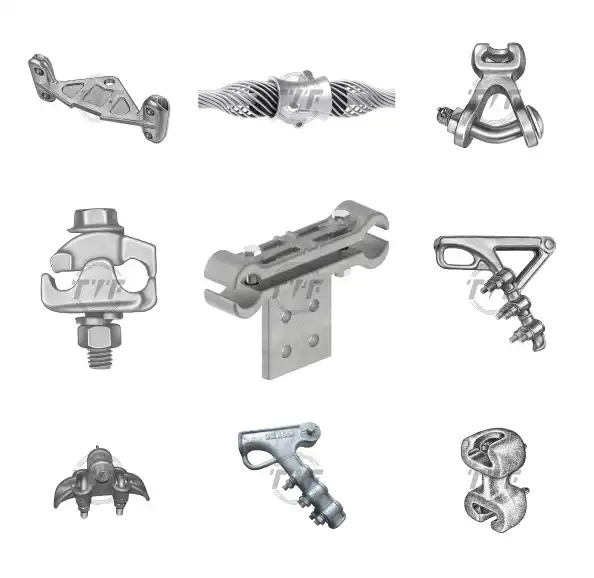

Crossover clamps are mechanical connectors used in overhead transmission and distribution networks to electrically and mechanically bond two conductors that cross at different elevations. They are installed where one phase conductor must pass over another in substations or line configurations. Crossover clamps maintain electrical continuity and ensure mechanical stability. They also prevent relative conductor movement under dynamic loading conditions such as wind-induced oscillations, galloping, and thermal expansion. Crossover clamps serve in overhead transmission line crossings, substation busbar crossovers, and network reconfiguration and line upgrades. They are from materials such as aluminum alloy, aluminum body with high-strength steel bolts, and plated hardware for corrosion resistance. Ensuring quality assurance prevents failures that can lead to increased resistance heating, conductor damage, or line faults. Clamp failure can lead to energy losses, localized overheating, conductor fatigue, and outage risks.
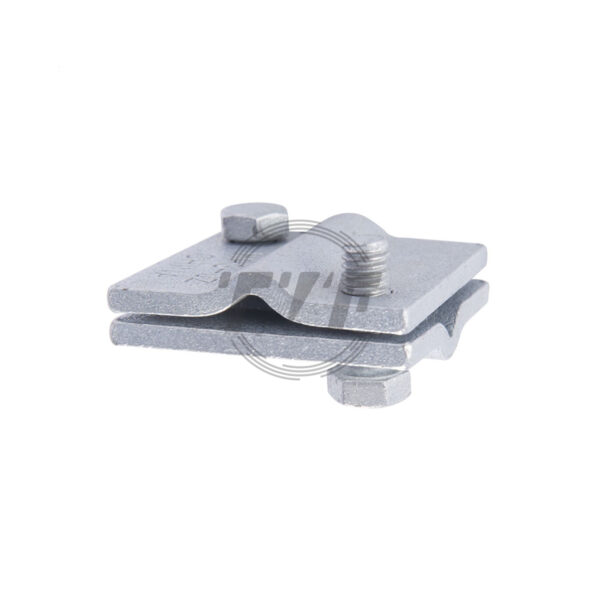
Crossover Clamp
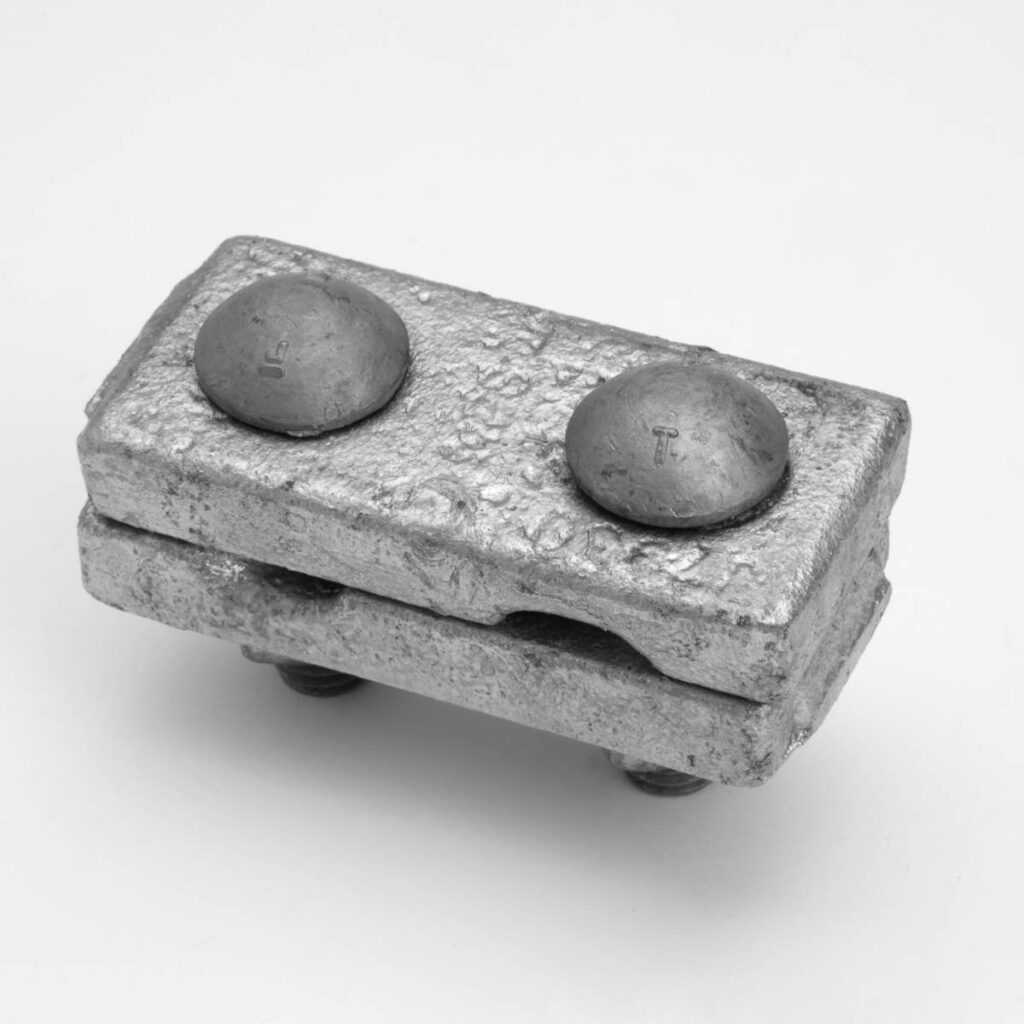
The Crossover Clamp, designed to precisely manage intersecting conductors, is a specialized hardware component engineered for overhead transmission and distribution lines. It ensures stringent electrical clearance and robust mechanical stability at crossing points, mitigating clashing and reducing vibratory wear for enhanced system reliability.
Key Features:
- Durable Construction: Typically forged from hot-dip galvanized steel or ductile iron for superior corrosion resistance and prolonged service life.
- Precision Grooves: Designed with integrated conductor grooves to securely accommodate and maintain precise separation of crossing conductors.
- Secure Fastening: Utilizes robust bolts (e.g., hex bolts with oval shoulders) for a positive clamping action, preventing slippage and maintaining connection integrity under dynamic loads.
- Optimal Clearance: Facilitates adherence to critical safety clearance requirements between perpendicular or overlapping conductors.
- Vibration Mitigation: Engineered to minimize wear and abrasion caused by conductor movement and wind-induced vibrations.
- Versatile Sizing: Available in various configurations to accommodate diverse conductor diameters and load ratings.
Importance of conducting quality assurance for crossover clamps
Quality assurance for crossover clamps is crucial for risk control in overhead transmission and distribution systems. The clamps operate as mechanical connectors and electrical current paths. By preventing failures, quality assurance ensures system reliability, safety, and asset lifespan. It helps the clamps to maintain low contact resistance throughout their operational life. Quality assurance ensures verified slip strength through tensile testing, proper bolt torque capacity and thread engagement, and structural durability under fatigue conditions. Failure of mechanical integrity can lead to conductor slippage, strand damage, or catastrophic separation. Crossover clamps experience cyclic heating due to load variation. Improper manufacturing can lead to uneven pressure distribution, loss of clamping force, and accelerated material creep. Quality assurance ensures the clamp maintains compression and conductivity over decades of service.
The role of quality assurance in crossover clamp manufacturing
Quality assurance in crossover clamp manufacturing ensures each unit meets defined electrical, mechanical, and environmental performance. QA governs the integrity of the entire manufacturing lifecycle. Here are the roles of quality assurance for crossover clamp manufacturing.
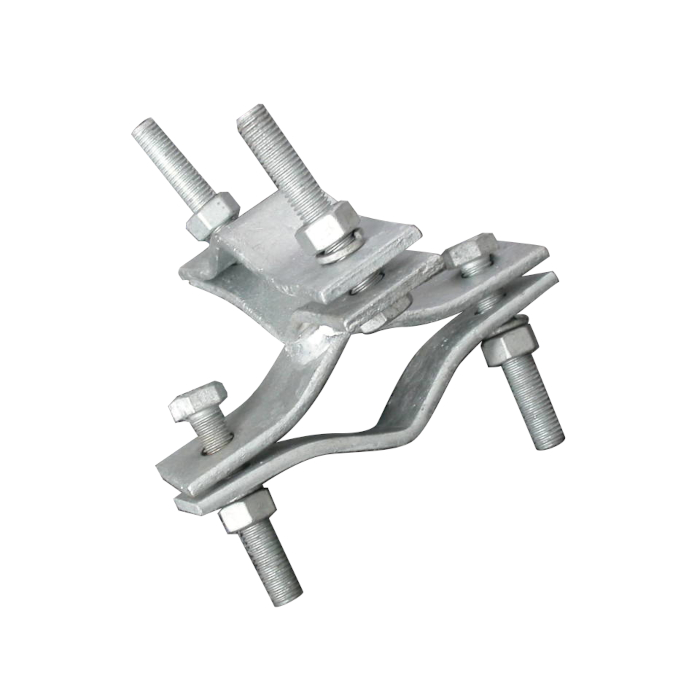
- Design validation and engineering control—quality assurance at the design includes verification of current-carrying capacity, finite element analysis for stress distribution, and contact pressure optimization for low resistance.
- Raw material qualification—the QA process includes chemical composition verification, mechanical property testing, electrical conductivity validation, and coating material certification for corrosion resistance.
- Process control during manufacturing—it is crucial to enhance quality assurance during manufacturing to maintain consistency. This includes casting oversight, machining accuracy, and assembly control.
- Electrical performance testing—crossover clamps must maintain low-resistance electrical paths. Quality assurance integrates micro-ohm resistance measurement, current cycle testing, and temperature rise analysis. These tests ensure the clamp does not introduce unacceptable power losses or overheating under rated load.
- Mechanical and structural testing—quality assurance includes slip strength testing, tensile load verification, vibration and fatigue testing, and thermal expansion simulation. These tests ensure structural reliability under wind, galloping, and thermal cycling conditions.
- Surface treatment and corrosion protection—QA checks galvanization thickness measurement, salt spray testing, coating adhesion checks, and dissimilar metal compatibility.
- Final inspection and pre-dispatch verification—quality assurance conducts visual inspections for defects, dimensional verification, and packaging inspection to prevent transit damage.
Key failures on crossover clamps used in overhead transmission networks
Crossover clamps operate under combined electrical loading, mechanical tension, vibration, and environmental exposure. Quality failures from material selection, manufacturing defects, or inadequate testing can compromise conductor integrity and grid reliability. Here are the most common failures on crossover clamps.
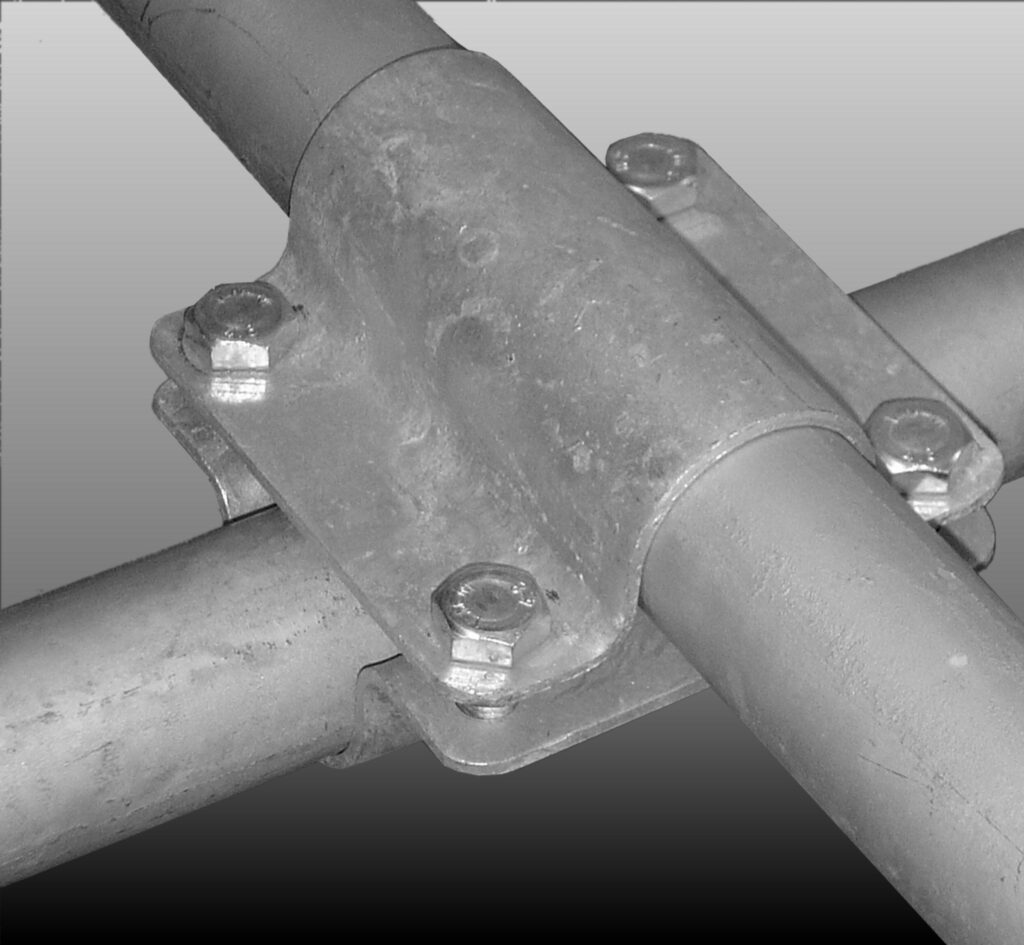
- High contact resistance—this arises from poor machining of conductor grooves, inadequate clamping force, and incorrect alloy conductivity. This results in localized overheating, accelerated oxidation, and risk of thermal runaway.
- Loss of clamping force—this arises from improper bolt torque during installation, inferior bolt grade, creep in aluminum under sustained load, and thermal cycling relaxation. This leads to conductor slippage, strand fretting, and progressive joint degradation.
- Mechanical fracture—this failure comes from casting porosity, improper heat treatment, internal material defects, and stress concentration from poor design. This leads to structural separation, conductor drop risk, and emergency outages.
- Groove mismatch and strand damage—incorrect dimensional tolerances, poorly machined conductor seats, and sharp edges cause these damages. This may lead to conductor strand nicking, fatigue initiation points, and reduced tensile strength of the conductors.
- Corrosion and galvanic degradation—these stem from inadequate galvanization thickness, dissimilar metal contact, and exposure to industrial conditions. This leads to reduced cross-sectional area, increased resistance, and bolt failure.
- Poor electrical-thermal cycling performance—this failure comes from improper alloy composition, uneven pressure distribution, and inadequate quality control during casting. These lead to progressive resistance increase, metal fatigue, and joint degradation.
How quality assurance protects materials for crossover clamps
Crossover clamps in overhead transmission networks should provide electrical continuity and mechanical retention at conductor intersection points. Selecting the right material influences conductivity, strength, corrosion resistance, and stability under cyclic loading. Quality assurance ensures these materials perform according to design intent. Here are the materials for crossover clamps and how quality assurance protects them.
Aluminum alloy
Crossover clamp bodies are mostly from high-conductivity aluminum alloys. The material offers electrical conductivity, corrosion resistance, and compatibility with AAC, AAAC, and ACSR conductors. Aluminum alloys may face casting porosity, alloy composition deviation, low mechanical strength, and surface oxidation. Quality assurance measures for the material include mechanical property testing, radiographic inspection, and surface roughness and groove profile verification. It ensures the aluminum maintains conductivity and structural reliability under mechanical and thermal stress.
Steel bolts and fasteners
High-strength carbon steel or alloy steel provides the required clamping force. The bolts are hot-dip galvanized for corrosion protection. This may cause incorrect bolt grade, thread defects, hydrogen embrittlement, and inadequate galvanization thickness. The quality assurance measures include bolt grade verification, thread pitch and dimensional inspection, torque-tension correlation testing, and coating thickness measurement.
Galvanized coatings
Hot-dip galvanization provides sacrificial corrosion protection for steel hardware. The coatings may cause uneven zinc coating, poor adhesion, inadequate thickness, and premature corrosion. Quality assurance includes coating thickness measurement, salt spray testing, adhesion testing, and visual inspection for surface discontinuities.
Bimetallic interfaces
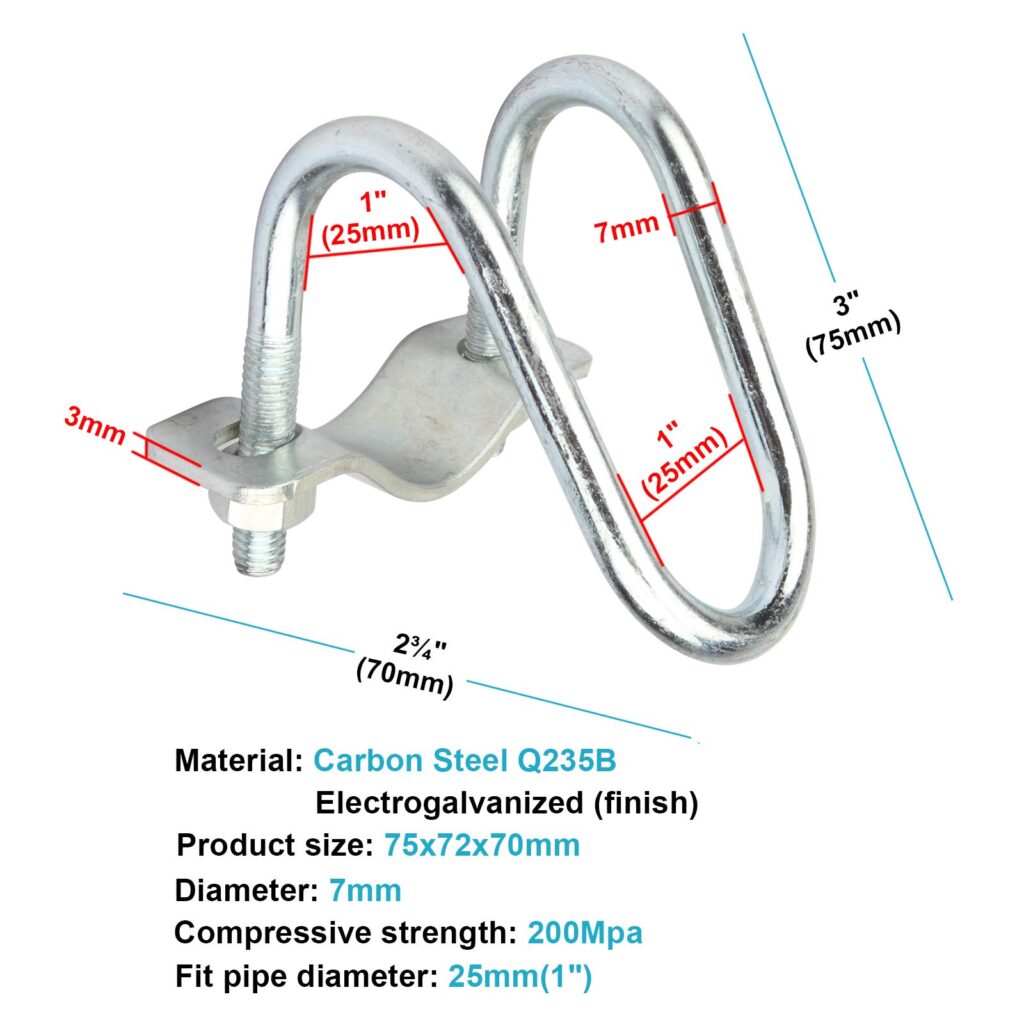
Most crossover clamps interface between aluminum conductors and steel-reinforced cores. The material transition must prevent galvanic corrosion, electrochemical incompatibility, accelerated corrosion at contact surfaces, and increased contact resistance. Quality assurance measures include galvanic compatibility assessment, controlled surface treatment, electrical resistance testing, and thermal cycling validation.
Surface finish and contact areas
The groove surface that contacts the conductor is crucial for electrical transfer and mechanical grip. Lack of surface finish causes sharp edges, improper groove radius, and oxide contamination. QA protection measures include dimensional tolerance inspection, surface finish measurement, contact pressure verification, and micro-ohm resistance testing.
TTF-certified crossover clamps. Why we certify.
TTF’s approach to power line hardware services results in optimal product quality, strict adherence to custom design, and reduced cost. We are constantly checking manufacturing processes, addressing material concerns, and improving staff expertise to ensure the best quality product. Our quality control for crossover clamps begins with the first batch of samples that you received from us. And this continues through all production phases, where our QC staff never stop looking for opportunities to improve product quality. We offer:
- Tolerance Analysis
- Tooling Life Analysis
- Rockwell Hardness Testing per ASTM E18
- Brinell Hardness Testing per ASTM E10
- Magnetic Particle Testing per ASTM E1444
- CMM (Coordinate Measuring Machine) Testing
- 24″ Optical Comparator for Complex Measurements
- Tensile/proof load testing up to 160,000 lbs (700 kN)
- Hot Dip Galvanizing Plating Thickness per ASTM E376
- Torque Testing
- Roughness Testing
- Lifetime Sample Retention
- Dimensional Testing
- Mechanical Testing
Advantages of quality assurance for crossover clamps
Quality assurance in crossover clamp production provides measurable operation, technical, and financial advantages. Verified manufacturing integrity enhances transmission system performance. TTF-certified crossover clamp contribute to electrical efficiency, structural stability, environmental durability, and regulatory compliance. A robust QA transforms crossover clamps from failure points into verified and high-performance connection assets. Here are the benefits of quality assurance for crossover clamps.
- Improved electrical performance—quality-assured crossover clamps undergo resistance measurement and current cycle testing. These tests help to confirm low contact resistance. Consistent electrical conductivity improves line efficiency and reduces long-term energy losses.
- Enhanced mechanical reliability—QA verifies tensile strength, slip resistance, and torque retention under dynamic loading. This offers secure conductor retention, resistance to vibration and galloping, reduced risk of clamp slippage, and stable performance under thermal expansion cycles.
- Compliance with international standards—QA processes ensure conformity with recognized specifications. Compliance offers simplified utility approval, reduced procurement risk, traceability of manufacturing documentation, and certification readiness for large-scale projects.
- Reduced failure risk—verifying materials, dimensional tolerances, and mechanical properties lower the probability of in-service defects. This provides fewer emergency repairs, lower outage risk, and improved network stability.
In conclusion,
Crossover clamps serve both electrical and mechanical functions at conductor crossover points. Their performance influences current continuity, structural stability, thermal behavior, and long-term network reliability. Lack of quality assurance may cause defects such as high contact resistance, casting porosity, bolt failure, corrosion, dimensional inaccuracies, and loss of clamping force. Quality assurance acts as an integrated control system across design validation, raw material verification, manufacturing process control, mechanical and electrical testing, corrosion resistance evaluation, and final inspection. Effective quality assurance offers sustained low-resistance electrical joints, verified mechanical retention, protection against environmental degradation, extended service life, and reduced maintenance frequency.