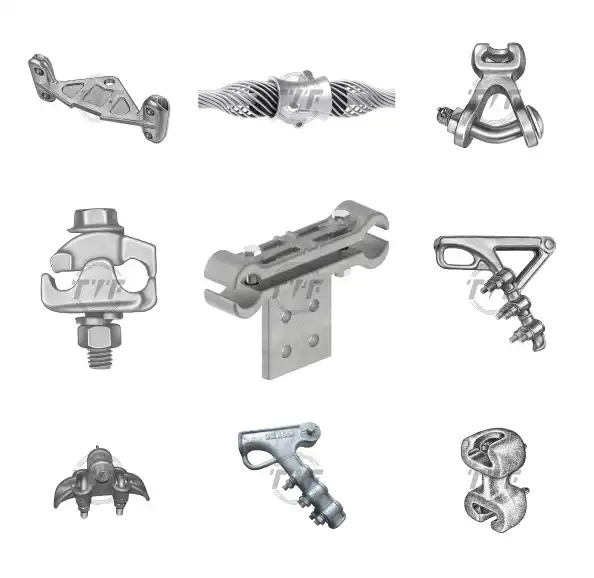

Line post insulators are components used in modern power transmission and distribution networks. The insulators provide mechanical support and electrical insulation for conductors. They do so while ensuring safe and reliable power flow across substations and overhead lines. Line post insulators face electrical stress, mechanical loads, and harsh environmental conditions. Quality assurance for line post insulators ensures they perform reliably throughout their service life and follow stringent utility and regulatory requirements. TTF Certified line post insulators are tested against harsh environmental conditions to check durability. These conditions include coastal salt spray, UV exposure, and external thermal cycling. These insulators ensure safety for linemen during installation and the communities that use them.
Importance of conducting quality assurance for line post insulators
Quality assurance is crucial for the performance, safety, and longevity of line post insulators used in transmission and distribution networks. The line post insulators provide electrical insulation and mechanical support. Any quality deviations in this case can affect grid reliability and operational safety. TTF Certified line post insulators are able to withstand continuous operating voltage and temporary overvoltages.
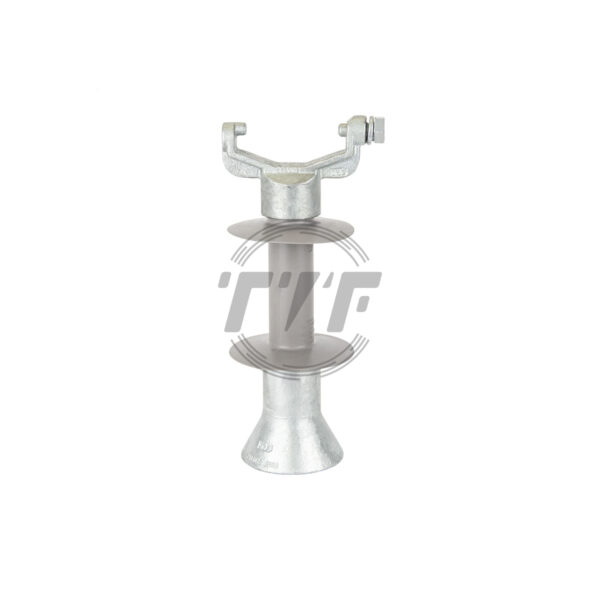
Line Post Insulator
A line post insulator is a high-strength insulating device used in overhead power line construction to support and isolate conductors on transmission and distribution poles, typically in horizontal or vertical mounting configurations. Designed for medium to high voltage systems, it ensures mechanical stability and electrical insulation, even under severe environmental and loading conditions.
Key Features:
- High dielectric strength for voltage levels up to 69 kV
- Robust mechanical load capacity for tension and cantilever stress
- Ribbed design to increase creepage distance and prevent flashover
- Available in porcelain and polymer (composite) materials
- Resistant to UV radiation, moisture, and pollution
- Suitable for vertical, horizontal, or angled mounting
- Meets ANSI, IEC, and NEMA standards
The quality assurance ensures stable dielectric strength and resistance to puncture, correct creepage distance to control surface leakage currents, and consistent electrical performance. TTF certified also enables line post insulators to have cantilever and torsional strength ratings. Additionally, it provides structural integrity of porcelain or composite cores. Quality assurance reduces safety risks by ensuring predictable and controlled failure behavior. They also reduce the likelihood of sudden, hazardous failures in service.
Role of quality assurance in TTF Certified line post insulator manufacturing
TTF certified line post insulators ensures that each unit meets stringent electrical, mechanical, and environmental performance requirements before use. TTF certification is embedded throughout the manufacturing lifecycle rather than applied only at final inspection. Quality assurance in line post insulator manufacturing controls materials, processes, and testing to deliver safe, reliable, and standard-compliant products. This helps protect grid reliability, enhance utility confidence, and ensure long-term asset value in transmission and distribution infrastructure. Here is a discussion of the role of TTF certification in insulator manufacturing.
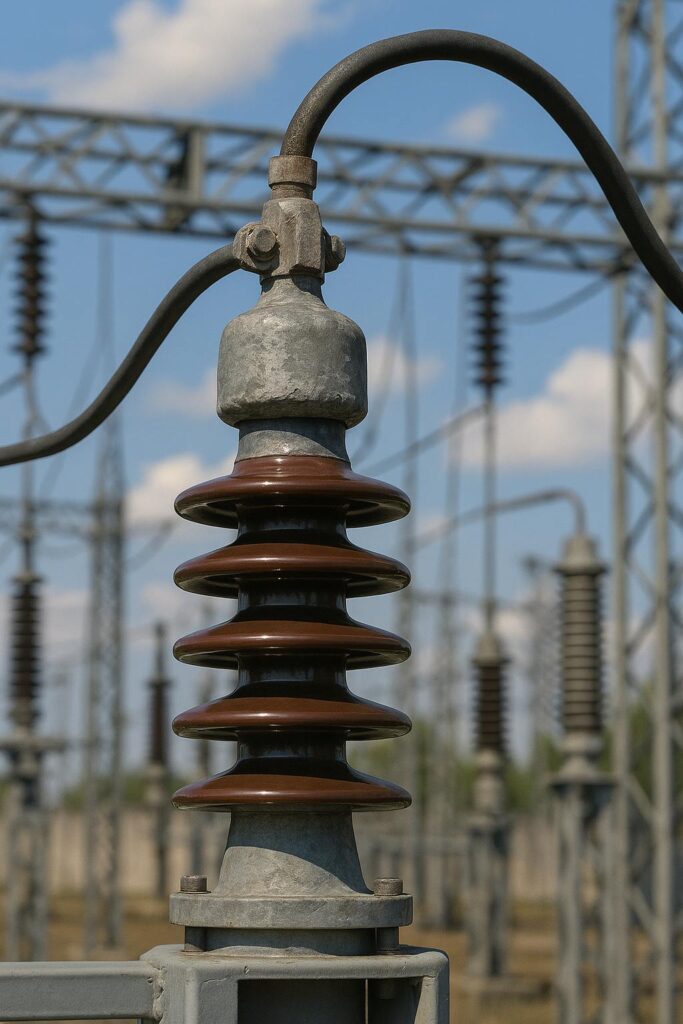
- Raw material verification—this process includes control of materials such as porcelain raw material verification for purity and consistency. Silicone rubber or glaze formulations are tested for aging, hydrophobicity, and contamination resistance. The metal end fittings and pins are inspected for metallurgy, dimensional accuracy, and corrosion resistance.
- Process control during manufacturing—quality assurance enforces process stability by monitoring forming, extrusion, or molding accuracy. This helps to maintain profile geometry and creepage distance. It also includes curing parameters for composite housings to prevent voids, cracks, or weak interfaces.
- Bonding and assembly integrity—TTF Certified validates the bond between the insulator body and metal fittings. This includes adhesive quality and curing verification, alignment and concentricity checks, and pull-out and mechanical interface inspections.
- Electrical and mechanical testing—quality assurance orders comprehensive testing in line with international standards. The tests include routine electrical tests, mechanical load and cantilever strength tests, and sample and type tests.
- Environmental and aging performance validation—these verify resistance to UV radiation and thermal cycling, pollution, salt fog, and moisture ingress, tracking, erosion, and surface degradation. These controls ensure the line post insulators remain reliable throughout their intended service life.
Common quality failures in line post insulators and how TTF certified process prevents them
Quality failures in line post insulators can lead to flashovers, mechanical collapse, premature aging, and unplanned outages. These failures originate from deficiencies in materials, manufacturing processes, or testing regimes. TTF certified line post insulators process is crucial in identifying, controlling, and eliminating the risks before insulators enter service. Here are the common quality failures in line post insulators.
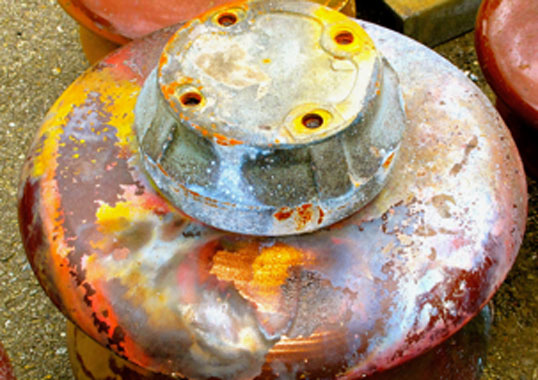
- Electrical flashover and puncture failures—these failures include inadequate dielectric strength, incorrect creepage distance, and internal voids in porcelain or composite cores. TTF Certified inspects materials and dielectric property and performs dimensional checks to confirm profile geometry and creepage distance.
- Mechanical breakage and structural failure—common failures include insufficient cantilever or torsional strength, poor bonding between the insulator body and metal fittings, and misalignment during assembly. Quality assurance prevents this through mechanical load testing, adhesive quality control, and inspections and alignment checks.
- Moisture ingress and internal degradation—these failures include inadequate sealing at metal-to-insulator interfaces, microcracks in housing, and poor curing of polymer housings. Performing quality assurance conducts seal integrity inspections, controlled curing and firing processes, and visual testing to detect surface and internal defects.
- Premature aging and surface degradation—poor-quality insulators may have low-quality silicone rubber with poor hydrophobicity retention, UV-sensitive polymer formulations, and inferior porcelain glaze resistant to pollution.
TTF Certified line post insulators assurance process
The TTF Certified assurance process for line post insulators is designed to ensure consistent electrical, mechanical, and environmental performance throughout the insulator lifecycle. TTF Certified is a structured, end-to-end system rather than a single inspection step.
Quality planning and standards compliance
The TTF Certified process begins with clear quality planning aligned to international and utility-specific standards. This defines electrical and mechanical performance requirements, dimensional tolerances, creepage distance specifications, and acceptance criteria for routine, sample, and type tests. This ensures the insulator design, materials, and processes meet grid application requirements.
Raw material inspection
This includes checking porcelain bodies or FRP cores for composition, strength, and consistency. It also includes testing silicone rubber housings for aging and contamination resistance. Other tests include inspecting metal fittings for metallurgy, galvanization thickness, and dimensional accuracy. Material control prevents latent defects that can lead to in-service failure.
In-process manufacturing controls
TTF Certified teams track manufacturing stages to ensure process stability. These controls include profile and dimension verification to maintain creepage distance, controlled firing cycles for porcelain insulators, and molding and curing controls.
Bonding and assembly verification
The assurance process emphasizes adhesive formulation and curing validation, concentricity and alignment inspections, and mechanical interface integrity checks. These tests ensure reliable load transfer and long-term mechanical performance.
Mechanical and electrical testing
These tests include visual inspection for surface defects, power-frequency withstand voltage tests, and mechanical load strength verification. Routine testing confirms each unit meets minimum operational requirements.
Sample and type testing
TTF Certified programs include periodic sample and type tests such as lightning impulse and switching impulse tests. It also includes mechanical fatigue and thermal cycling tests. These tests provide assurance of durability under real-world service conditions.
Aging and environmental performance validation
The process also checks resistance to environmental stressors. These include UV exposure and thermal changes, hydrophobicity, and erosion. This ensures reliable operation in polluted, coastal, desert, and high-humidity environments.
Traceability and audit readiness
TTF Certified systems maintain full traceability across production batches. It does so via serial or batch identification, test records, certificates of conformity, non-conformance reporting, and corrective action systems.
TTF Certified. Why Do We Certify?
TTF’s approach to power line hardware services results in optimal product quality, strict adherence to custom design, and reduced cost. We are constantly checking manufacturing processes, addressing material concerns, and improving staff expertise to ensure the best quality product. Our quality control begins at the first batch of samples that you received from us. And this continues through all production phases, where our QC staff never stop looking for opportunities to improve product quality. We can provide:
- Dimensional Testing
- Mechanical Testing
- Tolerance Analysis
- Tooling Life Analysis
- Rockwell Hardness Testing per ASTM E18
- Brinell Hardness Testing per ASTM E10
- Magnetic Particle Testing per ASTM E1444
- CMM (Coordinate Measuring Machine) Testing
- 24″ Optical Comparator for Complex Measurements
- Tensile/proof load testing up to 160,000 lbs (700 kN)
- Hot Dip Galvanizing Plating Thickness per ASTM E376
- Torque Testing
- Roughness Testing
- Lifetime Sample Retention
Benefits of TTF Certified line post insulators for utilities and grid operators
Strong quality assurance delivers measurable operational, financial, and risk-management benefits for utilities and grid operators. A strong QA is crucial for reliable network performance and long-term asset value. This is crucial in environments with aging assets, higher load densities, and increased regulatory scrutiny. Quality assurance supports resilient, sustainable, and economically efficient power systems. These are the key benefits of quality assurance.
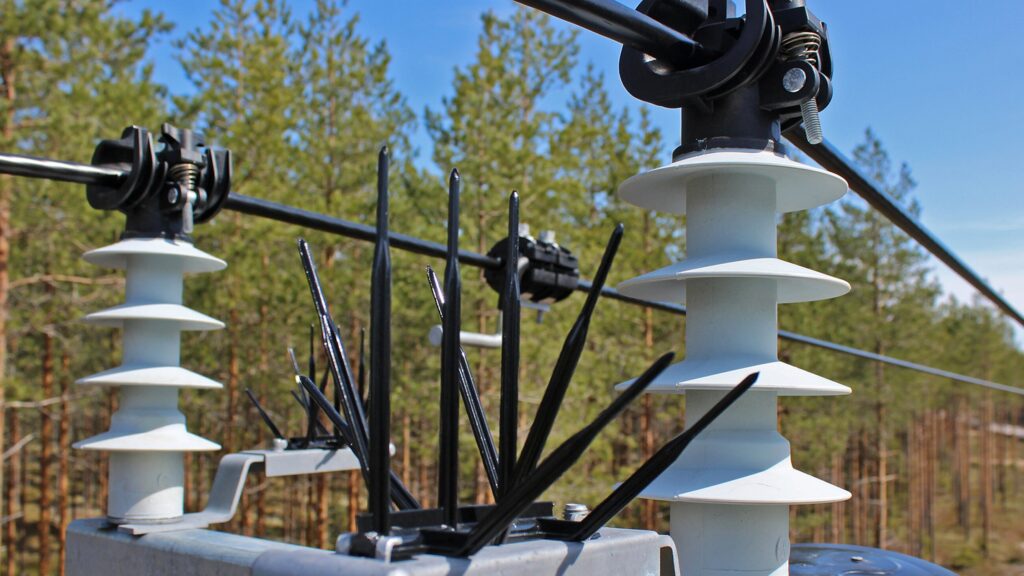
- Improved grid reliability and system availability—QA ensures that electrical insulators meet electrical and mechanical performance requirements. This results in reduced incidence of flashovers, conductor drops, and structural faults. It also leads to more stable operation under peak loads and adverse weather conditions.
- Reduced operations and maintenance costs—TTF Certified line post insulators manufactured under strong QA processes show longer service life and predictable performance. Utilities can hence enjoy lower frequency of emergency repairs, reduced maintenance interventions, and decreased spare parts inventory requirements.
- Enhanced safety for personnel—strong QA reduces risks by ensuring controlled and predictable failure nodes, compliance with safety and testing standards, and traceability for rapid root-cause analysis in case of an incident.
- Improved supplier management and procurement outcomes—quality assurance improves procurement discipline. It does so by enabling fair technical evaluation of suppliers. They also reduce acceptance of substandard or non-compliant insulators.
In conclusion,
Strong quality assurance ensures the reliable performance of TTF Certified line post insulators and the broader power grid infrastructure. It prevents common electrical, mechanical, and environmental failures before assets are deployed. It does so by controlling materials, manufacturing processes, testing, and documentation. Conducting quality assurance leads to higher system reliability, improved safety, regulatory compliance, and lower lifecycle costs for utilities and grid operators. Hence, strong quality assurance is a strategic need for sustaining resilient, long-term transmission and distribution networks.
Sources: