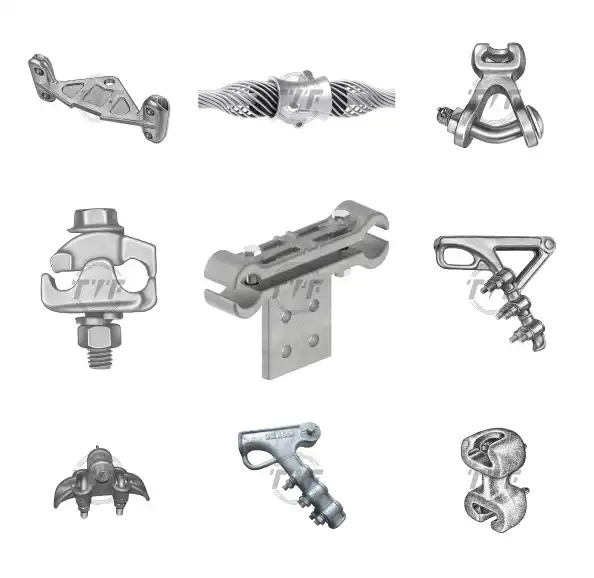
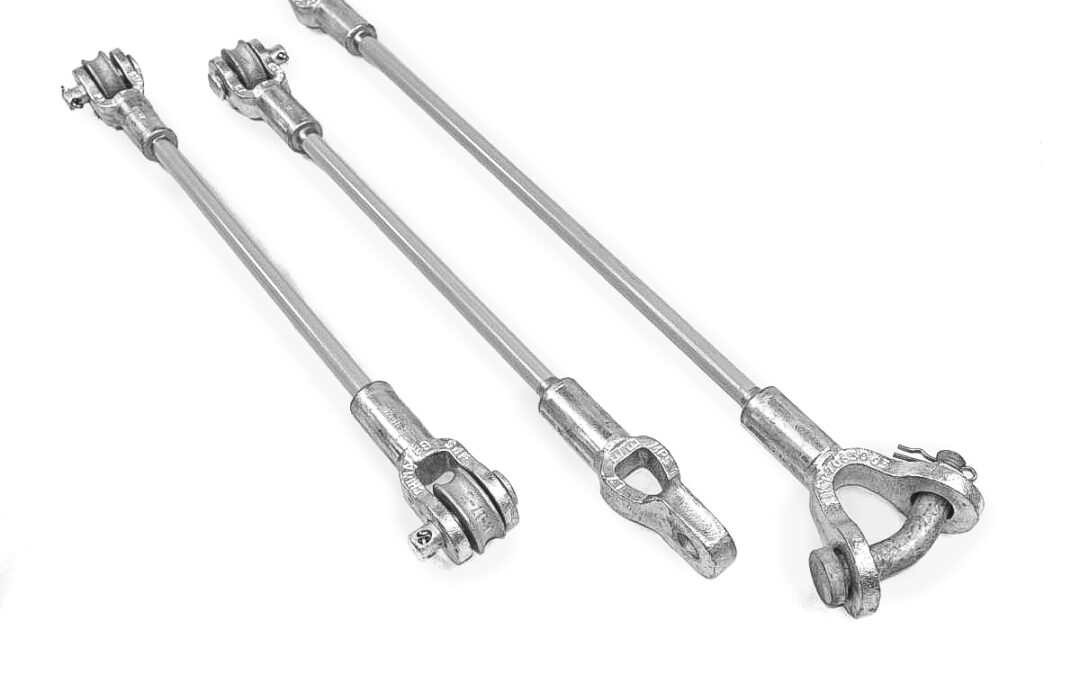
A fiberglass guy strain is a tensioning component used in overhead power and telecommunication infrastructure. It helps anchor and stabilize poles and towers. It works in guy wire systems to manage mechanical stress and maintain pole alignment under environmental and operational loads. The guy strain is manufactured from glass fiber-reinforced polymer for its unique performance in high-voltage and corrosive environments. Fiberglass guy strain provides load management, electrical insulation, vibration damping, and structural stability. Fiberglass guy strain can be used in high-voltage transmission lines, distribution networks, utility poles, and rail electrification systems.
The working of a fiberglass guy strain
A fiberglass guy strain operates on the principle of mechanical tension load distribution combined with electrical insulation. It helps stabilize poles and towers in overhead power and telecommunication networks. It provides structural and electrical functions to ensure safe and reliable performance in high-stress line environments. For instance, when a guy wire is anchored to a pole and connected through the fiberglass guy strain, it receives axial tensile loads from the guy wire, transfers the load along its fiberglass rod body, and redirects the force toward the anchor system. Its non-conductive nature separates the guy wire from the pole hardware, blocks leakage currents, and prevents induced voltages. The glass fibers carry the tensile load to disperse stress across the length of the strain. It also has end fittings that transfer loads smoothly without crushing or splitting the rod. Guy strains act as a micro-flexural load absorber to reduce shock loading.
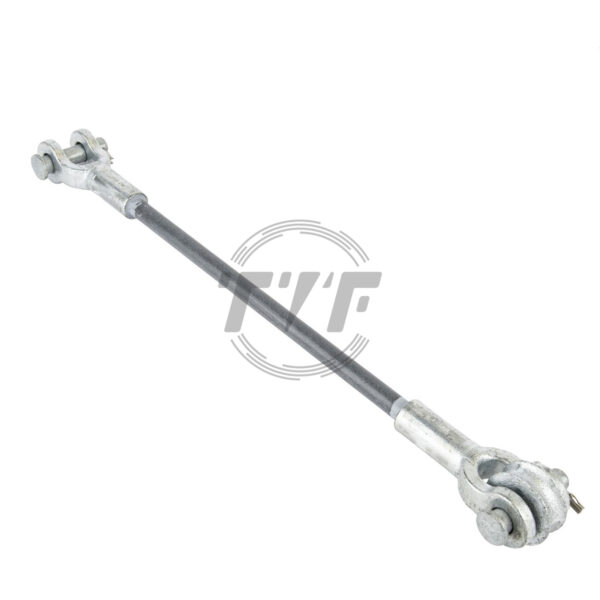
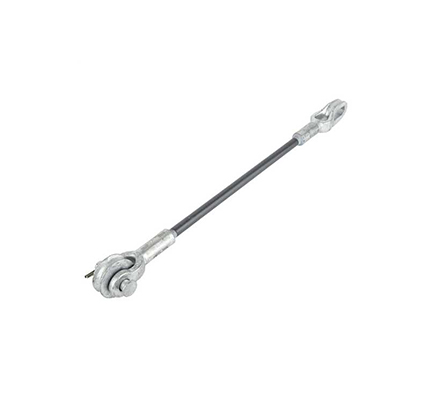
108 in Fiberglass Guy Strain, Ultimate Rating Strength 30,000 lb
The Fiberglass Guy Strain is a high-performance tensioning and insulating device designed for overhead power line construction. Engineered from glass fiber–reinforced polymer (GFRP), it provides exceptional mechanical strength, electrical insulation, and environmental durability, ensuring stable and safe pole and tower installations in transmission and distribution networks. Ideal for high-voltage, medium-voltage, and distribution applications, this component enhances grid reliability, reduces maintenance, and extends service life.
Key Features:
- High tensile strength for reliable guy wire support
- Non-conductive fiberglass construction for electrical insulation
- Corrosion, UV, and moisture-resistant for harsh outdoor environments
- Lightweight design for easy handling and installation
- Vibration damping to reduce conductor oscillation and structural fatigue
- Durable resin matrix ensuring long-term mechanical integrity
- Compatible with standard end fittings for secure connection
Significance of the fiberglass guy system in overhead power lines
A fiberglass guy strain is a mechanical and electrical component in overhead power networks. It enhances structural stability, electrical safety, and reliability of poles and transmission structures. It is thus a crucial component in grid performance, asset protection, and operational safety. Fiberglass guy strains play a crucial role in maintaining pole alignment and network geometry. They transfer tensile forces from guy wires to anchoring systems, prevent pole tilting, and stabilize structures exposed to high mechanical stress. Additionally, by reducing mechanical and electrical failure points, the fiberglass guy strain lowers the frequency of line outages, reduces conductor sag, and protects other line hardware from overload and fatigue. This helps improve network uptime and service continuity. The fiberglass guy strain ensures safe pole performance, reduced outages, lower maintenance costs, and improved grid operational efficiency.
Key features and components of the guy strain
The fiberglass guy strain is an engineering tension and insulating device used in guyed pole and tower systems. It delivers high mechanical strength, electrical insulation, and environmental durability. Its performance depends on structural components and its engineering features. It offers high tensile strength, electrical insulation capability, corrosion and weather resistance, and lightweight structural design. Here are the components of the fiberglass guy strain.
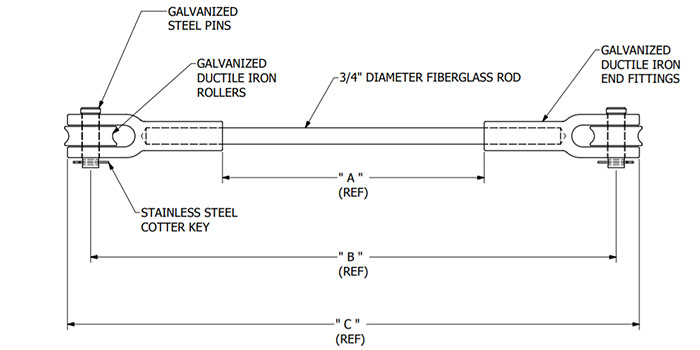
- Fiberglass rod—this is the primary load-bearing element of the device manufactured from glass fiber-reinforced polymer. It carries the full tensile mechanical load from the guy wire and provides inherent electrical insulation.
- End fittings—these are metal end fittings bonded onto each end of the fiberglass rod. It provides secure connection to guy wires, shackles, or anchor hardware. It is designed to handle high tensile stress without slippage.
- Protective outer coating—the fiberglass rod is compressed in a protective polymer coating. It shields the core from UV radiation, prevents moisture penetration, and resists chemical and salt corrosion.
- Internal resin matrix—the glass fibers are in a high-performance resin system. It bonds fibers into a rigid and unified structure, prevents micro-fractures under cyclic loading, and enhances impact resistance and long-term fatigue performance.
Types of fiberglass guy strain
Dead-end guy strain
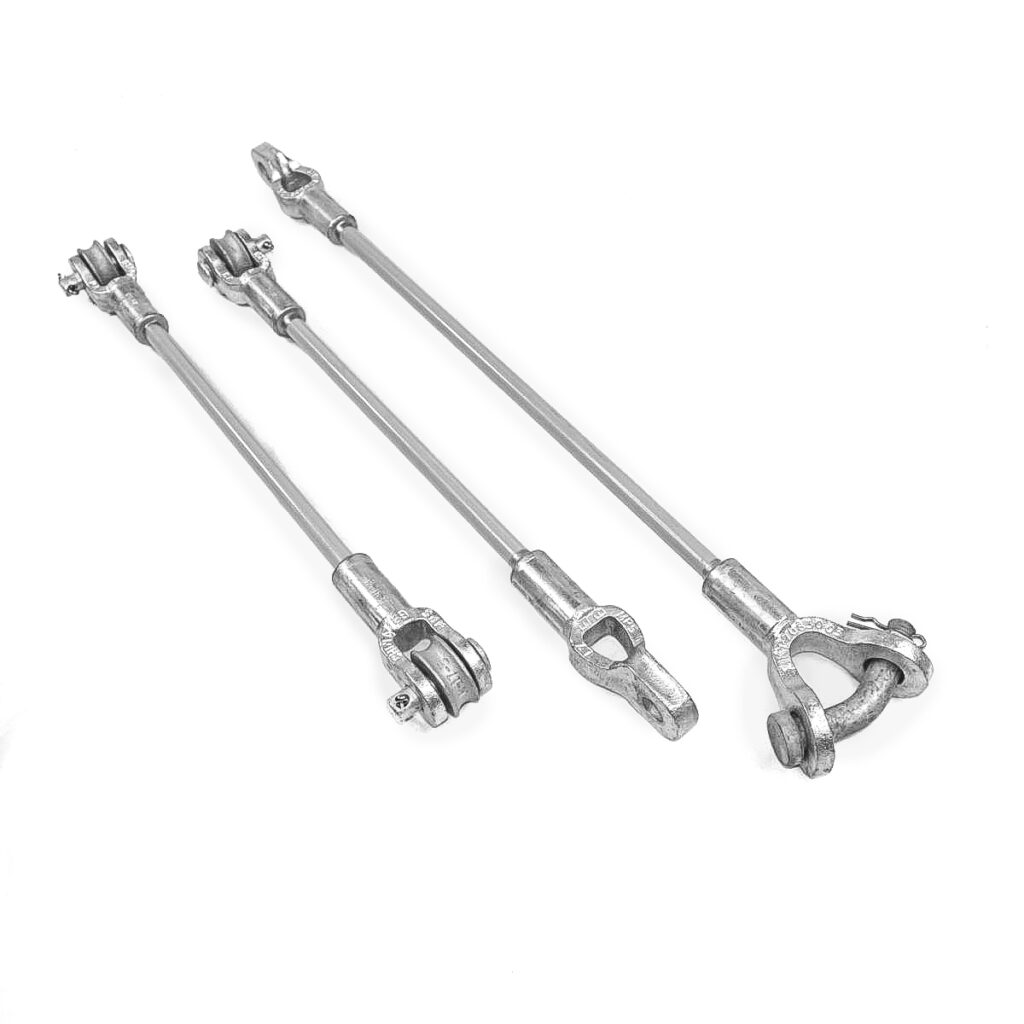
This guy strain is designed for permanent anchoring points where maximum mechanical tension must be terminated. It offers a high tensile load rating, rigid core construction, and heavy-duty metal end fittings. They function in termination poles, angle structures, and high-wind transmission corridors.
Tension fiberglass strain
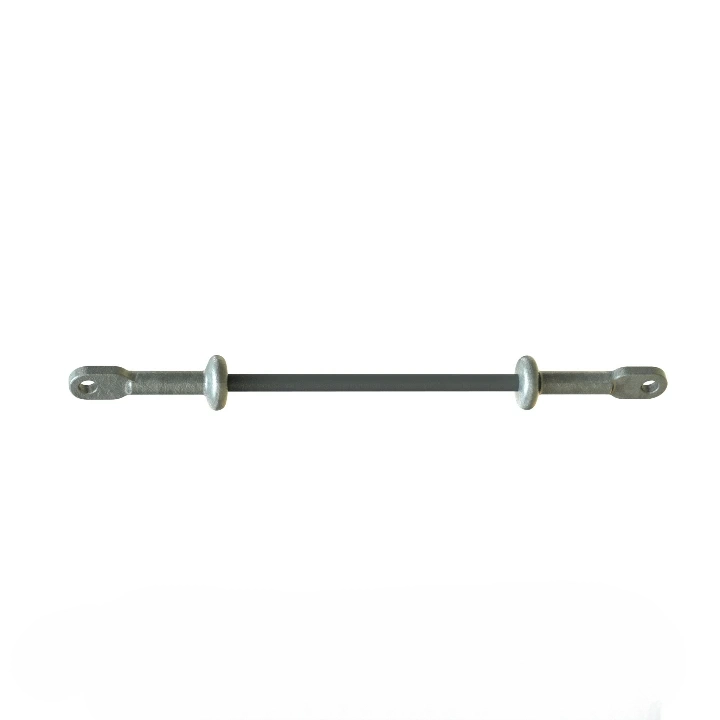
This works in series with the guy wire to manage tension across long spans. It provides balanced tensile strength and a flexible fiberglass body designed for load distribution. The tension guy strain works in mid-span guy sections, long-distance distribution lines, and telecom pole networks.
High-voltage insulating guy system

This provides electrical insulation in high-voltage environments to reduce flashover and stray current risks. It has enhanced dielectric performance, advanced sealing coatings, and extended fiberglass body length for higher creepage distance.
Heavy-duty structural guy strain
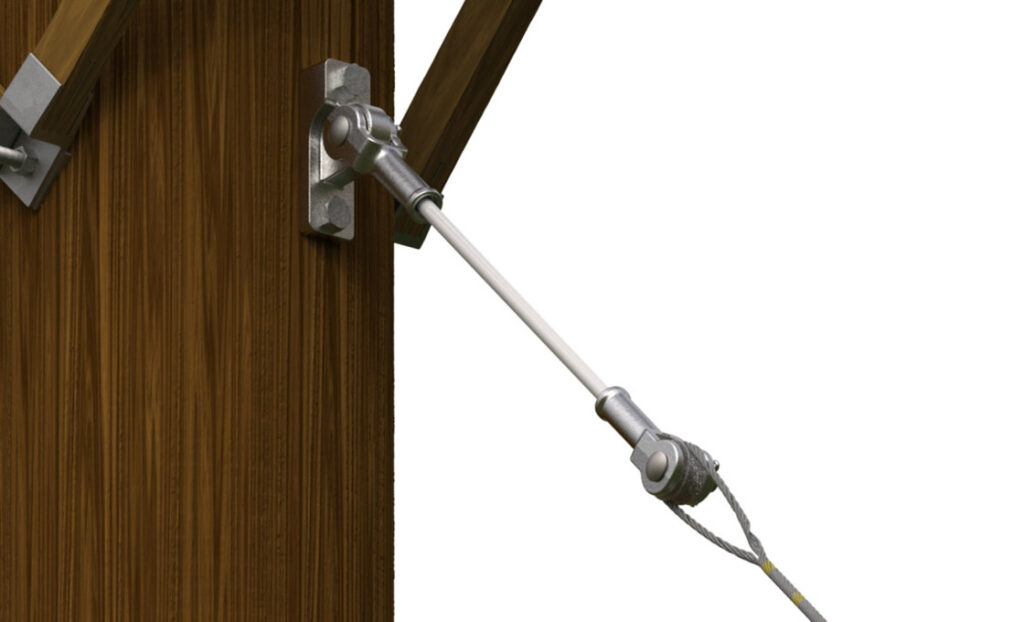
These can withstand extreme mechanical loads in harsh environmental conditions. It is also built for long-term durability under extreme environmental stress. The guy strain provides a larger diameter fiberglass rod, reinforced resin content, and industrial-grade end fittings. It works in mountainous, coastal, and long-span transmission towers.
Compact distribution fiberglass strain
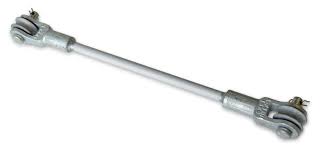
This works in low- and medium-voltage distribution networks for economic stabilization without overengineering. It has lightweight construction, a moderate load rating, and a cost-efficient design. It also works in urban and rural distribution poles, street lighting networks, and short-span guying systems.
Custom-engineered guy system
These can meet project-specific mechanical and electrical requirements. It ensures precise performance alignment with unique project demands. It has tailored length and diameter, custom end fittings, and application-specific coatings. They serve in renewable energy installations, industrial substations, and specific terrain.
Technical specifications for fiberglass guy system
The technical specifications for the guy strain define its mechanical strength, electrical performance, and environmental durability in power networks. The specifications help engineers to meet grid safety standards, structural loading requirements, and long-term operational reliability. They help ensure high mechanical performance, electrical insulation, and environmental durability in overhead power networks. Here are the technical specifications for fiberglass guy strain.
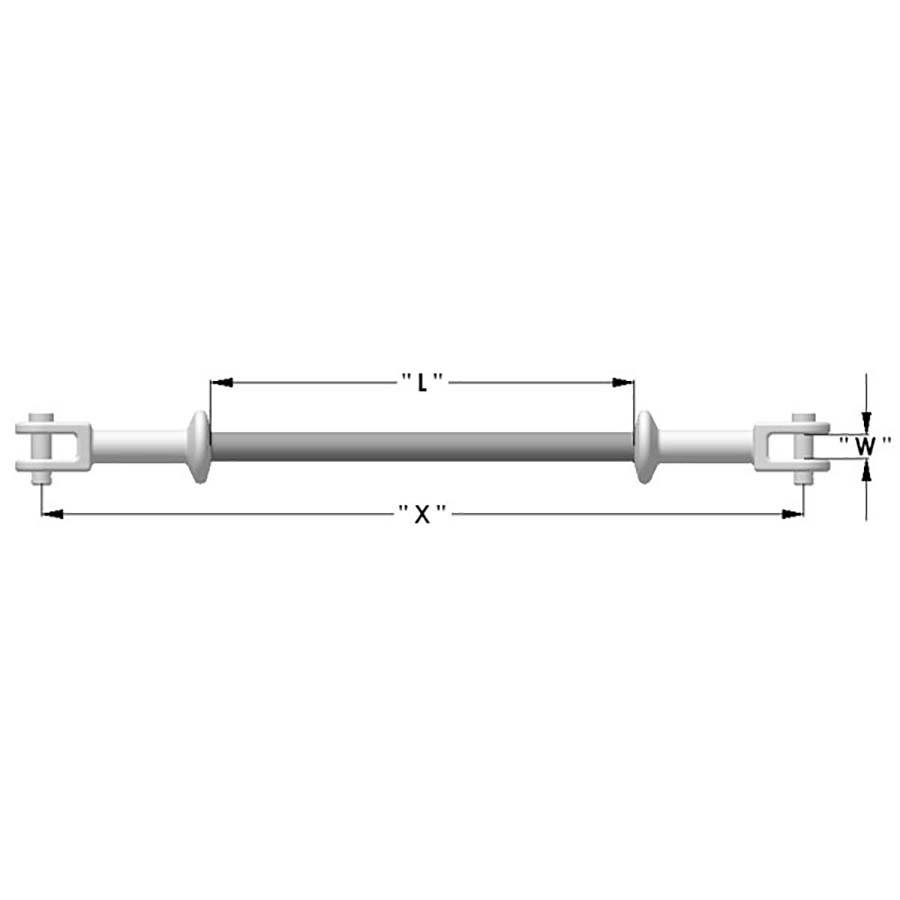
- Mechanical specifications—fiberglass guy strains can withstand high axial loads without failure. It ranges from 10 kN to 200 kN. It also has a working load limit between 30% and 40% of UTL, a rod diameter between 10 mm and 50 mm, and control insulation distance and mechanical flexibility between 200 mm and 1500 mm.
- Electrical specifications—the dielectric strength for the guy strain measures the insulating capacity of the fiberglass body. It also has surface distance designed to prevent electrical flashover, and low surface conductivity. This is crucial to prevent current tracking in humid conditions.
- Material specifications—the core material for the guy strain is glass fiber-reinforced polymer and high glass fiber volume content for load efficiency. The resin system consists of epoxy, polyester, or vinyl ester resin. Its end fittings are from hot-dip galvanized steel, stainless steel, or aluminum alloy. The guy strain has end coatings with a UV-stabilized polymer sheath and hydrophobic and anti-tracking surface treatments.
- Environmental specifications—the fiberglass guy strains have an operating temperature range. They also withstand UV exposure, corrosion, and offer ingress protection.
- Standards and compliance—fiberglass guy strains are also designed and tested following IEC, ASTM, IEEE, and ISO quality and environmental standards.
Application areas of the guy insulator
Fiberglass guy strains serve where structural stabilization and electrical insulation are necessary in guyed support systems. It consists of high tensile strength, non-conductive properties, and corrosion resistance. This makes it crucial across infrastructure sectors in energized environments. They provide safety and reliability in overhead infrastructure. Its applications include:
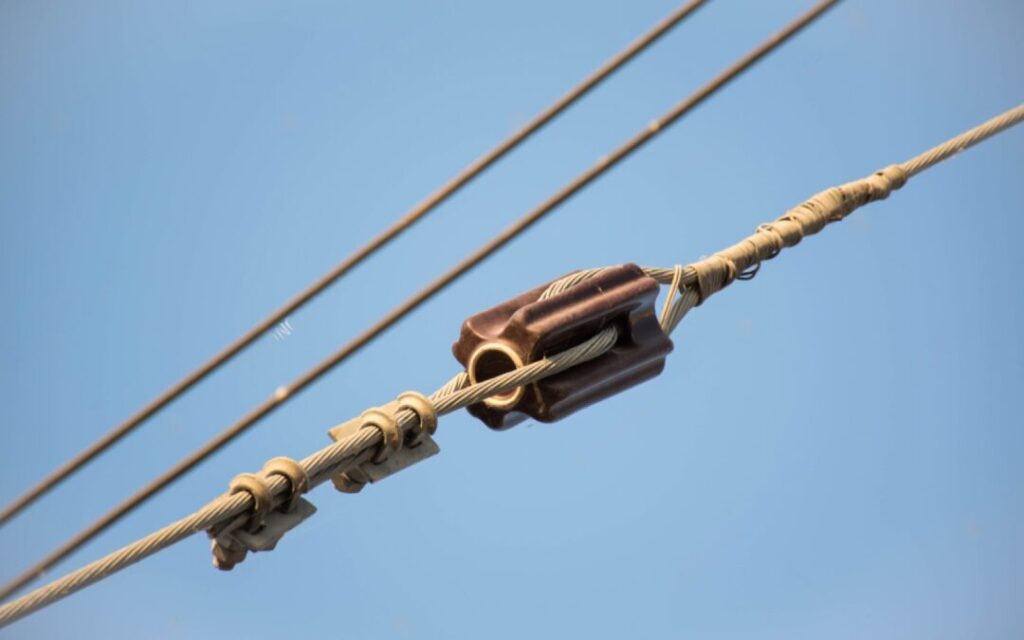
- Overhead power transmission networks—the guy strains serve in high-voltage and medium-voltage power lines to stabilize poles and towers. They prevent pole deflection, maintain conductor clearance, and cut electrical backfeed through guy wires.
- Electrical distribution systems—fiberglass guy strains support lightweight and medium-load structures. They improve pole alignment while isolating guy wires from energized equipment. They serve in urban and rural distribution poles, street lighting networks, and secondary line stabilization.
- Telecommunications infrastructure—the guy strains working in cellular base station towers, fiber optic and broadband pole lines, and microwave relay towers. They prevent signal interference caused by stray currents and provide long-term stability.
- Substations and switching stations—fiberglass guy strains support approach structures and bus supports located near energized equipment. They reduce the risk of flashover and prevent hazardous ground potential use. It serves as an in-line entrance and exit structure, support bracing for outdoor substation frames, and busbar support stabilization.
- Railway electrification systems – fiberglass Guy strains work in overhead catenary systems for electrified railways. They provide high electrical insulation while managing constant mechanical tension. Guy strains function in catenary support structures, sectioning and tensioning areas.
- Industrial and high-corrosion zones—guy strains work in environments where metal hardware would degrade. They reduce corrosion-related failures and reduce lifecycle maintenance costs. They function in coastal and offshore-adjacent power lines, industrial plants, mining, and heavy manufacturing corridors.
- Renewable energy infrastructure—guy strains stabilize support structures for renewable installations. They support reliable power evacuation while meeting strict electrical safety needs.
Following best practices for guy systems in overhead power networks
Using fiberglass guy strains in overhead power networks is crucial to achieve greatest mechanical performance, electrical safety, and long service life. Following the best practices ensures reliable and compliant installations. These practices include proper load matching, correct installation alignment, enough electrical clearance, and using compatible hardware. It also includes environmental protection, routine inspection and maintenance, and compliance with standards. Adhering to standards and industry specifications helps ensure safe, durable, and reliable performance in overhead power networks.