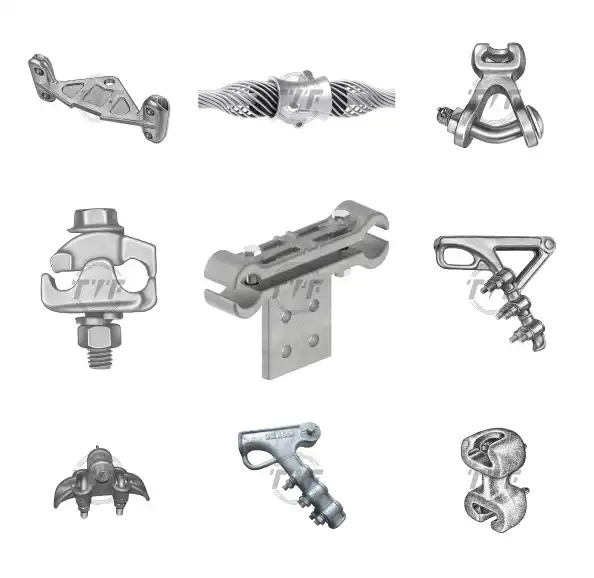

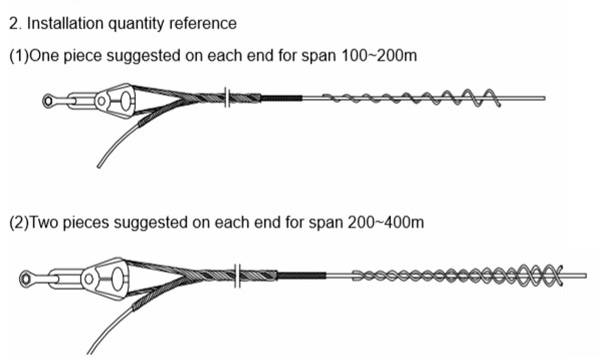
A spiral vibration damper (SVD) is a mechanical device used to reduce aeolian vibrations and other oscillations that occur on overhead power lines. It functions on transmission line infrastructure to protect conductors and cables from damage. A spiral vibration damper is a helical rod made from a high-strength, weather-resistant plastic material. It grips and wraps around a conductor. It absorbs and dissipates the energy produced by wind-induced vibrations. Spiral vibration dampers are at regular intervals near pole attachment points in ADSS fiber optic cables. They reduce bending strain, prevent cable sheath wear and ensure uninterrupted data transmission. Using spacer dampers prevents fatigue damage, extends service life, reduces maintenance, and enhances system reliability.
Working principle of a spiral vibration damper
Using a spiral vibration damper stabilizes and protects overhead conductors in power networks. Its main function is to reduce aeolian vibrations in overhead transmission lines. Increased vibrations can lead to metal fatigue, hardware loosening, and premature cable failure. When wind flows across an overhead conductor, low-pressure zones form behind it, producing vortex shedding. This causes the conductor to vibrate at high frequencies with small amplitudes. The SVD wraps around the conductor in a spiral pattern, creating contact points and distributing grip pressure evenly. It is lightweight, non-conductive, and corrosion-resistant for outdoor high-voltage applications. The damper alters the airflow around the conductor to reduce the strength of vortices and breaks the regular wind pattern. Using the dampers in modern power networks helps enhance conductor lifespan. They do so by preventing fatigue damage, maintain line stability, and protect sensitive communication cables from wear and signal interruptions.
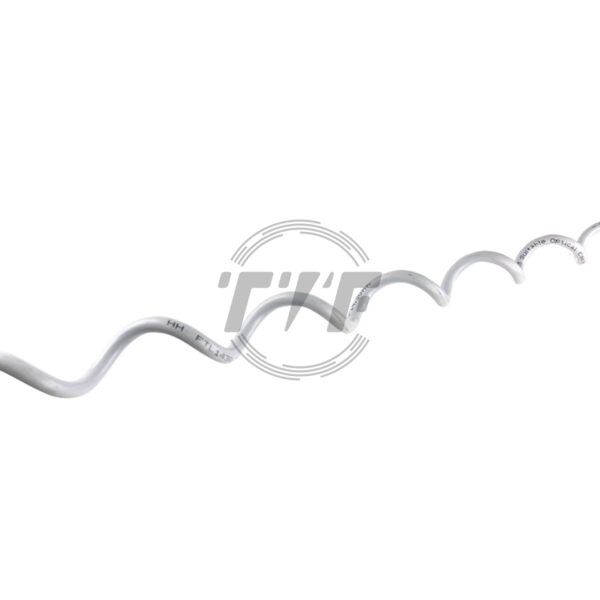
Spiral Vibration Damper
Spiral Vibration Dampers are helically-shaped devices designed to control aeolian vibrations in overhead power lines caused by wind. Installed directly onto conductors or shield wires, they dissipate vibration energy through flexural motion and friction, reducing the risk of fatigue damage to cables, hardware, and splices. Their simple, tool-free application makes them ideal for use in both new installations and retrofit scenarios.
Key Features:
- Efficient Vibration Control: Minimizes aeolian vibration to extend conductor and hardware lifespan.
- Tool-Free Installation: Wrap-around design enables fast, easy mounting without special tools.
- Corrosion-Resistant Material: Manufactured from UV-stabilized PVC or similar durable polymer.
- Wide Compatibility: Available for a range of conductor sizes and configurations.
- Weatherproof Design: Performs reliably in harsh environmental conditions.
- Non-Interfering: Lightweight and balanced to avoid affecting conductor sag or tension.
Importance of using aeolian vibration dampers in power line networks
In modern power line networks, the dampers maintain system reliability, reduce mechanical stress, and extend the lifespan of conductors and fittings. The dampers absorb and dissipate vibration energy to ensure long-term mechanical integrity of the entire power line system. Installing vibration dampers reduces fatigue stress on conductors and joints, prevents premature aging of fittings and cables, and extends the service life of the metallic and fiber optic lines. Using the dampers provides stability during high winds by reducing oscillation amplitudes, protects against conductor fatigue, and ensures consistent performance of optical and electrical transmission under adverse weather. This is mostly where vibration can damage sensitive fibers and disrupt communication signals. Their non-conductive and lightweight nature preserves the mechanical balance of the power line. It avoids introducing electrical faults or extra loading. Additionally, they function in large-scale transmission networks to ensure consistent electricity flow and protect valuable infrastructure assets.
Components and features of the vibration dampers
The stockbridge dampers can suppress aeolian vibrations and protect conductors from mechanical fatigue. The damper consists of components and material features that make it durable and effective in long-term field performance. Their conductive materials, durability, and ease of installation make them essential devices in power lines. They are crucial for maintaining safe, efficient, and long-lasting transmission systems. Here are the components and features of the spiral vibration dampers.
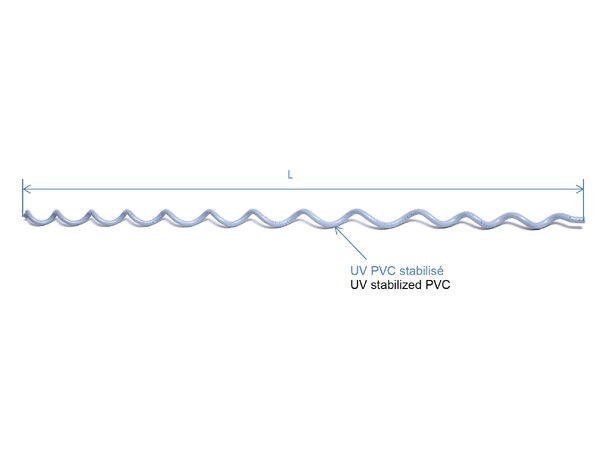
- Helical body—the main structure of the damper is a helically shaped rod that wraps around the conductor. The spiral form ensures a firm grip and uniform contact along the conductor. It distributes pressure evenly to prevent damage to the conductor sheath.
- Material composition—spiral vibration dampers are from high-strength, weather-resistant polymers. These materials include polyvinyl chloride, polypropylene, and fiberglass-reinforced plastic. These materials are non-conductive, corrosion-resistant, UV-stabilized, lightweight, and flexible.
- Preformed end sections—the ends of the damper are preformed to grip the conductor or cable. Their purpose is to hold the damper in place during vibration, prevent slippage, and maintain consistent damping performance. They have smooth curves to avoid abrasion or cutting into the cable jacket.
- Frictional contact zones—the spiral damper creates many points of contact with the conductor surface. The zones generate frictional damping, disperse stress, and offer continuous vibration absorption.
- Aerodynamic profile—this design breaks vortex shedding, reduces lift forces on the conductor, and ensures balanced airflow across the cable.
- Compatibility and customization—spiral vibration dampers are available in various lengths, diameters, and color codes. This allows for compatibility with different conductor sizes, ADSS and OPGW cables, and climatic terrain conditions.
Types of overhead vibration dampers
Standard vibration dampers
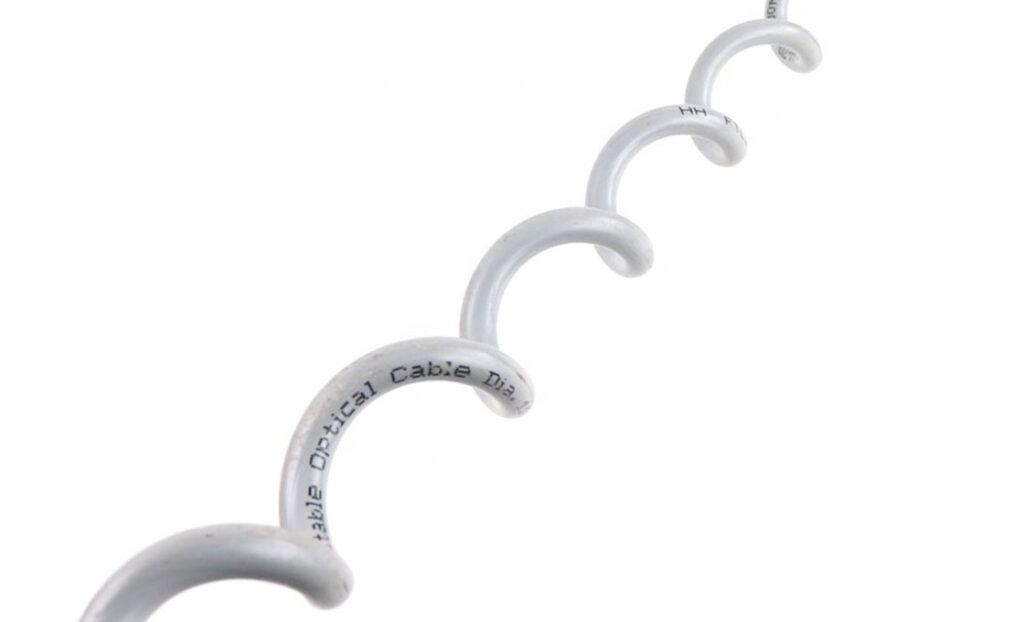
This is the most used type across transmission and distribution networks. It consists of a single helical rod made of high-strength polymer or plastic material. Standard dampers are ideal for general-purpose vibration control on medium-tension lines, ideal for bare conductors, ADSS, or OPGW cables. These dampers work on low- and medium-voltage networks and short-span installations.
Double spiral vibration damper
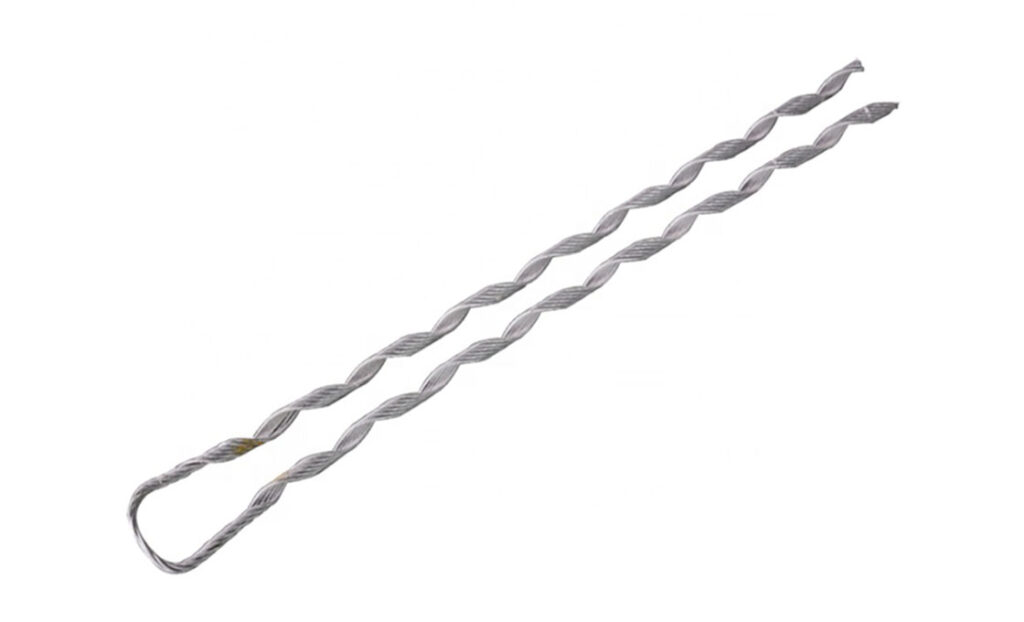
The double spiral type has two helical rods intertwined around the conductor. This design provides extra damping force and wider vibration control coverage. The damper provides enhanced frictional contact for greater energy dissipation and better stability near clamps. They are common on extra-high-voltage and ultra-high-voltage lines or long ADSS installations.
Performed spacer dampers
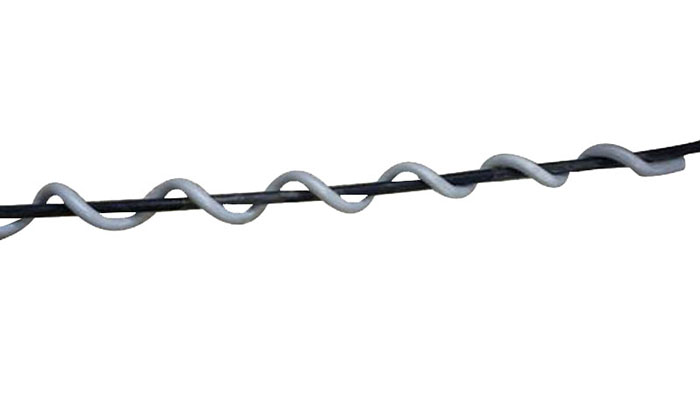
This is factory-preformed to fit specific conductor diameters with shape and grip designed to match cable size and material properties. They ensure uniform stress distribution along the conductor, prevent slippage, and allow quick installation due to their preformed fit. These dampers function in ADSS and OPGW cables. They maintain sheath integrity and consistent performance vital for the cables.
Reinforced helical vibration damper
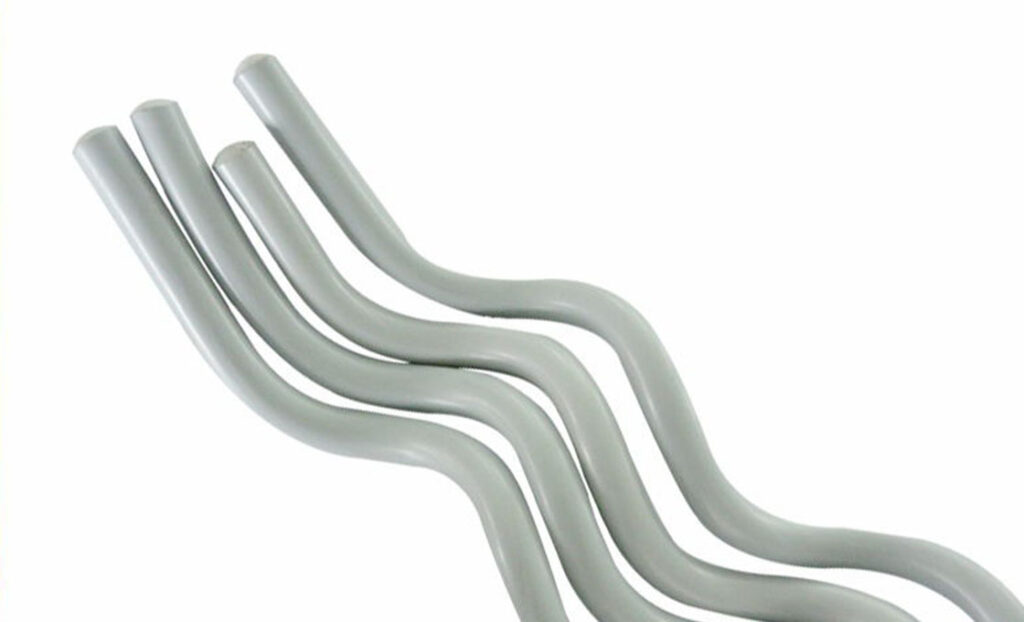
Reinforced SVDs are from fiberglass-reinforced plastic or composite materials for greater mechanical strength. They are designed for harsh environments of heavy-duty applications. The SVDs are durable and rigid for extreme weather conditions and provide longer service life. They are also resistant to temperature fluctuations, UV radiation, and corrosion.
Technical specifications of spiral vibration dampers
The technical specifications of spiral vibration dampers define their performance, durability, and compatibility with different conductor types. They ensure that the dampers provide optimal vibration suppression, long service life, and mechanical safety. Here is a discussion of the key technical specifications of spiral vibration dampers.
- Material composition—key materials include high-impact PVC, polypropylene, nylon, and fiberglass-reinforced plastic. The material selected should have high tensile and flexural strength, UV stabilization, corrosion resistance, non-conductivity, and temperature tolerance.
- Dimensions and diameter range—spiral vibration dampers are available in various sizes to fit specific conductor or cable diameters. The specifications include a length between 300 mm and 1200 mm and an outer diameter between 10 mm and 25 mm. It also includes an applicable conductor diameter range between 8 mm and 30 mm, and spiral spacing between 30 mm and 80 mm to optimize damping efficiency.
- Weight and density—typical range weight is between 0.2 and 0.8 kg depending on size and material. The density is between 1.3 and 1.5 g/cm for most polymer-based dampers. The low weight ensures easy installation while providing enough mechanical stability.
- Mechanical strength—the specifications determine the damper’s ability to withstand stress without cracking. Requirements for strength include tensile strength, flexural strength, impact resistance, and elongation at break. They allow the SVD to maintain shape and function even under strong winds and temperature fluctuations.
- Vibration damping efficiency—the effectiveness of the spiral damper depends on its ability to reduce aeolian vibration amplitude and fatigue stress on the conductor. Performance indicators include frequency range controlled, amplitude reduction, and energy dissipation.
Testing spiral dampers for performance
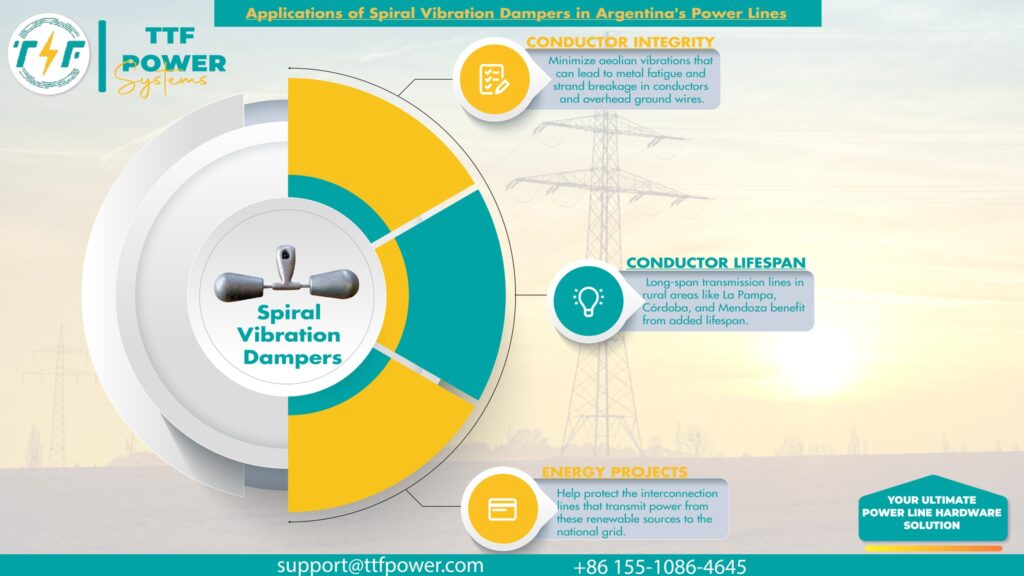
Checking for performance ensures that the spiral dampers perform effectively in mitigating aeolian vibrations. It is also crucial for protecting power line conductors from fatigue damage. Performance testing verifies that they meet international quality and safety standards before deployment. These tests include confirming their vibration suppression, evaluating their mechanical strength, ensuring material stability, and verifying compliance with global standards. It also includes a vibration performance test, a slip and grip test, a temperature cycling test, and a UV and weathering resistance test. Field testing provides real-world confirmation of damping efficiency to complement laboratory results. Quality control and standard compliance ensure that spiral vibration dampers meet industry-grade reliability and are safe for high-voltage applications. Combining laboratory tests, field evaluation, and strict adherence to international standards, manufacturers and utilities can ensure that SVDs deliver consistent protection and long-term reliability.
Best practices for stockbridge dampers in power line networks
Using spiral vibration dampers in power line networks needs strategic application and maintenance practices. This is crucial to ensure they deliver greatest protection and longevity. Proper selection and installation of SVDs can reduce aeolian vibrations, prevent mechanical fatigue, and extend the service life of conductors and fittings. Following best practices ensures that spiral vibration dampers deliver greatest performance, safety, and reliability in power line networks. These practices include conducting vibration assessment before installation, selecting the right type and size of damper, proper installation and positioning, ensuring clean and dry cable surfaces, and avoiding overlapping or excessive tension during installation. It is also crucial to conduct regular inspection and maintenance to check for cracks, discoloration, or brittleness due to UV exposure. Smart installation and maintenance of spacer dampers translate to a stronger, safer, and more efficient power grid.