A Y-clevis eye is a type of fitting used in power transmission and distribution systems for connecting insulators, conductors, or hardware at high-voltage lines. It has a Y-shaped clevis that allows secure pin connections. The “eye” part is a circular hole at the end to accommodate a pin, bolt, or another hardware fitting. The Y-clevis eye provides a mechanical connection between insulator strings and other line hardware. It connects yoke plates, ball clevises, or suspension clamps. The clevis eye helps send mechanical loads safely from the conductors to the support structure. It ensures alignment and articulation to reduce stress on the insulators and hardware. It functions in overhead transmission lines at suspension and deadend insulator assemblies where reliable, high-strength connections are necessary.
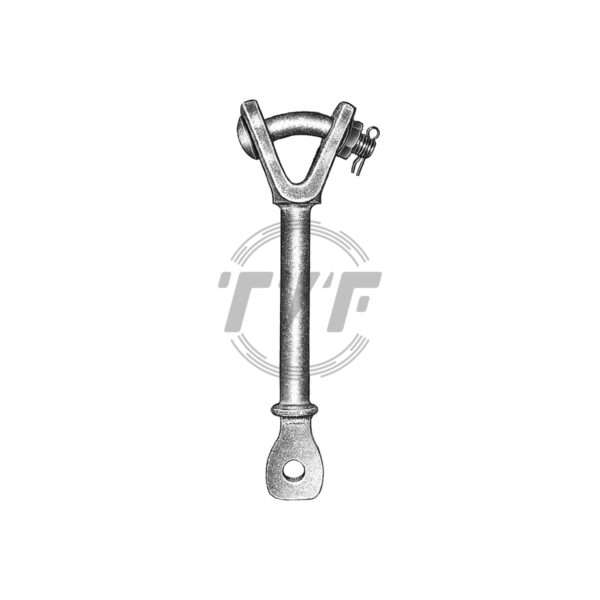
Y-Clevis Eye
The Y-clevis eye is a forged steel fitting used in overhead power line construction to provide a secure mechanical connection between insulator strings, conductors, and associated hardware. Its Y-shaped clevis arms accommodate a clevis pin for attachment, while the eye end enables easy linkage to shackles, yoke plates, or suspension clamps. Designed for high tensile strength and durability, the Y-clevis eye ensures reliable load transfer, articulation, and long service life in demanding transmission and distribution environments.
Key Features
- Material: High-tensile forged carbon steel or alloy steel.
- Finish: Hot-dip galvanized for superior corrosion resistance.
- Design: Y-shaped clevis with precision-machined eye for secure hardware connections.
- Strength: Rated for heavy mechanical loads, suitable for suspension and dead-end applications.
- Standards: Manufactured to ANSI/IEC/ASTM specifications for compatibility and interchangeability.
- Durability: Withstands environmental stresses including wind, vibration, and thermal expansion.
- Applications: Widely used in transmission lines, distribution networks, and substation hardware assemblies.
Working principle of a Y-clevis yoke
The Y-shaped clevis has two parallel arms with a hole on each side supporting the clevis tongue, yoke plate, or ball clevis. A pin or bolt passes through the aligned holes, locking the components together. The eye part provides another hole to connect with pins or shackles to allow many connection options. It transfers mechanical tension from one component to another and ensures forces are evenly distributed and prevents line hardware from overstressing. The pin connection allows slight angular movement. It also prevents rigid connections that could crack insulators or overstress fittings during wind, vibration, or thermal expansion. The Y-clevis eye maintains the insulation chain integrity by holding insulators in place. It is mostly galvanized or stainless steel to resist corrosion for longer service life and reliability in high-voltage environments.
Significance of Y-clevis eye on overhead power lines
The Y-clevis eye provides a secure, flexible, and durable connection between insulators and conductors. It ensures mechanical strength, electrical insulation integrity, and system reliability under demanding field conditions. The Y-clevis provides a strong and reliable link between insulators, conductors, and other line hardware. They ensure that high mechanical loads from conductor tension, wind pressure, and line vibrations are The clevis and pin connection allows slight articulation to prevent rigid joints. The flexibility helps absorb mechanical stresses from wind sway, galloping, or thermal expansion of conductors. Y-clevis eyes help preserve insulation chains in both suspension and dead-end applications. Their materials help resist corrosion, moisture, and UV exposure to ensure long service life in outdoor high-voltage environments. Their design makes them versatile and interchangeable to reduce maintenance costs and simplify installation. They ensure safe load transfer and reliable operation for uninterrupted power transmission.
Key elements of the clevis yoke
The Y-clevis eye offers strength, corrosion resistance, standardization, and flexibility that make it crucial in overhead power line hardware systems. Here are the key features of the Y-clevis eye.
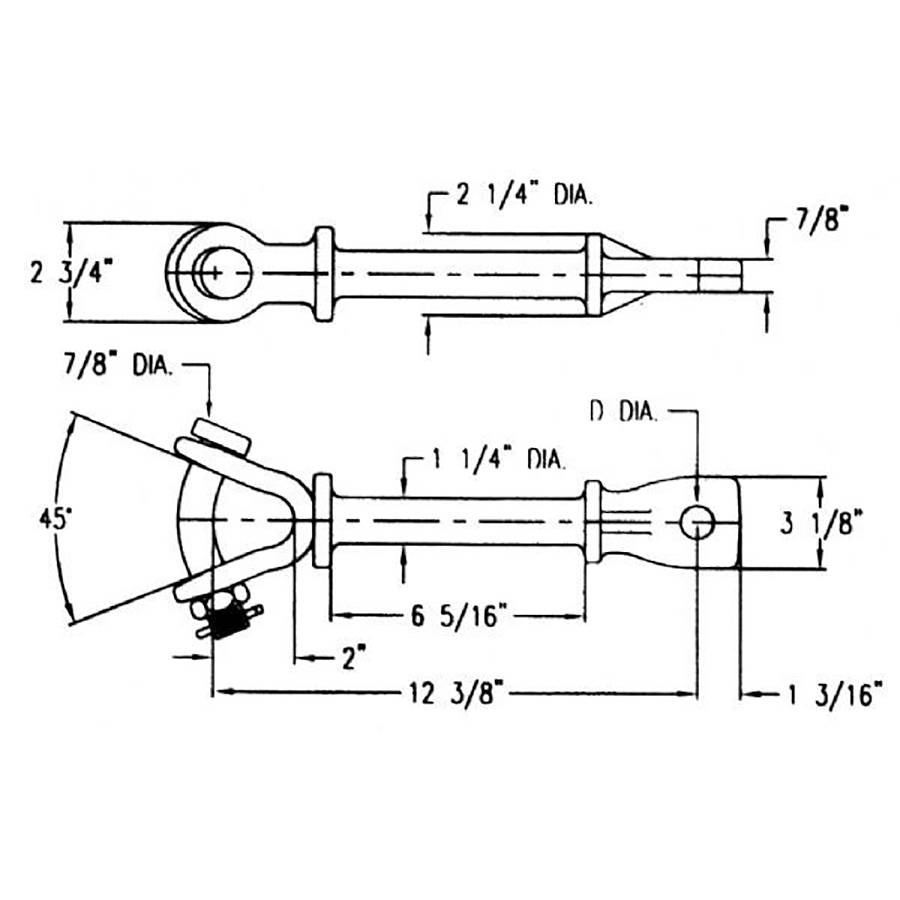
- Y-shaped clevis design—the Y arms allow a secure connection with a mating fitting such as a clevis tongue or yoke plate. A steel pin or bolt passes through both arms and the mating component to lock the assembly.
- Eye-end connection—one end features a circular eye that connects easily to shackles, links, or insulator hardware. It provides versatility in line hardware configurations.
- High mechanical strength—the clevis eye is from high-tensile steel or alloy steel to handle heavy tension from conductors and insulators. It is also designed to withstand both static loads and dynamic loads such as wind, vibration, or ice.
- Corrosion resistance—the surface has hot-dip galvanization or a stainless-steel finish to protect against rust, moisture, and chemical exposure.
- Standardized dimensions—the clevis is manufactured to IEC, ANSI, or ASTM standards. This ensures interchangeability with other power line fittings and reduces replacements and maintenance issues.
- Flexibility and alignment—the clevis and pin system provide slight articulation to prevent rigid joints. It helps absorb vibration, thermal expansion, and wind sway without overstressing insulators.
- Versatile applications—Y-clevis eyes work in suspension and deadend insulator strings. This makes them common in high-voltage transmission lines, distribution lines, and substations.
Common types of Y-clevis joints
Standard Y-clevis eye
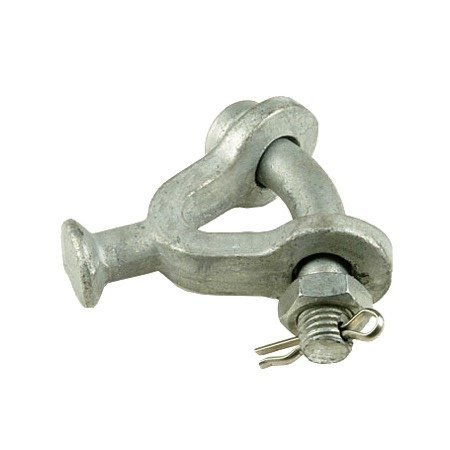
This has a Y-shaped clevis with two parallel arms and an eyehole at the other end. It mainly serves for general suspension and dead-end insulator assemblies. The standard clevis eye is also designed to meet ANSI and IEC dimensional standards for interchangeability.
Heavy-duty clevis eye
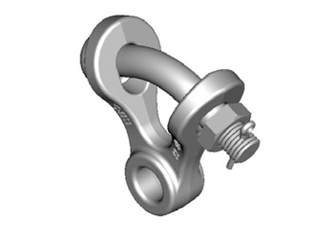
This is built with thicker arms and larger pin diameters made from high-strength forged steel or alloy steel. It is suitable for extra-high-voltage lines or installations with greater mechanical tension loads.
Ball and Y-clevis joint combination
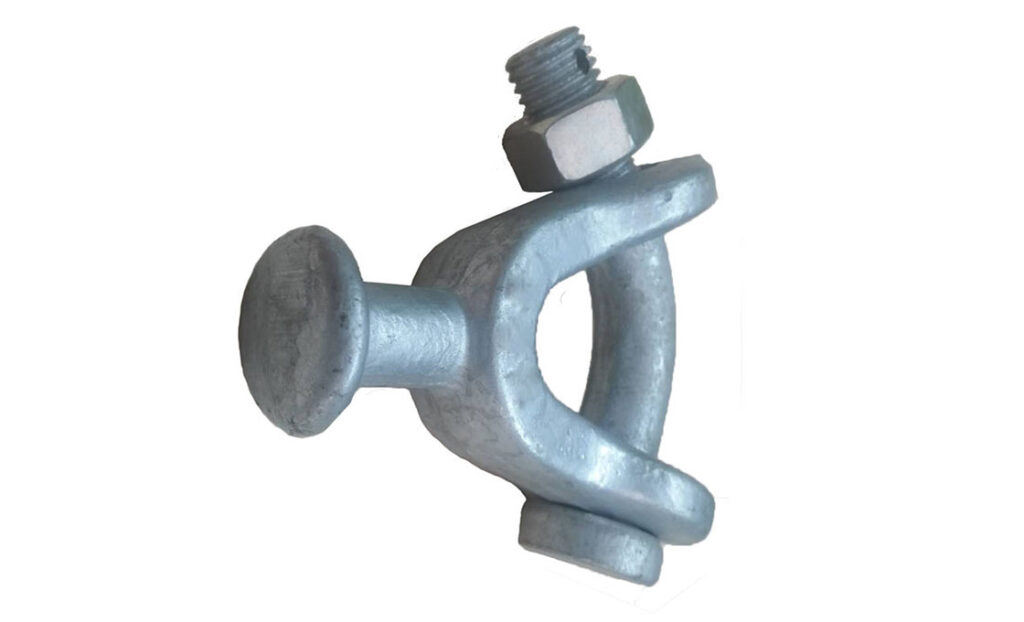
One side of the Y-clevis is for pin connection, and the other side has a ball fitting instead of an eye. It allows direct connection to ball sockets in suspension insulator strings. It also provides greater angular movement and flexibility in the line assembly.
Y-clevis eye with extended arm
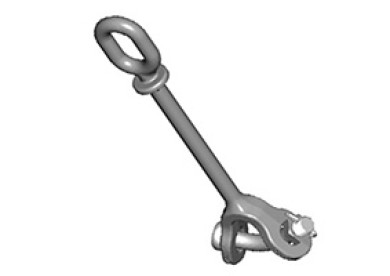
These feature elongated arms or extended shank length for special clearance needs. It functions where extra spacing is necessary between line fittings. It helps reduce electrical stress concentration in high-voltage insulation assemblies.
Utility-specific clevis eye
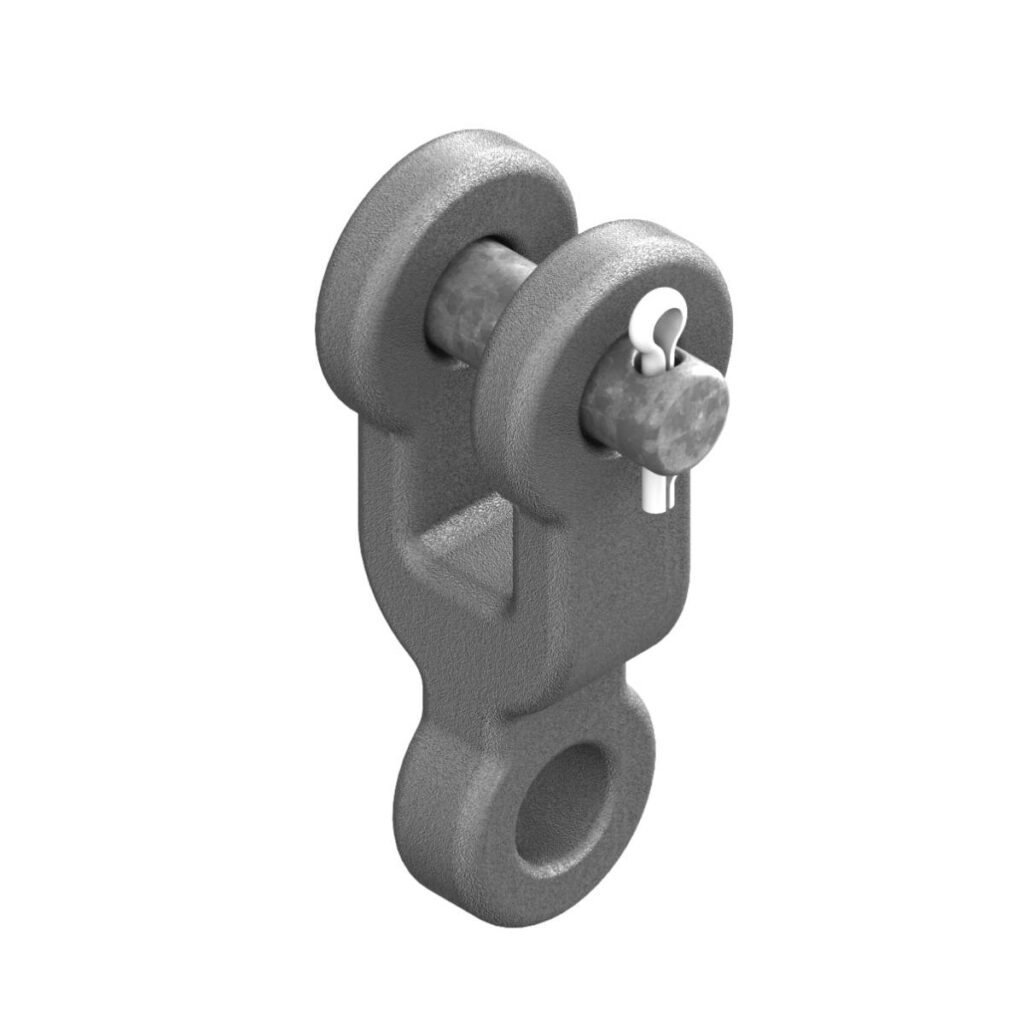
Some utilities order custom designs to fit proprietary insulator strings or hardware. Variations include different eye diameters, arm thickness, or pin sizes. It is also made for retrofits in older transmission infrastructure.
Design and materials for Clevis joints
The construction of the Y-clevis eye determines its strength, durability, and performance in overhead power lines. It has a forked clevis end and a circular eye built to provide a secure, flexible, and load-bearing connection in overhead power lines. Y-clevis eye consists of forged carbon steel, alloy steel, or stainless steel with galvanized or coated finishes for corrosion resistance. It is important to consider mechanical load capacity, corrosion resistance, compatibility, and service life. Y-clevis eyes comprise of forged carbon steel for high tensile strength, alloy steel for higher resistance to fatigue, stainless steel for excellent corrosion resistance, and ductile iron for good strength and flexibility. The design of the Y-clevis is as discussed below.
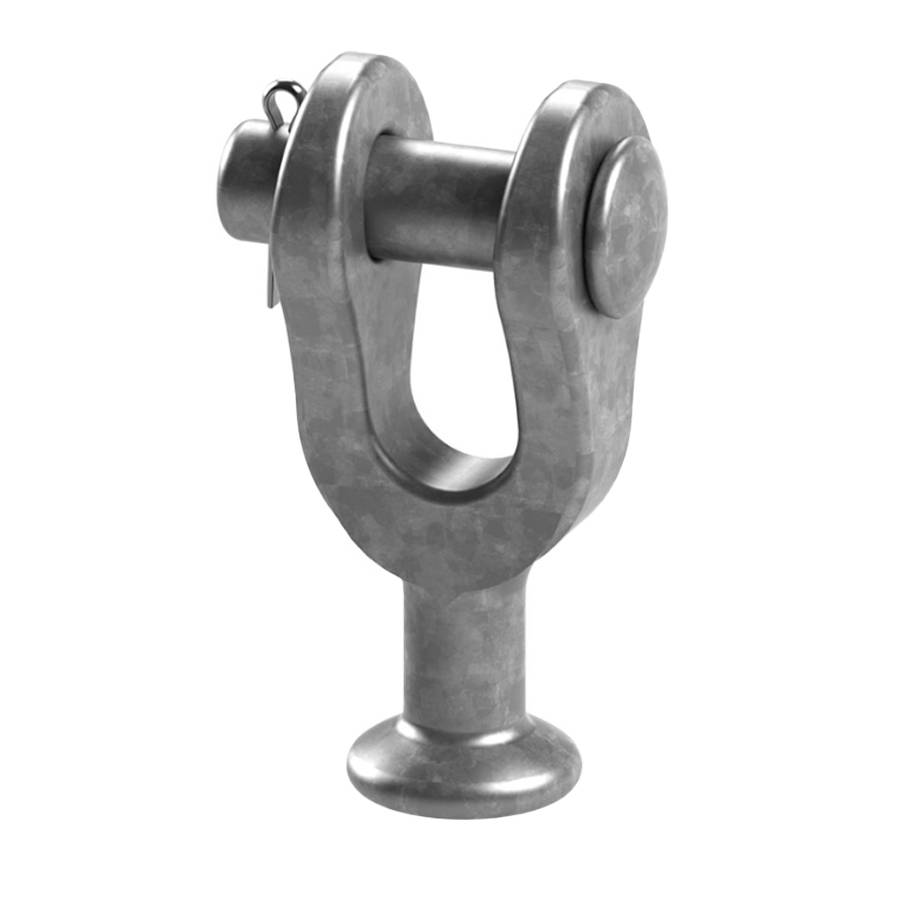
- Y-shaped clevis—this includes the two parallel forked arms with aligned holes. It also includes a steel pin that passes through the arms to lock in the clevis tongue, yoke plate, or insulator hardware.
- Eye-end connection—the opposite side has a circular eye for attachment to shackles, links, or ball fittings. Eye dimensions follow ANSI, IEC, or ASTM standards for compatibility with other line hardware.
- Load-bearing geometry—the clevis eye has smooth rounded edges to prevent stress concentrations and metal fatigue. The arm thickness and pin diameter are optimized for mechanical load requirements.
- Surface finish—the Y-clevis eye is usually hot-dip galvanized to improve corrosion resistance. Some applications use electro-galvanizing, epoxy coating, or stainless steel for enhanced durability.
Functions of Y-clevis yoke in overhead power lines
The Y-clevis eye functions as a secure, flexible, and durable connector in overhead power lines. It transfers mechanical loads, maintains insulation chain integrity, absorbs line movement, and ensures safe and reliable power transmission. The Y-clevis eye provides a versatile and robust articulating pivot point in a mechanical linkage system. Its design allows it to perform functions simultaneously in overhead power lines. A Y-clevis eye solves various problems, like creating a strong, reliable, and adjustable connection between two parts that are moving out of alignment with each other. Its functions are as detailed below.
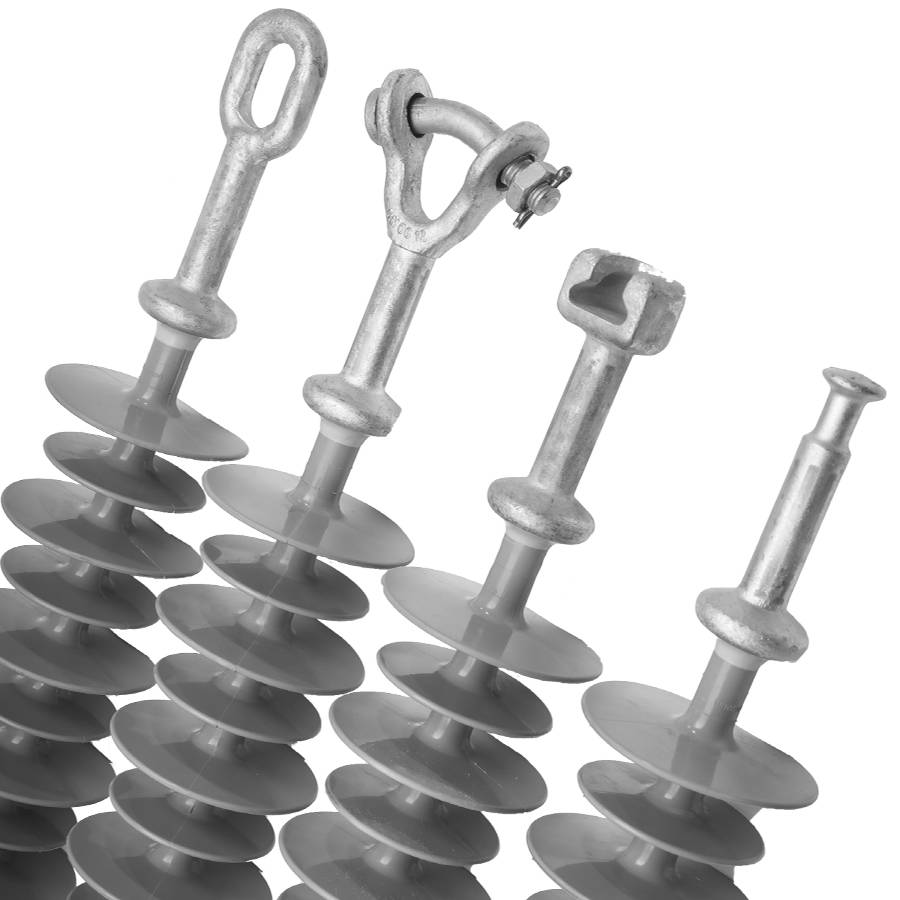
- Mechanical connection—the Y-clevis eye acts as a linking component between insulator strings, conductors, and other line fittings. It transfers mechanical loads from the conductor to the supporting tower structure.
- Flexibility and movement absorption—the pin-clevis arrangement allows slight angular movement. It prevents rigid connections that could crack insulators. It also helps absorb wind sway, conductor galloping, and thermal expansion.
- Maintaining insulation chain integrity—the clevis eye holds suspension or deadend insulators in place within the string assembly. It also ensures the electrical insulation distance between the conductor and the tower is maintained to prevent flashovers.
- Standardized hardware interface—it is also able to fit with yoke plates, ball clevises, shackles, and suspension clamps. It ensures interchangeability and compatibility in transmission and distribution line construction.
- Safety and reliability—the clevis eye is a crucial safety component preventing failure that could lead to line drops, outages, or equipment damage. It ensures stable operation of overhead power lines by providing a strong and secure joint.
- Durability in harsh environments—it is from forged steel or stainless steel with hot-dip galvanization for corrosion resistance. This helps it to function in outdoor, high-voltage environments exposed to rain, dust, salt, and extreme temperatures.
Best practices for using clevis joints in overhead power lines
Y-clevis eyes are crucial for the safety, reliability, and long service life of overhead power lines. It helps ensure safe load transfer in overhead lines, longer service life through corrosion resistance and proper alignment, system reliability, and reduced outages and maintenance costs. It is advisable to follow the manufacturer’s instructions when handling and installing Y-clevis eyes in overhead power lines. These practices include choosing the right dimensions and load rating based on conductor size and tension load, voltage level, and environmental conditions. It also includes using standardized and certified hardware, proper installation techniques, corrosion protection, and regular inspection and maintenance. Linemen should ensure compatibility with insulators and fittings, ensure proper alignment, and avoid overloading. Following these practices ensures the linkages remain safe, precise, and reliable for their service life.